

6–12 Weeks of Anti Inflammatory Herbal Tea Rotation for Sensitive Skin
For modest, measurable reductions in inflammation markers, reach for green tea, turmeric-ginger blends, and hibiscus, with tulsi, rosehip, and chamomile as gentle supporting players. Used consistently as part of a daily rotation, these teas can support lower CRP levels and healthier blood pressure over 6 to 12 weeks. They work best alongside sleep, diet, and movement, not instead of them, and anyone on medication or managing a health condition should check with a clinician first.
TL;DR:
- Drinking 3 to 6 cups daily of green tea, turmeric-ginger, or hibiscus over 6 to 12 weeks can support reductions in CRP levels and blood pressure.
- Green tea provides the strongest evidence for inflammation reduction, mainly thanks to EGCG, with 2 to 4 cups a day being an effective target.
- Boost turmeric absorption by adding black pepper or fat, and avoid high-dose extracts if pregnant, on blood thinners, or sensitive to supplements.
- Hibiscus daily intake of 250 to 500 milliliters can lower systolic blood pressure, supporting vascular health and reducing inflammation markers.
- People on medication, with allergies, or pregnant should consult a healthcare professional before regular tea consumption due to potential interactions and sensitivities.
Table of Contents
- Which Anti Inflammatory Herbal Teas Have the Strongest Evidence?
- How Do These Compounds Actually Fight Inflammation?
- How Should You Brew and Rotate These Teas Daily?
- What Safety Issues Should You Know Before Starting?
- What Results Can You Realistically Expect?
- Why LaTerraTales Believes in Rotation Over Single-Ingredient Hype
- Bring This Rotation Into Your Routine With LaTerraTales
- Sources
Which Anti Inflammatory Herbal Teas Have the Strongest Evidence?
Not every tea on a wellness shelf earns its reputation. Some have real trial data behind them; others ride on tradition and good marketing. Here is how the most talked-about anti-inflammatory herbal teas actually stack up.
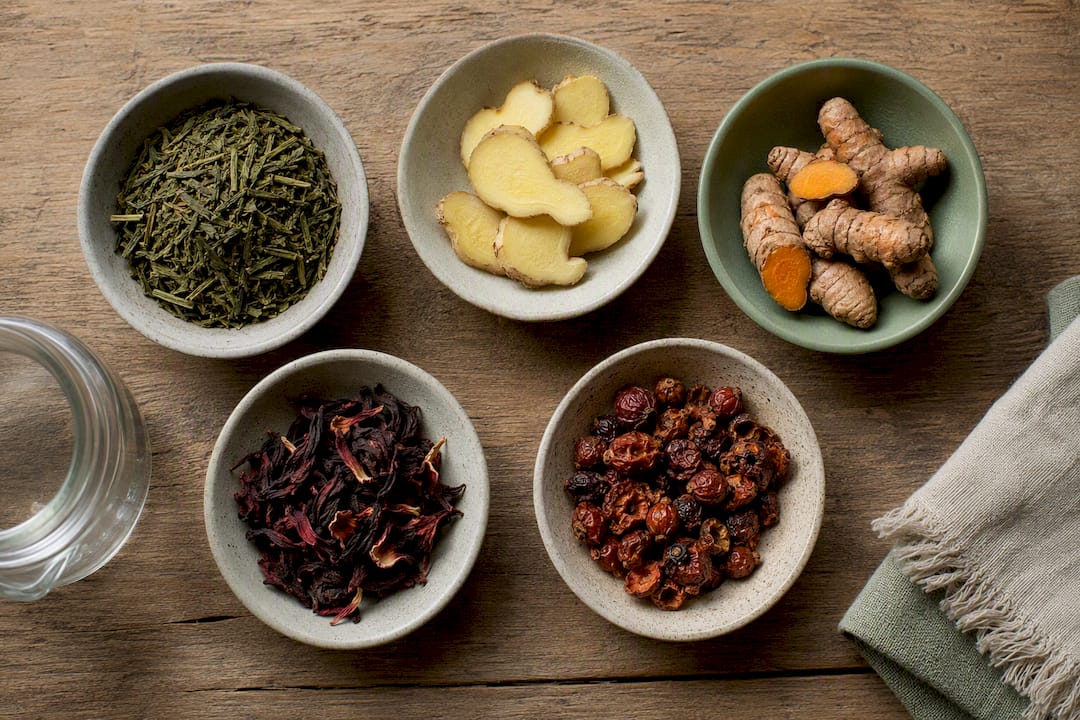
- Green tea carries the deepest evidence base of any tea studied for inflammation, largely thanks to EGCG, its dominant catechin. NCCIH’s evidence summary outlines how EGCG and related polyphenols have been linked to reduced inflammatory markers and cardiovascular benefits across multiple trials. Meta-analytic reviews point to green tea as having the most consistent support among teas studied for inflammation-related cardiovascular outcomes. Two to four cups a day is a reasonable target; more than that can bring on caffeine jitters or interfere with iron absorption.
- Turmeric and ginger, often brewed together, pair curcumin with gingerols. Clinical reviews and randomized trials show measurable CRP reductions when curcumin absorption is boosted, which matters because curcumin is notoriously hard for the body to absorb on its own. A pinch of black pepper or a splash of milk or coconut cream in the cup helps. Skip the extract-strength doses if you are pregnant or on blood thinners.
- Hibiscus brings anthocyanins to the cup and a caffeine-free profile that suits evening drinking. A systematic review and meta-analysis found reductions in systolic blood pressure with daily intake around 250 to 500 milliliters, which matters because blood pressure and vascular inflammation are closely linked.
- Tulsi (holy basil) shows up in adaptogen research more than inflammation research specifically, with early signals around cortisol and stress modulation. The evidence pool here is thinner, mostly smaller studies rather than large randomized trials, so treat tulsi as a supportive addition rather than a headline player.
- Rosehip and tart cherry infusions lean on anthocyanin content similar to hibiscus, with supportive data for joint discomfort and general antioxidant load. They make a pleasant, tart alternative when you want variety without caffeine.
- Chamomile and peppermint have the mildest inflammation evidence of the group but earn their place for sleep and digestive comfort. If bloating or restless nights are part of your picture, pairing chamomile with a proven digestion-focused tea rounds out the routine. Anyone with ragweed or daisy allergies should be cautious with chamomile specifically.
How Do These Compounds Actually Fight Inflammation?
Green tea catechins act on the NF-kappa-B pathway, a cellular switch that turns inflammatory signaling on and off, while also curbing oxidative stress that keeps that switch activated. WebMD’s overview of tea polyphenols confirms clinical trials have tied tea consumption to measurably lower inflammation markers.
Curcumin and gingerols work differently, dialing down COX-2 activity and specific inflammatory cytokines, but curcumin’s poor natural absorption limits how much reaches your bloodstream from a simple cup. Anthocyanins in hibiscus and rosehip support endothelial function, the inner lining of blood vessels, which helps explain the blood pressure effects. Most of this mechanistic detail comes from lab and animal research; the human-trial evidence is strongest for green tea’s cardiovascular markers and hibiscus’s blood pressure effects, and noticeably thinner for tulsi and chamomile.
How Should You Brew and Rotate These Teas Daily?
Getting the dose and preparation right matters as much as picking the right tea. Here is a simple protocol to follow:
- Steep green tea at 175°F for 2 to 3 minutes. Boiling water scorches the catechins and turns the cup bitter.
- Simmer fresh turmeric and ginger root for 10 minutes rather than using a quick powder steep, then stir in a pinch of black pepper or a little fat. Practitioner guidance confirms this combination meaningfully increases curcumin absorption.
- Steep hibiscus at a full boil for 5 minutes to pull out its anthocyanins fully.
- Finish with tulsi or chamomile in the evening, steeped 5 to 7 minutes, for a caffeine-free wind-down.
Aim for 3 to 6 cups total across categories daily rather than loading up on one ingredient. A sample rotation: green tea in the morning, turmeric-ginger at midday, hibiscus in the afternoon, tulsi or chamomile at night. Give the routine 6 to 12 weeks before judging results, and track how you feel weekly alongside any lab work your doctor orders.
Pro Tip: Brew a large batch of hibiscus or turmeric-ginger tea in the evening and refrigerate it. Cold-brewed anti-inflammatory drinks taste better iced and make the next day’s rotation effortless.
What Safety Issues Should You Know Before Starting?
Herbal teas are gentle, but “gentle” does not mean risk-free.
- Medication interactions matter most with turmeric and green tea. Turmeric can thin the blood further in people on warfarin, and green tea’s tannins can reduce iron absorption and interact with certain thyroid medications.
- Allergies are a real concern with chamomile, which belongs to the Asteraceae family. Harvard Health notes that people with ragweed or daisy pollen sensitivities can react to it.
- Pregnancy and breastfeeding call for caution with caffeine limits and concentrated turmeric doses; a clinician check is worth the five minutes.
- Stop and call your doctor if you are heading into surgery, notice new or worsening symptoms, or are using high-dose extracts rather than brewed tea.
What Results Can You Realistically Expect?
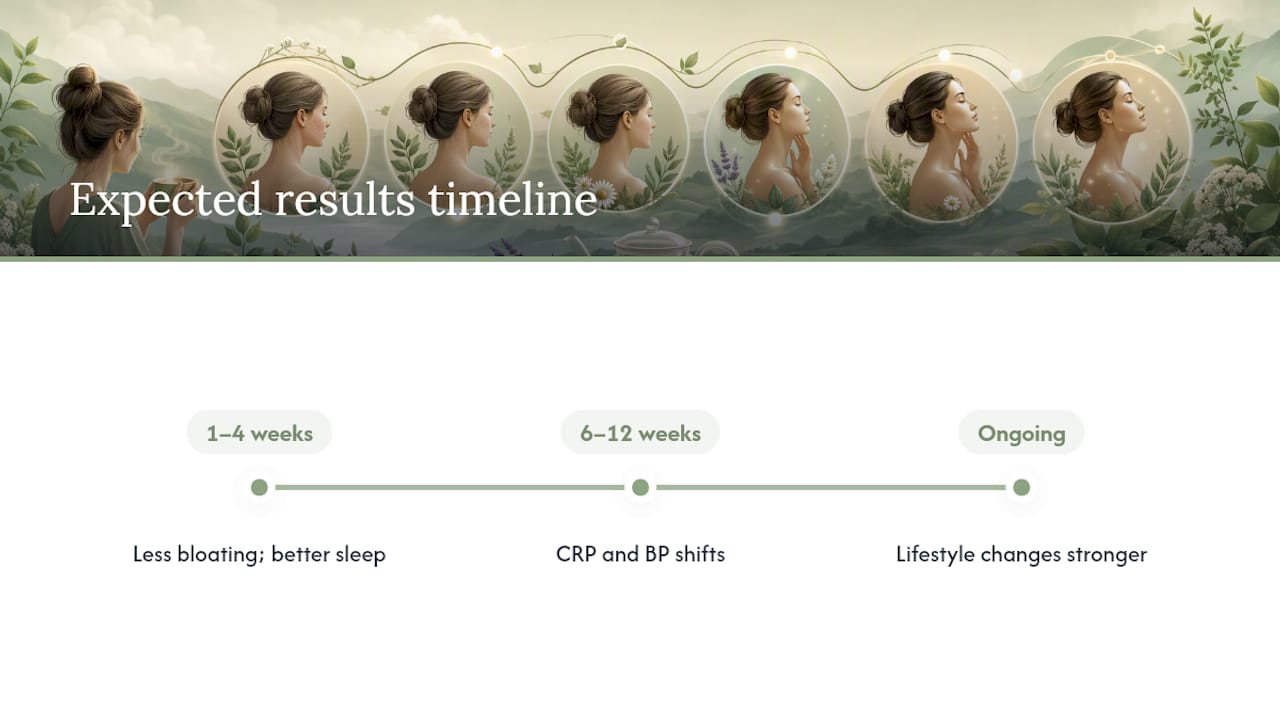
Trial data points to modest, not dramatic, change. Clinical reviews show measurable CRP and blood pressure shifts typically need 6 to 12 weeks of consistent intake, though subjective feelings like less bloating or better sleep often show up in 1 to 4 weeks. Tea works as a supporting player. Diet, sleep, exercise, and cutting back on smoking or alcohol move the needle more than any single cup ever will. If markers stay elevated or symptoms persist, that is your cue for lab testing or a clinical visit.
Why LaTerraTales Believes in Rotation Over Single-Ingredient Hype
The temptation in wellness is always to crown one “miracle” ingredient. The research does not support that. Green tea, turmeric-ginger, and hibiscus each work on different pathways, which is exactly why the infusions are built around rotation rather than a single hero botanical. Sensitive systems respond better to gentler, blended exposure than to concentrated extracts. If you are managing a health condition, loop in your clinician before adding any of this to your routine.
— LaTerraTales
Bring This Rotation Into Your Routine With LaTerraTales
This approach to inflammation support follows research suggesting it works through gentle, rotating botanicals rather than one oversized dose of a single ingredient.
Wellness infusions are formulated with sensitive-skin-friendly, eco-conscious sourcing in mind, mirroring the same rotation principles covered above. The Gut-Skin Axis Tea blends botanicals suited to digestive and skin-related inflammation, while the full wellness and self-care collection gives you room to build your own rotation without guessing at ratios or sourcing loose herbs yourself. Blends use minimal, carefully selected ingredients and sustainable packaging. If you want to compare notes on supplement-based approaches, this overview of anti-inflammatory supplement types is a useful companion read. Start by browsing the wellness collection and pick one blend to add to your evening routine this week.
This article is general information, not a substitute for advice from a qualified doctor. Consult a qualified healthcare professional about your own circumstances before acting on anything here.
Sources
- Tea: Does It Have Anti-inflammatory Properties? — WebMD
- PMC review article — relevant clinical review
- Green tea — National Center for Complementary and Integrative Health (NCCIH)
- PubMed entry — relevant hibiscus/blood pressure meta-analysis


