
Antioxidants and Anti-Aging Skincare: Your 2026 Guide
Antioxidants are defined as molecules that neutralize free radicals, making them the primary defense against oxidative stress in skin. The role of antioxidants in anti-aging skincare is to protect skin cells from damage that accelerates visible aging, including wrinkles, uneven tone, and loss of firmness. Key players include Vitamin C (L-ascorbic acid), Vitamin E (tocopherol), niacinamide, ferulic acid, and polyphenols. Each targets a different part of the skin’s structure. Your skin runs two lines of defense: endogenous antioxidants produced internally, and exogenous antioxidants delivered through diet and topical products. Topical antioxidants like vitamins C and E are necessary because your skin’s internal defenses cannot keep up with modern environmental stressors like UV radiation and pollution.
How do antioxidants protect skin from aging at the molecular level?
Free radicals form when UV light, pollution, or stress strip electrons from skin molecules. These unstable molecules then attack collagen, elastin, and DNA to stabilize themselves. The result is broken collagen fibers, reduced skin elasticity, and accelerated cell aging. This process is called oxidative stress, and it is the leading molecular cause of premature skin aging.
Antioxidants stop this chain reaction by donating electrons to free radicals without becoming unstable themselves. Vitamin C, for example, acts as a cofactor in collagen synthesis and directly neutralizes reactive oxygen species (ROS) in the watery, aqueous layers of skin. Vitamin E works in the lipid membranes of skin cells, protecting fatty acids from oxidation. Together, they cover two distinct compartments of skin biology.
Chronic oxidative stress also triggers a process called inflamm-aging. This is low-grade, persistent inflammation that degrades skin structure over time. Chronic oxidative stress drives inflamm-aging, a primary aging mechanism now targeted by personalized antioxidant regimens. Reducing this inflammatory burden is one of the most significant anti-aging properties of antioxidants.
Clinical evidence backs this up. Antioxidant interventions significantly improve skin hydration and reduce trans-epidermal water loss, with wrinkle reduction observed in both clinical and preclinical studies. A mean difference in hydration of 2.12 and a Hedges’ g of 1.75 for wrinkle reduction were recorded across systematic reviews. These are not marginal improvements. They represent measurable, meaningful changes in skin structure.
- Collagen protection: Antioxidants prevent the oxidative breakdown of collagen fibers, preserving skin firmness.
- Elastin preservation: Reduced ROS activity slows the degradation of elastin, keeping skin supple.
- DNA repair support: Antioxidants reduce oxidative DNA damage in skin cells, lowering the risk of photoaging.
- Barrier function: By reducing inflammation, antioxidants help maintain the skin’s protective outer layer.
Pro Tip: Apply your antioxidant serum in the morning before sunscreen. This positions antioxidants as the first line of defense against daytime UV and pollution exposure.
What are the best antioxidants for skin and how do they work together?
The best antioxidants for skin are not single ingredients. They are combinations, because different antioxidants protect different parts of the skin’s structure. Multi-antioxidant combinations represent the gold standard for comprehensive skin protection and anti-aging efficacy. Understanding each ingredient’s role helps you choose products that actually deliver results.
| Antioxidant | Primary Target | Key Benefit | Optimal Use |
|---|---|---|---|
| Vitamin C (L-ascorbic acid) | Aqueous skin layers | Collagen synthesis, brightening | Below pH 3.5 for maximum efficacy |
| Vitamin E (tocopherol) | Lipid membranes | Protects cell membranes from oxidation | Pairs with Vitamin C for synergy |
| Niacinamide | Cellular metabolism | Reduces inflammation, evens tone | Broad pH tolerance, gentle on skin |
| Ferulic acid | UV-induced ROS | Stabilizes Vitamin C and E | Enhances potency of other antioxidants |
| Bakuchiol | Retinol receptor pathways | Stimulates collagen, reduces lines | Suitable for sensitive skin |
| Polyphenols | Multiple ROS pathways | Broad-spectrum free radical scavenging | Found in plant-based formulas |
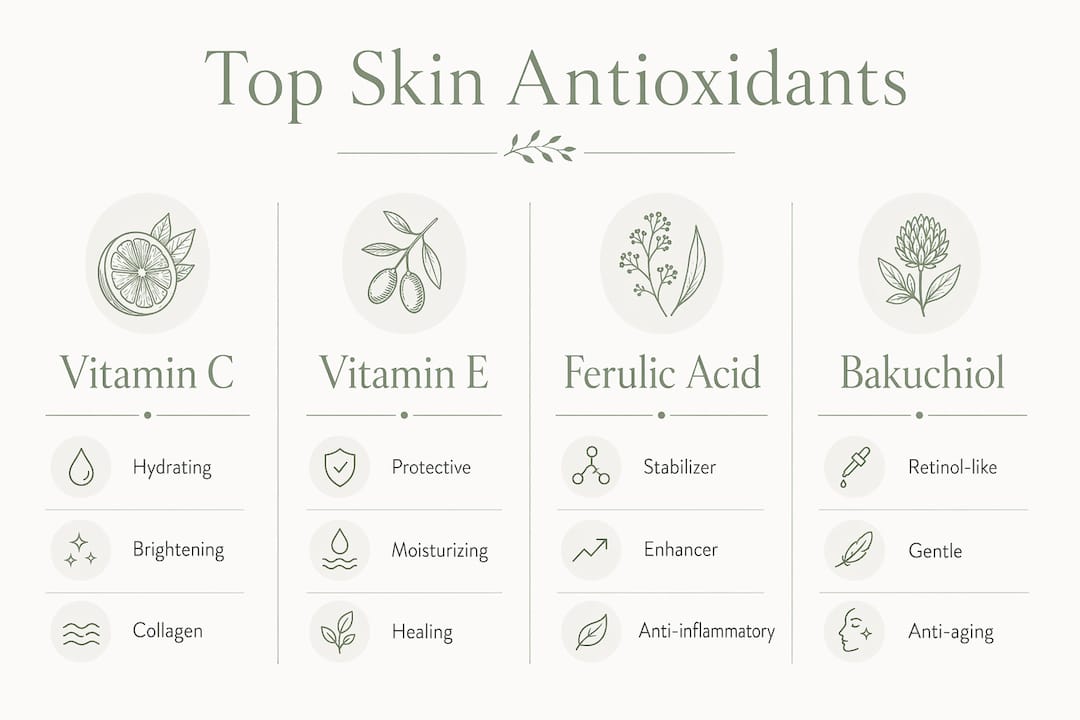
The antioxidant network effect is one of the most important concepts in this field. Vitamin C regenerates Vitamin E after it oxidizes, extending their combined protective effect far beyond what either ingredient achieves alone. This recycling mechanism means a formula containing both vitamins delivers sustained protection rather than a one-time burst.
Ferulic acid plays a supporting role that is often underestimated. It stabilizes both Vitamin C and Vitamin E in formulas, improving their shelf life and skin penetration. A serum combining L-ascorbic acid, tocopherol, and ferulic acid is one of the most studied and validated combinations in dermatology.
Bakuchiol deserves special attention as an emerging ingredient. It activates retinol receptor pathways without the irritation associated with retinoids. For people with sensitive or reactive skin, bakuchiol delivers retinol-like anti-aging benefits with significantly better tolerability. Niacinamide rounds out a well-formulated routine by reducing inflammation, strengthening the skin barrier, and evening skin tone.
Pro Tip: Look for serums that combine Vitamin C, Vitamin E, and ferulic acid in one formula. This trio is more stable and more effective than any single ingredient used alone.
How do antioxidants work with other anti-aging ingredients?
Antioxidants work best as part of a layered anti-aging strategy. They complement retinol and sunscreen but do not replace either. Antioxidants are synergistic partners enhancing UV defense but must never replace sunscreen. This is one of the most common and costly misconceptions in skincare.
Retinol at 0.1% is a validated concentration for stimulating collagen production and cell turnover. Pairing retinol with antioxidant serums enhances anti-aging effects because antioxidants reduce the oxidative stress that retinol can sometimes trigger. Use retinol in the evening and antioxidants in the morning for the most balanced approach.
Formulation stability is where many products fail. Pure L-ascorbic acid is notoriously unstable. Pure L-ascorbic acid loses efficacy when exposed to air, light, or incorrect pH, rendering the product inactive before it reaches your skin. Stabilized derivatives like Tetrahexyldecyl Ascorbate and airtight, opaque packaging are the markers of a well-formulated Vitamin C product.
- Check packaging: Vitamin C serums should come in dark, airtight bottles. Clear or open-top packaging accelerates oxidation.
- Watch the pH: L-ascorbic acid works below pH 3.5. Products outside this range deliver little benefit.
- Layer correctly: Apply water-based antioxidant serums before oils and moisturizers to maximize absorption.
- Support from within: Dietary antioxidants from whole foods support skin barrier function and hydration, complementing what you apply topically.
Diet is not a replacement for topical antioxidants, but it is a meaningful support system. Foods rich in polyphenols, Vitamin C, and Vitamin E help maintain the skin’s glutathione levels and reduce the overall oxidative load your skin carries. Think of topical and dietary antioxidants as working on the same problem from two different angles.
How to build a skincare routine with antioxidants
Building an effective antioxidant routine starts with knowing your skin type and primary concerns. Oily or acne-prone skin benefits from niacinamide and Vitamin C, both of which reduce inflammation and regulate sebum. Dry or mature skin responds well to Vitamin E, bakuchiol, and polyphenol-rich botanical oils, which protect the lipid barrier while delivering antioxidant coverage.
- Cleanse first. A gentle cleanser removes the surface pollutants and oxidized sebum that would otherwise block antioxidant absorption.
- Apply your antioxidant serum. Use it on clean, slightly damp skin in the morning. A niacinamide and hyaluronic acid serum delivers both antioxidant support and hydration in one step.
- Follow with moisturizer. Lock in the serum and support the skin barrier before applying SPF.
- Finish with broad-spectrum SPF 30 or higher. Antioxidants amplify UV protection but cannot substitute for it.
- Use retinol or bakuchiol in the evening. This separates potentially sensitizing actives from daytime antioxidant application.
The most common pitfall is buying a product with a strong antioxidant claim but poor formulation. A Vitamin C serum that has turned orange or brown has already oxidized. It will not protect your skin. It may even cause irritation. Discard it and choose a product with better packaging and a verified pH.
Pro Tip: Take a personalized skin diagnostic quiz before building your antioxidant routine. Matching ingredients to your specific skin profile and environment produces far better results than following a generic regimen.
Signs that your antioxidant routine is working include brighter, more even skin tone within four to six weeks, reduced redness, and improved skin texture over three months. If you see no change after eight weeks, reassess the product’s formulation quality before adding more ingredients.
Key Takeaways
Antioxidants protect skin by neutralizing free radicals, reducing inflamm-aging, and supporting collagen synthesis, making them the most evidence-backed category in anti-aging skincare.
| Point | Details |
|---|---|
| Antioxidants neutralize free radicals | They donate electrons to stop oxidative chain reactions that damage collagen and DNA. |
| Combinations outperform single ingredients | Vitamin C, Vitamin E, and ferulic acid together deliver sustained, synergistic protection. |
| Formulation stability matters | Choose airtight, opaque packaging and verify pH below 3.5 for L-ascorbic acid products. |
| Antioxidants complement, not replace, SPF | Use antioxidants in the morning under sunscreen for amplified UV defense. |
| Diet supports topical results | Antioxidant-rich foods reduce overall oxidative load and improve skin hydration from within. |
What I’ve learned about antioxidants after years of formulating for sensitive skin
At LaTerraTales, we have spent years working with sensitive skin types across different climates and lifestyles. One thing stands out clearly: most people underestimate how much formulation quality determines whether an antioxidant actually works. A beautifully marketed serum in a clear glass bottle with a dropper top is often a waste of money. The Vitamin C oxidizes within weeks.
The other misconception we see constantly is the belief that a single hero ingredient is enough. It is not. The skin is a layered organ with aqueous and lipid compartments. A single antioxidant cannot cover both. The antioxidant network effect is real, and it requires multiple ingredients working together.
We also believe the future of antioxidant skincare is personalization. Personalized, systems-level prevention based on individual environmental exposures is where the science is heading. Someone living in a high-pollution city needs a different antioxidant profile than someone in a rural, high-UV environment. Generic routines will always underperform.
What gives us confidence in natural formulations is the depth of polyphenol and botanical antioxidant research. Plant-derived antioxidants are not a softer alternative to synthetics. Many are equal or superior in specific mechanisms. The key is evidence-based formulation, not marketing.
— LaTerraTales
Antioxidant skincare from LaTerraTales: natural, stable, and effective
LaTerraTales formulates every product with both science and skin sensitivity in mind. Our antioxidant-rich collection includes the Hyaluronic Acid and Niacinamide Serum, which delivers antioxidant support alongside deep hydration, and the Bakuchiol Lift and Calm Serum, a natural retinol alternative packed with plant-based antioxidants suited for sensitive skin.
Every formula prioritizes stability, clean ingredients, and packaging that protects active compounds from oxidation. Our natural skincare collection is designed for people who want real anti-aging results without compromising on ingredient integrity or environmental responsibility. If you are ready to build a routine that actually works, LaTerraTales has the products to support it.
FAQ
What is the role of antioxidants in anti-aging skincare?
Antioxidants neutralize free radicals that damage collagen, elastin, and skin cell DNA, directly slowing the visible signs of aging. They also reduce inflamm-aging, a chronic low-grade inflammation that degrades skin structure over time.
Which antioxidants are most effective for skin?
Vitamin C, Vitamin E, niacinamide, ferulic acid, and bakuchiol are the most research-backed antioxidants for skin. Combining them covers more biological targets than any single ingredient can address alone.
Can antioxidants replace sunscreen?
Antioxidants cannot replace sunscreen. They amplify UV protection when used together with SPF, but they do not block UV radiation on their own.
How do I know if my Vitamin C serum is still active?
A Vitamin C serum that has turned yellow, orange, or brown has oxidized and lost its efficacy. Store it in a cool, dark place and replace it if the color changes significantly.
Do antioxidants work better when combined with diet?
Dietary antioxidants from whole foods support skin hydration and barrier function, complementing topical application. Clinical studies show improved hydration and reduced inflammation when both approaches are used together.


