

Why LaTerraTales Is the Zero Waste Skincare Pick for Sensitive Skin
LaTerraTales stands out as one of the best zero-waste skincare brands because it pairs plastic-free formats like solid cleanser bars and glass-bottled oils with minimal, evidence-backed formulas that actually work on sensitive skin. If you’re starting your low-waste routine, try the sensitive skin cleanser bar first. It swaps out your bottled cleanser without asking you to sacrifice results.
TL;DR:
- Solid cleansers and glass packaging significantly reduce microplastic exposure and environmental impact, especially for sensitive skin users.
- Formulation quality depends on active ingredient dosing and stability, not ingredient quantity or packaging type.
- Authentic low-waste brands disclose ingredient percentages, offer verifiable certifications, and ensure refillability or recyclability at end-of-life.
- Ingredient sourcing and manufacturing practices, such as regional plant oils and minimal water use, impact the true sustainability of zero-waste skincare.
- Zero-waste products often cost less per use over time, but initial price and availability may require consumers to adjust their purchasing habits.
Table of Contents
- What Zero-Waste Skincare Actually Means
- A Practical Checklist For Evaluating Zero-Waste Skincare Brands
- Why Minimal, Plant-Based Formulas Can Outperform Complex Ones
- The Environmental Footprint Nobody Talks About
- What Zero-Waste Skincare Actually Feels Like To Use
- Is Zero-Waste Skincare Actually Worth The Price?
- Why LaTerraTales Built Its Range Around Fewer, Better Ingredients
- Your Next Step Toward A Lower-Waste Routine
- Sources
What Zero-Waste Skincare Actually Means
Zero-waste skincare refers to products formulated and packaged to minimize landfill waste, typically by cutting single-use plastic from the equation entirely. This isn’t a vague marketing gesture. It shows up in specific, checkable formats you’ll see on shelves and in checkout carts across the plastic-free beauty market.
The main formats break down like this:
- Solid bars (cleansers, shampoo, conditioner) that use little to no water, cutting the plastic bottle and often the preservative load along with it.
- Refillable liquids, where you buy a durable container once and top it up with pouches or concentrate.
- Glass jars and bottles, infinitely recyclable and inert, meaning nothing leaches into your product over time.
- Compostable tubes and cartons, built from paper or plant-based materials that break down instead of lingering for centuries.
Each format trades convenience differently. Bars travel well and last longer per gram, but some people find them less intuitive to lather. Refillables cut waste dramatically over time, but only if the refill system is genuinely accessible where you live. Glass is the gold standard for ingredient integrity, though it’s heavier to ship, which matters if you’re weighing environmental footprint holistically.
Here’s the part most shoppers get wrong: they assume fewer ingredients means weaker results. Dermatologist commentary from Dr. Ann Nguyen-Chung pushes back on that directly, noting that minimal, plant-based formulas can perform just as well as complex ones when the actives are scientifically supported. The packaging isn’t what determines efficacy. The formulation is.
Packaging also has a quiet safety upside. Skincare packaged in plastic, especially anything left in heat or sunlight, carries a documented risk of microplastic shedding into the product itself. Solid bars, glass, and metal tins sidestep that risk structurally, which several plastic-free beauty brand roundups point to as a core reason shoppers switch formats in the first place.
A Practical Checklist For Evaluating Zero-Waste Skincare Brands
Scrolling through a brand’s Instagram bio won’t tell you whether a product is genuinely low-waste or just dressed up to look that way. Use this checklist while you shop, whether you’re standing in a store or scrolling a product page late at night.
- Read the ingredient list, not the marketing copy. A short, legible list with named actives and a clear preservative (not a vague “natural preservative blend”) signals a brand that’s confident in its formulation.
- Check the packaging’s actual end-of-life. Is it refillable, recyclable curbside, or compostable at home? “Eco-friendly” without a disposal path is a red flag, not a credential.
- Look for verifiable certifications. Cruelty-free listings, organic certification bodies, or third-party plastic-free seals carry more weight than a brand’s own self-description.
- Ask about active concentrations. Brands that publish percentages for actives like niacinamide or salicylic acid are telling you something a vague “infused with” claim never will.
- Factor in shipping footprint and refill logistics. A brand with a local or regional refill hub reduces the carbon cost of getting your product to your door, something zero-waste product roundups consistently flag as a differentiator among low-waste brands.
- Price against cost-per-use, not sticker price. A $28 bar that lasts three months often beats a $14 bottle you refill monthly.
Pro Tip: Email a brand and ask one direct question: “What preserves this product, and at what concentration are your key actives?” A brand with nothing to hide will answer in one paragraph. A brand that dodges the question is telling you something too.
Red flags worth walking away from: “chemical-free” claims (nothing is chemical-free, water is a chemical), sustainability language with zero specifics, and packaging that calls itself “biodegradable” without a timeframe or testing standard behind it.
Why Minimal, Plant-Based Formulas Can Outperform Complex Ones
The efficacy question is the one that stops most people from switching. If a cleanser bar has twelve ingredients instead of thirty, is it actually doing less for your skin?
Minimal-ingredient, plant-based formulas can deliver real, measurable results, but only when the actives inside them are chosen and dosed with scientific backing rather than simply because they sound clean. The formulation choice, not the ingredient count, determines what a product actually does for skin.
That’s the core argument Dr. Ann Nguyen-Chung makes, and it reframes the whole conversation. A twelve-ingredient bar built around a well-dosed active and a stable carrier oil can outperform a thirty-ingredient lotion padded with fillers and fragrance.
Formulation stability comes down to three things: a functioning preservative system (even “natural” preservatives like radish root ferment need to actually work), a carrier that delivers the active to skin rather than just sitting on top of it, and dosing that matches published, effective ranges rather than trace amounts added for the label. This is exactly what the buying checklist above is built to catch. Ask the formulation question, and you’ll know within one answer whether a brand did the work.
The Environmental Footprint Nobody Talks About
Packaging gets all the attention in zero-waste marketing, but it’s often not the biggest lever. Ingredient sourcing and manufacturing carry a footprint that outlasts the box your product came in.
Palm oil derivatives, for instance, remain common in conventional skincare and carry a well-documented deforestation footprint depending on sourcing. Brands that commit to traceable, often regionally sourced botanical oils, think olive, argan, or sunflower grown closer to the manufacturing site, cut transport emissions and support more accountable supply chains. Water use matters too: solid formats need little to none in production or use, while liquid products carry the hidden weight of the water diluting their formula.

Then there’s the shipping question, which most “zero-waste” checklists skip entirely. A glass jar is endlessly recyclable, but it’s heavier and more breakable than a compostable cardboard tube, meaning more fuel burned per shipment and a higher risk of damaged goods generating waste anyway. A brand transparent about where it manufactures, what its oils are sourced from, and how it ships is giving you the fuller picture. That transparency, more than any single packaging choice, tells you whether “zero-waste” is a genuine practice or a single marketing line sitting on top of business as usual.
Look past the label and ask where the ingredients grew, not just what jar they ended up in.
What Zero-Waste Skincare Actually Feels Like To Use
The sensory gap between zero-waste and conventional skincare has narrowed considerably, but real differences remain worth knowing before you buy.
Solid cleanser bars lather differently than a liquid pump, usually less foamy, more like a gentle glide, which throws off people expecting the same sudsy feel they grew up with. That’s not a performance downgrade. Foam is cosmetic, not functional; it doesn’t clean better, it just feels a certain way. Botanical oils, meanwhile, tend to feel richer going on and absorb over a few extra minutes compared to lightweight synthetic silicones, a texture some people love and others need a week to adjust to.

Fragrance is where sensitive skin users need to pay closest attention. Many zero-waste and natural brands lean on essential oils for scent, which smell wonderful but can irritate reactive skin more than a synthetic fragrance compound formulated for stability. If you’re prone to redness, look specifically for fragrance-free or low-fragrance versions rather than assuming “natural” automatically means gentler.
Application habits shift too. Refillable bottles and bars often need slightly different handling, letting a bar dry between uses, decanting a refill pouch, and that small learning curve is usually the only real friction in switching. Give any new format two weeks before judging it. Skin needs time to adjust to a new routine, and so do your hands.
Is Zero-Waste Skincare Actually Worth The Price?
Sticker shock is real. A $30 solid cleanser bar next to a $9 drugstore bottle looks like an easy decision, until you run the actual math.
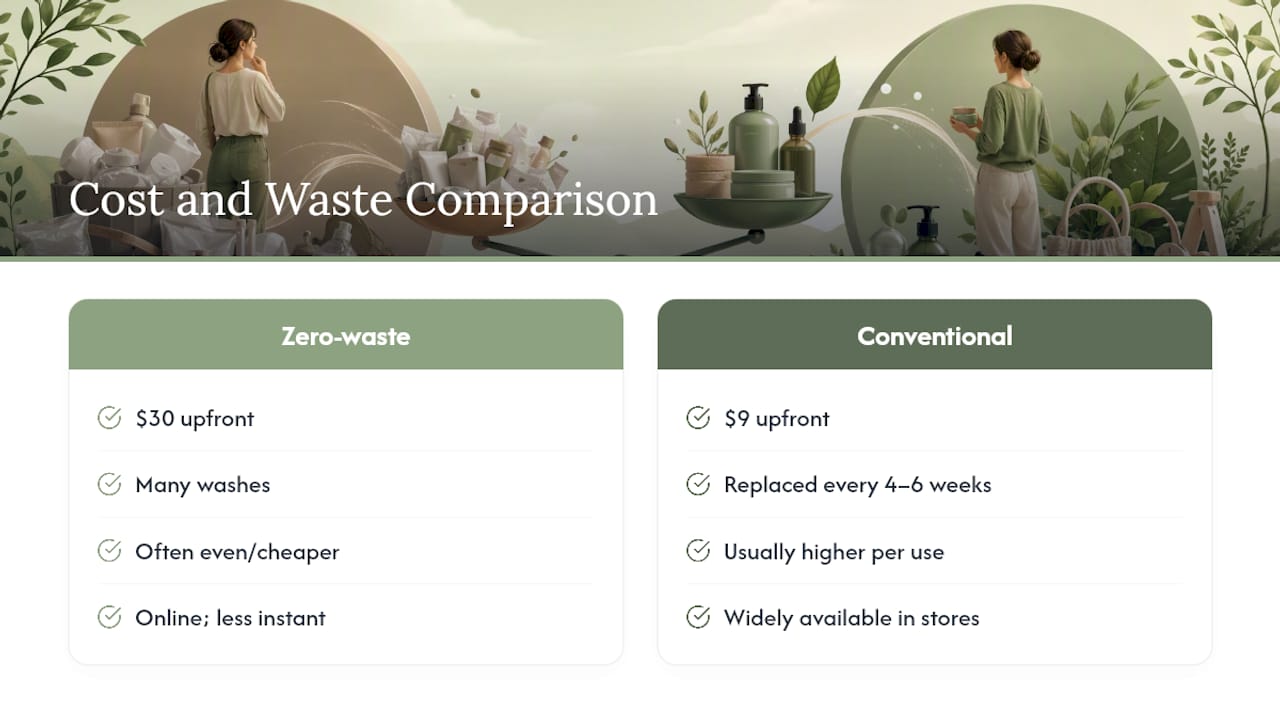
A well-made bar typically lasts many washes, often longer than liquid cleansers, since you’re not diluting the active ingredients with water at the point of manufacture. That drugstore bottle gets replaced every four to six weeks for the average user. Priced per use, the zero-waste bar frequently comes out even or cheaper, and you’re not paying for a plastic bottle that gets thrown away every time.
Where conventional brands win is on the shelf price alone and on availability. You can grab a cleanser at any pharmacy in minutes; a specific zero-waste brand might need a direct online order. That’s a real tradeoff, especially if you need a product immediately. But shipping has closed most of that gap, and refill programs push the long-term math further in the sustainable brand’s favor since you’re not repurchasing a full container every time.
The honest value comparison isn’t “zero-waste costs more.” It’s “zero-waste asks for more money upfront and returns it over months of use.” If you buy skincare the way you buy anything else, judging by the unit price on day one, you’ll miss where the real savings show up.
Why LaTerraTales Built Its Range Around Fewer, Better Ingredients
We built LaTerraTales around a simple bet: that skincare doesn’t need thirty ingredients or a plastic bottle to earn a spot in your routine. Our collection, solid cleansing bars, botanical oils, lip care, and herbal wellness infusions, exists because sensitive skin needed formulas that skip the filler without skipping the results.
Every product starts from the ingredient list backward. We ask what a formula needs to work, then package it in glass, cardboard, or a compostable format that matches how the product is actually used. That’s why our cleanser bar removes makeup without stripping your skin barrier, and why our oils use recognizable botanicals instead of a fragrance-heavy blend.
If you’re new to zero-waste skincare, start with one swap rather than overhauling your whole routine overnight. A cleanser bar or a single dry oil is enough to feel the difference, both in your skin and in what’s left in your trash bin by the end of the month.
— LaTerraTales
Your Next Step Toward A Lower-Waste Routine
Ready to make the switch without overthinking every ingredient label yourself? Start with the products built to solve the exact problems this guide covered.
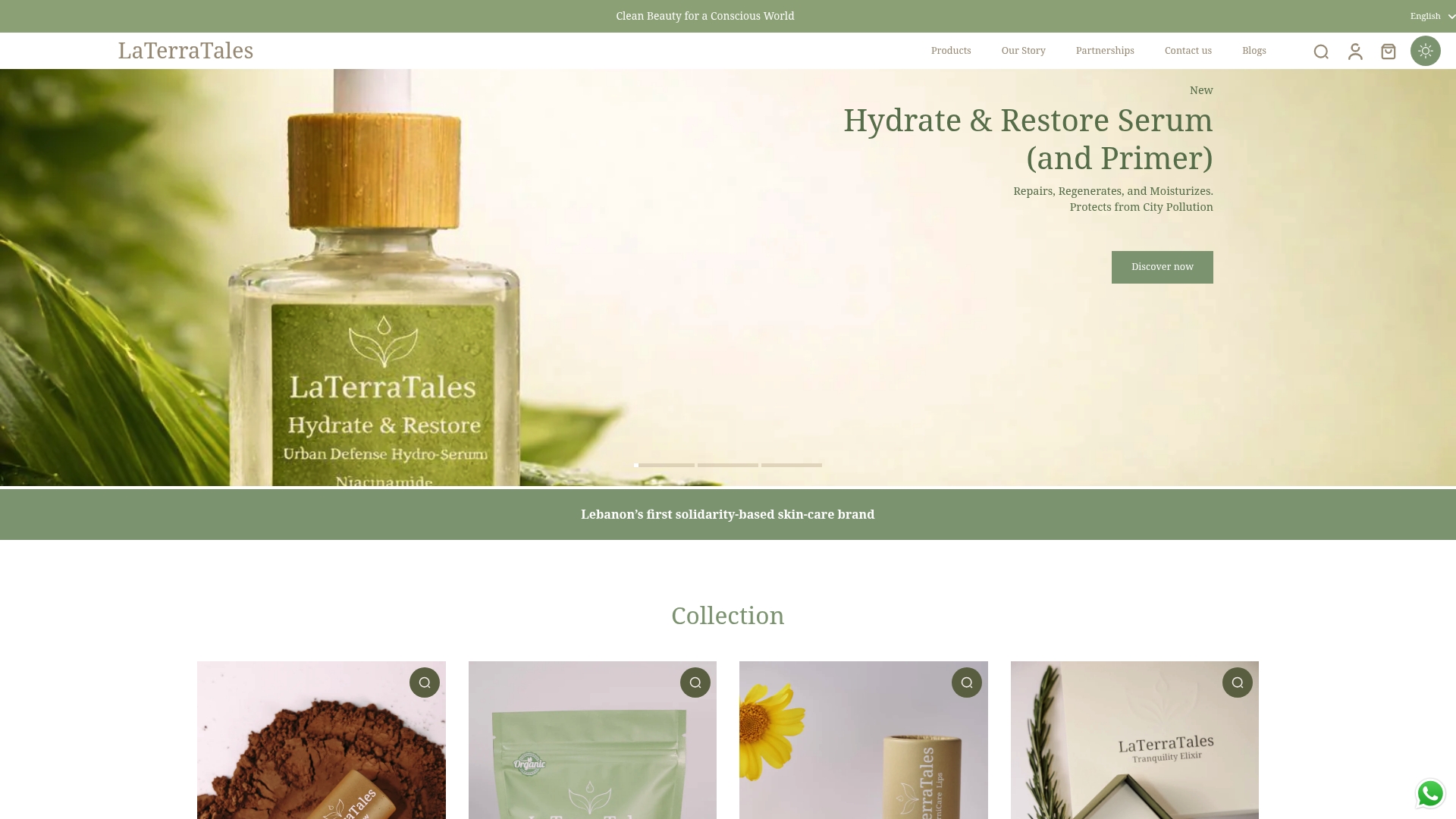
If your skin reacts to fragrance or leaves you guessing which cleanser won’t cause breakouts, the sensitive skin cleanser bar is the lowest-risk entry point. It’s glass and cardboard packaged, formulated for reactive skin, and does the job of a full bottle of liquid cleanser without the plastic pump.
Traveling or want a multi-purpose product that replaces three bottles in your bag? The Prestige Oriental dry oil works on body, hair, and skin, cutting down the number of containers you’re packing and buying in the first place.
If you’d rather browse before committing, the full natural skincare collection lays out every format LaTerraTales carries, sorted by skin need, so you can build a starter routine or a refillable gift set in one visit. Pick one product, use it for two weeks, and see how your skin, and your trash bin, respond.


