
Buy Locally Made Natural Skincare in Lebanon
Locally made natural skincare is defined as skincare produced near you using clean, plant-based, and minimally processed ingredients that are gentle on your skin and kind to the environment. When you buy locally made natural skincare, you get ingredient transparency, shorter supply chains, and formulas designed for your climate and skin needs. Lebanon has a growing community of artisan skincare makers who draw on regional botanicals, traditional recipes, and eco-conscious practices. This guide covers product types, key ingredients, where to shop, and how to switch safely.
What types of locally made natural skincare products can you buy?
The FDA classifies cosmetics into 16 primary categories, including skin care preparations such as creams, lotions, powders, and sprays. That classification system gives you a practical framework for identifying what you are actually buying, whether it is a leave-on treatment or a rinse-off cleanser. Knowing the category helps you compare products fairly and avoid mislabeled items.
Locally made beauty product types you will commonly find in Lebanon include:
- Cleansing bars and solid soaps: Handcrafted with olive oil, shea butter, or activated charcoal. These are rinse-off products that clean without stripping your skin barrier.
- Face creams and moisturizers: Leave-on preparations that hydrate and protect. Local makers often use beeswax, rosehip oil, or aloe vera as base ingredients.
- Facial serums: Concentrated leave-on treatments targeting specific concerns like dullness, uneven tone, or fine lines. Locally made versions frequently feature bakuchiol, niacinamide, or hyaluronic acid.
- Body oils and dry oils: Multi-purpose leave-on products that absorb quickly and nourish without greasiness. Regional botanicals like argan and oud are common.
- Lip balms and tints: Small-format leave-on products made with beeswax, arnica, or plant pigments.
- Wellness infusions and teas: Ingestible wellness products that support skin health from within, often featuring herbs like chamomile, nettle, or hibiscus.
| Product type | Common local ingredients | Leave-on or rinse-off |
|---|---|---|
| Cleansing bar | Olive oil, shea butter, charcoal | Rinse-off |
| Face cream | Beeswax, rosehip oil, aloe vera | Leave-on |
| Facial serum | Bakuchiol, niacinamide, hyaluronic acid | Leave-on |
| Body oil | Argan, oud, jojoba | Leave-on |
| Lip balm | Beeswax, arnica, plant pigments | Leave-on |
Understanding product categories protects you from buying a rinse-off formula and expecting it to perform like a leave-on treatment. It also helps you build a routine where each product plays a clear role.
Which natural ingredients should you look for in Lebanese-made skincare?
The most effective locally sourced natural beauty ingredients combine skin science with regional tradition. Lebanon sits at the crossroads of Mediterranean and Middle Eastern botanical heritage, which means local makers have access to some of the world’s most studied plant actives.
Key ingredients worth seeking out:
- Olive oil: Rich in oleic acid and vitamin E, olive oil deeply moisturizes and soothes dry or reactive skin. Lebanese cold-pressed olive oil is among the purest available.
- Honey and beeswax: Honey contributes moisturizing and antibacterial properties to skincare formulations. Beeswax creates a breathable barrier that locks in hydration without clogging pores.
- Shea butter: A fatty acid powerhouse that calms inflammation and restores the skin barrier. It appears in cleansers, creams, and body butters.
- Essential oils (rose, lavender, frankincense): Used at low concentrations, these provide antioxidant and calming benefits. Rose water, a staple in Lebanese households, tones and refreshes skin without irritation.
- Bakuchiol: A plant-derived retinol alternative from the babchi plant. It delivers cell-turnover benefits without the redness or peeling that synthetic retinol can cause, making it ideal for sensitive skin.
- Plantain ash and palm kernel oil: Traditional cleansing agents found in handcrafted soap recipes. African Black Soap demonstrates how these ingredients offer gentle exfoliation and detox benefits without irritation, a model that local artisan soap makers follow.
Ingredients to avoid include parabens, synthetic fragrances labeled as “parfum,” sodium lauryl sulfate, and formaldehyde-releasing preservatives. These are common in mass-market products and are the main reason sensitive skin reacts badly. Reading the INCI (International Nomenclature of Cosmetic Ingredients) list on any product gives you the clearest picture of what is actually inside.
Pro Tip: Terms like “organic,” “natural,” or “clean” carry no legal definition in Lebanon without third-party verification. Always check ingredient transparency before you buy, and look for makers who list every ingredient clearly.
Where can you find trustworthy locally made natural skincare in Lebanon?
Finding authentic, sustainably made products takes a little more effort than grabbing something off a supermarket shelf. The good news is that Lebanon’s artisan skincare scene is active and accessible.
- Local artisan markets: Souk El Tayeb in Beirut and seasonal craft fairs across Mount Lebanon regularly feature small-batch skincare makers. These vendors typically know every ingredient in their products and can answer your questions directly.
- Specialty boutiques and wellness shops: Small independent stores in neighborhoods like Gemmayzeh, Mar Mikhael, and Hamra stock curated selections of locally made natural beauty products. Staff at these shops usually have personal experience with the brands they carry.
- Brand websites and online shops: Many Lebanese natural skincare brands sell directly through their own websites. Local natural skincare collections from brands like LaTerraTales offer ingredient transparency, product descriptions, and customer reviews that help you make informed choices without leaving home.
- Community recommendations: Lebanese Facebook groups, Instagram communities, and WhatsApp networks focused on natural living are reliable sources for word-of-mouth recommendations. Real users share patch test results, ingredient feedback, and honest reviews.
- Verify sustainability claims: Eco-conscious consumers prioritize products with biodegradable packaging, fair trade sourcing, and cruelty-free certifications. Ask makers directly about their packaging materials and sourcing practices before purchasing.
The most trustworthy local brands publish their full ingredient lists, explain their sourcing, and are responsive to customer questions. Opacity about ingredients is a red flag, regardless of how appealing the branding looks.
How do you safely switch to locally made natural skincare?
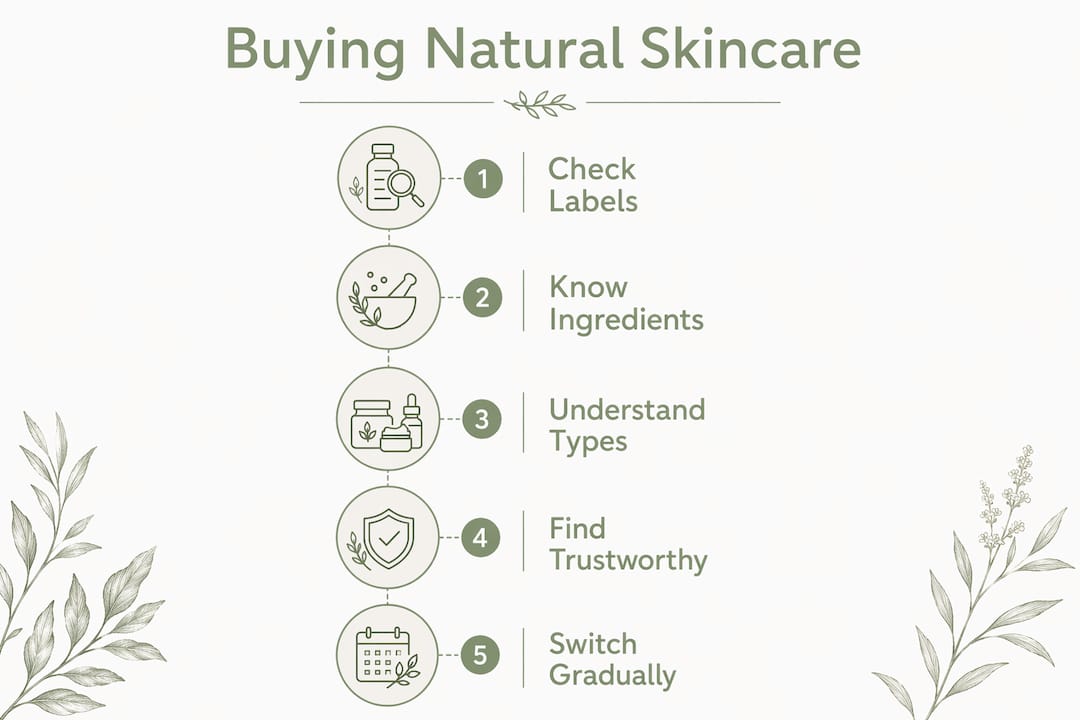
Switching from conventional to natural skincare is not an overnight process. Your skin needs time to adjust, and rushing the transition is the most common mistake people make.
- Audit your current routine. Write down every product you use and its key ingredients. This gives you a baseline and helps you spot which synthetic ingredients you are replacing.
- Introduce one product at a time. Gradually integrating one product at a time reduces skin stress and improves acceptance. Start with your cleanser, since it contacts your skin briefly and rinses off.
- Patch test every new product. Apply a small amount to your inner forearm or behind your ear. Wait 24–48 hours. Patch testing prevents allergic reactions and confirms product compatibility with sensitive skin before you apply it to your face.
- Give each product at least four weeks. Natural actives like bakuchiol and vitamin C work gradually. Expecting instant results leads to unnecessary product switching and wasted money.
- Keep your routine simple. A cleanser, a serum, and a moisturizer cover most skin needs. Adding too many products at once makes it impossible to identify what is helping or causing a reaction.
- Avoid mixing conflicting actives. Vitamin C and niacinamide can compete at high concentrations. Exfoliating acids and retinol alternatives should not be layered in the same routine without guidance. A Lebanon-specific guide to switching skincare can help you sequence products correctly.
Pro Tip: Your skin may purge mildly in the first two weeks of switching to a new cleanser or serum. This is normal. If redness, swelling, or itching appears, stop using the product and consult a dermatologist.
Key Takeaways
Buying locally made natural skincare in Lebanon means choosing products with transparent ingredients, sustainable sourcing, and formulas suited to your skin and climate.
| Point | Details |
|---|---|
| Know your product types | Use FDA cosmetic categories to distinguish leave-on treatments from rinse-off cleansers before buying. |
| Prioritize clean ingredients | Look for olive oil, honey, beeswax, and bakuchiol; avoid parabens, synthetic fragrance, and sulfates. |
| Verify label claims | Terms like “natural” and “organic” need third-party verification; always read the full ingredient list. |
| Source from trusted channels | Artisan markets, specialty boutiques, and brand websites with full ingredient transparency are your safest options. |
| Transition gradually | Introduce one product at a time, patch test for 24–48 hours, and allow four weeks before judging results. |
Why I believe local natural skincare is worth the extra effort
At LaTerraTales, we have spent years formulating products at the intersection of Lebanese botanical tradition and modern skin science. The most consistent thing we have observed is this: skin that is fed with clean, recognizable ingredients simply behaves better over time. It is calmer, more resilient, and less dependent on heavy corrective treatments.
What the mainstream beauty industry rarely tells you is that shorter supply chains are better for ingredient quality. An olive oil pressed in Lebanon and used within months retains far more of its polyphenols and vitamin E than one that has traveled across continents and sat in a warehouse. Freshness matters in skincare the same way it matters in food.
Supporting local skincare makers also preserves something culturally significant. Lebanon has centuries of skincare wisdom rooted in olive cultivation, rose water distillation, and herbal medicine. When you buy handmade skincare from a local artisan, you are keeping that knowledge alive and economically viable. That is not sentiment. That is a practical reason to choose local.
The one thing I would push back on is the idea that natural automatically means safe for everyone. Even the gentlest botanical can trigger a reaction in the right person. Patch testing is not optional. It is the single most protective habit you can build when switching to any new product, natural or otherwise.
— LaTerraTales
LaTerraTales: clean, locally made skincare for sensitive skin
LaTerraTales creates every product in its collection with sensitive skin and sustainability at the center. From the natural cleanser bar made with 100% natural ingredients to the Bakuchiol Serum that delivers visible lifting and calming without synthetic retinol, each formula is built on locally sourced botanicals and science-backed actives. Packaging is designed to minimize waste, and every ingredient is listed clearly so you always know what you are putting on your skin. Browse the full natural skincare collection to find products made for your skin, your values, and your corner of Lebanon.
FAQ
What does “locally made natural skincare” mean?
Locally made natural skincare refers to products formulated and produced in your region using plant-based, minimally processed ingredients. In Lebanon, this typically means formulas built on regional botanicals like olive oil, rose water, and local essential oils.
How do I know if a natural skincare product is genuinely clean?
Read the full INCI ingredient list and look for third-party certifications. Terms like “natural” or “organic” carry no legal guarantee without verification, so ingredient transparency from the brand is the most reliable indicator.
Is locally sourced skincare better for sensitive skin?
Locally sourced skincare often uses fewer synthetic preservatives and stabilizers, which reduces the risk of irritation for sensitive skin. Always patch test any new product for 24–48 hours before applying it to your face.
Where can I buy handmade skincare in Lebanon?
Artisan markets like Souk El Tayeb, specialty boutiques in Beirut, and brand websites are the most reliable sources. Look for sellers who publish their full ingredient lists and can explain their sourcing practices.
How long does it take to see results from natural skincare?
Most natural actives require a consistent routine of at least four weeks before visible results appear. Gradual transition and patience are the two factors that determine whether a natural skincare switch succeeds.


