

5 Herbal Teas for Digestion Matched to Your Symptom, Evidence Informed
For nausea, reach for ginger. For bloating and gas, peppermint or fennel work fastest. For stress-related indigestion, chamomile calms the gut-brain response, while green tea and hibiscus support digestion more gradually, through the microbiome and antioxidant activity rather than instant relief. Responses vary person to person, and a few of these teas interact with medications or worsen reflux, so match the tea to your symptom before you match it to your taste preference.
TL;DR:
- Ginger is well-supported for easing nausea and promoting digestion but can interact with blood thinners and may not suit daily use for everyone.
- Peppermint offers rapid relief from bloating and cramping but should be avoided if you have reflux or a hiatal hernia.
- Fennel effectively reduces bloating and stimulates bile flow, making it preferable for reflux-prone individuals, especially after fatty meals.
- Green tea feeds beneficial gut bacteria over time but provides no immediate relief and contains caffeine, making it better for mornings.
- Tea’s effects vary by individual gut bacteria, and concentrated extracts are more potent than single brewed cups, setting realistic expectations for herbal remedies.
Table of Contents
- Herbal Tea for Digestion: The Top Picks and What Each One Actually Does
- Matching Your Symptom to the Right Tea
- How to Brew Digestive Herbal Tea So It Actually Works
- Safety, Side Effects, and When to Talk to Your Doctor
- LaTerraTales’ Approach to Evidence-Based Wellness
- Where the Conventional Advice Gets It Wrong
- A Gentle Daily Infusion for Gut and Skin
- Sources
Herbal Tea for Digestion: The Top Picks and What Each One Actually Does
Not every tea on this list works the same way, and knowing the mechanism helps you pick correctly instead of guessing. Some calm spasming intestinal muscle. Others speed up a sluggish stomach. A few simply feed the bacteria that keep your gut running smoothly over months, not minutes.
- Ginger. The compound gingerol is why ginger remains the most consistently recommended herbal tea for digestion, particularly for nausea and delayed gastric emptying. Research reviewed by PubMed supports ginger’s role in easing nausea and helping food move through the stomach at a normal pace, and the NCCIH confirms the effect while flagging interaction risks worth knowing before you rely on it daily.
- Peppermint. Menthol relaxes smooth muscle in the gut, which is why peppermint shows up so often in guidance for bloating and IBS-related cramping. Meta-analyses cited by the NCBI found peppermint oil effective for IBS symptoms, though brewed tea delivers a milder dose than the oil capsules used in most trials. One caveat: that same muscle-relaxing effect can loosen the valve between your esophagus and stomach, so it’s a poor choice if you deal with acid reflux.
- Chamomile. Long used as a calming agent, chamomile also has mild antispasmodic properties that help with gas and stress-triggered indigestion, the kind that flares up before a big presentation or a hard conversation.
- Fennel. A classic carminative, meaning it helps move trapped gas through the digestive tract. Small human trials and animal studies referenced in PubMed support fennel’s role in easing bloating, and some evidence suggests it stimulates bile flow, which can help with fattier meals.
- Green tea. Its polyphenols appear to feed beneficial bacteria like Bifidobacterium, according to research on gut microbiota, though most of that data comes from people drinking multiple cups daily over weeks. This is a long-game tea, not an instant fix, and its caffeine content means it’s better suited to mornings than evenings.
- Hibiscus. Its strength lies in antioxidant content and a documented effect on blood pressure, summarized by Harvard Health, rather than acute digestive relief. Think of it as a supportive daily habit for overall gut and cardiovascular wellness, not a fix for tonight’s bloating.
- Licorice root. Traditionally used to soothe the stomach lining, but it can raise blood pressure and deplete potassium with regular use, so it deserves caution rather than daily rotation.
- Holy basil (tulsi). Often used for stress-linked digestive upset, with a gentler profile than licorice, though the human evidence base is thinner.
- Spearmint. A milder cousin of peppermint, useful for people who want the calming effect on gas without peppermint’s reflux risk.
A 2026 review on tea and gut health makes an important point: tea compounds get processed differently by everyone’s individual gut bacteria, which is part of why the same cup of ginger tea can work beautifully for one person and do almost nothing for another. Dietitian-facing outlets like Everyday Health land on largely the same shortlist, ginger, peppermint, chamomile, fennel, with a shared caveat: most clinical evidence comes from concentrated extracts, not the single cup you’re sipping at your desk.
Matching Your Symptom to the Right Tea
- Nausea or queasy stomach. Start with ginger tea, sipped slowly rather than gulped, ideally at the first sign of queasiness rather than after it peaks.
- Gas and bloating. Peppermint works fast for most people; fennel is the better pick if you’re prone to reflux, since it skips the muscle-relaxing effect that can send acid upward.
- Constipation or sluggish regularity. Warm fluids in general help, and fennel’s mild stimulating effect on digestion makes it a reasonable daily habit alongside adequate water intake.
- Acid reflux or heartburn. Chamomile is the safer bet here, or ginger in small amounts. Skip peppermint entirely; it’s one of the few teas on this list that can make reflux worse.
- Stress-related indigestion. Chamomile, taken in the evening or after a tense meal, addresses the gut-brain piece that pure carminatives don’t touch.
Drink a moderate amount daily, timed to the trigger, after a heavy meal for ginger or fennel, before bed for chamomile. If a tea isn’t helping within a week or two of consistent use, that’s your cue to stop self-treating and talk to a doctor instead of increasing the dose.
How to Brew Digestive Herbal Tea So It Actually Works
Technique matters more than people assume. Peppermint and fennel both rely on volatile oils that evaporate quickly, so covering your cup while it steeps traps those compounds instead of releasing them into the air with the steam.
- Steep peppermint and fennel for 10 to 15 minutes, covered, using about one teaspoon of dried herb or one bag per cup.
- For fresh ginger, use a few thin slices or roughly one teaspoon of grated root per cup; dried ginger works too, at about half that amount.
- Crush fennel seeds lightly before steeping to release more of the oil than whole seeds would.
- Chamomile needs less time, five to seven minutes is enough before it turns slightly bitter.
- Start with one cup and see how you respond before working up to two or three a day.
Pro Tip: A simple fresh ginger infusion, a few thin slices steeped in hot water for 10 minutes with the lid on, tends to outperform tea bags for nausea because you control the strength directly.
For a fennel seed steep, crush one teaspoon of seeds, cover with hot water, and let it sit for 10 minutes before straining. Use tea as a short-term aid for a flare-up, not a replacement for addressing what’s causing the flare-up in the first place.
Safety, Side Effects, and When to Talk to Your Doctor
Herbal doesn’t mean risk-free. Ginger can affect blood clotting, which matters if you’re on anticoagulants or scheduled for surgery. The NCCIH notes this interaction specifically, and it’s worth mentioning to your doctor before you make ginger tea a daily habit.
- Licorice root can raise blood pressure and lower potassium levels with regular use.
- Peppermint can worsen symptoms for people with acid reflux or a hiatal hernia.
- Green tea’s caffeine content adds up quickly if you’re drinking several cups, and concentrated green tea extracts (not brewed tea) have been linked to rare liver concerns.
- Pregnant or breastfeeding individuals, and anyone on regular medication or managing liver or gallbladder disease, should check with a clinician before adding any of these teas as a daily habit.
The mechanism matters here almost as much as the dose: most safety data on ginger’s blood-thinning potential and peppermint’s reflux effect comes from systematic reviews rather than single small trials, which is exactly the kind of evidence worth trusting over anecdotal claims. See a doctor promptly if you notice severe abdominal pain, blood in your stool, vomiting that won’t stop, or unexplained weight loss. No herbal tea for digestion is meant to mask symptoms like those.
LaTerraTales’ Approach to Evidence-Based Wellness
Wellness infusions are built around the same standard applied here: check what’s actually been studied, note the caveats, and skip the overstated claims common in wellness marketing. That means favoring systematic reviews over single small trials and being upfront about where the science is still developing.
- Read more in Hibiscus Tea Benefits: What the Research Actually Shows
- See our full breakdown in The Best Digestion Teas, Backed by Evidence and Dietitian Picks
- For bloating specifically, check Match Herbal Tea for Bloating to Your Symptom
Where the Conventional Advice Gets It Wrong
Most articles on herbal tea for digestion treat the category as one interchangeable blend of “gut-friendly” leaves. That’s the biggest gap between popular advice and what the research actually supports. Ginger and peppermint don’t do the same job. One speeds up a slow stomach; the other relaxes cramping muscle, and using them interchangeably means you’re often reaching for the wrong tool.
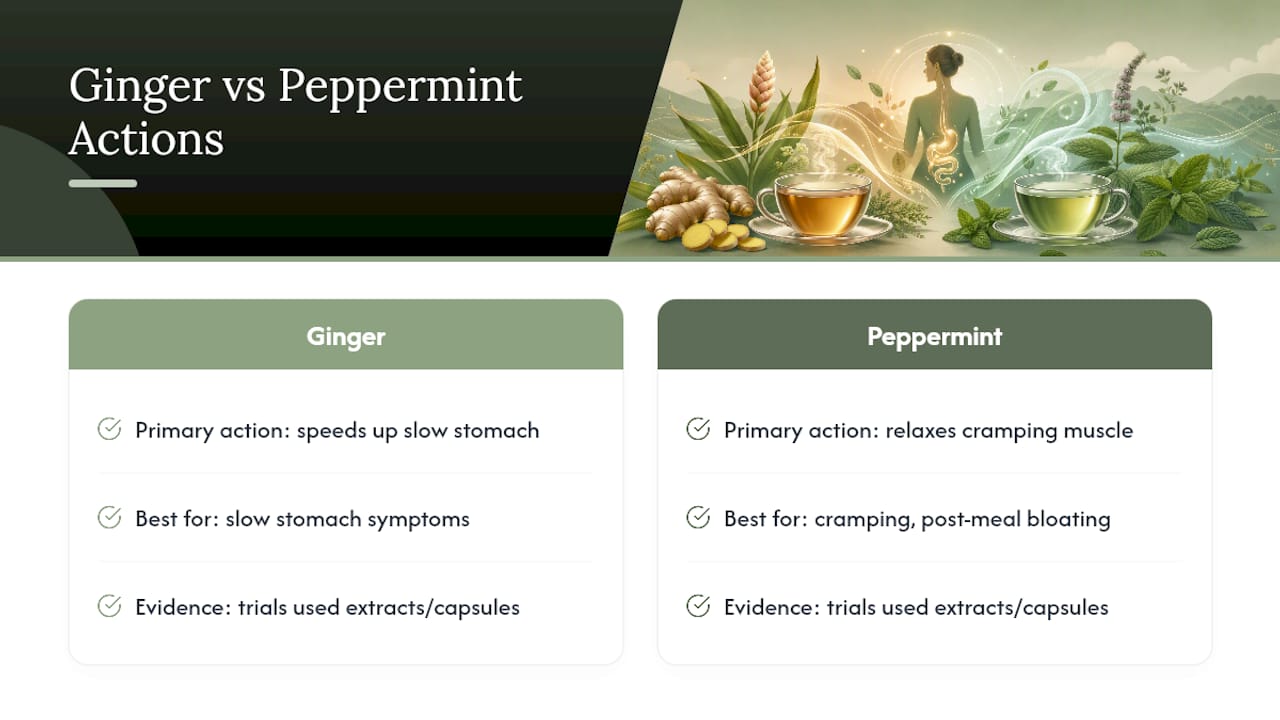
The second gap is honesty about strength. Most of the trials behind these claims used concentrated extracts or capsules, not a single steeped cup, so a brewed tea is a gentler, supportive habit rather than a fast-acting remedy. That’s not a reason to dismiss tea. It’s a reason to set realistic expectations and pair it with basics like eating more slowly, staying hydrated, and giving any new habit at least a week before judging it.
What we’d prioritize first: match the tea to the specific symptom, not the other way around. Someone bloated after dinner needs fennel or peppermint, not chamomile. Someone anxious and gassy before a flight needs chamomile, not ginger. Precision beats habit here.
— LaTerraTales
A Gentle Daily Infusion for Gut and Skin
If you’re drawn to fennel, ginger, and green tea for the reasons covered above but want a ready-made blend instead of assembling loose herbs, A Gut-Skin Axis Tea combines several of these evidence-aligned botanicals into a single daily infusion.
It’s built for people who want a gentle, consistent habit that supports digestion and, through the same gut pathways, skin clarity, rather than a single-symptom quick fix. If you’re pregnant, breastfeeding, or taking regular medication, particularly anticoagulants or blood pressure treatment, check with your doctor before adding it to your routine, for the same reasons outlined in the safety section above. Explore the full wellness and self-care collection to see how it fits alongside other similar formulas, or go straight to the product page to check ingredients and start your first order today.
This article is general information, not a substitute for advice from a qualified doctor. Consult a qualified healthcare professional about your own circumstances before acting on anything here.
Sources
- PubMed: ginger antiemetic and gastric emptying research
- NCCIH: Ginger
- Tea and digestive system health: integrating gut microbiota-involved ADME and personalized nutrition for gastrointestinal disorders intervention (2026)
- NCBI PMC: peppermint oil / IBS reviews
Recommended
Share


