

Evidence First Herbal Tea for Stress: 2–4 Week Trial Plan
Chamomile, lavender, lemon balm, and ashwagandha carry the strongest research behind them for easing everyday stress, with peppermint and passionflower as gentle backups. Expect mild-to-moderate relief, not a cure. Give any single herb two to four weeks of consistent use before judging it, and talk to a clinician first if you take medication, are pregnant, or are nursing.
TL;DR:
- Herbs like chamomile, lavender, lemon balm, and ashwagandha require two to four weeks of consistent use to establish noticeable stress relief.
- Aromatic, chemical, and behavioral channels all contribute to herbal tea’s calming effects, with inhalation and ritualistic preparation enhancing relaxation.
- Chamomile and lavender are best for short-term anxiety and bedtime calm, while lemon balm and ashwagandha support daytime stress resilience with caution around allergies and interactions.
- Trial sizes are small, often short-term, so herbal teas should complement sleep, movement, and professional care rather than replace them.
- Building a routine involves proper brewing, pairing herbs with specific times of day, and monitoring effects before mixing multiple herbs.
Table of Contents
- Best Herbal Teas for Stress: A Quick-Look Shortlist
- How Does Herbal Tea Reduce Stress?
- Herb-by-Herb Profiles: Evidence, Dosing, and Who Each One Suits
- How to Brew Stress-Relief Tea for Maximum Effect
- Are There Side Effects or Drug Interactions to Watch For?
- LaTerraTales’ Evidence-First Approach to Wellness Infusions
- What a Realistic Stress-Tea Routine Looks Like
- Try a Curated Calming Blend Instead of Guessing Alone
- Sources
- FAQ
Best Herbal Teas for Stress: A Quick-Look Shortlist
If you want to start tonight, here’s where the evidence and practical experience point you. Each of these has a distinct personality, so the right pick depends on what kind of stress you’re managing, morning tension or nighttime racing thoughts.
- Chamomile — best for gentle calming and winding down before bed; contains apigenin, a flavonoid the NCCIH links to modest anxiety reduction and sleep support.
- Lavender — best for mood and anxiety when you need a short-term reset; a 2020 randomized trial found participants who drank it morning and night saw measurable drops in anxiety scores.
- Lemon balm — best for daytime calm without drowsiness; a 2021 study tied it to improved mood and reduced stress symptoms.
- Ashwagandha — an adaptogen for building daily resilience to stress, though it needs more caution around dosing and drug interactions than the others.
- Peppermint, rooibos, and passionflower — solid alternatives when your stress shows up as digestive tension or you want a caffeine-free evening habit.
None of these work like a fast-acting pill. Think of them as a supporting habit, one you layer onto sleep, movement, and, when needed, professional care.
How Does Herbal Tea Reduce Stress?
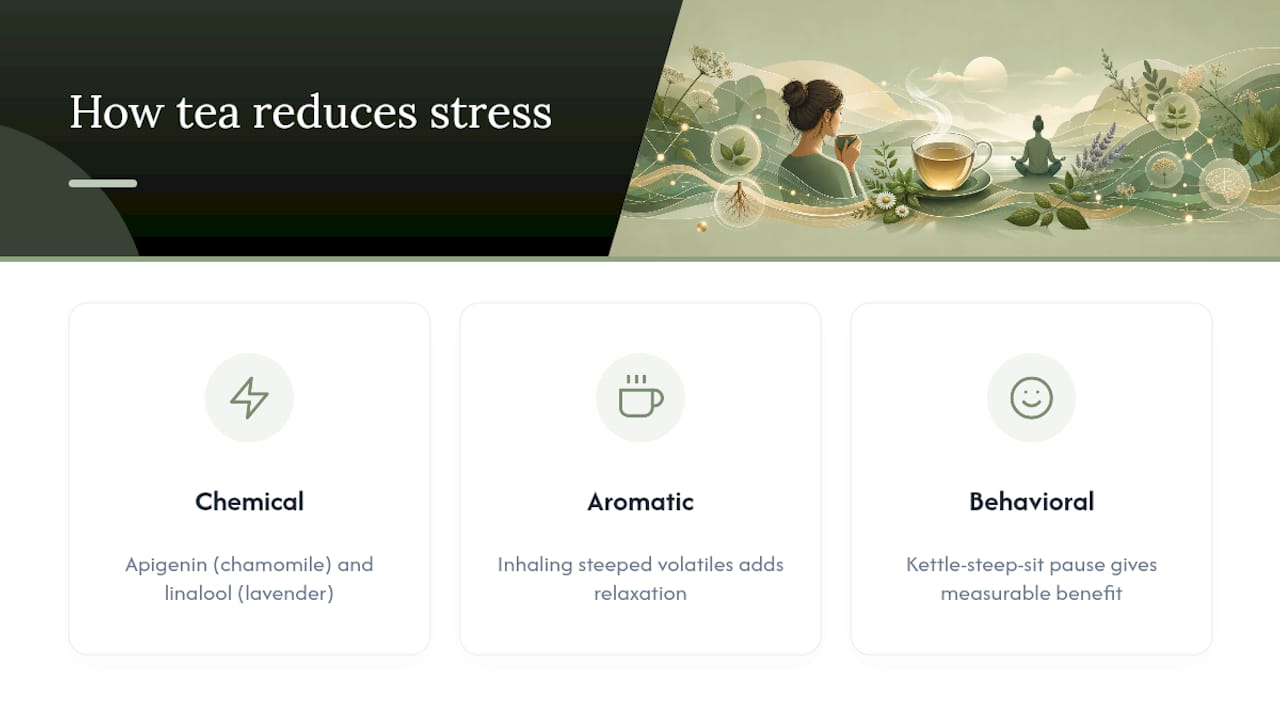
Herbal tea works on stress through three separate channels at once, which is part of why it feels more effective than plain water even before you factor in the plant chemistry; it also serves as a portable, low-caffeine ritual ideal for mindful moments while traveling. Understanding all three helps you get more out of every cup.
The first is chemical. Chamomile contains apigenin, a flavonoid that binds to certain receptors in the brain associated with calming effects, according to the NCCIH. Lavender contains linalool, a volatile compound that appears to influence relaxation both when swallowed and when inhaled as steam. This dual pathway, taste and smell working together, is one reason lavender shows up in both tea blends and aromatherapy diffusers.
The second channel is aromatic. Inhaling the volatile compounds released during steeping contributes to the relaxation response independent of what you actually swallow. That’s why covering your cup while it steeps isn’t just a brewing tip. It concentrates the aroma so you get a bigger dose of it when you finally lift the lid and breathe in.
The third channel is behavioral. Making tea forces a pause. You fill a kettle, wait, steep, and sit. Holistic health research frames that ritual itself as producing measurable psychological benefit, separate from anything happening chemically in the cup.
What the clinical evidence actually shows: a 2020 trial found lavender tea consumed twice daily reduced anxiety and depression scores in older adults over a short study window. A 2021 study linked lemon balm to improved feelings of stress and anxiety, with researchers commonly recommending a few cups daily for support. Chamomile has a longer track record of small-to-moderate benefit summarized by the NCCIH.
None of this amounts to proof that tea cures anxiety. Systematic reviews consistently flag the same limitations: trials tend to be small, run for a few weeks at most, and vary widely in quality. The honest read is that herbal tea belongs in the adjunctive category, a real, evidence-backed support tool that works best alongside sleep, movement, and professional care rather than instead of it.
Herb-by-Herb Profiles: Evidence, Dosing, and Who Each One Suits
Each herb below has its own chemistry, its own ideal drinker, and its own cautions. Treat this as a reference for matching the tea to your specific situation rather than picking whatever’s on sale.
Chamomile. The most studied calming herb in this list, chamomile’s apigenin content is what researchers point to when explaining its mild sedative and anxiety-easing effects, per the NCCIH. A typical serving is 1 cup steeped 5 to 10 minutes, taken 1 to 3 times daily. It suits people who want a bedtime wind-down ritual more than a midday pick-me-up. The main caution: chamomile belongs to the ragweed family, so anyone with ragweed allergies should approach it carefully, and it can carry mild interaction risk with blood-thinning medication.
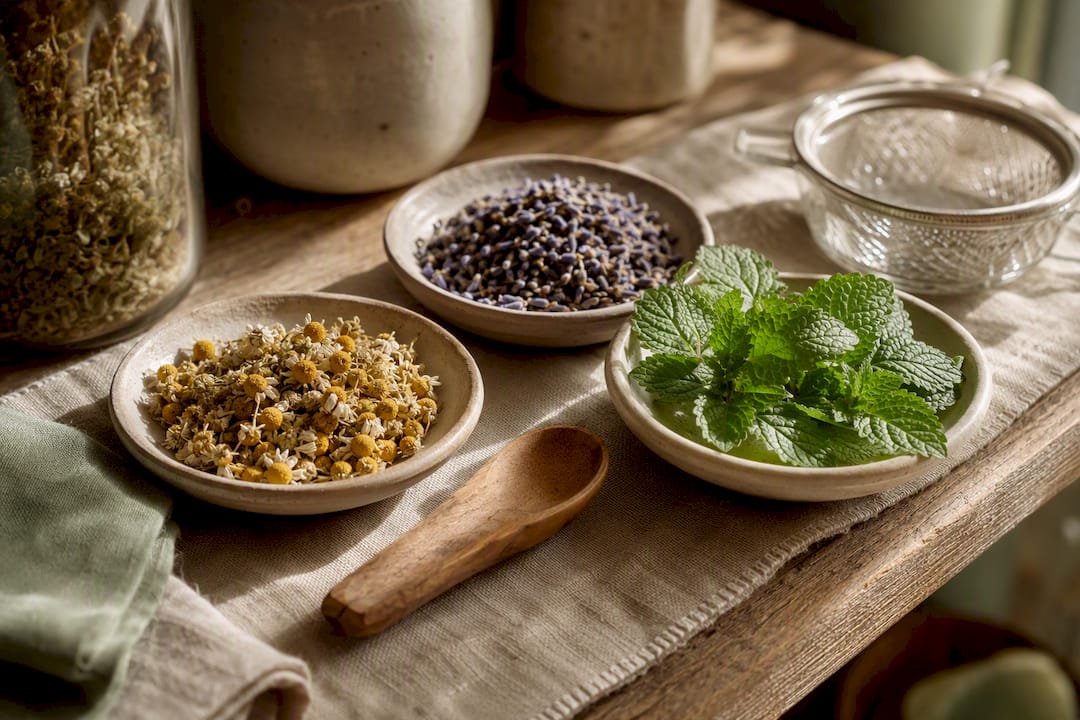
Lavender. Best for short-term anxiety relief, supported by the 2020 clinical trial showing reduced anxiety and depression scores with morning-and-evening use. One cup steeped 5 minutes, once or twice daily, is a common starting point. It fits people managing situational stress, a hard week, a big decision, more than chronic anxiety. Lavender tea is generally well tolerated, though very high intakes of lavender in any form can cause drowsiness or mild stomach upset.
Lemon balm. A member of the mint family prized for calming without sedating, which makes it one of the few options genuinely suited to daytime use. The 2021 research supporting it recommends roughly 2 to 3 cups daily, steeped 5 to 10 minutes. It’s a strong fit for anyone who wants stress relief that doesn’t interfere with focus at work. Caution: lemon balm can interact with thyroid medication and sedatives, so check with a clinician if you’re on either.
Peppermint. Less studied for anxiety specifically, but well established for easing the digestive tension that often rides along with stress, a racing gut, tight stomach, nausea before a big event. One cup steeped 5 to 7 minutes works well after meals or during a stressful afternoon. Avoid it if you have acid reflux, since peppermint can relax the esophageal sphincter and worsen symptoms.
Passionflower. Traditionally used for anxiety and sleep support, with a milder overall research base than chamomile or lavender. A typical serving is 1 cup steeped 5 to 10 minutes in the evening. It pairs well with chamomile in a bedtime blend but should not be combined with sedative medications without medical guidance.
Ashwagandha. An adaptogen, meaning it’s used to help the body build resilience to ongoing stress rather than calm a single spike of it. Traditional use spans centuries, and some modern research points to benefits for stress and cortisol regulation, though tea-form dosing varies more than with true teas since ashwagandha is a root extract, not a leaf. Read a full ashwagandha breakdown before starting daily use. It suits people managing chronic, low-grade stress over months rather than an acute bad day. Caution: ashwagandha can interact with thyroid medication and immunosuppressants, and it’s not recommended during pregnancy.
Rooibos. Naturally caffeine-free with a mild, slightly sweet profile, rooibos doesn’t carry strong anxiety-specific research but works as a low-risk daily base for anyone sensitive to the stronger flavors or effects of the herbs above. One cup steeped 5 to 7 minutes, any time of day.
Valerian. The most sedating option here, valerian root is generally reserved for sleep support rather than daytime calm. It requires a longer steep, 10 to 15 minutes, to draw out its active compounds from the tougher root material. Valerian should never be combined with alcohol, benzodiazepines, or other sedatives, and it’s a poor fit for anyone who needs to stay alert afterward.
Pro Tip: Start with one herb at a time for at least a week before trying a blend. Combining sedating herbs, like valerian and passionflower, can compound their effects in ways single-herb trials won’t show you.
How to Brew Stress-Relief Tea for Maximum Effect
Getting the steep right matters more than people assume. Volatile oils, the compounds behind both the aroma and much of the calming effect, evaporate fast if you brew carelessly.
- Heat water to 200 to 212°F for most leaf-based herbs (chamomile, lavender, lemon balm, peppermint). Boiling water is fine for tougher plant material but can scorch delicate flowers if left too long.
- Cover the cup while it steeps. Covering traps the volatile aromatic compounds that would otherwise escape as steam, which matters since inhalation is part of how these herbs work.
- Steep leaves and flowers 5 to 10 minutes. Chamomile, lavender, lemon balm, and passionflower all fall in this range. Loose-leaf generally needs the fuller end of that window; bagged tea can be ready slightly sooner.
- Steep roots longer. Valerian root needs 10 to 15 minutes to release its active compounds fully, since roots are denser than leaves or flowers.
- Lift the lid and breathe in before you sip. This single step captures the aromatherapy benefit you just spent ten minutes preserving.
- Match the blend to the time of day. Lemon balm and peppermint suit mornings and midday stress; chamomile, passionflower, and valerian suit the hour before bed. Verywell Health’s timing research points to an evening cup, roughly an hour before sleep, as the window with the most consistent relaxation payoff.
Pro Tip: If you’re building a wind-down ritual, pair your tea with two minutes of slow breathing while it steeps rather than scrolling your phone. The Verywell research on ritual benefit only shows up when the pause is actually restful. For a full evening routine built around this idea, see this guide to herbal tea for sleep.
Are There Side Effects or Drug Interactions to Watch For?
Herbal doesn’t mean risk-free, and a handful of interactions come up often enough in herbal safety literature that they’re worth knowing before you start.
- Chamomile and blood thinners: chamomile may have mild anticoagulant properties, so combining it with warfarin or similar medications warrants a conversation with your doctor.
- Ashwagandha and thyroid medication: ashwagandha can influence thyroid hormone levels and shouldn’t be combined with thyroid drugs or immunosuppressants without medical supervision.
- Valerian and sedatives: valerian is itself sedating, and stacking it with alcohol, benzodiazepines, or sleep medication can amplify drowsiness beyond what’s safe.
- Ragweed allergies and chamomile: chamomile belongs to the same plant family as ragweed, and cross-reactivity can trigger allergic symptoms in sensitive people.
- Pregnancy and breastfeeding: several herbs, ashwagandha and valerian in particular, aren’t well studied for safety during pregnancy and are generally best avoided or discussed with an OB-GYN first.
Even with strong research behind herbs like lavender and lemon balm, reviews of the evidence base caution that trial sizes remain small and short. That’s a reason for realistic expectations, not a reason to avoid these teas, but it does mean self-monitoring matters.
Seek medical attention if you notice hives, swelling, or difficulty breathing after a new herb (signs of allergic reaction), if your anxiety worsens rather than improves after a few weeks, or if you notice unusual bleeding, extreme drowsiness, or other signs of a medication interaction. None of these teas are meant to replace treatment for diagnosed anxiety disorders or depression.
LaTerraTales’ Evidence-First Approach to Wellness Infusions
Wellness infusions are best built starting from what the research actually supports, rather than what sounds appealing on a label. That means favoring herbs like chamomile, lemon balm, and lavender for their documented profiles over trendier ingredients with thinner evidence behind them.
Sustainability is important in sourcing. Herbs can be selected with eco-conscious standards similar to those applied in skincare and body-care lines, and packaging chosen to minimize environmental impact without compromising freshness, since stale herbs lose the volatile oils that make them effective in the first place.
For readers building out a broader calming routine, LaTerraTales also publishes practical guides like how to create a holistic self-care ritual at home, which pairs well with the brewing steps above. As with any wellness product, availability and formulations are best confirmed directly on the wellness and self-care collection, and anyone managing a diagnosed condition or taking medication should loop in a clinician before adding a new herb to their routine.
What a Realistic Stress-Tea Routine Looks Like
Two to four weeks is the honest trial window. Herbal tea isn’t fast-acting like caffeine, so judging chamomile or lemon balm after three days will leave you unimpressed even if it’s genuinely working. Track something simple, sleep quality, a 1 to 10 stress rating before bed, how often you reach for it, rather than expecting a dramatic before-and-after.
The ritual matters as much as the herb. Spend the steeping time doing nothing else: no phone, no inbox, just a few slow breaths while the aroma builds under the lid. That sensory pause is doing real psychological work alongside whatever the plant chemistry contributes.
And keep tea in its proper lane. It pairs well with consistent sleep hours, regular movement, and, when stress tips into something heavier, actual therapy. A cup of lavender tea is a support tool. It was never designed to carry the whole job alone.
— LaTerraTales
Try a Curated Calming Blend Instead of Guessing Alone
Building your own tea cabinet from scratch means buying five separate bags of loose herbs, guessing at ratios, and hoping the chamomile you bought hasn’t been sitting on a shelf losing its apigenin content for a year. LaTerraTales solves that by curating wellness infusions where the blend, freshness, and sourcing are already handled.
Each infusion is chosen the way this guide recommends choosing your own tea: evidence first, sustainable sourcing second, and formulated with the same sensitive-skin-friendly, gentle philosophy that shapes every LaTerraTales product. If you’d rather sample a few calming blends before committing to a full routine, the wellness and self-care collection is built for exactly that kind of low-commitment trial. For a broader look at how LaTerraTales pairs natural ingredients across skincare and wellness, the bundles collection is worth a look too. Pick one blend, commit to the two-to-four-week window this article recommends, and see how your evenings feel by the end of it.
Sources
- The effects of lemon balm (Melissa officinalis L.) on depression and …
- Effects of lavender on anxiety: randomized clinical trial
- Chamomile - NCCIH
- Review article on herbal interventions and anxiety/stress
This article is general information, not a substitute for advice from a qualified doctor. Consult a qualified healthcare professional about your own circumstances before acting on anything here.
FAQ
How Long Does It Take for Herbal Tea to Reduce Stress?
Most people notice subtle changes within a few days, but the studies behind chamomile, lavender, and lemon balm generally measured benefits after a few weeks of consistent daily use.
How Many Cups of Herbal Tea Should I Drink for Stress?
A common, conservative range is a few cups daily, with lemon balm research specifically recommending moderate daily consumption for support; concentrated extracts follow different dosing entirely.
Can I Mix Chamomile and Lavender in the Same Cup?
Yes, both are mild and commonly blended, but start with each herb alone first so you know how your body responds before combining them.
Is Herbal Tea a Substitute for Anxiety Medication?
No. Herbal tea can offer mild-to-moderate support as an adjunct to care, but it should never replace prescribed medication or therapy without a clinician’s guidance.
Does LaTerraTales Sell Ready-Made Calming Tea Blends?
Yes, LaTerraTales offers curated wellness infusions built on evidence-backed herbs with sustainable sourcing; current options and pricing are listed on the wellness and self-care collection.
Recommended
Share


