

How to Personalize Skincare Gifts for Sensitive Skin
Personalizing a skincare gift for sensitive skin means selecting fragrance-free, alcohol-free, and minimal-ingredient products that protect the skin barrier and avoid known irritants. This is not simply about choosing something that looks beautiful. It is about choosing something that will not cause burning, redness, or a flare-up the moment it touches reactive skin. The standard industry term for this approach is barrier-supportive gifting, and it draws directly from dermatological guidelines that prioritize gentle formulas, gradual introduction, and ingredient transparency. Done right, a custom skincare gift for sensitive skin is one of the most thoughtful and genuinely useful presents you can give.
What makes a great personalized skincare gift for sensitive skin?
The best custom skincare gifts for sensitive skin share three qualities: minimal ingredients, no fragrance, and a clear focus on barrier support. Dermatological guidelines updated in 2026 prioritize avoiding common irritants and recommend gradual product introduction. That guidance shapes every good gifting decision.
Sensitive skin reacts to triggers that normal skin tolerates easily. Fragrance is the most common culprit, followed by alcohol, harsh surfactants, and synthetic preservatives. A gift that contains any of these risks causing the exact discomfort you are trying to avoid.
The most effective tailored skincare for sensitive skin focuses on one product category at a time. A single, well-chosen gentle cleanser or a calming moisturizer delivers more value than a five-step set that overwhelms the recipient’s skin. Gifting single, high-tolerance products is safer than multi-step systems, which risk triggering sensitivity reactions. Simplicity is not a compromise. It is the strategy.
Which ingredients should you look for and avoid?
Gold-standard soothing ingredients
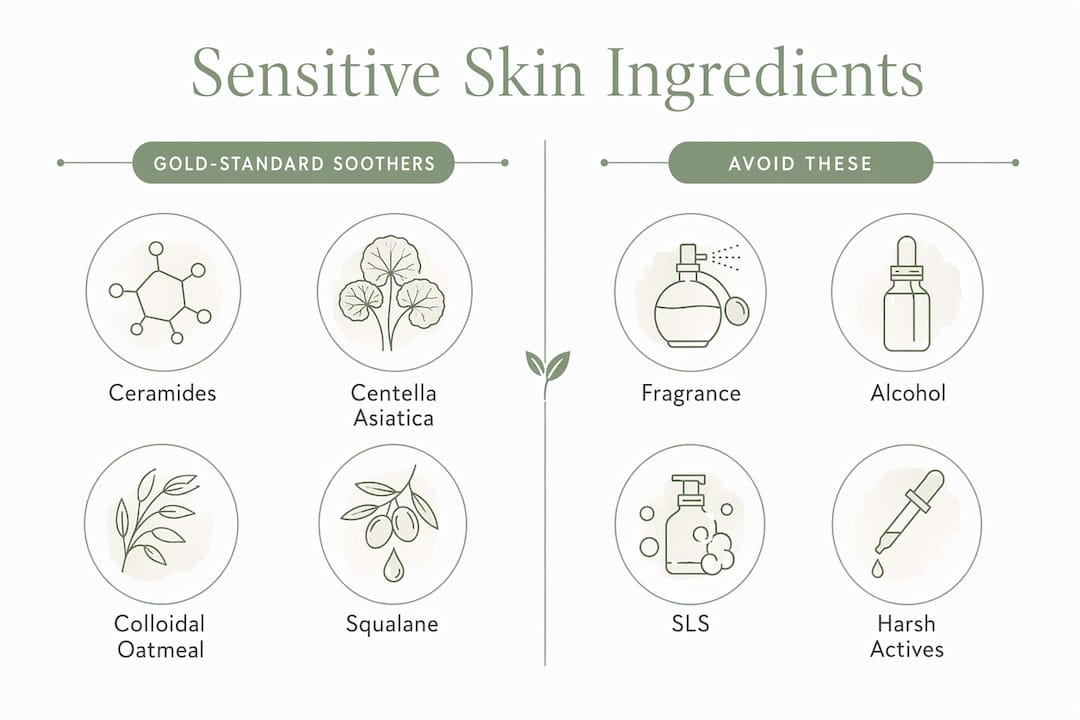
Ceramides and centella asiatica are recognized as gold-standard calming ingredients for sensitive skin. Ceramides reinforce the skin’s natural barrier, locking in moisture and keeping irritants out. Centella asiatica, also known as cica, reduces redness and supports healing at the cellular level.
Other ingredients worth seeking out include:
- Niacinamide (at low concentrations, 2–5%): calms inflammation and strengthens the barrier
- Oat extract (colloidal oatmeal): soothes itching and reduces reactivity
- Hyaluronic acid: hydrates without clogging pores or triggering reactions
- Squalane: a lightweight oil that mimics the skin’s own sebum
- Aloe vera: cools and calms on contact, with minimal reaction risk
Ingredients to avoid entirely
Knowing what to leave out is just as important as knowing what to include. A clear guide on ingredients to avoid for sensitive skin covers this in detail, but the core list includes synthetic fragrance, denatured alcohol, sodium lauryl sulfate (SLS), retinoids at high concentrations, and chemical exfoliants like glycolic acid or salicylic acid.
Natural ingredients like centella asiatica aid barrier repair and calm inflammation safely. That is why botanical, minimal-ingredient formulas consistently outperform complex, active-heavy products for sensitive skin recipients.
Pro Tip: Choose products with fewer than 10 ingredients on the label. The shorter the list, the easier it is to identify any trigger if a reaction occurs.
How do you safely personalize and customize a skincare gift?
Safe personalization follows a clear sequence. Skipping steps increases the risk of a reaction, no matter how gentle the products appear.
- Identify the recipient’s known triggers. Ask directly or observe what they currently use. If they avoid fragrance, that is your first filter.
- Choose one product category. A gentle cleanser, a calming moisturizer, or a mineral sunscreen. Not all three at once.
- Select a formula with five to ten ingredients. Fewer ingredients mean fewer potential reactions and easier troubleshooting.
- Include a handwritten usage note. Explain how to introduce the product: use it once every other day for the first week, then daily if the skin tolerates it.
- Add a patch test reminder. A small card that says “apply a small amount to your inner wrist and wait 24 hours before full use” is a genuinely caring touch.
Patch testing and introducing one product at a time is the recommended best practice for safe product introduction. This step protects the recipient and shows that your gift was chosen with real care.
Pro Tip: Wrap products in unscented tissue paper. Scented wrapping can transfer fragrance to the product packaging and irritate sensitive skin before the gift is even opened.
A simple comparison of gifting approaches helps clarify the right path:
| Gifting approach | Risk level | Best for |
|---|---|---|
| Single fragrance-free moisturizer | Low | All sensitive skin types |
| Multi-step skincare set | High | Skin that has already tolerated each product |
| Botanical oil with minimal ingredients | Low to medium | Dry or barrier-compromised skin |
| Active-laden serum (retinol, AHA) | High | Not recommended as a gift for sensitive skin |
Common mistakes to avoid when gifting skincare for sensitive skin
The most common mistake is choosing a product based on how it smells or how luxurious the packaging looks. Fragrance is the number one skin sensitizer, and a beautifully scented gift set is often the worst choice for reactive skin.
Avoid gifting fragranced products, harsh exfoliants, and active-laden formulas to sensitive skin recipients. These products trigger burning, itching, redness, or rash, worsening the skin condition rather than improving it.
Other mistakes that cause real harm include:
- Gifting a full routine at once. Introducing multiple new products simultaneously makes it impossible to identify which one caused a reaction.
- Choosing products based on trend rather than tolerance. Viral serums with high-concentration actives are rarely appropriate for sensitive skin.
- Ignoring the recipient’s current routine. A new product that conflicts with an existing one can destabilize skin that was previously calm.
- Gifting during a known flare-up. During flare-ups, subtracting irritants and pausing potent actives is more effective than adding new products.
“The best gift for sensitive skin during a flare-up is often nothing new at all. Barrier support, minimal intervention, and patience outperform any active treatment. If you must gift something, choose a plain, fragrance-free moisturizer and nothing else.”
If an unexpected reaction occurs, advise the recipient to stop using the new product immediately, return to their existing routine, and consult a dermatologist if redness or irritation persists beyond 48 hours.
How to complement your gift with supportive care tips
A thoughtful skincare gift goes further when paired with simple, practical advice. Sensitive skin needs consistent habits as much as it needs good products.
Protective habits that reduce repeat reactions include:
- Cleansing with lukewarm water only. Hot water strips the barrier.
- Patting skin dry with a soft cloth rather than rubbing.
- Applying moisturizer within 60 seconds of cleansing to lock in hydration.
- Using a mineral sunscreen daily. Chemical UV filters are a common trigger for reactive skin.
- Avoiding friction from rough fabrics, tight clothing, or over-washing.
Protecting sensitive skin from sun, wind, sweat, and friction reduces repeat reactions and improves tolerance over time. These habits complement gifted products and give them the best chance to work.
A professional skincare routine built around gentle cleansing and consistent moisturizing is the foundation that makes any new product more effective. Encourage the recipient to track how their skin responds each day for the first two weeks. A simple note in their phone is enough.
For thoughtful add-ons that extend the gifting experience without adding skin risk, consider a wellness infusion for stress relief, a calming aromatherapy roll-on, or a natural lip balm. These complement a skincare gift without introducing new products to the face.
Key Takeaways
The safest and most effective personalized skincare gift for sensitive skin is a single, fragrance-free, minimal-ingredient product that supports the skin barrier and is introduced gradually with a patch test.
| Point | Details |
|---|---|
| Choose fragrance-free formulas | Synthetic fragrance is the leading cause of skin sensitization and must be avoided entirely. |
| Prioritize barrier-supportive ingredients | Ceramides, centella asiatica, and squalane calm and protect without triggering reactions. |
| Gift one product at a time | Multi-step sets increase reaction risk; a single well-chosen product is always safer. |
| Include a patch test reminder | A simple usage note shows care and protects the recipient from unexpected irritation. |
| Avoid gifting during flare-ups | Subtracting irritants outperforms adding new products when skin is already reactive. |
What gifting skincare for sensitive skin has taught us at LaTerraTales
The most common feedback we hear is this: “I wish someone had told me sooner that less is more.” Sensitive skin does not need a 10-step routine. It needs one product that works, used consistently, without interference.
What surprises most people is how often well-intentioned gifts cause the most trouble. A luxurious gift set filled with botanical extracts, essential oils, and active serums sounds ideal. For sensitive skin, it is often a recipe for a week of redness and frustration. The recipient feels guilty for reacting, and the giver feels confused. Neither outcome reflects the care that went into the choice.
The approach that actually works is almost counterintuitive. Strip everything back. Choose one product. Make sure it has no fragrance, no alcohol, and no more than 10 ingredients. Write a note explaining how to introduce it slowly. That single gesture, done thoughtfully, delivers more value than any elaborate set.
We have also learned that the conversation around the gift matters as much as the product itself. Asking someone what their skin reacts to, what they currently use, and what they wish they had is not intrusive. It is the difference between a gift that sits unused and one that becomes a daily staple.
Empathy is the real ingredient in a great sensitive skin gift. The product is just the vehicle.
— LaTerraTales
LaTerraTales natural skincare for sensitive skin gifts
LaTerraTales builds every product around the principles this article describes: fragrance-free formulas, minimal ingredients, and barrier-supportive botanicals sourced sustainably.
The sensitive skin collection includes gentle cleansing bars, calming moisturizers, and botanical oils designed for reactive skin. The natural makeup remover cleanser bar is a standout gift option: fragrance-free, solid format, and formulated with minimal ingredients that cleanse without stripping. For a complete gift experience, pair it with the Arnica Lip Balm or the Tranquility Elixir aromatherapy roll-on for a calming, skin-safe addition that goes beyond the face. Every LaTerraTales product is made with conscious consumers and sensitive skin in mind.
FAQ
What is the safest skincare gift for sensitive skin?
A single, fragrance-free, alcohol-free moisturizer or gentle cleanser with fewer than 10 ingredients is the safest choice. Dermatological guidelines recommend avoiding complex formulas and introducing products one at a time.
Which skincare ingredients are best for sensitive skin gifts?
Ceramides, centella asiatica, colloidal oatmeal, squalane, and low-concentration niacinamide are the most reliable options. These ingredients support barrier repair and calm inflammation without triggering reactions.
Should I include a full skincare routine in a gift set?
No. Multi-step skincare routines increase the risk of irritation for sensitive skin. One well-chosen product, introduced gradually, is always the better gift.
How do I know if a product is safe to gift for sensitive skin?
Check the ingredient list for fragrance, alcohol, SLS, and high-concentration actives. A guide on how to choose natural products for sensitive skin walks through the full evaluation process.
What should I do if the recipient has a reaction to the gift?
Advise them to stop using the product immediately and return to their existing routine. If redness or irritation persists beyond 48 hours, a dermatologist visit is the right next step.


