

2–5 Drops to Balance Oil and Calm Redness: Jojoba Oil for Face
Jojoba oil is one of the safest, most versatile facial oils you can add to a routine, and it works well for nearly every skin type, including oily, acne-prone, and reactive skin. Its chemistry mimics human sebum, so it moisturizes without clogging pores, calms redness, and helps balance oil production. Patch test first, then smooth 2 to 5 drops onto damp skin.
TL;DR:
- Jojoba oil’s anti-inflammatory effects can reduce cytokine secretion by about 30 percent, supporting skin calmness and healing.
- Its ability to loosen and dissolve excess sebum makes it suitable for oily and acne-prone skin, with a low risk of clogging pores.
- Most users notice improvements in skin texture and oiliness within four to eight weeks of consistent application.
- Proper patch testing and adjusting quantities based on skin type are essential to avoid irritation or excess shine.
- Unrefined jojoba retains more antioxidants and is preferable for maximum anti-inflammatory benefits, while refined jojoba suits sensitive, reactive skin.
Table of Contents
- What Jojoba Oil Does for Facial Skin
- Research Snapshot: The Strongest Studies and What They Mean for You
- How to Use Jojoba Oil on Your Face
- Safety, Side Effects, and How to Patch Test
- Refined vs. Unrefined Jojoba: Does Grade Change the Results?
- LaTerraTales’ Perspective: Where Jojoba Fits Into a Gentle Routine
- A Jojoba-Based Option Worth Trying
- Sources
What Jojoba Oil Does for Facial Skin
Jojoba oil isn’t technically an oil at all. It’s a liquid wax made of roughly 98% wax esters, a structure that closely resembles the sebum your skin already produces. That similarity is the whole story behind why it works so well on the face, and why it behaves differently from heavier plant oils.
Because your skin recognizes jojoba’s structure, it doesn’t fight it the way it might fight a mismatched ingredient. Instead, jojoba forms a light film that locks moisture in and keeps environmental irritants out, which is technically occlusive behavior rather than true hydration. Oils don’t add water to skin. They seal in the water already there and reduce trans-epidermal water loss, an important distinction if you’ve ever wondered why an oil alone doesn’t fix chronically dehydrated skin.
For oily and acne-prone skin, jojoba does something almost paradoxical: it can help dissolve excess, hardened sebum sitting in pores. Dermatologist-aligned guidance describes jojoba as a sebum-like lipid that helps loosen the buildup behind comedones, especially when paired with proper cleansing beforehand. Its comedogenic rating sits around 2 out of 5, low enough that most breakout-prone skin tolerates it well.
Jojoba also carries real anti-inflammatory and antioxidant activity, which matters if redness, sunburn recovery, or general sensitivity are on your radar.
What jojoba oil helps with on the face:
- Moisturizing without a heavy or greasy finish
- Regulating excess sebum in oily and combination skin
- Calming visible redness and inflammatory flare-ups
- Supporting the skin barrier against moisture loss
- Delivering antioxidant protection against everyday environmental stress
Statistic to know: In an ex-vivo human skin model, topical jojoba wax reduced inflammatory markers IL-6, IL-8, and TNFα by roughly 30%, while also boosting pro-collagen III and hyaluronic acid production.
Set your expectations by timeline, not by wishful thinking. Most people notice smoother texture and less visible oiliness within 4 to 8 weeks of consistent use. That’s realistic for hydration support and mild barrier repair. Deep acne scarring, significant hyperpigmentation, or advanced signs of aging need dedicated clinical treatment. Jojoba is a strong daily support player, not a substitute for a dermatologist visit.
Research Snapshot: The Strongest Studies and What They Mean for You
The most compelling recent data on jojoba comes from a 2024 ex-vivo study using real human skin tissue outside the body. Researchers applied jojoba wax topically and measured a direct biological response.
The wax reduced pro-inflammatory cytokine secretion (IL-6, IL-8, TNFα) by approximately 30% and meaningfully increased synthesis of pro-collagen III and hyaluronic acid in the ex-vivo human skin organ culture model.
That’s a genuinely strong signal for anti-inflammatory and skin-supportive activity, though “ex-vivo” matters here. The tissue was tested outside a living body, in controlled lab conditions, not on someone’s actual face over weeks of real-world exposure. It tells you jojoba has biological activity worth taking seriously. It doesn’t tell you exactly how much benefit shows up on intact, living skin over time.
A broader look at the existing literature backs this up with more context:
- A comprehensive review covering jojoba’s chemistry and ethnobotanical use documents antimicrobial, anti-inflammatory, and antioxidant activity across multiple studies.
- Small clinical trials and dermatology-reviewed summaries note improvement in acne symptoms and barrier function in jojoba-containing formulations.
- Wound-healing properties appear consistently in laboratory settings, though formulation matters, since the emulsifier and delivery system affect how much of the active compound actually reaches the skin.
The honest gap: most of this evidence comes from lab models, small trials, or ethnobotanical documentation rather than large randomized controlled trials on facial skin specifically. The direction of the evidence is encouraging. It isn’t the same as clinical proof for every claim you’ll see on a product label.
How to Use Jojoba Oil on Your Face
Getting the technique right matters more than the oil itself. Here’s the routine that gets the most out of every drop.
- Cleanse first. Start with a clean face so the oil isn’t sealing dirt or excess oil underneath it.
- Apply to damp skin. A few seconds after cleansing, while skin still holds a light layer of water, is when oil locks in moisture most effectively.
- Use 2 to 5 drops, warmed briefly between your palms before contact.
- Press gently into skin rather than rubbing. Rubbing drags the skin and can irritate sensitive areas.
- Wait a minute or two before layering sunscreen or makeup, so the oil has time to settle rather than sliding products around.
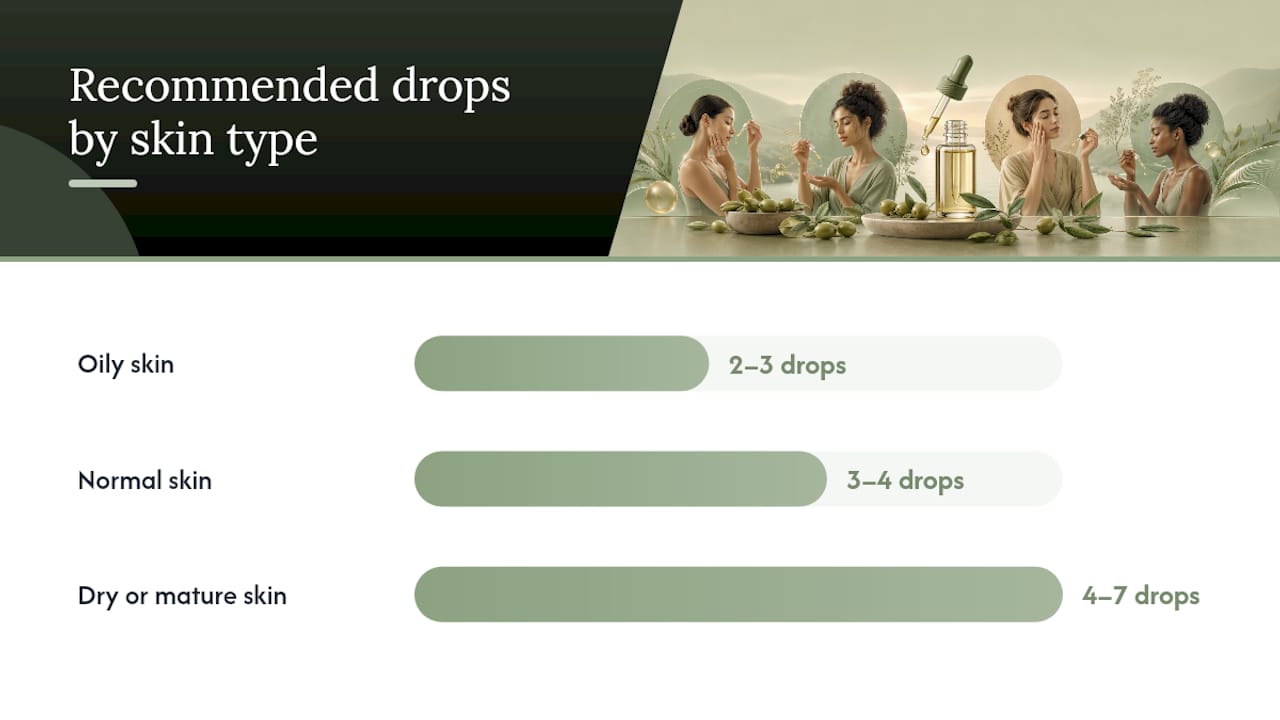
Quantity should shift with your skin type. Oily skin usually does well with just 2 to 3 drops, normal skin with 3 to 4, and dry or mature skin with 4 to 7. If your skin looks shiny an hour after application, you’re using too much.
Jojoba works in the morning under sunscreen without issue, since it doesn’t interfere with mineral or chemical filters when applied first and given a moment to absorb. At night, it layers well under a heavier cream if your skin runs dry, or stands alone if you lean oily.
Beyond a standalone moisturizer step, jojoba fits into the oil cleansing method, works as a targeted spot treatment on rough patches, and doubles as a light eye-area oil since it’s gentle enough for thin skin.
Pro Tip: If your skin looks slightly shinier than usual during the first few weeks, resist the urge to quit. That’s often a short adjustment phase, not a sign the oil is wrong for you.
Safety, Side Effects, and How to Patch Test
Jojoba oil ranks among the gentler facial oils, but “gentle” doesn’t mean “risk-free for everyone.” A proper patch test still comes first.
- Apply a small amount to your inner forearm and watch for 24 to 48 hours before using it on your face.
- Redness, itching, or bumps at the test site mean you should discontinue and consider a different oil.
- Some people notice a temporary “purging” phase or slightly oilier skin in the first 3 to 6 weeks as skin adjusts. This typically settles rather than escalating.
- If you have severe rosacea, perioral dermatitis, or you’re using prescription topicals like tretinoin, talk to a dermatologist before adding jojoba to the mix, since layering can change how those treatments behave.
- True allergic reactions are rare but possible, and they warrant stopping use and seeking medical advice if symptoms spread or worsen.
Store jojoba oil in a cool, dark spot away from direct sunlight. Unlike many plant oils, it has a genuinely long shelf life and resists rancidity well, but quality still degrades faster in heat or light exposure.
Refined vs. Unrefined Jojoba: Does Grade Change the Results?
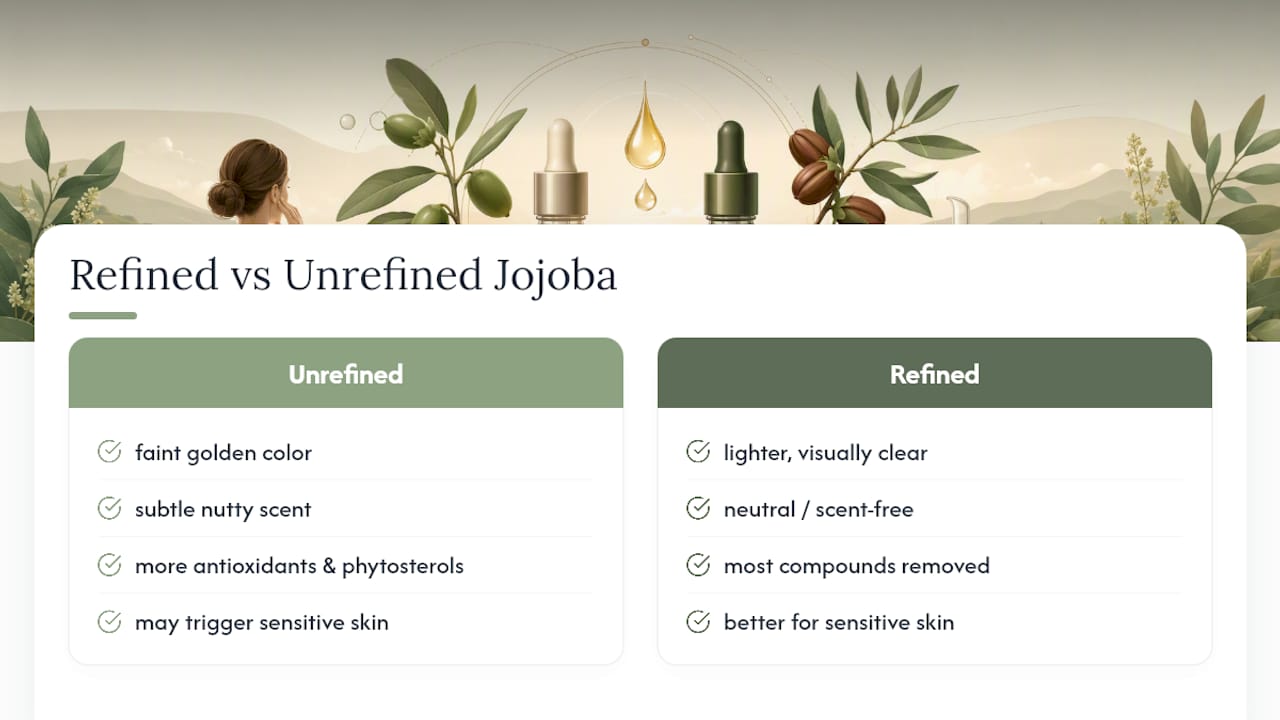
Not all jojoba oil performs the same, and the grade you choose shapes both tolerance and potency. Cold-pressed, unrefined jojoba retains more of its natural antioxidants and phytosterols, the compounds most closely tied to its anti-inflammatory and antioxidant activity. It typically carries a faint golden color and a subtle, nutty scent, both signs the oil hasn’t been stripped down.
Refined jojoba goes through additional processing that removes most color and scent, leaving a lighter, more neutral oil. For sensitive or reactive skin, that neutrality can actually be an advantage. Fewer residual plant compounds sometimes means fewer triggers for skin that reacts to fragrance or trace botanicals.
Organic certification adds another layer of confidence, mainly around how the jojoba plant was grown rather than a change to the oil’s core chemistry. It signals fewer pesticide residues and often a cleaner overall extraction process, which matters if you’re already avoiding synthetic inputs elsewhere in your routine.
Neither grade is universally “better.” Unrefined suits people chasing maximum antioxidant content and don’t mind a natural scent. Refined suits sensitive skin or anyone who prefers a scent-free, visually clear oil. What matters most is knowing which one you’re buying, since vague labeling on “pure jojoba oil” often hides which processing method was actually used.
LaTerraTales’ Perspective: Where Jojoba Fits Into a Gentle Routine
We formulate with jojoba because it does the job without demanding much from your skin. Minimal ingredients, sustainable packaging, and a wax structure your skin already understands: that combination is the whole philosophy behind how we approach facial oils. If you’re curious about layering oils into a cleansing step too, our guide on oil-based cleansing walks through the mechanics. Patch test, give it a few weeks, and let your skin set the pace.
— LaTerraTales
A Jojoba-Based Option Worth Trying
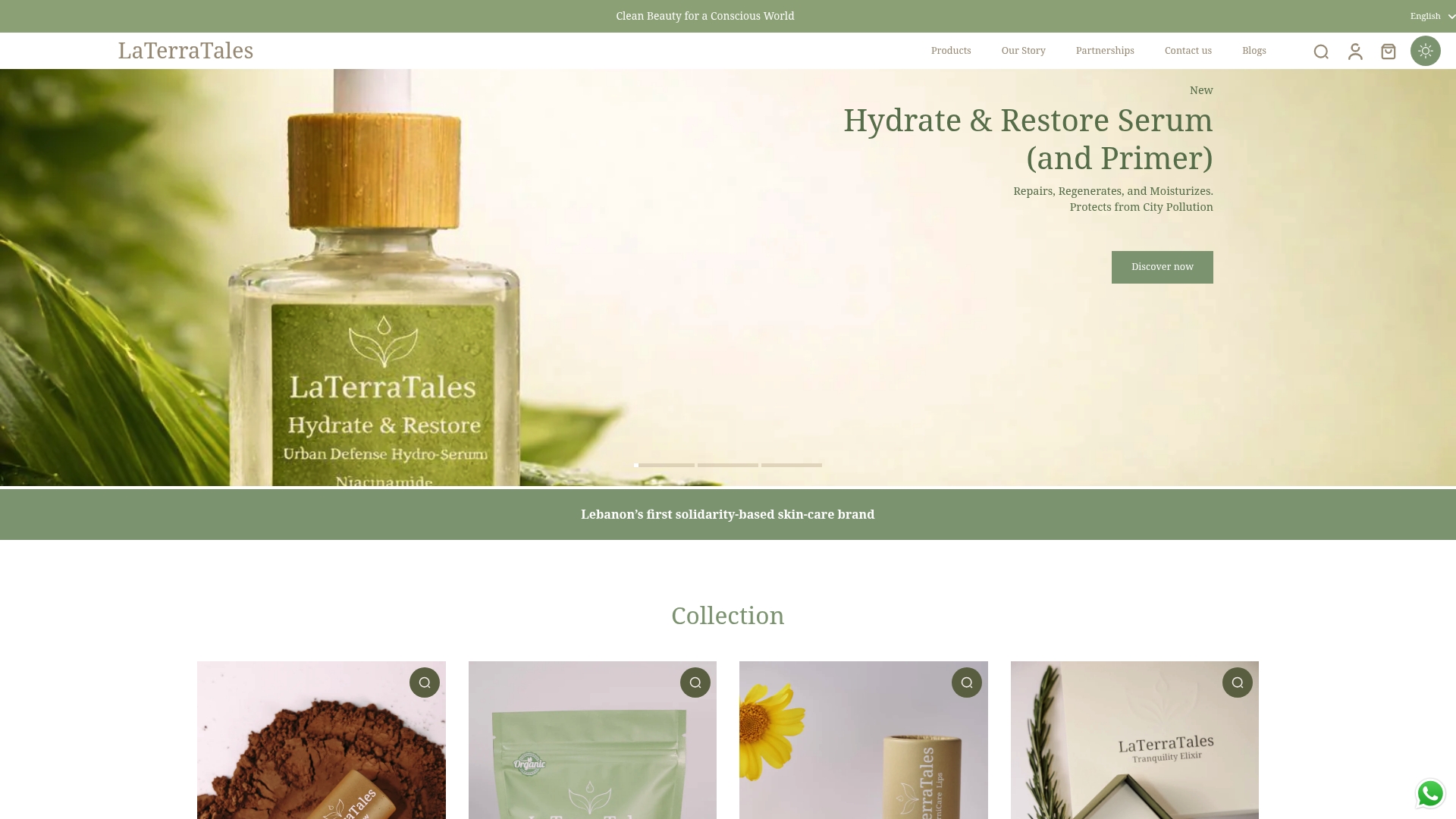
If everything above has you ready to add jojoba to your shelf, look for a formulation that keeps the ingredient list short and the sourcing transparent. LaTerraTales’ Prestige Oriental multi-purpose dry oil suits oily, dry, and sensitive skin alike, and it’s built around botanical oils rather than filler ingredients or synthetic fragrance.
Use it the way this guide outlines: a few drops pressed onto damp skin, morning or night, with a patch test before your first full application. It doubles as a body and hair oil too, so one bottle covers more of your routine than a single-purpose facial oil would. Browse the full natural skincare collection to find the right starting point for your skin, and place your order when you’re ready to give jojoba a real trial run.
Recommended
Share


