

Natural Skincare Explained: Benefits, Ingredients, and Tips
Natural skincare is defined as the use of topical products formulated primarily from naturally derived ingredients, free from synthetic chemicals, that support healthy skin and environmental sustainability. The term covers a wide range of products built around plant extracts, botanical oils, minerals, and select animal-derived substances. What is natural skincare explained in practical terms? It means choosing formulas that work with your skin’s biology rather than against it. The natural skincare market shows strong growth driven by consumer demand for products without synthetic chemicals like parabens and sulfates. That shift reflects a real change in how people think about what they put on their skin every day. LaTerraTales was built on exactly this principle: that effective skincare and clean ingredients are not mutually exclusive.
What is natural skincare explained, and how does it differ from organic?
Natural skincare uses ingredients sourced from plants, minerals, and certain animal products with minimal processing. The goal is to avoid synthetic compounds that can disrupt skin function or cause long-term sensitization. This definition sounds simple, but the labeling gets complicated fast.
The terms “natural” and “organic” are not interchangeable. The USDA National Organic Program governs organic claims with strict certification standards, while “natural” remains an unregulated term under U.S. law. That distinction matters enormously when you are reading a product label. A product labeled “natural” can legally contain synthetic ingredients, while a certified organic product must meet documented sourcing and processing criteria.
Conventional skincare products often rely on synthetic preservatives, artificial fragrances, and petroleum-derived emollients. Natural formulas replace these with plant-based alternatives that tend to be gentler and more compatible with the skin’s own chemistry. The FDA does not regulate the word “natural” on cosmetic labels, so reading the full ingredient list is the only reliable way to verify what you are actually buying.
What are the common natural ingredients used in skincare?
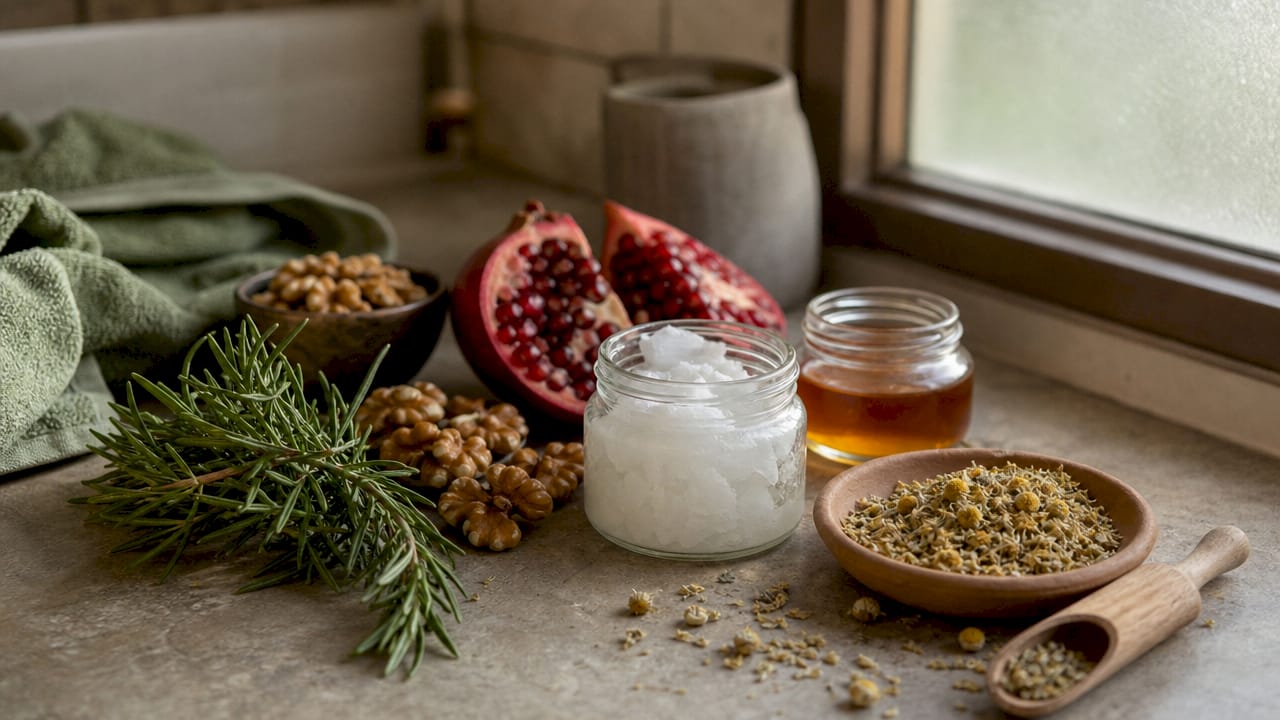
Natural skincare draws from a rich library of plant-derived, mineral, and animal-sourced ingredients. Each one brings specific functional benefits that address real skin concerns without relying on synthetic chemistry.
The most widely used natural ingredients include:
- Jojoba oil: Technically a liquid wax, jojoba closely mimics the skin’s natural sebum. It provides emollient properties that work for oily, dry, and combination skin types without clogging pores.
- Shea butter: A rich fat extracted from the shea tree nut. It delivers deep moisture and supports the skin barrier, making it a staple for dry and sensitive skin.
- Aloe vera: A clear gel from the aloe plant with well-documented soothing and anti-inflammatory properties. It calms redness, hydrates, and supports healing after sun exposure.
- Tea tree oil: An essential oil with natural antimicrobial properties. It is commonly used to address blemishes and oily skin without the harshness of benzoyl peroxide.
- Chamomile extract: Rich in bisabolol and apigenin, chamomile soothes irritated skin and reduces visible redness. It is one of the gentlest botanical actives available.
- Beeswax: An animal-derived ingredient that forms a protective barrier on the skin’s surface. It locks in moisture without blocking pores and is a common base in lip care and balms.
- Safflower oil: A lightweight carrier oil high in linoleic acid. It reinforces the skin barrier and is especially beneficial for acne-prone skin.
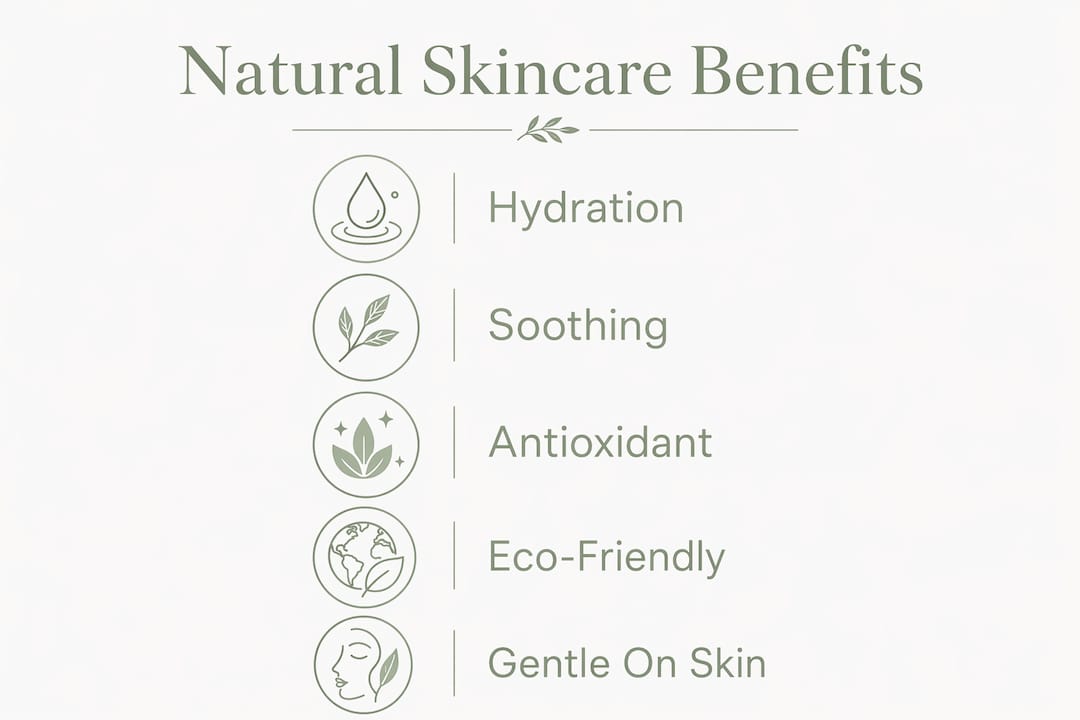
These natural ingredients provide moisturizing, soothing, anti-inflammatory, and antioxidant benefits. That combination addresses the most common skin concerns without introducing unnecessary chemical load.
Pro Tip: When you see “fragrance” or “parfum” on a label, that single word can represent dozens of synthetic compounds. Choose products that list each aromatic ingredient individually, such as lavender essential oil or rose water, so you know exactly what you are applying.
For a deeper look at how plant-based oils interact with your skin, the LaTerraTales guide on natural oils breaks down the science clearly.
How does natural exfoliation work, and why does it matter?
Natural exfoliation supports the skin’s built-in renewal process, called desquamation, where dead skin cells shed from the surface every 28 to 40 days. When that cycle slows down due to age, stress, or environmental factors, skin looks dull and feels rough. Exfoliation accelerates the process without forcing it.
There are two main approaches: physical and chemical. Physical exfoliation uses scrubs or textured tools to manually remove dead cells. Chemical exfoliation uses acids or enzymes to dissolve the bonds holding dead cells together. The difference in outcome is significant.
| Method | How it works | Risk level | Best for |
|---|---|---|---|
| Physical scrubs | Manual abrasion removes surface cells | Higher: micro-tears possible | Rough body skin, not face |
| Natural AHAs (glycolic, lactic acid) | Dissolve cell bonds chemically | Low when used correctly | Dull, uneven skin tone |
| Fruit enzymes (papain, bromelain) | Break down dead cell proteins | Very low, gentle | Sensitive and reactive skin |
| BHAs from natural sources | Oil-soluble, penetrate pores | Low to moderate | Oily and acne-prone skin |
Dermatologists recommend chemical exfoliation using natural AHAs or enzymes over abrasive physical scrubs due to risks of infection and barrier damage. Physical scrubs feel satisfying, but the friction can create micro-tears in the skin, especially on the face. Those tiny injuries increase sensitivity and can worsen conditions like rosacea or post-inflammatory hyperpigmentation.
Chemical exfoliants like AHAs and BHAs derived from natural sources dissolve dead skin cell bonds, improving texture and brightness. This approach respects the skin barrier and supports the natural renewal cycle rather than disrupting it. Lactic acid, derived from fermented sugars, is one of the gentlest AHAs and works well for people new to chemical exfoliation.
Pro Tip: Start with a low-concentration AHA product, around 5 to 8 percent, used once or twice a week. Give your skin two to three weeks to adjust before increasing frequency. Pair it with a mineral SPF the following morning, since freshly exfoliated skin is more sensitive to UV damage.
What benefits does natural skincare offer compared to conventional products?
Effective natural skincare delivers real results while reducing the chemical burden on your skin and the environment. The advantages are specific and well-supported, not just marketing language.
Natural skincare products can be gentler and less irritating for sensitive skin due to the absence of harsh synthetic additives. Plant and mineral-based ingredients often carry inherent soothing properties that synthetic alternatives lack. For people with reactive skin, this difference is felt immediately.
The key advantages of natural skincare include:
- Fewer irritants: No synthetic parabens, sulfates, or artificial fragrances that are common triggers for contact dermatitis and sensitization.
- Skin barrier support: Ingredients like ceramide-rich plant oils and shea butter actively reinforce the skin’s protective layer rather than stripping it.
- Antioxidant protection: Botanical extracts such as green tea, rosehip, and vitamin C from natural sources neutralize free radicals that accelerate skin aging.
- Environmental responsibility: Naturally derived ingredients are generally more biodegradable than synthetic compounds. Sustainable sourcing also reduces the ecological footprint of your routine.
- Ingredient transparency: Brands committed to natural formulation tend to list every ingredient clearly, making it easier to identify what works for your skin and what to avoid.
- Compatibility with sensitive skin: The absence of synthetic dyes and preservatives like methylisothiazolinone reduces the risk of allergic reactions in people with eczema, rosacea, or general sensitivity.
The advantages of natural skincare extend beyond personal health. Choosing biodegradable formulas and sustainably packaged products reduces the environmental impact of your daily routine in a measurable way.
How to choose natural skincare products that actually work
Choosing effective natural skincare requires more than picking products with green packaging. You need to read labels critically, understand your skin type, and introduce new products carefully.
-
Read the full ingredient list, not just the front label. The FDA does not regulate the word “natural,” so a product can carry that claim while containing synthetic preservatives or fillers. Look for recognizable botanical names like Butyrospermum parkii (shea butter) or Simmondsia chinensis (jojoba oil) near the top of the list.
-
Distinguish natural from organic. If you want certified organic ingredients, look for the USDA Organic seal or equivalent third-party certification. That seal guarantees the ingredients meet documented sourcing and processing standards that the word “natural” alone does not.
-
Match ingredients to your skin type. Oily skin benefits from lightweight, non-comedogenic oils like jojoba or safflower. Dry skin responds well to richer emollients like shea butter or rosehip oil. Sensitive skin does best with fragrance-free formulas built around aloe vera, chamomile, or oat extract.
-
Patch test every new product. Apply a small amount to the inner forearm or behind the ear for 24 to 48 hours before using it on your face. Natural does not automatically mean hypoallergenic. Essential oils, in particular, can cause reactions in some people.
-
Introduce one product at a time. Adding multiple new products simultaneously makes it impossible to identify the source of any reaction. Wait at least two weeks between introductions so your skin has time to respond clearly.
-
Be skeptical of vague claims. Phrases like “clean,” “green,” or “eco-friendly” carry no legal definition in the U.S. cosmetics industry. Rely on certified labels and transparent ingredient lists rather than marketing language on the front of the package.
For practical guidance on switching to natural skincare, a step-by-step approach reduces the risk of skin disruption during the transition.
Key Takeaways
Natural skincare works best when you combine clean, naturally derived ingredients with informed label reading, skin-type matching, and a gradual introduction process.
| Point | Details |
|---|---|
| “Natural” is unregulated | The FDA does not define “natural” on labels, so always read the full ingredient list. |
| Organic requires certification | Only USDA Organic-certified products meet documented sourcing and processing standards. |
| Chemical exfoliation is safer | Natural AHAs and enzymes exfoliate without the micro-tears caused by physical scrubs. |
| Match ingredients to skin type | Jojoba suits oily skin; shea butter and rosehip oil suit dry or sensitive skin. |
| Patch test every new product | Apply to the inner forearm for 24–48 hours before full facial use to avoid reactions. |
What I have learned from years of formulating with natural ingredients
The most common misconception about natural skincare is that “natural” automatically means safe and “synthetic” automatically means harmful. That binary is too simple. Poison ivy is natural. Niacinamide, one of the most well-researched skin-brightening ingredients available, is synthesized in a lab. What matters is whether an ingredient is effective, well-tolerated, and transparently disclosed.
At LaTerraTales, we have seen firsthand that the real value of natural formulation is not purity for its own sake. It is the reduction of unnecessary chemical load. Most conventional products contain five to ten ingredients that serve no skin function at all. They exist to extend shelf life, improve texture, or reduce manufacturing costs. Removing those ingredients does not weaken a formula. It often makes it more effective because the active ingredients face less competition.
The other thing worth saying plainly: natural skincare requires patience. Botanical actives work with your skin’s biology, which means results build over weeks, not overnight. People who abandon natural routines after two weeks are comparing them unfairly to products that produce fast but temporary results through surface-level effects.
The evidence-based approach to natural beauty is not about rejecting science. It is about applying science to ingredients that have been used safely for centuries and understanding exactly why they work.
— LaTerraTales
LaTerraTales natural skincare for sensitive and conscious skin
Your skin deserves formulas you can trust from the first ingredient to the last.
LaTerraTales builds every product around this standard: clean, naturally derived ingredients, transparent labeling, and formulas tested for sensitive skin. The natural skincare collection includes solid cleansing bars, botanical oils, serums, and lip care, each designed to simplify your routine without compromising results. The 100% natural cleanser bar removes makeup and impurities gently, without stripping the skin barrier. For targeted care, the Bakuchiol Serum delivers a plant-based retinol alternative that firms and calms without irritation. Every formula reflects the same commitment: nature-backed, science-informed, and made for real skin.
FAQ
What does natural skincare mean exactly?
Natural skincare refers to topical products formulated primarily from plant-derived, mineral, or animal-sourced ingredients with minimal synthetic additives. The term is not regulated by the FDA, so ingredient list review is necessary to verify any natural claim.
Is natural skincare effective for sensitive skin?
Natural skincare products are generally gentler on sensitive skin because they avoid common synthetic irritants like parabens, sulfates, and artificial fragrances. Plant and mineral-based ingredients often carry soothing and anti-inflammatory properties that support reactive skin.
What is natural exfoliation and how does it work?
Natural exfoliation uses AHAs derived from fruit acids or enzymes like papain from papaya to dissolve the bonds between dead skin cells. Dermatologists favor this method over physical scrubs because it renews the skin surface without causing micro-tears or barrier damage.
How do I know if a natural skincare product is truly natural?
Look for third-party certifications like the USDA Organic seal and read the full ingredient list rather than relying on front-label claims. The FDA does not regulate the word “natural,” so certified labels and transparent ingredient disclosure are the only reliable indicators.
What natural ingredients should I look for in skincare?
Jojoba oil, shea butter, aloe vera, chamomile extract, and tea tree oil are among the most well-researched natural skincare ingredients. Each provides specific benefits including moisturizing, soothing, antimicrobial, and antioxidant effects suited to a range of skin types.


