
Organic vs Natural Beauty: What the Labels Really Mean
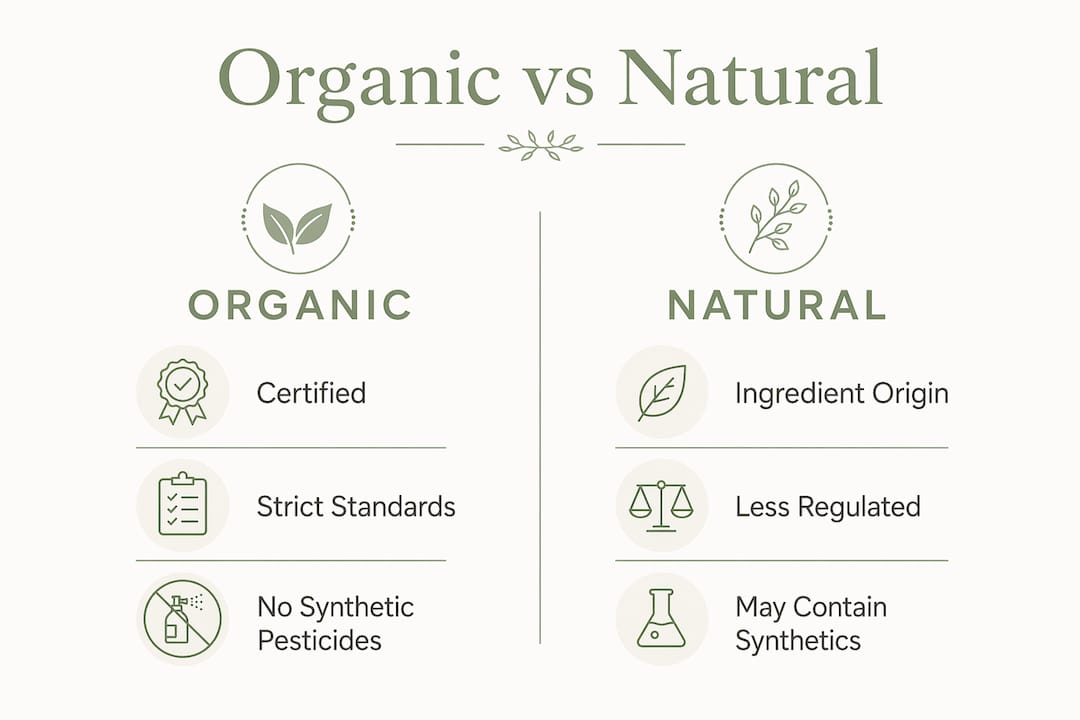
The difference between organic and natural beauty products is defined by ingredient sourcing and certification. Organic beauty products use ingredients grown under certified farming standards, verified by bodies like USDA Organic, COSMOS, or ECOCERT. Natural beauty products contain ingredients derived from plants, minerals, or other natural sources, but no universal legal definition governs the term. That gap matters more than most shoppers realize. A product can call itself “natural” and still contain synthetic preservatives, while a certified organic product must meet strict, audited standards at every stage of production.
What is the difference between organic and natural beauty?
The core distinction is straightforward. “Natural” concerns ingredient origin; “organic” centers on how those ingredients are grown, harvested, and processed. A botanical oil pressed from lavender is natural by origin. That same oil becomes organic only when the lavender was farmed without synthetic pesticides, fertilizers, or genetically modified organisms, and when a third-party certifier has verified the entire supply chain.

This distinction shapes everything from ingredient quality to price. Organic certification adds cost and complexity to sourcing. Natural labeling adds nothing beyond a marketing claim, unless a brand voluntarily backs it with transparency.
Understanding this difference protects your skin and your wallet. When you know what each label actually promises, you stop paying a premium for words and start paying for verified quality.
What does organic beauty mean and how is it certified?
Organic beauty certification is a formal, audited process. USDA Organic and COSMOS are the two most recognized certification frameworks globally, and each sets strict requirements for farming practices, ingredient processing, and finished product formulation.
To earn certification, brands must meet specific criteria:
- No synthetic pesticides or fertilizers used during farming
- No genetically modified organisms (GMOs) in the supply chain
- Third-party audits of farming, harvesting, and manufacturing
- Minimum organic ingredient thresholds in the finished formula (USDA requires 95% organic content for the “certified organic” seal; COSMOS has tiered standards)
- Restricted processing methods to preserve ingredient integrity
ECOCERT, a French certification body, applies similar standards and is widely recognized in European and Middle Eastern markets. These certifications do not just verify what goes into a product. They verify what does not: no petrochemical solvents, no synthetic fragrances, no irradiation.
The practical implication for your skin is real. Certified organic ingredients are grown in cleaner soil, processed with fewer chemical interventions, and arrive in your product with a documented chain of custody. That traceability is the value you pay for when you choose certified organic beauty.
What defines natural beauty products and why is the term less regulated?
Natural beauty is defined by ingredient origin, not by any regulatory standard. The FDA does not regulate the word “natural” on cosmetic labels, which means brands use the term freely without mandatory ingredient thresholds or third-party verification. A product with 5% plant extract and 95% synthetic filler can legally call itself natural.
The practical risks of this gap are worth knowing:
- No minimum natural content is required for the label
- No banned ingredient list applies automatically to “natural” products
- No audit or certification is required before a brand makes the claim
- Wide variation in quality exists between products using the same label
Natural ingredients themselves carry genuine benefits. Plant-derived actives like bakuchiol, rosehip oil, and arnica deliver phytochemicals and antioxidants that support skin health. You can read more about natural skincare benefits and how specific ingredients work in practice.
The problem is not natural ingredients. The problem is that the label “natural” tells you almost nothing about what percentage of the formula is actually plant-derived, how those ingredients were sourced, or whether the product has been tested for safety. Your best protection is reading the full ingredient list, not the front-of-pack claim.
How do organic and natural beauty differ in safety, effectiveness, and formulation?
Consumer perception often treats organic and natural as automatically safer or more effective than conventional products. The science is more nuanced. Natural ingredients can trigger allergic reactions and contact dermatitis as readily as synthetic ones. Essential oils, botanical extracts, and plant proteins are among the most common contact allergens in skincare.
Formulation presents real technical challenges for both categories:
- Preservative limitations: Without synthetic preservatives, natural and organic formulas rely on alternatives like vitamin E, rosemary extract, or phenoxyethanol. These work, but they require careful formulation.
- Shorter shelf life: Natural products can spoil quickly without adequate preservation, increasing the risk of microbial contamination.
- Ingredient instability: Plant-based actives like vitamin C derivatives and retinol alternatives degrade faster when exposed to light, air, or heat.
- Bioavailability gaps: Phytochemicals in their raw form do not always penetrate the skin effectively.
Cosmetic scientists identify product stability as a key challenge for natural and organic formulations, precisely because petrochemical preservatives are excluded. Brands that solve this problem invest heavily in formulation science.
One area where the science is genuinely exciting is delivery technology. Nanoencapsulation improves bioavailability of phytochemicals in natural products, meaning the active compounds actually reach the skin layers where they can work. This technology is closing the efficacy gap between natural and synthetic actives.
Pro Tip: Always check the expiration date on natural and organic products, and store them away from direct sunlight. A shorter shelf life is not a flaw; it is often a sign that the formula relies on gentler preservation.
The safety question also cuts the other way. 1 in 5 people with sensitive skin report irritation linked to synthetic petrochemical-derived preservatives and fragrances. For this group, a well-formulated natural or organic product genuinely reduces exposure to known irritants. The key word is “well-formulated.” A poorly preserved natural product introduces different risks. Understanding the tradeoffs helps you choose based on your skin’s actual needs, not just a label.
How does natural beauty compare to clean beauty and synthetic skincare?
The beauty aisle now carries at least four distinct claims: natural, organic, clean, and conventional. Each addresses a different concern, and they overlap in ways that confuse even experienced shoppers.
Clean beauty prioritizes ingredient safety and the exclusion of harmful substances, regardless of whether those substances are natural or synthetic. A clean beauty product excludes parabens, phthalates, and formaldehyde releasers, but it can contain synthetic ingredients deemed safe by toxicological review.
| Category | Defined by | Regulated? | Can contain synthetics? |
|---|---|---|---|
| Organic | Farming and processing standards | Yes, via USDA/COSMOS/ECOCERT | Restricted |
| Natural | Ingredient origin | No universal standard | Often yes |
| Clean | Ingredient safety and exclusion | No universal standard | Yes |
| Conventional | No specific claim | Standard cosmetic regulations | Yes |
Products can be clean without being natural, and natural without being clean. A product made with natural fragrance compounds can still cause sensitization. A product with carefully selected synthetic actives can be completely clean by safety standards. Dr. Jose Rossello, a cosmetic scientist, emphasizes that consumer education on these distinctions is the most important step toward confident purchasing decisions.
For a deeper look at how natural and synthetic ingredients compare in real formulations, the LaTerraTales guide on natural vs synthetic ingredients breaks down the evidence clearly.
What practical tips help you choose between organic and natural beauty?
Making a confident choice between organic and natural beauty products comes down to asking the right questions before you buy.
-
Look for certification marks, not just claims. A USDA Organic, COSMOS, or ECOCERT seal means a third party verified the formula. A front-of-pack “natural” claim means nothing without supporting evidence.
-
Read the full ingredient list (INCI list). Ingredients are listed in descending order of concentration. If the first five ingredients are water and synthetic fillers, the natural botanical extract at position 15 is present in trace amounts.
-
Match the product to your skin type. If you have sensitive or reactive skin, look for products with short ingredient lists and no added fragrance. Both natural and synthetic fragrances are common triggers. The LaTerraTales guide on choosing products for sensitive skin offers specific guidance.
-
Patch test every new product. Apply a small amount to your inner forearm for 48 hours before full use. Natural does not mean hypoallergenic.
-
Assess your priorities. If environmental impact matters most, certified organic is the stronger choice. If ingredient safety is your primary concern, clean beauty criteria may serve you better. If you want both, look for products that carry organic certification and meet clean beauty standards.
Pro Tip: When a product claims to be “made with organic ingredients,” check the percentage. USDA rules allow this phrase for products with as little as 70% organic content. The full “certified organic” seal requires 95% or more.
Key Takeaways
The difference between organic and natural beauty is a certification question: organic is verified by third-party standards like USDA Organic and COSMOS, while natural is an unregulated marketing term with no required ingredient threshold.
| Point | Details |
|---|---|
| Organic requires certification | USDA Organic and COSMOS verify farming, harvesting, and processing standards. |
| Natural has no legal definition | The FDA does not regulate the term; quality varies widely between products. |
| Natural ingredients carry allergy risk | Contact dermatitis can result from plant-based actives as readily as from synthetics. |
| Clean beauty is about safety, not origin | Clean products exclude harmful substances but can contain safe synthetic ingredients. |
| Certification is your best protection | Look for USDA, COSMOS, or ECOCERT seals rather than front-of-pack marketing claims. |
What the labels taught us at LaTerraTales
The beauty industry’s label problem is not accidental. “Natural” is a powerful word, and it costs nothing to print on a box. At LaTerraTales, we have spent years working through the exact confusion this article describes, and our honest conclusion is that labels are the beginning of the conversation, not the end.
What we have found is that consumers who focus on ingredient lists make better choices than those who shop by category. A certified organic formula with a poorly chosen botanical can irritate sensitive skin just as easily as a conventional product. A thoughtfully formulated product with a small number of well-tested natural actives can outperform a product with 30 plant extracts and no stability testing.
The uncomfortable truth is that “natural” and “organic” are not quality guarantees. They are sourcing signals. Quality comes from formulation science, ingredient selection, and honest testing. We built LaTerraTales around that principle because we believe your skin deserves more than a marketing claim. It deserves a formula you can actually trust.
Clearer distinctions between these labels give you the tools to ask better questions. That is what confident skincare decisions look like.
— LaTerraTales
Clean, certified, and made for your skin
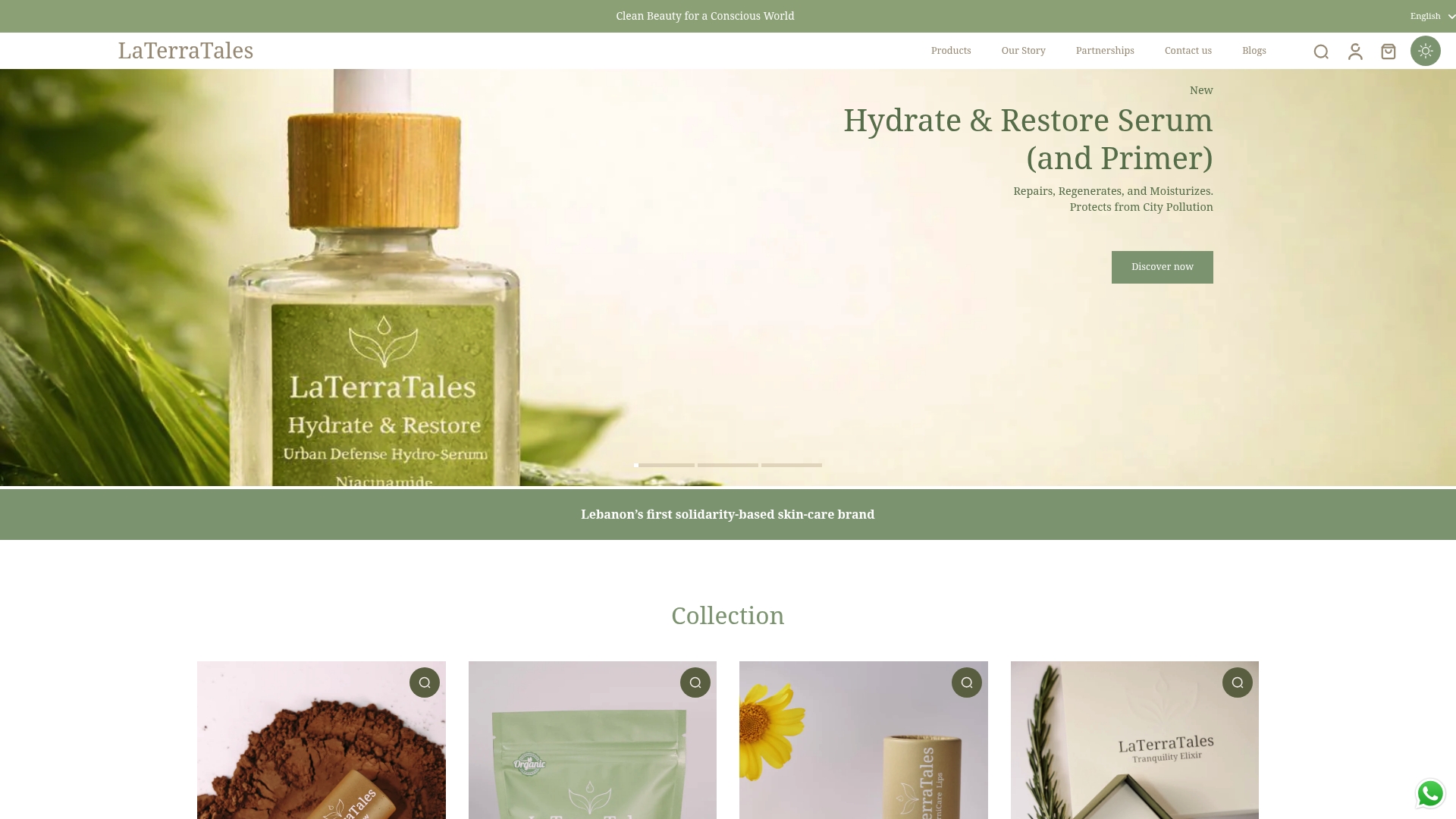
LaTerraTales formulates every product with ingredient transparency at the center. The natural skincare collection features clean, carefully sourced formulas designed for sensitive skin, with ingredient lists you can actually read and understand. Each product reflects the same principle: natural origin, formulation science, and honest labeling. Whether you are looking for a gentle daily cleanser, a botanical oil, or a targeted serum, the range is built to meet the standard this article describes, not just claim it.
FAQ
What is the main difference between organic and natural beauty?
Organic beauty products use ingredients grown under certified farming standards, verified by bodies like USDA Organic or COSMOS. Natural beauty products contain ingredients from natural sources but carry no mandatory certification or ingredient threshold.
Are organic beauty products safer than natural ones?
Not automatically. Both categories can cause allergic reactions, and natural ingredients are among the most common contact allergens in skincare. Certified organic products offer greater supply chain transparency, but safety depends on the full formulation.
Does “natural” on a label mean the product is chemical-free?
No. The FDA does not regulate the word “natural” on cosmetics, so brands use it without meeting any specific standard. Every ingredient, including water, is a chemical compound.
What is clean beauty and how does it differ from natural?
Clean beauty focuses on excluding ingredients with known safety concerns, such as parabens and phthalates, regardless of whether those ingredients are natural or synthetic. Natural beauty focuses on ingredient origin, not safety classification.
How can I tell if a beauty product is genuinely organic?
Look for a recognized certification seal such as USDA Organic, COSMOS, or ECOCERT on the packaging. A front-of-pack “organic” claim without a certification mark is unverified.


