

Cut Bathroom Plastic Fast: Your Room-by-Room Swap Guide
Start here: swap your shampoo bottle for a concentrated shampoo bar, retire the disposable razor for a safety razor, and switch liquid body wash for solid soap or a refill system. Those three moves eliminate the largest share of bathroom plastic in most households, because they target the items you buy and toss most often.
The rule for everything else: replace as empty, not all at once. Finish what you own, then choose the plastic-free version when you reorder. Frequency beats intention every time. A 2016 NCBI review found microplastics are already common in personal-care products and their packaging, which is exactly why the items touching your skin and mouth daily deserve first attention.
Where to start this week:
- Shampoo and conditioner bars instead of bottles
- Bar soap or a Castile refill instead of bottled body wash
- A safety razor instead of disposable cartridges
- A refill station or bulk pouch for hand soap
- A PEVA or fabric shower curtain liner instead of PVC
LaTerraTales makes this easier with its 100% Natural Handmade Cleanser Bar, a minimal-packaging option formulated for sensitive skin that replaces a plastic bottle outright.
Key Takeaways
Cutting bathroom plastic waste works best when you prioritize high-frequency, high-contact products first and replace them only as your current supply runs out.
| Point | Details |
|---|---|
| Start with frequency | Swap shampoo, conditioner, and body wash first since they get repurchased most often. |
| Use the replace-as-empty rule | Finish current products before buying plastic-free replacements to avoid waste. |
| Fix storage to make swaps stick | A drained soap dish and proper tins extend bar-product life significantly. |
| Handle textiles separately | Use a fiber-catching laundry bag on synthetic towels instead of discarding them early. |
| Choose LaTerraTales for the first swap | The 100% Natural Handmade Cleanser Bar offers a sensitive-skin, minimal-packaging replacement for bottled cleanser. |
Table of Contents
- How Do You Prioritize Bathroom Plastic Swaps?
- Hair Care Swaps: Bars, Refills, and Storage That Actually Work
- Body Cleansing Without the Plastic Bottle
- What Are the Best Plastic-Free Oral Care Swaps?
- Shaving and Grooming: Ditching Disposables for Good
- Why Do Towels and Bath Mats Matter for Microplastics?
- Fixtures, Cleaners, and Refill Systems Worth the Investment
- Your 30/90/180-Day Plastic Reduction Plan
- Why Trust This Guide
- How Do You Dispose of Bathroom Plastics Correctly?
- What Is the Environmental Impact of Bathroom Plastic?
- Can You Make Your Own Plastic-Free Bathroom Products?
- Everyday Habits That Cut Single-Use Plastic Fast
- How Do You Get Household Members on Board?
- What the Conventional Advice on Bathroom Plastic Gets Wrong
- Start Your Low-Waste Bathroom With One Simple Swap
- Sources
How Do You Prioritize Bathroom Plastic Swaps?
Not every swap deserves the same urgency. The most useful filter has three axes: how often you buy the product, how much direct contact it has with skin, hair, or mouth, and how much single-use packaging it generates per use. Rank a product high on all three and it belongs at the top of your list.
A shampoo bottle you replace monthly that coats your scalp for minutes at a time scores high on every axis. A plastic soap dish you bought once five years ago scores low on frequency and packaging, even though it is technically plastic. That distinction is why the Plasticproof impact-ranked framework puts shampoo bars, bamboo toothbrushes, and safety razors ahead of aesthetic storage swaps.
Here is a rough way to sort your own bathroom:
- Daily, high-contact, single-use plastic (shampoo, conditioner, body wash, toothpaste tubes)
- Weekly or occasional, high-contact items (razors, shaving cream, floss containers)
- Durable fixtures with long replacement cycles (shower curtains, soap dispensers, mats)
Sustainability practitioners note that shampoo, conditioner, and body wash are typically the most frequently repurchased single-use plastic items in a household bathroom, which makes them the highest-leverage place to start.
Tackle category one first. Everything else can wait for the next reorder.
Hair Care Swaps: Bars, Refills, and Storage That Actually Work
Solid shampoo and conditioner bars are concentrated formulas without the water and plastic bottle. One bar typically lasts as long as two to three bottles of liquid shampoo, which is why the cost per wash often runs lower than it looks on the shelf price. Concentrated liquid refills, sold in pouches you dilute at home, are a middle-ground option if you are not ready to commit to a bar. Aluminum refill systems, where you buy one bottle and refill it from a bulk pouch or in-store station, work well for people who prefer a pump.
Storage determines whether a bar lasts three months or three weeks. A soap dish with real drainage keeps bars dry between uses, since bars left sitting in water turn to mush fast. Metal tins work for travel and double as a drying rack if you drill a few holes in the lid.
- Choose a ridged or slotted soap dish, not a flat one
- Let bars air-dry fully between showers when possible
- Store spare bars in a cool, dry cabinet, not a steamy shelf
The adjustment period trips people up more than the product itself. Hair coated in years of silicone residue can feel waxy or dull for one to three weeks after switching to a bar. A diluted apple-cider-vinegar rinse or a single clarifying wash beforehand usually resets your hair faster and prevents you from giving up early.
Pro Tip: If your hair feels off after switching, don’t blame the bar. Do one clarifying wash first to strip old product buildup, then give the bar two full weeks before judging it.
Body Cleansing Without the Plastic Bottle
Bar soap is the simplest swap in the entire bathroom, and it has been around long before liquid body wash existed. For anyone with sensitive or reactive skin, a gentle, fragrance-light bar reduces both plastic and the irritation risk that comes with heavily preserved liquid formulas.
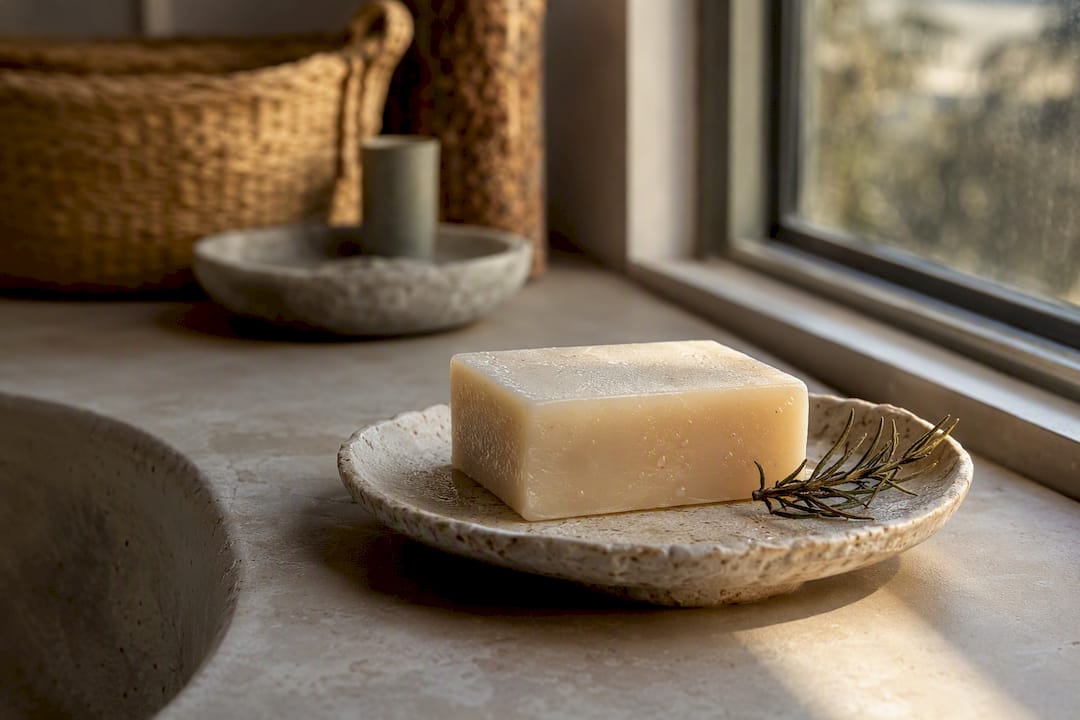
Castile soap, sold as a concentrate, is worth stocking if you want one product for several jobs. Diluted at roughly a quarter cup per gallon of water, it works as a body wash, hand soap, and even a light surface cleaner. Buying it in a large glass or metal container and refilling smaller bottles at home cuts packaging waste dramatically compared with buying single-use plastic bottles repeatedly.
Refill stations, now available in many independent grocery and zero-waste stores, let you bring your own container for shampoo, body wash, and dish soap. Where a store nearby does not exist, buying in bulk glass or metal packaging and decanting into smaller bottles achieves a similar reduction.
- Bar soap for daily face and body washing
- Diluted Castile soap for multipurpose use
- Bulk glass or metal containers refilled at home or in-store
One caution: not every “eco” label on a bottle means less plastic. The University of Colorado’s guide to spotting greenwashing points out that terms like “biodegradable” or “natural” on packaging often say nothing about the actual plastic mass used or whether the container gets recycled. Read the material, not the marketing.
What Are the Best Plastic-Free Oral Care Swaps?
Bamboo-handled toothbrushes cut the plastic handle almost entirely, though most still use nylon bristles, since fully biodegradable bristle materials are still rare and less durable. If bristle waste bothers you, look for brushes with replaceable heads on a reusable bamboo handle instead of tossing the whole brush every three months.
Toothpaste tablets, which you chew and then brush with, eliminate the plastic tube entirely and typically come in glass jars or compostable pouches. Traditional toothpaste in a metal tube is another option, though check locally whether your recycling program accepts it. Few curbside programs take plastic tubes.
- Bamboo toothbrush with a replaceable head, if available
- Toothpaste tablets in a refillable glass jar
- Metal or glass toothpaste alternatives where local recycling supports them
- Silk or plant-fiber floss in a refillable dispenser instead of plastic floss picks
Electric toothbrush owners do not need to switch cold turkey. Keep the handle and swap only the head, and check whether the brand runs a mail-back recycling program for old heads before tossing them.
Shaving and Grooming: Ditching Disposables for Good
A safety razor uses a single replaceable steel blade instead of a plastic-cartridge head packed with five blades sealed in more plastic. One razor handle, made of metal, can last decades, and blades are typically sold in bulk cardboard packaging rather than blister plastic.
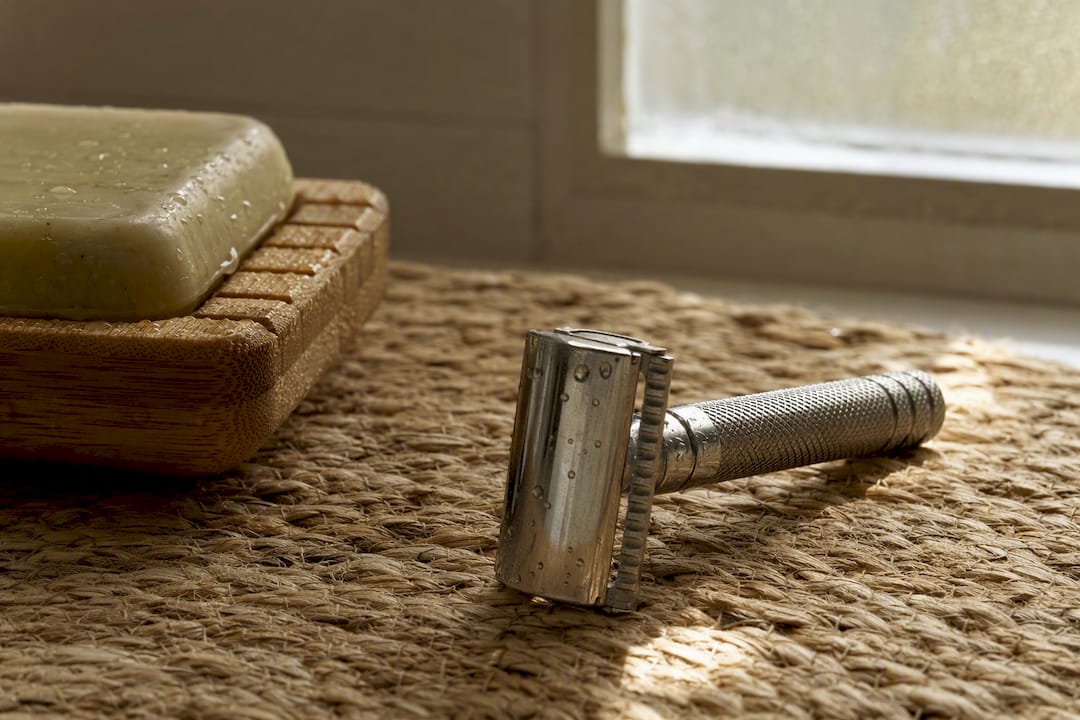
The learning curve is real for the first week or two. Go slower than you think you need to, use less pressure than a cartridge razor trained you to use, and shave with the grain until you get comfortable with the blade angle.
Solid shaving soap paired with a brush replaces aerosol shaving cream cans, and a puck of shaving soap can outlast several cans of foam. If you prefer an electric razor, the most sustainable move is keeping it running as long as possible rather than upgrading for marginal feature gains.
- Metal safety razor with replaceable single blades
- Solid shaving soap and a brush instead of aerosol cream
- Used blades collected in a metal tin, then dropped at a scrap-metal or hazardous-waste recycling point
Pro Tip: Never toss loose razor blades in household trash. Collect them in an old metal tin until it’s full, then take it to a scrap-metal recycler or a household hazardous-waste drop-off.
Why Do Towels and Bath Mats Matter for Microplastics?
Synthetic towels and bath mats made from polyester or nylon shed microfibers every time you wash them, and those fibers flow straight through most washing-machine filters into wastewater. A study published in PLOS One documented significant microfiber release from synthetic textiles during ordinary laundering, one of the most overlooked sources of bathroom microplastic pollution.
You do not need to throw out a functional towel to fix this. A Guppyfriend-style washing bag captures shed fibers during the wash cycle as an interim fix while your current towels are still usable.
- Wash synthetic towels and mats inside a fiber-catching laundry bag
- Replace worn-out towels with GOTS-certified organic cotton or hemp
- Wash bath mats less frequently and on cooler, gentler cycles to reduce fiber shedding
Fixtures, Cleaners, and Refill Systems Worth the Investment
PVC shower curtain liners have drawn scrutiny for releasing volatile organic compounds, especially that “new shower curtain” smell in the first weeks after purchase. A PEVA liner or a fabric curtain with a removable liner avoids that VOC release and typically lasts longer before cracking or growing mildew.
Refill dispensers mounted in the shower, filled from bulk pouches or gallon jugs, eliminate the steady stream of small plastic bottles most households buy for shampoo and body wash. Pair that with a low-flow showerhead, and you get a water-saving co-benefit alongside the plastic reduction, since design guidance from House Beautiful points to durable, well-chosen fixtures as a better long-term investment than frequent replacement.
Simple habits and swaps worth adopting together:
- Replace a cracked or moldy PVC curtain with a PEVA or fabric version
- Install a refill dispenser once and reuse the bottles indefinitely
- Fit a low-flow showerhead for a water and energy co-benefit
- Mix a basic all-purpose cleaner from white vinegar, water, and a few drops of essential oil
- Store it in a reusable glass spray bottle instead of buying a new plastic one each time
- Refill from a concentrate pouch once the bottle runs low
Your 30/90/180-Day Plastic Reduction Plan
Trying to overhaul the entire bathroom in one weekend usually backfires. It gets expensive fast, and you end up with half-used plastic bottles thrown out before their time, which defeats the purpose. A staged plan works better.
- Days 1 to 30: Replace shampoo, conditioner, and body wash as each bottle empties. Buy one safety razor and try it.
- Days 31 to 90: Switch toothpaste to tablets or a metal tube. Add a fiber-catching laundry bag for synthetic towels.
- Days 91 to 180: Replace the shower curtain liner and any worn towels or mats. Install a refill dispenser if you have not already.
The math favors patience. A shampoo bar generally lasts longer and can be more cost-effective per wash than an equivalent amount of liquid shampoo in bottles, and a safety razor pays for itself within a few months compared with a subscription box of disposable cartridges.
| Swap | Typical cost-per-use pattern |
|---|---|
| Shampoo bar vs. bottled shampoo | Bar often lasts 2 to 3 bottles’ worth of washes |
| Safety razor vs. disposable cartridges | Razor handle pays back within a few months of blade savings |
| Bar soap vs. body wash | Bar typically outlasts an equivalent bottle at similar price |
Try one new product at a time and give it a two-week testing window before judging it. Switching everything at once makes it hard to tell which product actually caused an adjustment issue.
Why Trust This Guide
LaTerraTales builds sensitive-skin formulas around minimal ingredient lists and sustainable packaging, which is the same lens this guide applies to every swap recommendation: does it reduce plastic mass, and does it actually work on skin day after day? The Reclaim Design plastic-free bathroom guide and the Plasticproof impact framework both informed the prioritization approach used throughout this article, alongside the NCBI review on microplastics in personal care.
For deeper reading, LaTerraTales’ own resources cover common single-use beauty waste sources, ingredient transparency, and a closer look at microplastics and health.
A swap only counts as progress when it survives daily use, not just the first week of enthusiasm.
How Do You Dispose of Bathroom Plastics Correctly?
Most bathroom plastic is not curbside-recyclable in the way people assume. Pumps, small caps, and squeeze tubes often contain mixed materials that jam sorting machinery, so a shampoo bottle might qualify while its pump top does not.
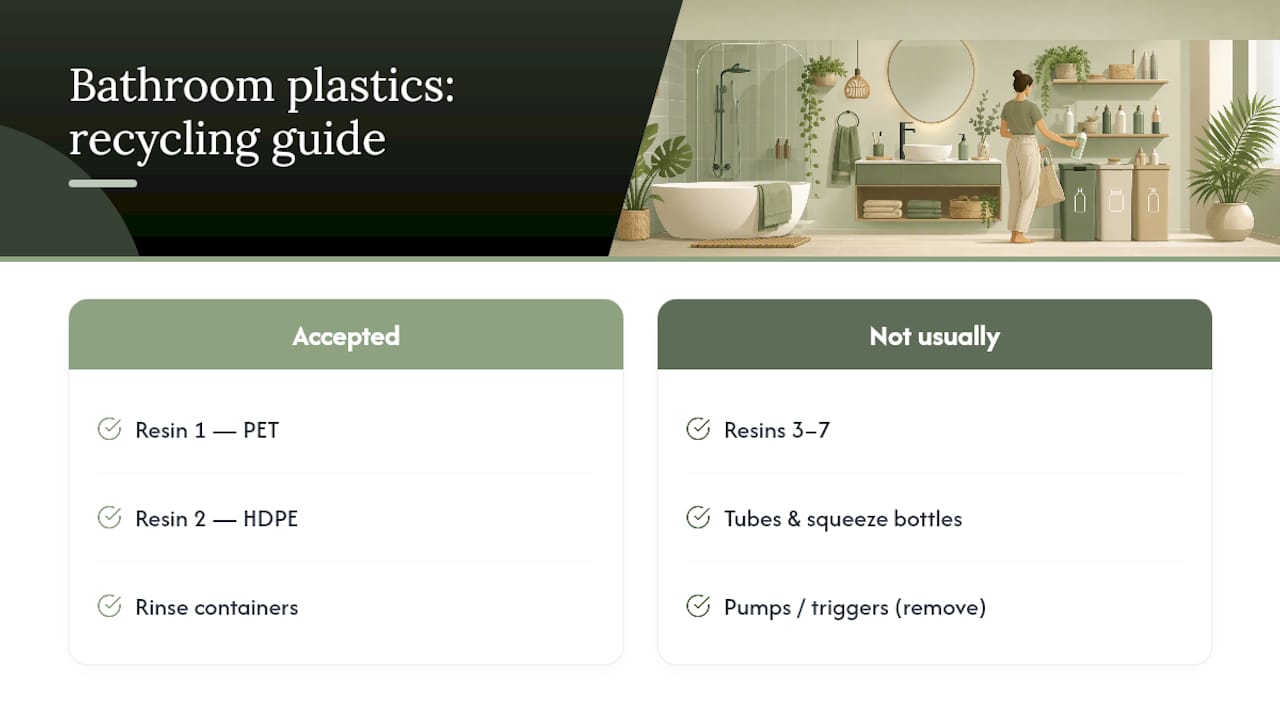
Check the resin code stamped on the bottom of a bottle before tossing it in the recycling bin. Numbers 1 (PET) and 2 (HDPE) are the most widely accepted by municipal programs; numbers 3 through 7, common in tubes and squeeze bottles, are far less likely to be processed even if your local program technically lists them.
Separate the pump or trigger mechanism from the bottle before recycling; the plastic bottle body can usually go in, but the pump mechanism, which mixes metal springs with plastic, typically cannot.
Toothpaste tubes, razor cartridges, and dental floss containers rarely qualify for curbside pickup at all. Some brands run mail-back recycling programs through partners like TerraCycle for hard-to-recycle categories such as razors and oral-care packaging, though availability depends on the specific brand and your region.
Rinse every container before recycling. Residue from shampoo or conditioner can contaminate an entire batch at the sorting facility, which is one of the most common reasons recyclable plastic ends up in a landfill anyway. When in doubt about a specific item, your municipality’s own recycling website is more reliable than the recycling symbol alone, since acceptance varies significantly by processing facility.
What Is the Environmental Impact of Bathroom Plastic?
Bathroom plastic breaks down into two distinct problems: the packaging itself, and the microplastics embedded directly in products or shed from synthetic materials. Both end up in waterways, but through different routes.
Packaging waste, bottles, tubes, and blister packs, typically travels through the landfill or recycling stream. Even when it gets processed correctly, plastic degrades in quality with each recycling cycle, meaning a shampoo bottle recycled today becomes a lower-grade plastic product tomorrow, not another shampoo bottle. Eventually, that material stream reaches a dead end.
Microplastics are a separate and arguably more direct exposure route. The NCBI review on microplastics in personal-care products documents that tiny plastic particles, once used as exfoliating beads in scrubs and toothpaste, pass straight through most wastewater treatment systems and into rivers and oceans. Fish and other aquatic life ingest them, and they eventually cycle back through the food chain.
Synthetic textiles compound the problem in a way most people never consider. Every wash cycle of a polyester towel or bath mat sheds fibers too small for washing-machine filters to catch, adding a steady, invisible stream of plastic into wastewater that has nothing to do with product packaging at all. That is why textile choices belong in the same conversation as bottles and tubes, even though they rarely get mentioned in typical plastic-reduction advice.
Can You Make Your Own Plastic-Free Bathroom Products?
Homemade alternatives work well for a handful of bathroom categories, though they are not a universal fix for everything on your shelf.
A basic all-purpose cleaning spray made from white vinegar, water, and a few drops of essential oil handles most bathroom surfaces, from mirrors to countertops, without buying another plastic spray bottle. Reuse an existing glass or plastic bottle rather than purchasing a new one for this.
Baking soda mixed into a paste with a small amount of water works as a mild abrasive scrub for tubs and sinks, replacing single-use plastic scrub sponges impregnated with cleaning chemicals.
For hair, a diluted apple-cider-vinegar rinse (roughly one tablespoon per cup of water) restores shine and removes product buildup between shampoo-bar washes, doubling as the clarifying step mentioned earlier in this guide.
Homemade deodorant and toothpaste recipes exist widely online, but approach them cautiously. Baking-soda-based DIY deodorants can irritate sensitive underarm skin over time, and DIY toothpaste lacks the fluoride that dental professionals recommend for cavity prevention. For oral care and skin-contact products specifically, a commercially tested tablet, bar, or cream from a brand that discloses its full ingredient list is a safer bet than an improvised recipe, especially for anyone with sensitive skin or existing dental concerns.
Where DIY genuinely shines is in the categories with low formulation risk: surface cleaners, scrubs, and rinses. Save the store-bought route for anything that goes directly on skin, teeth, or hair long-term.
Everyday Habits That Cut Single-Use Plastic Fast
Small daily habits add up faster than most people expect, often faster than a single big swap.
Buying in bulk whenever your household size allows it cuts packaging waste per use, since one large bottle generates less plastic overall than three smaller versions of the same product. Keep a small running list on your phone of which products you have already swapped and which are still due, so you are not caught reordering the same plastic bottle out of habit.
Skip sample-size and travel-size versions of products you already own in full size. They generate a disproportionate amount of packaging relative to the small quantity of product inside, and a reusable travel container filled from your existing full-size product works just as well.
- Decant liquids into reusable travel containers instead of buying minis
- Choose the largest reasonable size when buying anything in plastic
- Say no to free plastic samples at checkout counters when you do not need them
- Keep a small stock of one or two products in transition rather than testing five at once
Bathroom cabinets tend to accumulate half-used products from past experiments. Before buying anything new, do a quick inventory of what is already open, and commit to finishing it before starting the next swap. That single habit, more than any product choice, is often what determines whether a plastic-reduction effort actually sticks past the first month.
How Do You Get Household Members on Board?
Getting an entire household to change bathroom habits is usually harder than changing your own, and pushing too hard tends to backfire.
Start with whoever controls the reordering, since that person has the most leverage over which products actually enter the house. If you share a bathroom with a partner, roommate, or family, frame swaps around what they already care about rather than plastic waste alone. A safety razor is cheaper over time. A shampoo bar takes up less shelf space and never leaks in a suitcase.
Let one person’s success be the demonstration. If you switch to a shampoo bar and your hair looks fine after the adjustment period, that is a more persuasive argument than any statistic you could quote.
- Introduce one swap at a time rather than announcing a full household overhaul
- Replace shared items like hand soap and shower cleaner first, since those decisions affect everyone with the least friction
- Leave the new product next to the old one during the transition so no one feels forced to switch overnight
- Involve kids in age-appropriate swaps, like picking their own toothbrush color or bar-soap scent
Avoid framing every conversation around guilt. Most people respond better to “this actually works and it’s cheaper” than to a lecture about ocean plastic. Consistency from one household member, sustained for a few months, tends to shift the rest of the household’s habits more effectively than any single conversation.
What the Conventional Advice on Bathroom Plastic Gets Wrong
Most plastic-free bathroom advice treats every swap as equally urgent, which sends well-meaning people chasing aesthetic wins, matching glass jars, wooden accessories, before they touch the products actually generating the most waste. That is backward. A shampoo bottle you replace every six weeks matters more than a plastic toothbrush holder you bought once a decade ago.
The other blind spot is pretending every “natural” swap is automatically better. A DIY toothpaste recipe skips fluoride protection. A poorly stored soap bar turns to mush in ten days and gets tossed, plastic bottle waste avoided but money and effort wasted too. Real reduction depends on products that hold up to daily use, not just products that photograph well.
That is where a bar like LaTerraTales’ 100% Natural Handmade Cleanser Bar earns its place in this guide: it is formulated for sensitive skin, arrives with minimal packaging, and solves a genuine high-frequency, high-contact problem rather than a decorative one. Readers should prioritize the products they touch daily, on skin or in the mouth, and treat everything else as a second-phase project once those habits are locked in.
Start Your Low-Waste Bathroom With One Simple Swap
You do not need to replace everything in your bathroom this month. Pick the one product you repurchase most often, and start there.
LaTerraTales built its 100% Natural Handmade Cleanser Bar specifically for this kind of first swap: a gentle, sensitive-skin formula that replaces a plastic bottle with a compact bar wrapped in minimal, sustainable packaging. It cleanses without stripping skin, and because it is solid, it skips the pump, cap, and bottle body that make liquid cleansers such a steady source of bathroom plastic.
If you want to see how it fits alongside the rest of a low-waste routine, browse the full natural skincare collection for sensitive-skin formulas designed with the same minimal-ingredient, minimal-packaging approach. Add the cleanser bar to your next order, place it where your old bottle used to sit, and let the empty bottle be the last one you buy.
Sources
- Occurrence and effect of microplastics in personal care products — NCBI
- Plastic-Free Bathroom Guide | Reclaim Design
- Plastic-Free Bathroom Guide (2026): Every Swap, Ranked by Impact | Plasticproof


