

Biodegradable Ingredients in Beauty: What They Really Do
Biodegradable ingredients in beauty products serve two core purposes: they break down naturally after use, reducing environmental persistence, and they tend to be gentler on your skin’s microbiome compared with many conventional synthetics. The science behind this is grounded in standardized testing, specifically the OECD 301 series, which measures how completely an ingredient breaks down within 28 days under controlled conditions. Ingredients that meet or exceed the readily biodegradable threshold are classified as “readily biodegradable,” a classification relevant for rinse-off products like shampoos and cleansers that flow directly into wastewater systems.
Here is what that means in practice:
- Environmental role: Readily biodegradable ingredients are removed from aquatic environments faster, reducing long-term accumulation and lowering the risk of aquatic toxicity.
- Skin-health role: Many plant-derived biodegradable surfactants and emollients are milder and more microbiome-compatible than their petrochemical counterparts.
- Rinse-off vs. leave-on: The stakes are highest for rinse-off formulas (face washes, shampoos, body washes) because those ingredients intentionally enter waterways. Leave-on products like eye creams and lip balms carry a different risk profile.
“The role of biodegradable ingredients in beauty is two-fold: improve skin biocompatibility and ensure compounds are irreversibly removed from the biosphere after disposal. This is a core goal of green chemistry.” — Integrated Cosmetic Biodegradability Framework
LaTerraTales builds its formulations around this dual principle, selecting plant-based surfactants, traceable bio-based emollients, and cellulose-derived materials that meet or exceed OECD 301 benchmarks.
Table of Contents
- What “biodegradable” actually means for cosmetic ingredients
- What biodegradable ingredients actually change in the environment
- How biodegradable ingredients protect your skin and its microbiome
- The main biodegradable ingredient classes you will find on labels
- How formulators balance biodegradability with performance and shelf life
- Testing, claims, and certifications you can trust in the U.S. market
- How to evaluate biodegradable claims on products and suppliers
- What research and brand practice show about biodegradable beauty
- Common myths about biodegradable beauty ingredients
- Key Takeaways
- Why credible biodegradable ingredients are worth the investment
- LaTerraTales’ biodegradable beauty products, made for conscious skin
- Primary sources and further reading
What “biodegradable” actually means for cosmetic ingredients
Not every ingredient labeled “natural” or “plant-based” is readily biodegradable, and the distinction matters. In cosmetic science, biodegradability falls into two main categories.
Readily biodegradable means an ingredient achieves at least 60% biodegradation within 28 days under a standardized OECD 301 test. This is the gold standard. Inherently biodegradable means an ingredient will eventually break down but does not meet the 28-day threshold under those conditions. For formulators, the gap between these two categories determines how long an ingredient lingers in rivers, lakes, and soil after it washes off your skin.
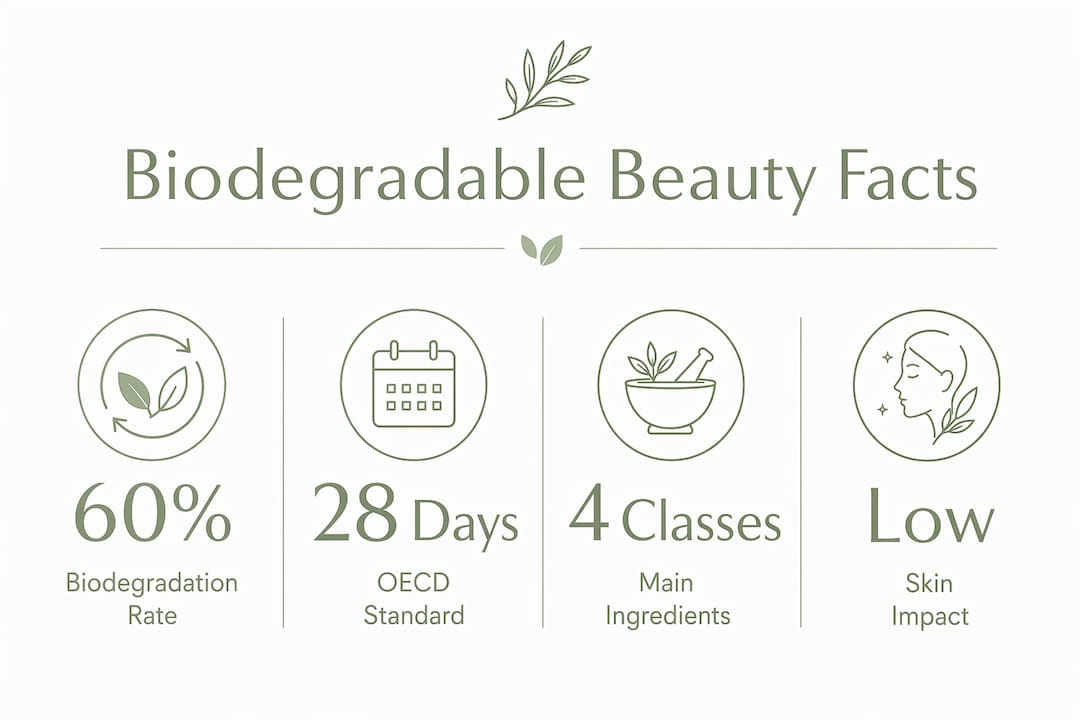
The OECD 301 series includes several test methods, each suited to different ingredient types. OECD 301B (the Modified Sturm Test) and OECD 301F (the Manometric Respirometry Test) are the most commonly cited in cosmetic supplier datasheets. Both measure how much of an ingredient’s organic carbon is converted to CO₂ by microorganisms within 28 days. A concrete example: EcoSense GL-60 HA, a naturally derived glycolipid biosurfactant, achieves greater than 60% biodegradation within 28 days per OECD 301F, placing it firmly in the readily biodegradable category.
Biodegradation happens in different environments, and each has limits. Wastewater treatment plants support aerobic biodegradation well, but not all ingredients fully break down before effluent reaches natural waterways. Anaerobic conditions (like deep sediment) slow or halt the process for many compounds. Organic carbon-based molecules generally biodegrade more readily than engineered synthetics, but synthetics can be designed to biodegrade too — they just require test confirmation, not assumption.
| Test Method | Full Name | Pass Threshold (28 days) | What a Datasheet Should Report |
|---|---|---|---|
| OECD 301B | Modified Sturm Test | ≥60% CO₂ evolution | % biodegradation, test duration, inoculum source |
| OECD 301F | Manometric Respirometry | ≥60% O₂ uptake | % biodegradation, method, controls |
| OECD 301D | Closed Bottle Test | ≥60% O₂ uptake | % biodegradation, test conditions |
An academic framework published in the International Journal of Cosmetic Science proposes measuring a Product Biodegradability Index (PBI) — the percentage of readily biodegradable organic content in a formula — alongside a Global Biodegradability Index (GBI) for entire product portfolios. This approach gives brands a structured way to track and improve biodegradability across their full range, not just ingredient by ingredient.
What biodegradable ingredients actually change in the environment
The environmental case for biodegradable beauty ingredients is real, but it comes with honest limits. Understanding both sides helps you avoid overclaiming and make genuinely better choices.
Core environmental benefits:
- Reduced persistence: Readily biodegradable ingredients are metabolized by microorganisms and removed from aquatic systems faster, leaving less residue in rivers and coastal waters.
- Lower bioaccumulation risk: Ingredients that break down quickly are less likely to accumulate in fish, invertebrates, or sediment over time.
- Reduced aquatic toxicity: Many plant-derived surfactants and bio-based emollients show lower ecotoxicity profiles compared with some conventional petrochemical alternatives.
- Circular compatibility: Biodegradable ingredients integrate more cleanly into composting and natural biological cycles, supporting a more circular product lifecycle.
Realistic limits to keep in mind:
- Biodegradation rates depend heavily on the receiving environment. An ingredient that breaks down well under aerobic wastewater conditions may persist much longer in anaerobic sediment or cold, low-oxygen water.
- A formula containing mostly biodegradable ingredients can still carry non-biodegradable components (certain preservatives, synthetic fragrances, UV filters) that offset the overall environmental benefit.
- Sourcing footprint matters too. A bio-based ingredient grown on monoculture farmland with heavy pesticide use may carry a larger upstream environmental cost than its biodegradability score suggests.
Rinse-off product categories — shampoos, face washes, body washes, and cleansing bars — are the highest-priority targets for biodegradability improvement because they intentionally enter wastewater systems every time you use them. Leave-on products like moisturizers and serums stay on the skin and are absorbed or evaporate rather than washing directly into drains, which changes their environmental risk profile considerably.
Pro Tip: If you are a formulator or brand deciding where to focus reformulation efforts, start with your highest-volume rinse-off SKUs. The environmental return per reformulation dollar is significantly higher there than in leave-on categories.
How biodegradable ingredients protect your skin and its microbiome
The skin-health case for biodegradable ingredients is closely tied to where those ingredients come from. Many plant-derived surfactants and bio-based emollients are structurally closer to the lipids and sugars your skin already produces, which is one reason they tend to be milder.
Alkyl polyglucosides, for example, are derived from glucose and fatty alcohols from plant sources like coconut or corn. Their molecular structure is gentle enough that they are widely used in baby care and sensitive-skin formulations. Compared with sulfate-based surfactants, they are less likely to disrupt the skin’s acid mantle or strip the lipid barrier that keeps moisture in and irritants out. A well-functioning skin barrier directly supports a healthy microbiome, since the microorganisms living on your skin depend on a stable pH and lipid environment.
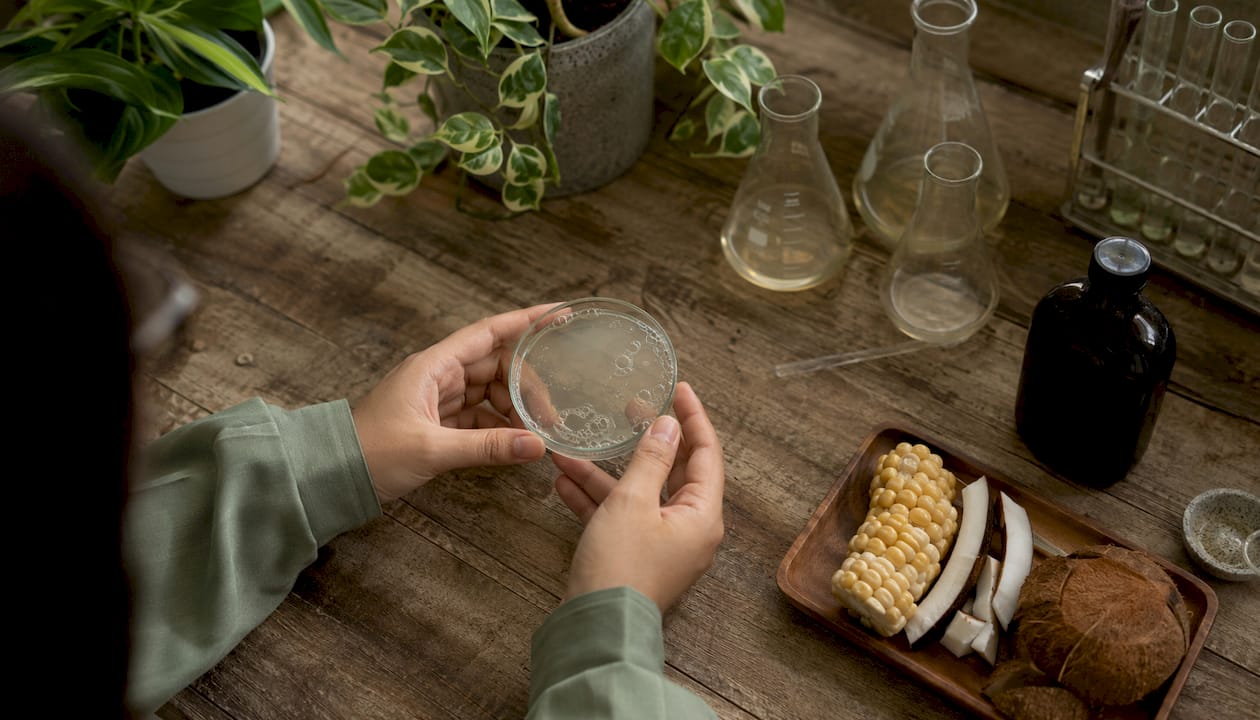
Biosurfactants like EcoSense GL-60 HA are marketed specifically for their low aquatic toxicity and skin-microbiome compatibility, with greater than 99% bio-derived content and non-GMO status. That combination of environmental and skin-health credentials is increasingly what formulators and conscious consumers look for in the same ingredient.
One important safety caveat: biodegradable and natural are not synonyms for hypoallergenic. Essential oils, botanical extracts, and some plant-derived proteins are biodegradable and still carry real allergen risk for sensitive individuals. Fragrance components derived from natural sources are among the most common contact allergens in cosmetics. Shifting to biodegradable ingredients also changes preservation requirements. Bio-based formulas can be more susceptible to microbial contamination, which means preservation systems need careful attention to keep products safe throughout their shelf life. The goal is a formula that is gentle on skin, safe for the environment, and stable enough to protect the consumer from the moment of purchase to the last use.
The main biodegradable ingredient classes you will find on labels
Understanding the ingredient families behind eco-friendly beauty products helps you read labels with confidence and ask better questions of brands. Here are the major classes, what they do, and what to look for on a product label or supplier datasheet.
Alkyl polyglucosides (APGs)
APGs like decyl glucoside and lauryl glucoside are plant-derived surfactants made from glucose and fatty alcohols. They function as cleansers and foam boosters in face washes, shampoos, and body cleansers. Their INCI names appear exactly as “Decyl Glucoside” and “Lauryl Glucoside” on ingredient lists. Both are well-documented for biodegradability and low irritation potential, making them a go-to for sensitive-skin formulations. You will also see Coco-Glucoside and Caprylyl/Capryl Glucoside in the same family.
Biosurfactants
Biosurfactants are surface-active compounds produced by or derived from microorganisms and plants. Glycolipids are the most commercially relevant class in cosmetics. EcoSense GL-60 HA is a glycolipid biosurfactant certified as readily biodegradable within 28 days per OECD 301F. On labels, biosurfactants may appear under names like “Sophorolipid,” “Rhamnolipid,” or under their INCI trade names. Biotechnology advances are making biosurfactants increasingly cost-competitive and scalable for mainstream beauty formulations.
Bio-based emollients: sugarcane squalane and algae oils
Squalane derived from sugarcane (rather than shark liver) is one of the most widely adopted bio-based emollients in modern skincare. It is lightweight, non-comedogenic, and readily biodegradable. AlgaPūr HSHO is an algae-derived oil produced via controlled fermentation that is classified as readily biodegradable per OECD 301B, palm-free, and traceable. It suits vegan and halal formulations and delivers a skin-compatible fatty acid profile without the land and water footprint of conventional crop-based oils. On labels, look for “Squalane” (with a sourcing note from the brand) or “Schizochytrium sp. Oil” for algae-derived variants.

Cellulose-derived materials
Microcrystalline cellulose (MCC) is used as a texture agent, absorbent, and bulking ingredient in powders and creams. Its INCI name is simply “Microcrystalline Cellulose.” More recently, cellulose-based glitters have emerged as a biodegradable alternative to conventional plastic-based cosmetic glitters, which are a significant source of microplastic pollution. These plant-derived glitters are typically made from wood pulp or other cellulose sources and are designed to biodegrade in aquatic environments, unlike their polyester counterparts.
Biodegradable polymers and NaDES
Natural deep eutectic solvents (NaDES) are a newer class of green excipients gaining traction in sustainable beauty formulations. They are formed by combining natural compounds like sugars, amino acids, and organic acids at specific ratios, creating a liquid solvent without the toxicity or persistence concerns of conventional solvents. NaDES can solubilize active ingredients, improve skin penetration, and replace synthetic glycols in some applications. Biodegradable polymers such as xanthan gum, guar gum, and hydroxypropyl guar serve as thickeners and stabilizers with good biodegradation profiles.
Comparison of biodegradable ingredient classes
| Ingredient Class | Environmental Impact / Biodegradation Rate | Skin Compatibility | Formulation Performance | Sourcing Transparency | Cost / Availability |
|---|---|---|---|---|---|
| Alkyl polyglucosides (APGs) | Readily biodegradable; low aquatic toxicity | Excellent; suitable for sensitive skin | Good foam, mild cleansing; lower foam volume than sulfates | Well-established supply chains; widely disclosed | Moderate cost; widely available |
| Biosurfactants (glycolipids) | Readily biodegradable per OECD 301F | Microbiome-friendly; low irritation | Functional foam and emulsification; improving with biotech | Emerging traceability; supplier datasheets available | Higher cost; scaling rapidly |
| Bio-based squalane / algae oils | Readily biodegradable (OECD 301B); low land use (algae) | Excellent; non-comedogenic; sensitive-skin compatible | Lightweight emolliency; excellent skin feel | Traceable fermentation sources; palm-free options | Moderate-to-high cost; growing availability |
| Cellulose-derived materials | Biodegradable in aquatic environments; replaces microplastics | Generally well-tolerated | Texture, absorbency, glitter effects | Wood pulp or agricultural sources; varies by supplier | Moderate cost; increasingly available |
| NaDES / biodegradable polymers | Biodegradable; low persistence | Generally mild; formulation-dependent | Solubilization, thickening, stabilization | Variable; requires supplier documentation | Variable; NaDES still emerging commercially |
How formulators balance biodegradability with performance and shelf life
Switching to biodegradable ingredients is not a simple swap. Each ingredient class brings its own formulation challenges, and understanding them upfront saves significant reformulation time.
Stability and sensory trade-offs are the first hurdle. Plant-derived oils and bio-based emollients can be more susceptible to oxidation than their synthetic counterparts, which affects both shelf life and sensory experience. Formulators often address this by incorporating natural antioxidants like tocopherol (vitamin E) or rosemary extract alongside the biodegradable base. Foam volume from APGs is typically lower than from sodium lauryl sulfate, which some consumers interpret as reduced efficacy. Co-surfactant blends, combining APGs with amphoteric surfactants like cocamidopropyl betaine, can improve foam quality while maintaining a mild, biodegradable profile.
Preservation is a genuine challenge. Bio-based formulas tend to support microbial growth more readily than synthetic ones, particularly water-containing products. The shift away from parabens and conventional preservatives toward phenoxyethanol, ethylhexylglycerin, or natural preservation systems (like certain organic acids) requires careful challenge testing to confirm efficacy. Accelerated stability testing at elevated temperatures and humidity is non-negotiable before launch.
A practical formulation strategy checklist:
- Audit your current formula’s biodegradable organic content using a Product Biodegradability Index approach before reformulating.
- Request OECD 301B or 301F test reports from every surfactant and emollient supplier before finalizing ingredient selection.
- Use co-surfactant blends (APG plus amphoteric) to balance foam performance and mildness.
- Select biodegradable thickeners (xanthan gum, guar gum) and verify their biodegradation data with suppliers.
- Run accelerated stability testing (40°C/75% RH for 12 weeks minimum) on any reformulated product before commercial launch.
- Conduct preservative efficacy testing (USP 51 or equivalent) on every new preservation system.
- Document supplier environmental datasheets and OECD reports for every key ingredient.
Pro Tip: Prioritize reformulating your highest-volume rinse-off products first. A single high-volume shampoo or body wash reformulated with readily biodegradable surfactants delivers far more environmental impact reduction than reformulating a dozen small-batch leave-on products.
Testing, claims, and certifications you can trust in the U.S. market
“Biodegradable” on a product label is not a regulated claim in the United States the way “organic” is under USDA standards. That gap means the burden of verification falls on you, whether you are a consumer or a formulator evaluating suppliers.
The most credible substantiation comes from full OECD 301 test reports. A supplier datasheet that simply states “readily biodegradable” without naming the specific method (301B, 301F, etc.) and the actual percentage achieved at 28 days is not sufficient. Requesting the specific OECD method and the percentage biodegradation figure is the minimum standard for any ingredient you plan to feature in a biodegradability claim.
Third-party certifications add another layer of credibility. The most relevant for cosmetics in the U.S. market include:
- COSMOS (Cosmetic Organic and Natural Standard): Covers both formulation and packaging requirements. Certified products must meet specific biodegradability thresholds for ingredients. COSMOS-certified products are increasingly available in the U.S. through brands that meet the standard’s European-origin requirements.
- Ecocert: A French certification body that operates globally and certifies natural and organic cosmetics. Ecocert certification requires ingredient biodegradability testing and supply chain traceability.
- NSF/ANSI 305: A U.S.-specific standard for personal care products containing organic ingredients, administered by NSF International. It is more accessible for U.S.-based brands than COSMOS.
None of these certifications covers the entire product lifecycle. COSMOS, for example, addresses formulation biodegradability and packaging separately. A COSMOS-certified formula may still come in non-recyclable packaging, and vice versa. Understanding the scope of each certification prevents misreading a label.
Pro Tip: When evaluating a supplier’s biodegradability claim, ask for the full OECD test report, not just the summary statement. The report should name the test method, the inoculum source, the controls used, and the exact percentage biodegradation achieved at 28 days. A supplier who cannot provide this document is not in a position to substantiate a “readily biodegradable” claim.
How to evaluate biodegradable claims on products and suppliers
Whether you are shopping for clean beauty products or sourcing ingredients for a new formula, a structured approach to evaluating biodegradability claims protects you from greenwashing.
For consumers, check for:
- Specific INCI ingredient names on the label (e.g., “Decyl Glucoside,” “Squalane,” “Microcrystalline Cellulose”) rather than vague terms like “plant-derived cleansers.”
- A stated OECD test method (301B or 301F) and a percentage biodegradation figure, either on the product page or in published brand documentation.
- Third-party certification logos (COSMOS, Ecocert, NSF/ANSI 305) with a clear statement of what the certification covers.
- Brands that publish supplier environmental datasheets or ingredient traceability reports, even in summary form.
- A distinction between formula biodegradability and packaging biodegradability. These are separate claims and should be stated separately.
For formulators and procurement teams:
- Request full OECD 301B or 301F test reports for every surfactant, emollient, and polymer in your formula.
- Ask for supplier traceability documentation: where is the raw material sourced, and what is the supply chain from crop or fermentation to finished ingredient?
- Request life-cycle assessment (LCA) data or environmental product declarations where available.
- Obtain sample stability data from the supplier, particularly oxidative stability for bio-based oils.
- Verify that the test was conducted on the ingredient as supplied, not on a chemically similar proxy.
Six questions worth asking any brand or supplier:
- Which specific OECD 301 method was used to test this ingredient?
- What percentage biodegradation was achieved at 28 days?
- Was the test conducted on the ingredient as commercially supplied, or on a reference compound?
- Do you provide a full supplier environmental datasheet for this ingredient?
- What is the sourcing origin of the bio-based feedstock, and is it traceable?
- Does your product-level biodegradability claim cover the formula, the packaging, or both?
What research and brand practice show about biodegradable beauty
The science behind biodegradable beauty ingredients has matured considerably over the past decade. A few key findings shape how serious formulators and brands approach this space.
An integrated framework published in the International Journal of Cosmetic Science proposes measuring biodegradability at the product level, not just the ingredient level, using a Product Biodegradability Index and a portfolio-wide Global Biodegradability Index. This approach gives brands a quantitative tool for tracking progress and setting reformulation targets, rather than relying on ingredient-by-ingredient claims that may not reflect the formula as a whole.
Biotechnology-driven ingredients like algae oils and cellulose-based glitters are removing the historical trade-off between performance and sustainability. AlgaPūr HSHO algae oil, for example, delivers a skin-compatible emollient profile while meeting OECD 301B readily biodegradable criteria and eliminating the palm oil and land-use concerns associated with conventional plant oils. These are not niche ingredients anymore. They are entering mainstream formulation pipelines.
Research on environmentally friendly cosmetic formulations consistently points to rinse-off categories as the highest-leverage intervention point. The evidence supports prioritizing surfactant and emollient biodegradability in shampoos, body washes, and cleansing bars before addressing leave-on products.
LaTerraTales applies these principles directly. The brand selects plant-based skincare ingredients with documented biodegradation data, prioritizes traceable supply chains, and focuses its rinse-off formulations on APG-based surfactant systems. The brand’s evidence-based approach to natural beauty means ingredient choices are backed by supplier datasheets and OECD test references, not just marketing language.
Pro Tip: When communicating biodegradability to consumers, name the specific test method and the percentage achieved rather than using the generic claim “biodegradable.” A statement like “readily biodegradable per OECD 301F (>60% at 28 days)” is verifiable and builds far more trust than a label badge alone.
Common myths about biodegradable beauty ingredients
A few persistent misconceptions make it harder for consumers and brands to make genuinely informed choices. Here is what the evidence actually shows.
Myth: “All natural ingredients are fully biodegradable.” Not accurate. Some natural compounds, including certain plant waxes and mineral-derived ingredients, biodegrade slowly or not at all under standard test conditions. Biodegradability is a property that must be measured, not assumed from origin.
Myth: “Biodegradable means non-toxic.” These are separate properties. An ingredient can be readily biodegradable and still cause aquatic toxicity during the time it takes to break down, or cause skin sensitization in some individuals. Biodegradation rate and toxicity profile are both important and need to be evaluated independently.
Myth: “If the packaging is biodegradable, the formula is too.” Packaging and formula biodegradability are entirely separate claims. A product in a compostable container may contain synthetic surfactants or UV filters with poor biodegradation profiles. Always check what the biodegradability claim actually refers to, and understand the difference between plastic-free packaging and a biodegradable formula.
Myth: “Biodegradable ingredients always perform worse than synthetics.” Biotechnology advances have largely closed this gap. APGs, biosurfactants, and algae-derived emollients now match or exceed the performance of many conventional synthetics in foam quality, skin feel, and stability when formulated correctly.
Myth: “Leave-on products need the same biodegradability focus as rinse-off ones.” The environmental priority is different. Rinse-off formulas enter wastewater directly and consistently. Leave-on products are absorbed, evaporate, or are removed by rinsing incidentally. Formulators should address rinse-off biodegradability first, then extend the approach to leave-on categories.
Realistic trade-offs to accept: Bio-based ingredients can cost more than their synthetic equivalents, particularly biosurfactants and algae-derived oils. Availability can be limited for newer ingredient classes like NaDES. Fragrance solubilization in biodegradable systems sometimes requires creative co-solvent choices. These are solvable challenges, not reasons to avoid the category.
Key Takeaways
Biodegradable ingredients in beauty products reduce environmental persistence and improve skin compatibility, with the greatest impact in rinse-off formulas that enter wastewater systems directly.
| Point | Details |
|---|---|
| Rinse-off is the priority | Shampoos, cleansers, and body washes enter wastewater directly, making them the highest-leverage category for biodegradable reformulation. |
| “Readily biodegradable” has a standard | An ingredient must achieve ≥60% biodegradation within 28 days under OECD 301B or 301F to carry this designation credibly. |
| Biodegradable does not mean non-toxic or non-allergenic | Biodegradation rate and skin or aquatic toxicity are separate properties; both must be evaluated independently. |
| Demand test documentation | Ask for the specific OECD method, the percentage at 28 days, and the full test report, not just a label claim. |
| LaTerraTales’ approach | LaTerraTales selects APG-based surfactants and traceable bio-based emollients with documented OECD biodegradation data for its rinse-off formulations. |
Why credible biodegradable ingredients are worth the investment
At LaTerraTales, we have found that the decision to invest in genuinely biodegradable ingredients is not primarily a marketing decision. It is a quality decision. When you select an ingredient because it meets OECD 301F at greater than 60% biodegradation, is traceable to a specific fermentation or agricultural source, and has been tested for skin compatibility, you are also selecting an ingredient that tends to be purer, more consistent, and better characterized than a conventional synthetic alternative. The rigor required to substantiate a biodegradability claim forces a level of supplier engagement and documentation that improves formula quality across the board.
The brands that will earn lasting consumer trust in this space are not the ones with the most badges on their packaging. They are the ones who can answer the question “Which OECD method, and what percentage at 28 days?” without hesitation. That transparency is what separates a genuine commitment to sustainable beauty formulations from a label claim.
LaTerraTales’ biodegradable beauty products, made for conscious skin
LaTerraTales selects ingredients the way a careful formulator should: with supplier datasheets, OECD biodegradation references, and a clear preference for plant-based surfactants and traceable bio-based emollients. Every rinse-off product in the collection is built around APG-based cleansing systems that meet readily biodegradable criteria, because those are the products that matter most for waterway health.
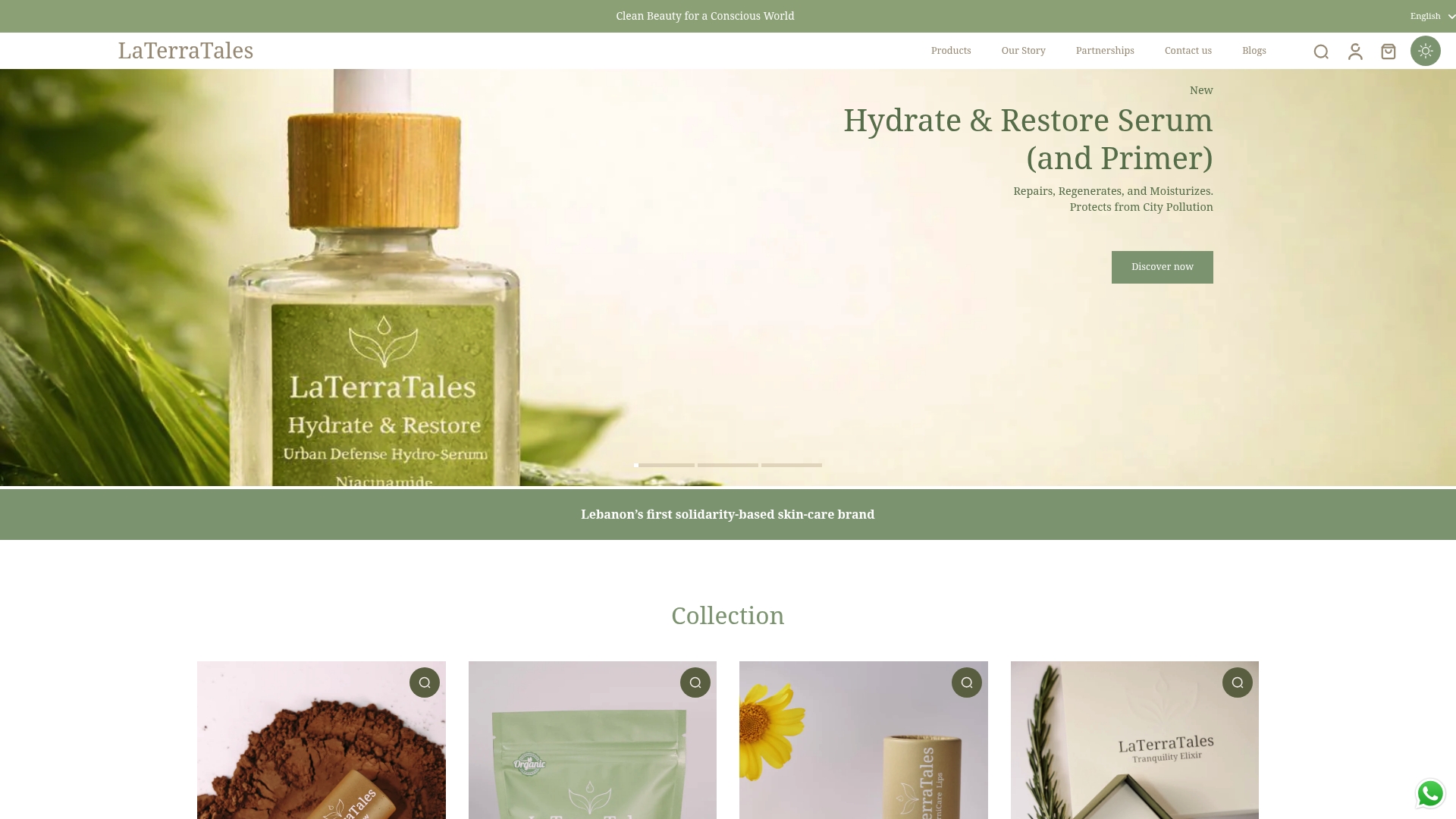
The Natural Handmade Cleanser Bar is a practical example: a solid, rinse-off format that eliminates the water content of conventional liquid cleansers, uses plant-derived surfactants, and comes in minimal packaging. The natural skincare collection extends the same philosophy to leave-on formulas, with botanical oils and bio-based emollients chosen for both skin compatibility and sourcing transparency. If you want to see how these principles translate into products your skin will actually feel, browse the full clean beauty range and look for the ingredient documentation LaTerraTales publishes alongside each product.
Primary sources and further reading
Consumers and formulators who want to verify claims and go deeper into the science will find these sources useful.
- An integrated approach to address the biodegradability of cosmetic formulations — Peer-reviewed framework proposing the Product Biodegradability Index (PBI) and Global Biodegradability Index (GBI) for cosmetic portfolios. The most rigorous academic source on formula-level biodegradability measurement.
- EcoSense GL-60 HA Surfactant — Dow Inc. — Supplier datasheet for a commercially available glycolipid biosurfactant with OECD 301F test data. A model for what a credible supplier datasheet should contain.
- AlgaPūr HSHO Algae Oil — Lubrizol — Product page for an algae-derived emollient with OECD 301B readily biodegradable classification and full traceability documentation.
- The rise of natural ingredients for cosmetics — CAS Insights — Industry analysis of biotechnology-driven ingredient innovation, including algae oils and cellulose-based materials.
- Biodegradability in cosmetics — MPR Labs — Practical explainer on what biodegradability testing means for cosmetic ingredients and what documentation to request from suppliers.
- “Edible Beauty”: The Evolution of Environmentally Friendly Cosmetics — PMC/NCBI — Peer-reviewed review of environmentally friendly cosmetic formulation trends, including biodegradable ingredient classes and green chemistry principles.
- What Does Biodegradable Mean? — Global Bioenergy — Accessible overview of biodegradability definitions, covering organic vs. engineered synthetic compounds and the chemical basis for biodegradation.
Request full OECD 301 test reports directly from your ingredient suppliers for any ingredient you plan to feature in a biodegradability claim. A summary statement is not sufficient; the full report with method, controls, and percentage at 28 days is the standard of evidence worth holding to.


