

The Role of Facial Oils in Aging Skin Care
Facial oils are defined in dermatology as lipid-based topical agents that support the skin’s barrier function by reducing transepidermal water loss, commonly abbreviated as TEWL. The role of facial oils in aging skin is primarily to replenish lipids that decline with age, seal in moisture from water-based products, and soften the visible appearance of fine lines. They do not rebuild collagen, stimulate elastin, or replace clinically proven actives like retinoids or peptides. Understanding what facial oils actually do, and what they cannot do, helps you build a routine that delivers real results for mature skin.
How do facial oils benefit aging skin at the barrier level?
Facial oils benefit aging skin by restoring the lipid layer that protects the outermost surface of the skin, known as the stratum corneum. As skin ages, sebum production drops and the skin’s natural lipid content decreases. This leads to increased water evaporation from the skin’s surface, which shows up as dryness, tightness, and more visible fine lines. A 1991 Archives of Dermatology study confirmed these age-related changes in sebum and water loss, establishing the scientific basis for using oils to reduce moisture evaporation in mature skin.
The primary mechanism is occlusion. Oils form a physical layer over the skin that slows water from escaping. Research confirms that occlusive properties of oils drive sustained hydration outcomes in aging skin more reliably than humectants alone. That means a hyaluronic acid serum works better when an oil seals it in afterward.
Some emollients go further than simple surface occlusion. A 2026 Scientific Reports study found that the ester emollient DTTC penetrates the skin’s lipid matrix and integrates with barrier lipids, providing persistent hydration beyond what a surface film alone can deliver. This distinction matters when choosing a facial oil formulation for mature skin.
- Oils reduce TEWL by forming an occlusive layer over the skin surface.
- They replenish lipids lost through aging, supporting the skin’s protective structure.
- Certain emollient oils integrate into the skin’s lipid layers for longer-lasting hydration.
- Surface barrier support is not the same as deep dermal remodeling. Oils address the former.
Pro Tip: Apply your facial oil as the last step in your evening routine, after your serum and moisturizer, to lock in all the hydration you have already layered on.
What types of facial oils are best suited for mature skin?
Not all facial oils benefit aging skin equally. The fatty acid profile of an oil determines whether it supports or disrupts the skin’s barrier. Oils high in oleic acid, such as marula and coconut oil, can disrupt lipid organization in the skin’s barrier and increase water loss with repeated use. That short-term softness can mask longer-term barrier damage, which is the opposite of what aging skin needs.
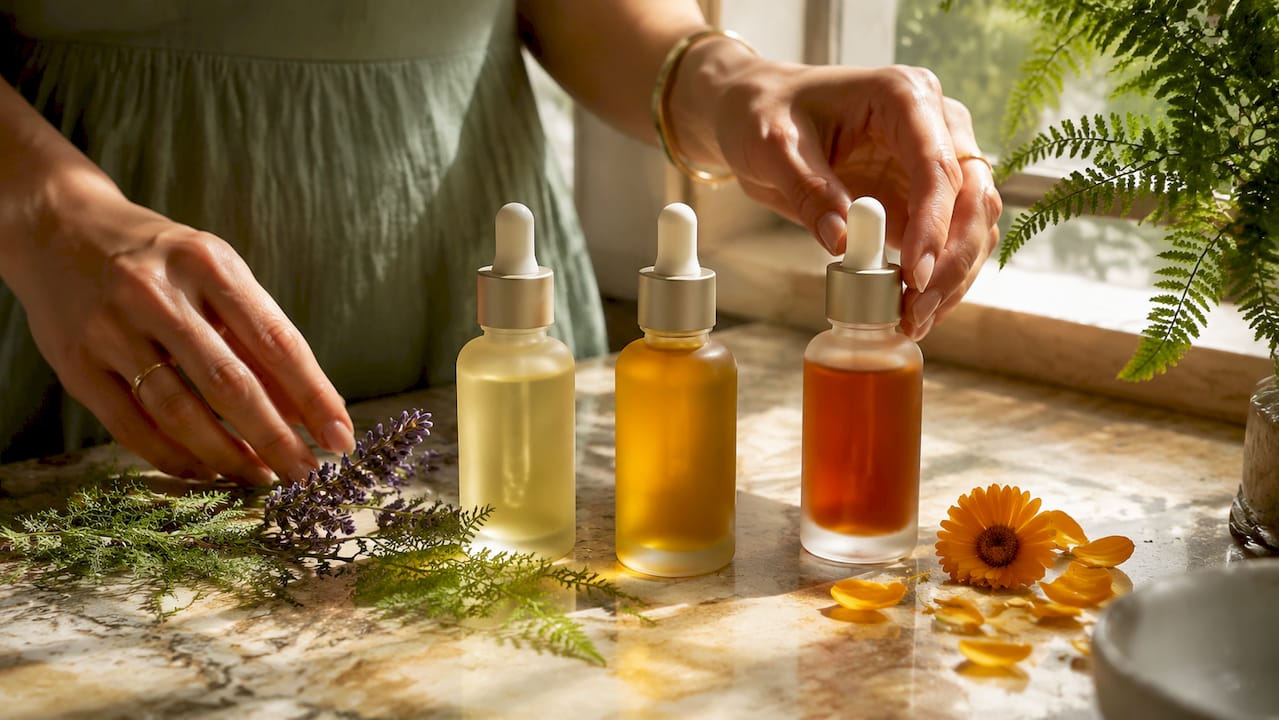
Oils rich in linoleic acid and antioxidants are the better choice for mature skin. Linoleic acid mirrors the fatty acids naturally found in healthy skin lipids, making it more compatible with the barrier structure. Argan oil, jojoba oil, and squalane are three well-documented options with strong track records for aging skin.
| Oil | Key benefit for aging skin | Consideration |
|---|---|---|
| Argan oil | Rich in linoleic acid and vitamin E; antioxidant protection | Light texture; absorbs well |
| Jojoba oil | Structurally similar to sebum; balances without clogging | Suitable for most skin types |
| Squalane | Lightweight; mimics natural skin lipids; very stable | Excellent for sensitive or reactive skin |
| High-oleic oils (e.g., marula) | Immediate softness | May impair barrier with prolonged use |
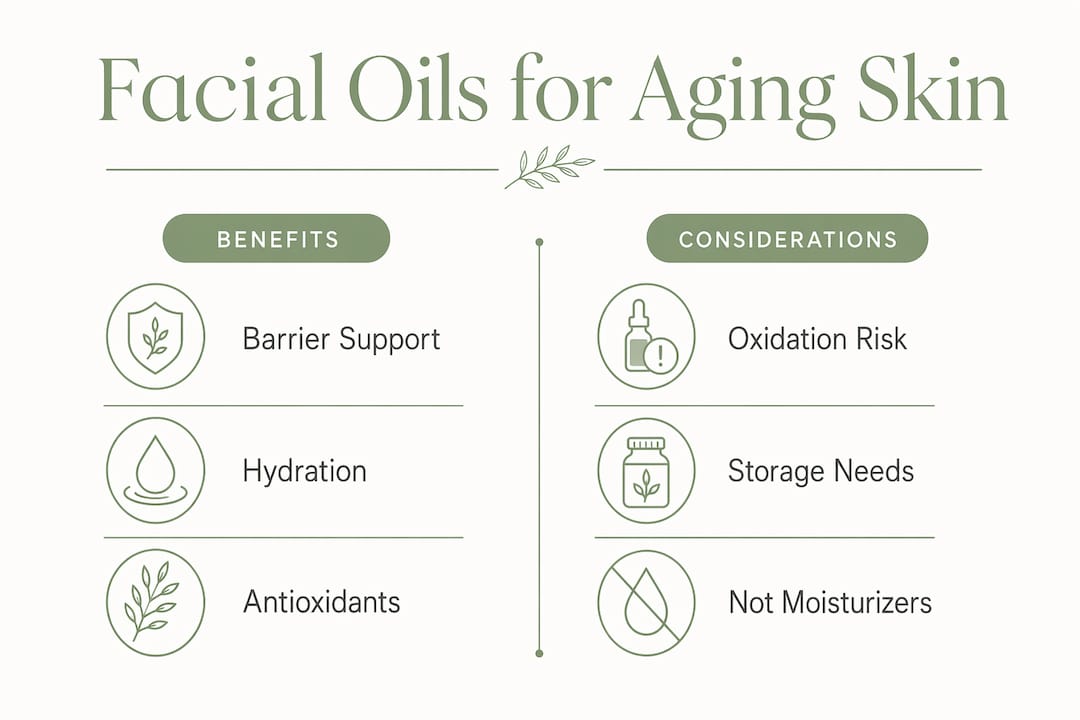
Oxidation is another risk with botanical oils. Oils that oxidize quickly generate free radicals, which accelerate skin aging rather than slow it. Squalane stands out because it is highly stable and resists oxidation, making it a reliable choice for daily use on mature skin.
Pro Tip: Store your facial oils in a cool, dark place and check for a rancid smell before use. Oxidized oil does more harm than good on aging skin.
How should facial oils fit into an anti-aging skincare routine?
Facial oils work best as a sealing step, applied after water-based products have been absorbed. The correct layering order protects both barrier function and the delivery of active ingredients. Applying an oil before a serum can block active ingredient absorption, reducing the effectiveness of treatments like retinoids, niacinamide, or vitamin C.
Follow this sequence for an anti-aging routine that uses facial oils effectively:
- Cleanser. Remove makeup, sunscreen, and daily buildup without stripping the skin.
- Toner or essence. Deliver the first layer of water-based hydration to damp skin.
- Serum. Apply your active ingredients, such as retinol, bakuchiol, or hyaluronic acid, while the skin is still slightly damp.
- Moisturizer. Lock in the serum and add additional humectants and emollients.
- Facial oil. Apply 2 to 4 drops as the final step to seal everything in and reduce overnight water loss.
- Sunscreen (morning only). Always apply SPF after your oil in the morning. Oils do not provide sun protection.
A few additional points worth knowing:
- Facial oils complement retinoids but do not replace them. Retinoids remodel collagen; oils support the surface barrier.
- Dry and mature skin types benefit most from oils in the evening routine. Oily or combination skin types may prefer oils only two to three nights per week.
- Sensitive skin responds best to single-ingredient oils like squalane before trying blended formulas.
What realistic results can you expect from facial oils for aging skin?
Facial oils soften fine lines by improving surface hydration and enhancing light reflection on the skin. That visible improvement is real, but it is surface-level. Oils are supportive barrier players that improve hydration and soften fine lines without directly rebuilding deeper skin structures like collagen or elastin.
A 2026 clinical study on an antioxidant-rich oil-based formulation called Aliophen showed modest improvements in wrinkle depth and skin biomechanics over 56 days. The study confirmed that anti-aging effects depend on actives and the delivery vehicle, not on the oil base alone. The oil formulation helped deliver the polyphenol actives, but the actives did the structural work.
Realistic success metrics for facial oils in mature skin include:
- Reduced dryness and tightness within the first one to two weeks of consistent use.
- Softer, more comfortable skin texture, especially in dry climates or during winter months.
- A subtle plumping effect on fine lines caused by dehydration, not by structural skin changes.
- Improved tolerance for active ingredients like retinoids, because a stronger barrier handles them better.
Measuring success by reductions in dryness and TEWL, rather than by wrinkle elimination, sets accurate expectations. Oils are one part of a complete anti-aging routine, not a standalone solution.
Key takeaways
Facial oils support aging skin primarily through barrier reinforcement and moisture retention, not through structural skin remodeling.
| Point | Details |
|---|---|
| Barrier support is the core function | Facial oils reduce water loss and replenish lipids, softening fine lines caused by dehydration. |
| Oil type matters significantly | Linoleic-rich oils like argan, jojoba, and squalane support the barrier; high-oleic oils may impair it over time. |
| Layering order protects results | Apply oils last in your routine to seal in actives without blocking their absorption. |
| Oils complement, not replace, actives | Retinoids and peptides rebuild skin structure; oils support the surface while those actives work deeper. |
| Measure success by comfort, not wrinkles | Reduced dryness, tightness, and improved texture are the right benchmarks for facial oil performance. |
Laterratales’ perspective on facial oils and mature skin
The most common mistake people make with facial oils is expecting them to do the job of a retinoid. When a facial oil does not “fix” wrinkles in four weeks, they abandon it. That expectation is the problem, not the oil.
At Laterratales, we see facial oils as the foundation of a comfortable, resilient barrier, not as the hero ingredient. A well-supported barrier tolerates active ingredients better, holds hydration longer, and simply feels better day to day. That comfort is not a small thing. Skin that is tight, reactive, and stripped is skin that cannot absorb or benefit from anything else you apply.
The oils we trust most for mature skin are the ones with the clearest lipid compatibility: squalane for its stability and gentleness, and linoleic-rich botanicals for their structural similarity to the skin’s own lipids. We are cautious about high-oleic oils, especially for daily use, because the research on barrier disruption is consistent enough to take seriously.
One observation we return to often: people who add a well-chosen facial oil to a routine that already includes a good serum and moisturizer see noticeably better results than those who use an oil alone. The oil amplifies what is already there. It does not work in isolation.
— Laterratales
How Laterratales supports your aging skin routine
Laterratales formulates natural skincare with barrier health and mature skin in mind. Every product is designed to work with your skin’s biology, not against it.
If you are ready to build a routine that pairs barrier-supportive oils with proven actives, the Bakuchiol Serum Lift & Calm combines squalane with bakuchiol, a natural retinol alternative, for gentle anti-aging support that sensitive and mature skin tolerates well. For a broader look at clean, skin-conscious formulas, explore the full natural skincare collection at Laterratales
FAQ
What does a facial oil actually do for aging skin?
A facial oil reduces water loss from the skin’s surface and replenishes lipids that decline with age. This softens fine lines caused by dehydration and improves overall skin comfort, but it does not rebuild collagen or elastin.
Which facial oils are best for mature skin?
Argan oil, jojoba oil, and squalane are the best-documented choices for mature skin. They are rich in linoleic acid or structurally similar to skin lipids, making them compatible with the skin’s barrier without disrupting it.
Can facial oils replace a moisturizer for aging skin?
Facial oils do not replace moisturizers. Oils are occlusive agents that seal in hydration; moisturizers deliver humectants and emollients that attract and hold water. Both serve different functions and work best together.
When should I apply facial oil in my routine?
Apply facial oil as the last step in your routine, after your serum and moisturizer. Applying it before water-based products can block the absorption of active ingredients like retinoids or niacinamide.
Do facial oils reduce wrinkles?
Facial oils soften the appearance of fine lines by improving hydration and light reflection on the skin’s surface. They do not reduce deep wrinkles or structurally remodel skin the way retinoids or peptides do.


