
What Does Naturally Derived Mean in Beauty Products?
Naturally derived ingredients are defined as materials sourced from nature but chemically or biologically processed before they reach your skin. This distinction sits at the heart of what does naturally derived mean in beauty, and it separates a broad category of ingredients from those that are purely natural and unmodified. Standards like ISO 16128, certifications like COSMOS NATURAL and NATRUE, and brands like Laterratales all navigate this line daily. Understanding it protects you from misleading labels and helps you choose products that genuinely align with your values.
How are naturally derived ingredients defined by standards like ISO 16128?
ISO 16128 is the international technical standard that defines and measures the naturality of cosmetic ingredients. It assigns each ingredient a Natural Index (NI) score between 0 and 1. Ingredients scoring above 0.5 are classified as natural-origin. This scoring system gives formulators and brands a consistent, calculation-based method to describe ingredient origin.

ISO 16128 is not a certification and carries no regulatory enforcement. A brand cannot display an ISO 16128 logo on its packaging the way it would display a COSMOS or NATRUE seal. The standard exists to harmonize how naturality is calculated across the industry, not to police marketing claims. That distinction matters because it means a product can reference ISO 16128 methodology internally while still making vague front-label claims.
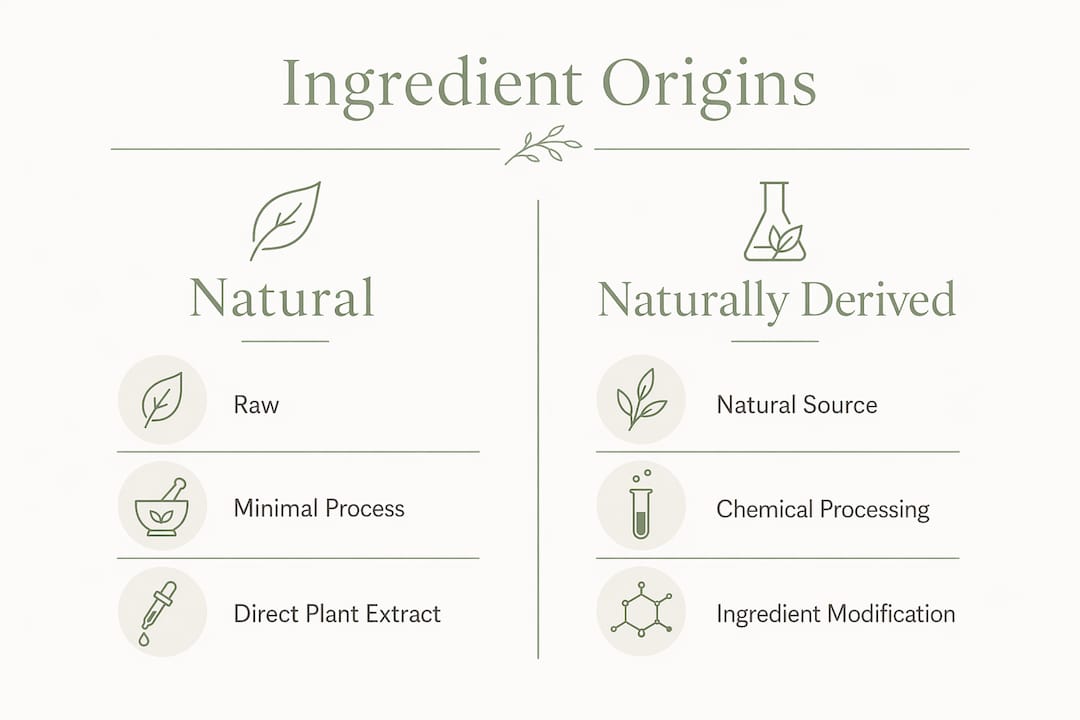
The standard separates ingredients into two main groups. Natural ingredients come from plants, animals, or minerals with minimal processing, such as cold-pressed argan oil or raw shea butter. Naturally derived ingredients start from the same natural sources but undergo chemical or biological transformation, such as glycerin refined from vegetable oil or squalane hydrogenated from olive-derived squalene.
Pro Tip: When a brand cites ISO 16128 on its website, ask whether it publishes the actual NI scores for key ingredients. Transparency at that level signals genuine commitment, not just marketing language.
| Ingredient | Origin | Processing level | ISO classification |
|---|---|---|---|
| Cold-pressed argan oil | Plant (argan kernel) | Minimal | Natural |
| Glycerin from vegetable oil | Plant (palm or soy) | Chemical refining | Naturally derived |
| Squalane | Plant (olive) | Hydrogenation | Naturally derived |
| Synthetic fragrance | Petroleum | Full synthesis | Synthetic (NI = 0) |
What is the difference between “natural” and “naturally derived”?
“Natural” means an ingredient remains mostly unmodified from its source. Aloe vera gel pressed from the leaf, raw jojoba oil, or unrefined shea butter all qualify. The plant or mineral material reaches your product with its original molecular structure largely intact. Your skin receives something close to what nature produced.
“Naturally derived” means a transformation has occurred. Chemical or biological processing changes the ingredient’s structure to improve its stability, texture, or compatibility with other formula components. Glycerin derived from vegetable oil, plant-based emulsifiers, and fermented hyaluronic acid all begin in nature but arrive in your product as something chemically distinct from the raw source material.
The practical difference shows up in three key ways:
- Stability: Naturally derived ingredients often last longer in a formula because processing removes compounds that cause oxidation or spoilage.
- Performance: Refinement can concentrate active compounds or improve skin absorption, making naturally derived ingredients more effective than their raw counterparts.
- Skin tolerance: Processing can remove allergens or irritants present in the raw plant material, making naturally derived versions gentler for sensitive skin.
The term “naturally derived” is far less regulated than “organic,” which has legal definitions in food and, in some markets, cosmetics. Products can claim “natural” with just a single botanical extract alongside up to 95% synthetic fillers, and no legal enforcement stops them. That regulatory gap is where consumer confusion and greenwashing take root.
Why “naturally derived” claims can be misleading
The U.S. FDA does not legally define “natural” or “naturally derived” for cosmetics. This means any brand can print either phrase on its packaging without meeting a defined standard. The beauty industry frequently uses “naturally derived” to appeal to eco-conscious shoppers, sometimes without full ingredient transparency to back the claim.
Common greenwashing tactics include:
- Front-label nature imagery paired with ingredient lists dominated by synthetic compounds
- Vague phrases like “inspired by nature” or “nature-identical” that carry no regulatory weight
- Cherry-picking one botanical ingredient to anchor a “naturally derived” claim while the rest of the formula is synthetic
- Omitting processing details so consumers cannot tell how far removed an ingredient is from its natural source
Industry experts confirm that the only reliable way to assess a naturally derived claim is through ingredient scrutiny or independent certification verification. Reading the INCI (International Nomenclature of Cosmetic Ingredients) list is your first line of defense. The INCI list helps you identify whether an ingredient is plant-based, synthetically produced, or somewhere in between.
Pro Tip: Search any unfamiliar INCI name on the Environmental Working Group’s Skin Deep database. It flags synthetic origin and safety concerns in plain language, no chemistry degree required.
Look for third-party certifications that require audited compliance, not just self-reported claims. COSMOS NATURAL requires at least 95% naturally sourced ingredients and prohibits parabens, genetically modified ingredients, and animal testing. NATRUE categorizes substances as natural, derived natural, or nature-identical, with strict thresholds for each. The Soil Association Organic certification applies similar rigor. These certifications involve third-party audits and require ongoing compliance, making them the most trustworthy signals on a beauty label.
Examples of naturally derived ingredients in skincare formulations
Naturally derived ingredients appear in almost every modern skincare formula. Understanding what they are and why they are processed helps you read labels with confidence.
- Glycerin (plant-derived): Extracted from vegetable oils through saponification, glycerin draws moisture into the skin and improves formula texture. It is one of the most studied humectants in dermatology and is well tolerated by sensitive skin.
- Squalane: Derived from olive-sourced squalene through hydrogenation, squalane is a stable, lightweight emollient. Chemically modified naturally derived ingredients like squalane start from natural raw materials but undergo refinement to improve performance and shelf life.
- Plant-based emulsifiers: Cargill Beauty’s nature-derived emulsifiers, including Botany Design and StarDesign Power, are plant-based and biodegradable, offering petroleum-free alternatives that suit sensitive skin while maintaining formula stability.
- Fermented hyaluronic acid: Hyaluronic acid is produced through bacterial fermentation of plant sugars. Fermentation is a biological transformation, placing this ingredient firmly in the naturally derived category.
- Plant-derived esters: Ingredients like cetyl alcohol (from coconut or palm) and cetearyl glucoside (from glucose and fatty alcohols) are processed to create the smooth, skin-friendly textures you feel in lotions and creams.
Many naturally derived ingredients require complex extraction, purification, or fermentation to achieve the safety, stability, and compatibility that modern beauty formulations demand. The processing is not a compromise of natural origin. It is what makes these ingredients reliable and effective on your skin. You can explore how botanical oils fit into this picture for a deeper look at plant-based ingredient benefits.
How to choose truly natural or high-quality naturally derived beauty products
Choosing well means looking past the front label and applying a consistent evaluation process. These steps give you a reliable framework.
- Check for independent certifications. Look for COSMOS NATURAL, NATRUE, or Soil Association Organic seals. These require third-party audits and verified ingredient sourcing, not just brand self-declaration.
- Read the full INCI list. Ingredients appear in descending order by concentration. If the first five ingredients are synthetic and the botanical extract appears near the bottom, the product is not meaningfully natural.
- Look for percentage transparency. Brands that publish the percentage of natural or naturally derived ingredients in their formula demonstrate genuine commitment. This practice aligns with ISO 16128 methodology and signals formulator integrity.
- Prioritize sensitive skin formulations. Naturally derived ingredients processed to remove allergens and irritants are often better tolerated than raw botanicals. Look for labels that specify “dermatologically tested” alongside natural claims.
- Assess sustainability credentials. Naturally sourced skincare should also consider environmental impact. Biodegradable ingredients, recyclable packaging, and responsible sourcing practices indicate a brand that takes the full picture seriously.
- Use brand transparency as a filter. Brands that publish their ingredient sourcing philosophy, explain their processing methods, and welcome questions about their formulas are more trustworthy than those that rely on vague nature imagery. Laterratales publishes ingredient rationale across its product range as a standard practice.
Verified certifications are the single most reliable shortcut when you do not have time to research every INCI name. Pair certification checks with a quick scan of the ingredient list, and you cover the most important ground in under two minutes.
Key takeaways
Naturally derived ingredients are not the same as natural ingredients, and that distinction determines whether a product’s claims are meaningful or just marketing.
| Point | Details |
|---|---|
| Definition clarity | Naturally derived means natural-origin but chemically or biologically processed, not unmodified. |
| ISO 16128 framework | ISO 16128 assigns NI scores to ingredients but is not a certification or regulatory standard. |
| Greenwashing risk | No U.S. law defines “naturally derived,” so front-label claims require independent verification. |
| Certification value | COSMOS NATURAL and NATRUE seals require third-party audits and verified ingredient thresholds. |
| Practical selection | Read the full INCI list, check certifications, and favor brands that publish ingredient sourcing details. |
What we have learned from formulating with naturally derived ingredients
At Laterratales, we have spent years working at the intersection of nature and science, and the most honest thing we can tell you is this: the term “naturally derived” is both genuinely useful and genuinely abused. We use naturally derived ingredients in our formulas because they perform better, last longer, and tolerate sensitive skin more reliably than many raw botanicals. But we also know that the phrase alone means nothing without the sourcing documentation and certification to back it up.
What concerns us most is how confidently some brands use “naturally derived” as a full stop, as if the phrase itself is the answer. It is not. The answer lives in the INCI list, the NI score, the certification seal, and the willingness of a brand to explain its choices. We publish our ingredient rationale because we believe you deserve to understand what you are putting on your skin, not just trust a front label.
The beauty industry is moving toward greater transparency, and that is genuinely good news. But the pace is uneven. Until regulation catches up, your best protection is knowledge. Learn to read an INCI list. Recognize the certifications that carry real weight. And choose brands that treat ingredient transparency as a baseline, not a differentiator. For a broader look at how evidence-based natural beauty works in practice, that resource is worth your time.
— Laterratales
Naturally derived beauty products from Laterratales
Laterratales builds every formula around ingredients with verified natural or naturally derived origin, selected for both skin performance and environmental responsibility.
Every product in the Laterratales natural skincare collection is formulated for sensitive skin, with ingredient sourcing you can trace and certifications you can verify. From solid cleansing bars to botanical oils and wellness infusions, each formula reflects the same standard: nature-backed, science-supported, and fully transparent. If you are ready to move beyond vague labels and into skincare you can trust, the Laterratales collection is a clear starting point. You can also take the skin diagnostic quiz to find the right products for your specific skin type and concerns.
FAQ
What does “naturally derived” mean in beauty products?
Naturally derived means an ingredient originates from a natural source, such as a plant or mineral, but has been chemically or biologically processed before use. This distinguishes it from purely natural ingredients, which remain mostly unmodified from their source.
Is naturally derived the same as natural in skincare?
No. Natural ingredients are minimally processed and close to their raw form, like cold-pressed oils or raw plant extracts. Naturally derived ingredients undergo transformation, such as fermentation, hydrogenation, or chemical refining, to improve stability or performance.
Is naturally derived better for sensitive skin?
Naturally derived ingredients are often better tolerated by sensitive skin than raw botanicals, because processing can remove allergens and irritants present in the unrefined plant material. Look for formulas that are dermatologically tested alongside their natural claims.
How can I tell if a beauty product is genuinely naturally derived?
Read the full INCI ingredient list and look for independent certifications like COSMOS NATURAL or NATRUE, which require third-party audits. Certification seals are more reliable than front-label marketing phrases.
Does the FDA regulate “naturally derived” claims on beauty products?
The FDA does not legally define “naturally derived” or “natural” for cosmetics. This means brands can use these terms without meeting any defined standard, which is why independent certifications and ingredient list transparency matter so much.


