
What Is Clean Beauty? A Guide for Lebanese Consumers
Clean beauty is the use of non-toxic, transparently labeled, ethically sourced skincare and cosmetic products that prioritize both your health and the environment. The term has exploded across social media and store shelves in Lebanon and worldwide, yet no government body has officially defined it. That gap matters. Without a legal standard, any brand can call its products “clean” without meeting a single verified requirement. Understanding what clean beauty actually means gives you the power to cut through the noise and choose products that genuinely protect your skin.
What is clean beauty, and what defines it?
Clean beauty has no government-regulated definition, which means every brand sets its own rules. The core principles that most credible frameworks agree on include non-toxic formulas, full ingredient transparency, ethical sourcing, and a commitment to health equity. Organizations like the Clean Beauty Coalition have pushed to standardize these principles, but legal enforcement remains absent.
The health equity dimension is one the beauty industry rarely discusses openly. Black women are exposed to 80% more toxic beauty ingredients than other groups, and 1 in 12 products marketed to their communities ranks as highly hazardous. That statistic reveals clean beauty is not just a lifestyle preference. It is a public health issue.
The FDA does not define “clean beauty”, so different frameworks have emerged to fill the gap: retailer-defined standards, third-party certifications, and community-built definitions. Each draws its own line. Knowing which framework a product follows tells you far more than any front-label claim.

What ingredients does clean beauty avoid?
Clean beauty products typically exclude a core set of ingredients linked to hormone disruption, skin irritation, or long-term health concerns. The most commonly avoided include:
- Parabens (preservatives linked to endocrine disruption)
- Sulfates such as sodium lauryl sulfate, which strip the skin barrier
- Phthalates, often hidden inside “fragrance” listings
- PEGs (polyethylene glycols), which can be contaminated with carcinogens
- BHA and BHT, synthetic antioxidants flagged by the European Union
- Unspecified synthetic fragrance, which can mask dozens of undisclosed chemicals
- EDTA, a chelating agent with environmental persistence concerns
Reading the ingredient list is the only reliable way to verify a product’s safety. Front-of-package claims like “natural” or “pure” carry no legal weight.
Certifications offer a stronger signal. EWG Verified and MADE SAFE both require independent audits and documentation, making them the most rigorous clean beauty definitions available outside of government regulation. Sephora Clean is a retailer-defined standard that bans over 50 ingredients, but it is still a brand-controlled list, not an independent audit.
Pro Tip: When you pick up a product, flip it over immediately. The ingredient list on the back is your real source of truth, not the claims on the front.
Do natural ingredients actually work? The science says yes
The biggest skepticism around clean beauty is whether natural ingredients can match the performance of synthetic ones. Clinical research increasingly answers that question with evidence.
A 12-week randomized human trial on GABALAGEN, a marine-derived nutricosmetic ingredient combining fish collagen and GABA, showed skin hydration improved by 20% and wrinkle depth reduced by 15%. The trial reported a 94% completion rate with no adverse effects. Those are results comparable to many synthetic actives, delivered by an ingredient sourced from the sea.
Plant-derived ingredients show similar promise. Bioactive peptides extracted from tree peony flowers have demonstrated antioxidant, moisturizing, and anti-wrinkle effects without cytotoxicity in lab studies. Researchers identified 54 small-molecule peptides with dose-dependent efficacy, meaning the more you use, the more benefit you see, within safe limits.
| Ingredient | Source | Proven Benefit |
|---|---|---|
| GABALAGEN | Marine (fish collagen + GABA) | +20% hydration, -15% wrinkle depth |
| Tree peony peptides | Plant (Paeonia suffruticosa) | Antioxidant, moisturizing, anti-wrinkle |
| Bacterial cellulose nanofibrils | Microbial fermentation | Hydration without pore clogging |
| Bakuchiol | Babchi plant | Retinol-like results, gentler on sensitive skin |
Sustainable innovation is also reshaping formulation. Bacterial cellulose nanofibrils (BCNF) are emerging as biocompatible, sustainable alternatives to synthetic silicones. They hydrate and smooth skin without creating the false barrier that silicones leave behind. This kind of science-backed ingredient development is exactly what separates credible clean beauty from marketing spin.
Pro Tip: Look for products that cite clinical studies or list specific active concentrations. Vague claims like “powered by nature” tell you nothing. A named ingredient with a published study tells you everything.
What are the biggest misconceptions about clean beauty?
The most damaging myth in clean beauty is that “clean” means “chemical-free.” All ingredients are chemical compounds, including water, vitamin C, and shea butter. The goal of clean beauty is safety and transparency, not the avoidance of chemistry itself. Conflating the two leads people to distrust effective natural actives and fall for vague marketing instead.
“Cleanwashing” is the industry’s version of greenwashing. Expert Claire Louvet describes it as brands marketing products as clean without genuine ingredient safety behind the claim. A brand might remove parabens but replace them with a lesser-known preservative that causes equal or greater irritation. Because no law governs the word “clean,” that swap still qualifies as a marketing win.
“Clean is a spectrum, not a binary. A product can remove one controversial ingredient and add another. The label tells you the story the brand wants you to hear. The ingredient list tells you the truth.” — Expert Claire Louvet, via The Ethicalist
The lack of standardization also means brands self-select their own ingredient avoidance lists with no external oversight. One brand’s “clean” may ban 10 ingredients. Another’s may ban 1,500. Both can legally use the same label. Your job as a consumer is to look past the marketing and read the actual formula.
How can Lebanese consumers choose clean beauty products?
Lebanon does not have a national clean beauty certification, but you can still make well-informed choices using globally recognized tools and a few practical habits.
-
Read the INCI list. Every cosmetic sold in Lebanon must list ingredients by their International Nomenclature of Cosmetic Ingredients (INCI) names. Learn the red-flag names: methylparaben, propylparaben, sodium lauryl sulfate, parfum (which hides phthalates), and BHT.
-
Check third-party certifications. EWG Verified and MADE SAFE are the gold standards. If a product carries one of these seals, an independent body has reviewed the formula. Retailer standards like Sephora Clean are a secondary signal, not a guarantee.
-
Use the Clean Beauty Coalition’s resources. The Clean Beauty Coalition offers consumer pledges and educational tools that help you understand ingredient safety without needing a chemistry degree.
-
Prioritize sustainable packaging. In Lebanon, where waste management infrastructure is limited, packaging matters. Glass, aluminum, and refillable formats reduce your environmental footprint meaningfully. Brands that invest in sustainable packaging usually invest equally in their formulas.
-
Support local and regional brands with transparent sourcing. Laterratales, a French-Lebanese brand available in Lebanon, publishes its ingredient rationale and focuses on plant-based, ethically sourced formulas for sensitive skin. Choosing brands that explain their “why” is a reliable proxy for genuine clean commitment.
Pro Tip: Download the Think Dirty or EWG Skin Deep app before your next shopping trip. Scan a product’s barcode and get an instant safety rating based on its ingredient list, not its packaging.
For a deeper look at switching to natural skincare in Lebanon, Laterratales has published a practical local guide worth bookmarking.
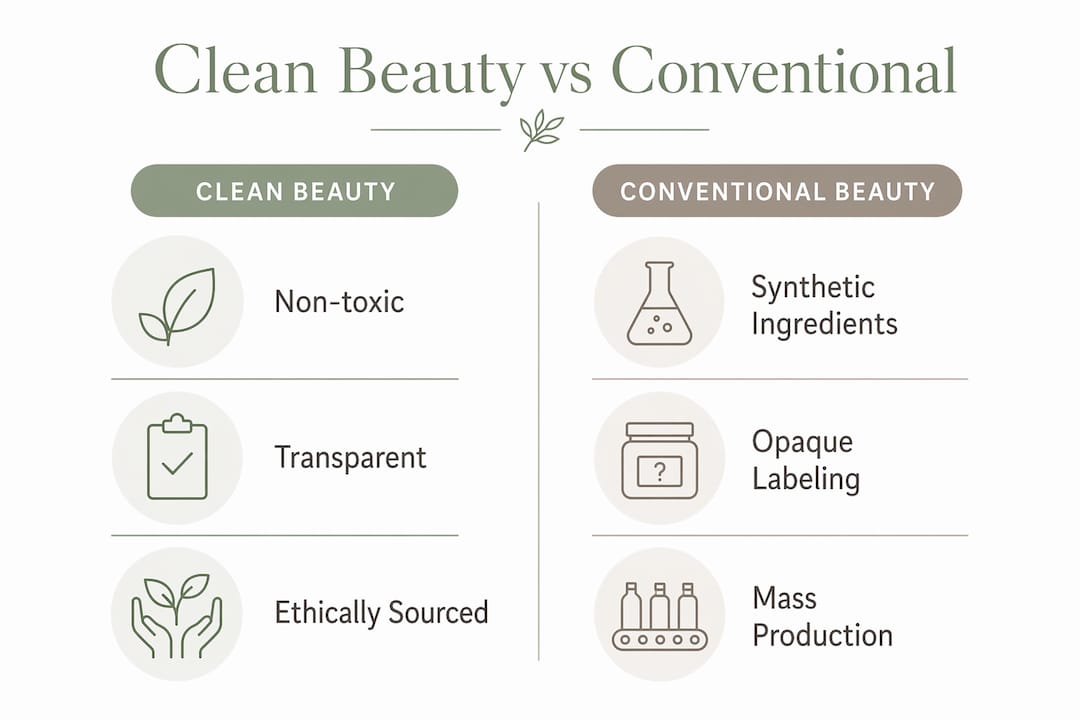
Clean beauty vs. conventional beauty: what actually differs?
The differences between clean and conventional beauty go beyond ingredient lists. They reflect different priorities in formulation, sourcing, and environmental impact.
| Factor | Clean Beauty | Conventional Beauty |
|---|---|---|
| Ingredient philosophy | Avoid known toxins; prioritize safety data | Performance-first; safety assessed post-market |
| Transparency | Full INCI disclosure + sourcing context | INCI required by law; sourcing rarely disclosed |
| Certifications | EWG Verified, MADE SAFE, organic seals | No equivalent third-party safety certification |
| Environmental impact | Biodegradable formulas, sustainable packaging | Synthetic polymers, plastic-heavy packaging |
| Price in Lebanon | Generally higher due to sourcing costs | Widely available at lower price points |
| Skin sensitivity | Formulated for reactive and sensitive skin | May contain irritants like synthetic fragrance |
The price gap is real, but it narrows when you consider product concentration. Clean beauty formulas often use higher-quality actives at effective doses, meaning you use less per application. A science-backed natural serum with bakuchiol or niacinamide can outperform a cheaper conventional product that dilutes its actives heavily.
Key Takeaways
Clean beauty is defined by ingredient safety, transparency, and ethical sourcing, not by the absence of chemistry or the presence of a “natural” label.
| Point | Details |
|---|---|
| No official definition exists | “Clean” is unregulated; always verify through certifications or ingredient lists, not front labels. |
| Natural ingredients have clinical backing | GABALAGEN improved hydration by 20% and reduced wrinkle depth by 15% in a 12-week trial. |
| Cleanwashing is a real risk | Brands can remove one ingredient and add a worse one while still calling the product “clean.” |
| Certifications are your strongest signal | EWG Verified and MADE SAFE require independent audits, unlike retailer or brand-defined standards. |
| Lebanese consumers have practical tools | INCI reading, certification checks, and apps like Think Dirty work regardless of local regulation. |
The truth about clean beauty that most articles skip
At Laterratales, we have spent years formulating products for sensitive skin in Lebanon, and the most honest thing we can tell you is this: the clean beauty market rewards skepticism. We have seen brands launch “clean” lines by simply removing parabens and adding a botanical extract to the name. That is not clean beauty. That is rebranding.
What actually changes skin is ingredient quality, concentration, and compatibility with your skin barrier. When we developed our Bakuchiol Serum, we chose bakuchiol because the clinical evidence supports it as a gentler retinol alternative, not because it sounds natural. The science came first. The story followed.
We also believe ingredient literacy is the single most empowering thing a Lebanese consumer can develop. You do not need to memorize every INCI name. You need to know five or six red flags, understand what certifications actually mean, and stop trusting front labels. That shift takes about 20 minutes of reading and protects you for a lifetime of purchases.
The future of clean beauty is not about purity theater. It is about evidence-based natural beauty, where every ingredient earns its place through safety data and clinical results. That is the standard we hold ourselves to, and it is the standard you deserve from every brand you choose.
— Laterratales
Discover Laterratales clean beauty products
If you are ready to put these principles into practice, Laterratales makes it straightforward. Every product in our collection is formulated without parabens, synthetic fragrance, or PEGs, and each formula is designed specifically for sensitive skin in Lebanon’s climate.
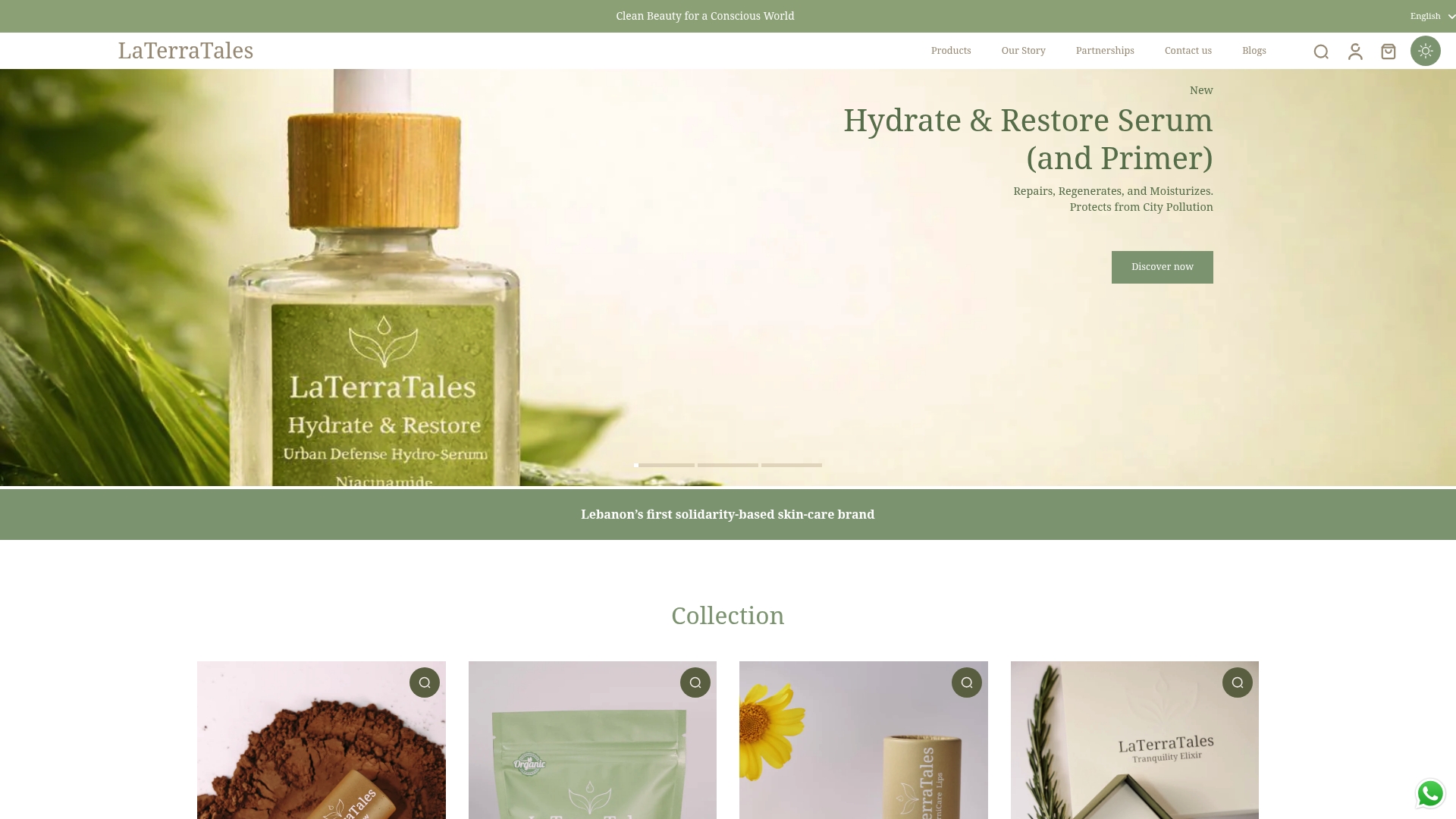
Our natural skincare collection includes bestsellers like the Bakuchiol Serum, the 100% Natural Handmade Cleanser Bar, and our Hyaluronic Acid and Niacinamide Serum. Not sure where to start? Take our skin diagnostic quiz and get a personalized recommendation based on your skin type, concerns, and ingredient preferences. Clean beauty should feel personal, not overwhelming.
FAQ
What is the clean beauty definition in simple terms?
Clean beauty refers to products formulated without ingredients known or suspected to harm human health, with full ingredient transparency and ethical sourcing. No government body has officially defined the term, so definitions vary by brand and certification body.
Is clean beauty actually safer than conventional beauty?
Clean beauty products that carry third-party certifications like EWG Verified or MADE SAFE have been independently audited for ingredient safety, making them a more reliable choice than uncertified conventional products. However, not all products labeled “clean” meet a rigorous standard, so reading the ingredient list remains necessary.
What ingredients should I avoid in beauty products?
The core ingredients to avoid include parabens, sulfates, phthalates, unspecified synthetic fragrance, PEGs, BHA, BHT, and EDTA. These are linked to hormone disruption, skin irritation, or environmental harm, and are excluded by most credible clean beauty frameworks.
Does “natural” mean the same thing as “clean beauty”?
No. “Natural” refers to ingredient origin, while “clean” refers to safety and transparency. A product can use natural ingredients that are still irritating or poorly sourced, and a clean product may include safe synthetic ingredients. The two terms overlap but are not interchangeable.
How do I find clean beauty products in Lebanon?
Look for products carrying EWG Verified or MADE SAFE certifications, read the INCI ingredient list on every product, and use apps like Think Dirty or EWG Skin Deep to check formulas quickly. Local brands like Laterratales that publish their ingredient rationale and sourcing practices are a strong starting point.
Recommended
Share


