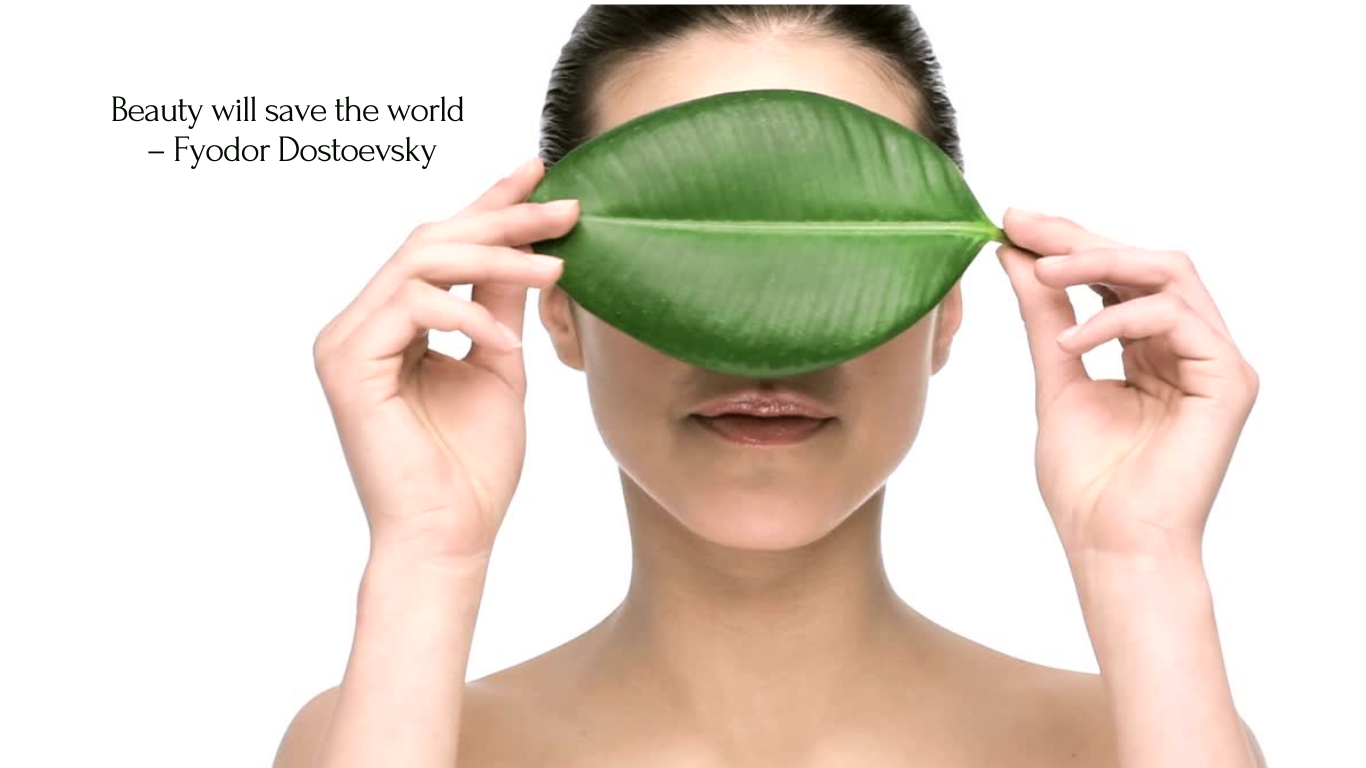

What Is the Local Beauty Movement, and Why It's Growing
The local beauty movement is a shift toward skincare and wellness products made by brands rooted in a specific place, using regionally sourced ingredients, short supply chains, and formulas tuned to local climates and skin types. It’s built on a few core ideas:
- Locally sourced ingredients grown or gathered close to where the product is made
- Regional formulation tailored to specific climates and skin needs
- Short, transparent supply chains from farm or forager to shelf
- Community engagement through local events, artisan partnerships, and shared stories
- Sustainability as a built-in principle, not an afterthought
The momentum is real: 55% of consumers say they trust “locally sourced” claims, and Mintel’s beauty forecasts point toward products that integrate wellness, not just cosmetics. LaTerraTales, a French-Lebanese skincare brand, builds its entire model around this same idea.
Key Takeaways
Local beauty works because it shortens the distance between ingredient and formula, ingredient and origin, and brand and customer.
| Point | Details |
|---|---|
| Trust drives purchase | 55% of consumers trust “locally sourced” claims, making transparency a real conversion factor. |
| Formulation follows climate | Products built for humid coastal climates rarely perform the same in dry regions, so regional tuning matters. |
| Greenwashing is a real risk | Check for named farms, batch details, and full ingredient lists before trusting a “local” claim. |
| Wellness integration is the next wave | Multi-sensory, health-integrated formulas are reshaping how local brands compete. |
| LaTerraTales applies these principles | Its solid cleansing bars and botanical oils are formulated for sensitive skin in Mediterranean climates with transparent ingredient lists. |
Table of Contents
- What Defines the Local Beauty Movement?
- Why Does Local Beauty Matter Right Now?
- How Do Local Beauty Brands Actually Operate?
- How Can You Tell a Genuine Local Beauty Brand From a Marketing Claim?
- What Are the Criticisms and Limits of Local Beauty?
- How LaTerraTales Practices Local-Minded Beauty
- Where Is Local Beauty Heading Next?
- Why Local Beauty Matters to Me
- Bring Local Beauty into Your Routine
- Frequently Asked Questions
- Sources
What Defines the Local Beauty Movement?
Local beauty brands share a handful of practices that set them apart from mass-market lines. Each one shapes what ends up on your skin and how much you can trust the label.
- Local sourcing: ingredients grown, harvested, or foraged within a defined region, often from small farms or wildcrafters
- Regional formulation: recipes adjusted for climate and skin type, since a moisturizer built for a humid coastline behaves differently in a dry, high-altitude town
- Short supply chains: fewer steps between harvest and bottle, which usually means fresher actives and lower shipping emissions
- Transparent provenance: brands that name their growers instead of hiding behind “natural” on the label
- Small-batch production: smaller runs that allow for tighter quality control, though they can limit availability
- Community activation: pop-ups, artisan collaborations, and local events that replace big ad budgets with word-of-mouth trust
Freshness and traceability tend to move together. A shorter supply chain means an active ingredient spends less time degrading in transit, and a brand willing to show you exactly where an ingredient came from usually has less to hide.
Pro Tip: When a brand claims “local” or “wildcrafted,” check whether they name the actual region or farm. Vague phrases like “sourced responsibly” without a place attached are often a sign the claim is more marketing than practice.

Why Does Local Beauty Matter Right Now?
Three forces are converging at once: environmental pressure, economic reality, and a cultural shift toward wellness that actually shows up on your skin.
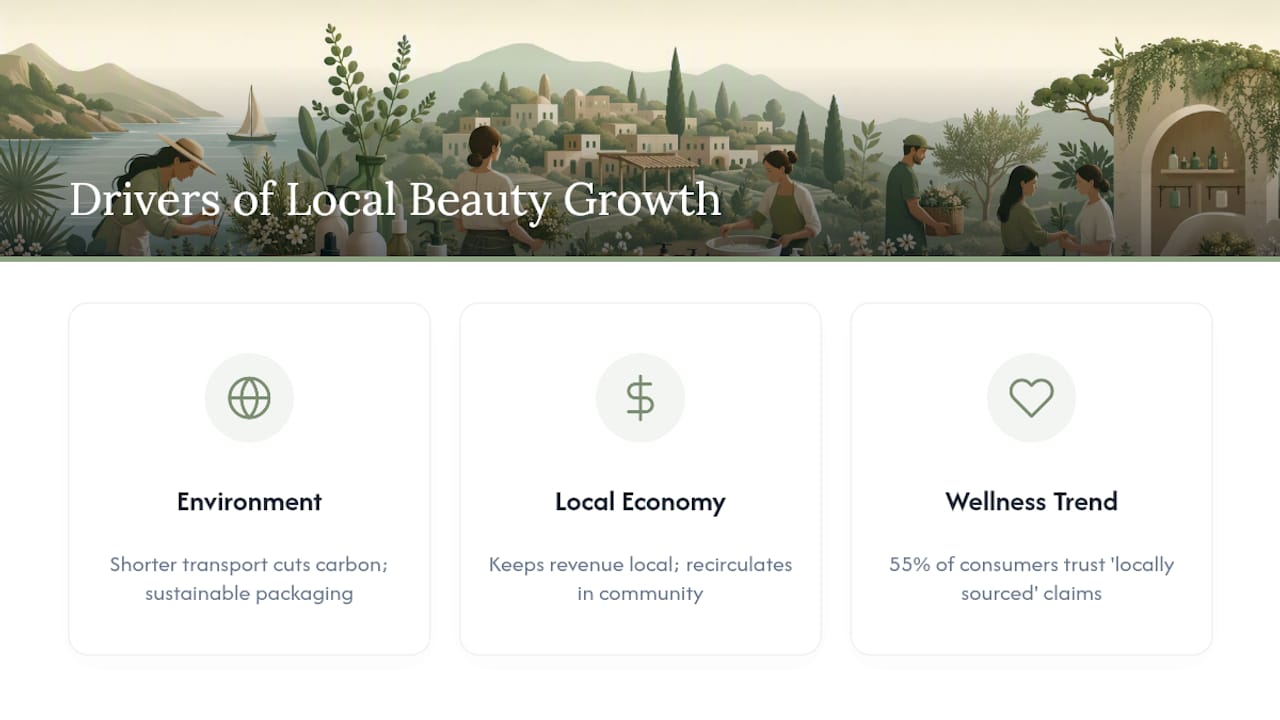
On the environmental side, shorter transport distances cut the carbon cost of getting a product to your bathroom shelf, and brands with tighter supply chains tend to pair that with sustainable packaging and more accountable sourcing. Economically, buying local keeps revenue with small farmers, artisans, and manufacturers instead of routing it through a handful of multinational distributors. That money recirculates in the immediate economy rather than leaving it.
The wellness angle might matter most. Global beauty e-commerce grew significantly in 2025, driven largely by personalized, health-integrated products, and consumers are rejecting over-polished, AI-perfected marketing in favor of real skin and real stories.
55% of consumers trust “locally sourced” claims more than generic sustainability language, according to NIQ’s 2026 beauty research. That trust translates directly into purchase decisions when the claim is backed by specifics.
How Do Local Beauty Brands Actually Operate?
Behind the label, local-first brands run a different playbook than global mass producers. It starts with relationships, not procurement contracts.
- Partnerships with named growers or foragers instead of anonymous ingredient brokers
- Small-batch production runs that keep quality consistent and reduce overstock waste
- Formulas adjusted for regional conditions, since what performs in a humid coastal climate often underperforms in a dry, high-altitude one
- Distribution through pop-ups, community markets, and omnichannel local-first retail rather than only big-box shelving
Regional manufacturing also cuts risk, since a shorter chain is less exposed to global shipping disruptions and lets a brand adjust a formula in weeks instead of months.
Picture a solid cleansing bar: olive oil pressed from a nearby grove, a botanical extract foraged within the same region, both blended in a small workshop, then sold at a local market stall or shipped directly from the brand’s own site. No warehouse hops, no unnamed middlemen. That’s the sourcing-to-shelf path local beauty brands are built around.
How Can You Tell a Genuine Local Beauty Brand From a Marketing Claim?
Not every “local” label holds up under scrutiny. Here’s what to check before you trust it.
- Ingredient provenance: does the brand name specific farms, regions, or foragers, or just say “natural”?
- Producer stories: look for photos, interviews, or behind-the-scenes content showing real people, not stock imagery
- Batch size and location: ask where products are actually manufactured, and whether batch sizes are disclosed
- Ingredient lists: full transparency, not a vague “proprietary blend”
- Certifications: third-party or regional certifications add credibility, though their absence doesn’t automatically disqualify a small brand
- Community presence: genuine local brands tend to show up at markets, workshops, or collaborations rather than only running paid ads
You’ll usually find the strongest signals on a brand’s own website and social accounts, particularly ones that post unedited content instead of heavily retouched imagery.
Pro Tip: If a brand’s “local” ingredient shows up in ten other product lines from unrelated countries, that’s a red flag. Genuine local sourcing is usually specific enough that it can’t scale infinitely.
What Are the Criticisms and Limits of Local Beauty?
The movement isn’t without trade-offs, and pretending otherwise would undersell your intelligence.
- Price: small-batch, locally sourced products often cost more than mass-produced alternatives, since they lack economies of scale
- Scale limits: seasonality affects ingredient availability, which can mean waitlists or limited-run products
- Inclusivity gaps: smaller brands sometimes struggle to formulate across the full range of skin tones and types on a limited budget
- Greenwashing risk: some brands slap “local” on packaging without any real regional sourcing behind it
The honest fix is transparency on both sides: brands publishing real sourcing details, and consumers asking direct questions before buying.
How LaTerraTales Practices Local-Minded Beauty
LaTerraTales was built on the same principles this movement runs on: locally relevant formulation, honest ingredient sourcing, and products designed for real skin, not idealized skin. As a French-Lebanese brand, it formulates specifically for sensitive skin and Mediterranean climate conditions, where humidity and sun exposure demand different choices than a formula built for a temperate European market.
The product range reflects that focus: solid cleansing bars, botanical oils, and lip care built around minimal, evidence-based ingredient lists rather than long, filler-heavy formulas.
Our approach has always started with a simple question: does this ingredient earn its place in the formula, and does it make sense for the skin and climate it’s actually meant for? That’s the standard behind every LaTerraTales product.
Where Is Local Beauty Heading Next?
The next phase of this movement leans further into wellness, not away from it. Mintel’s analysts describe a shift toward what they call “sensorial synergy,” where scent, texture, and ritual matter as much as active ingredients.
- Health-integrated beauty products that double as wellness rituals, not just cosmetic routines
- Multi-sensory formulations built around scent and texture, not just performance claims
- Cultural beauty rituals scaling globally through e-commerce and marketplaces while keeping their origin story intact
- More Lebanon-relevant formulations reaching consumers directly, without the layers of distribution that used to keep regional brands niche
For consumers in Lebanon, that means a growing local ecosystem where you don’t have to choose between authenticity and accessibility.
Why Local Beauty Matters to Me
I believe the strongest argument for local beauty isn’t sentiment, it’s accountability. When a brand names its farmers and shows its process, it has less room to cut corners on your skin’s health. Judge a local product on both fronts: does it actually work, and does the story behind it hold up?
Bring Local Beauty into Your Routine
LaTerraTales was built around the exact principles this movement runs on: real ingredient sourcing, formulas suited to Mediterranean skin and climate, and minimal routines that skip the filler. Every product answers a simple test: does this ingredient earn its place, and does it work for the skin it’s meant for?
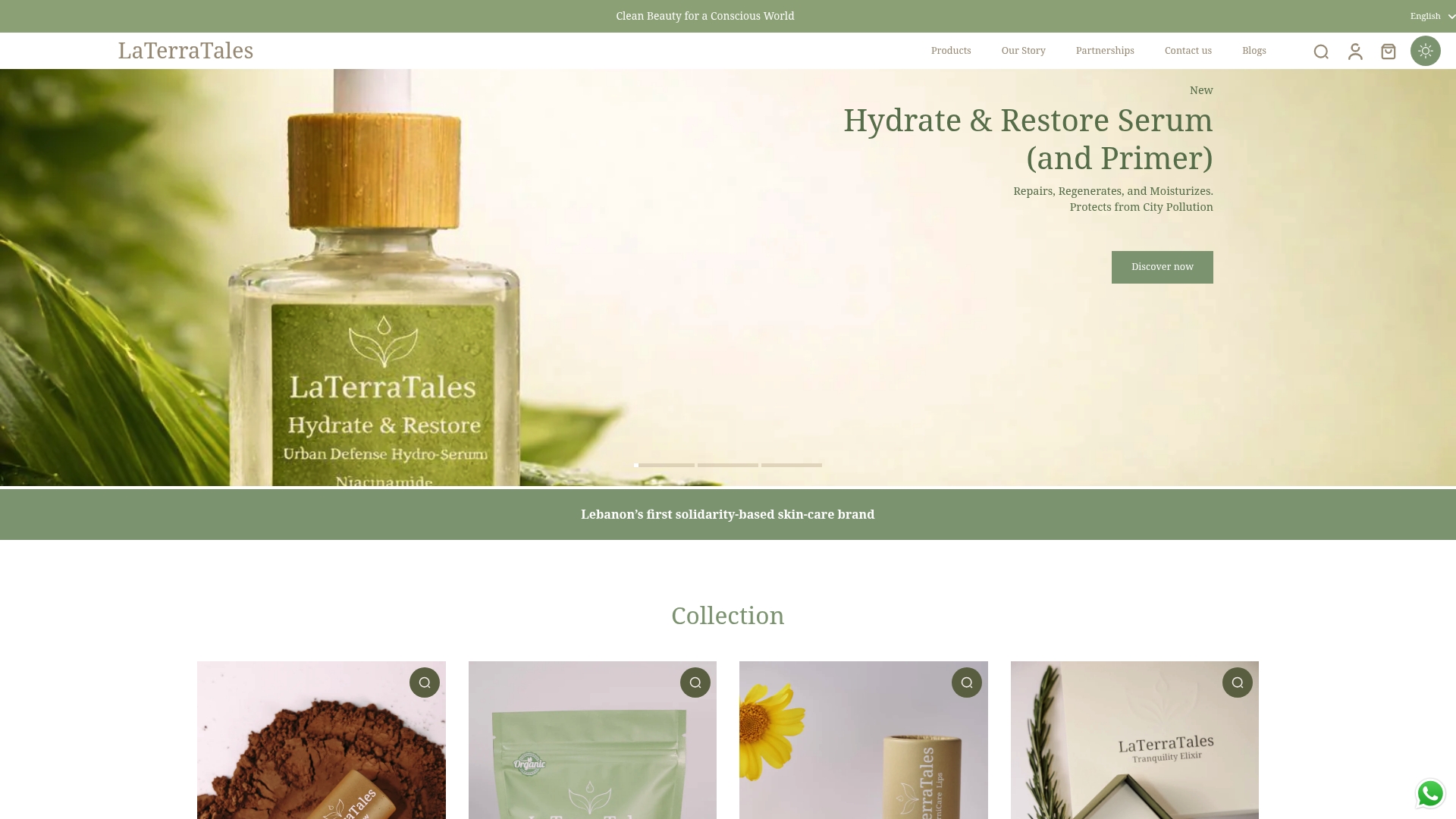
If you’re ready to see what regionally formulated, sensitive-skin-friendly skincare actually looks like, start with the natural skincare collection built for sensitive skin. It’s a practical first step for anyone who wants their beauty routine to match the values behind this movement rather than just the marketing around it.
Frequently Asked Questions
What is the local beauty movement in simple terms? It’s a shift toward beauty brands rooted in a specific place, using regionally sourced ingredients, short supply chains, and formulas designed for local climate and skin needs rather than one-size-fits-all global formulas.
Is local beauty the same as sustainable beauty? They overlap heavily but aren’t identical. Sustainable beauty focuses on environmental impact broadly, while local beauty specifically emphasizes regional sourcing, community ties, and short supply chains, which often produce sustainability benefits as a side effect.
How do I know if a “local” beauty brand is genuine? Look for named farms or foragers, disclosed batch sizes and manufacturing locations, full ingredient transparency, and real community presence at markets or events rather than only polished ad campaigns.
Are local beauty products more expensive? Often, yes. Small-batch production and regional sourcing typically cost more than mass manufacturing, though many consumers find the trade-off worthwhile for freshness and traceability.
Does LaTerraTales fit the local beauty movement? LaTerraTales formulates specifically for sensitive skin and Mediterranean climate conditions, uses evidence-based minimal ingredient lists, and builds products like solid cleansing bars around the same transparency principles the movement is built on.
Sources
- Four predictions: beauty’s strategic shift in 2026 - Mintel
- The rise of the cultural beauty movement - Euromonitor


