

Why Natural Skincare Takes Longer to Work
Natural skincare is defined as formulations that rely on plant-based bioactive compounds to support and restore skin health gradually, working with your body’s biology rather than overriding it. Understanding why natural skincare takes longer to work starts with one biological fact: your skin renews itself on a roughly 28-day cycle, and no product can safely shortcut that process. LaTerraTales builds every formula around this reality, prioritizing long-term skin resilience over the illusion of overnight results. Consistent use, realistic expectations, and the right storage habits determine whether you see the full benefit of what nature offers.
Why natural skincare takes longer to work: the biology behind it
The skin cell turnover cycle is the foundation of every skincare timeline. Your skin replaces its outermost layer approximately every 28 days on average, moving new cells from the deepest layer to the surface. That means any visible improvement, whether it’s smoother texture, a more even tone, or reduced redness, only becomes apparent once those new, healthier cells reach the surface.
Natural skincare products work with this cycle. They support the conditions that allow healthy cell production, feeding the skin with botanical nutrients, antioxidants, and fatty acids that strengthen the skin barrier from within. Synthetic products, by contrast, often act on the surface layer directly, using exfoliating acids, retinoids, or occlusive agents that produce visible changes faster but do not necessarily address the underlying skin environment.
The table below shows how these two approaches differ in mechanism and timing.
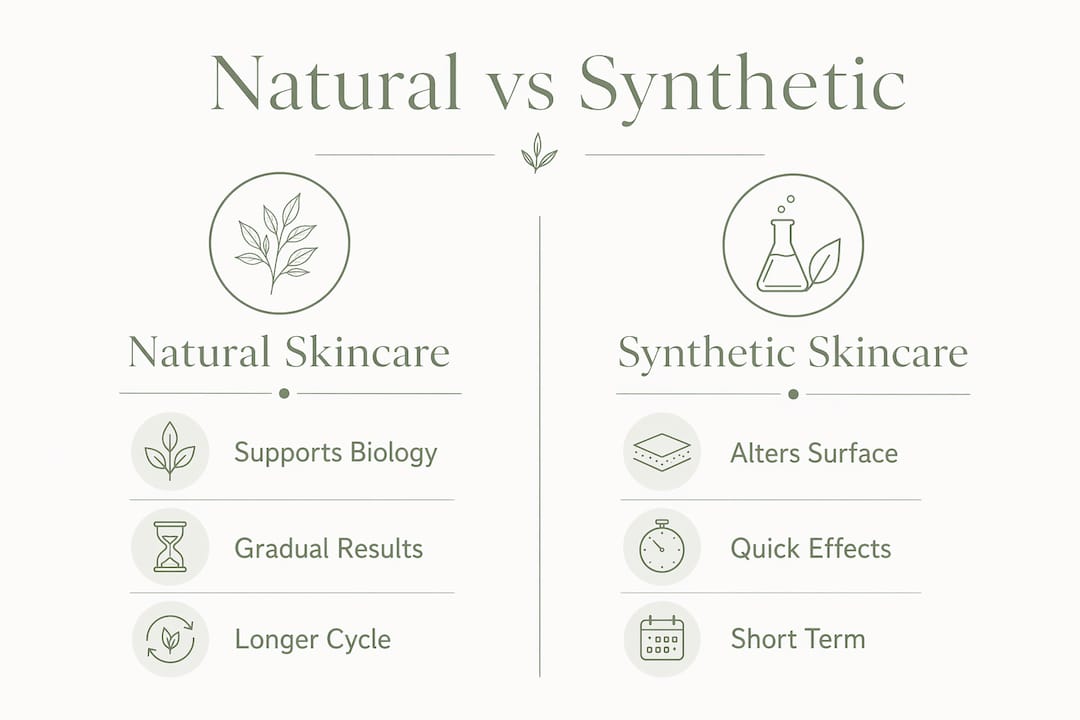
| Feature | Natural skincare | Synthetic skincare |
|---|---|---|
| Mode of action | Supports skin biology gradually | Targets surface symptoms directly |
| Visible results timeline | 4–12 weeks | Days to 2 weeks |
| Risk of irritation | Lower for sensitive skin | Higher with active concentrations |
| Long-term skin resilience | Builds over time | Variable; may cause dependency |
| Shelf life | 18–24 months | Often longer due to preservatives |
Dermatologists recommend giving any product 4–12 weeks before judging its effectiveness. That window aligns directly with the skin’s renewal timeline, not with marketing promises.
Why do natural ingredients produce slower visible effects?
Plant-based ingredients contain complex, synergistic mixtures of bioactive compounds that your body must absorb, metabolize, and integrate before they produce visible changes. A synthetic active like retinol delivers one isolated molecule at a known concentration. A botanical oil like rosehip delivers dozens of compounds, including retinoids, linoleic acid, and polyphenols, all interacting with each other and with your skin’s own chemistry.
That complexity is a feature, not a flaw. The holistic, gradual action of plant-based products aims to restore the skin’s overall balance rather than suppress a single symptom. Redness calms because the skin barrier strengthens, not because an anti-inflammatory agent masks the signal. Breakouts reduce because sebum regulation improves, not because a drying agent strips the surface.
Emerging formulation techniques are closing the gap. Fermentation, for example, increases the bioavailability of botanical extracts, improving how readily the skin absorbs them and accelerating the onset of gradual benefits. Fermented plant actives are now a recognized method for enhancing skin affinity without sacrificing the natural profile of the ingredient.
Here is what slows visible results from natural ingredients specifically:
- Bioactive complexity. Multiple compounds compete for absorption pathways, slowing the uptake of any single active.
- Lower active concentrations. Natural formulas often use whole-plant extracts rather than isolated actives, which means lower per-molecule concentrations.
- Metabolic adaptation. Your skin needs time to adjust to new botanical inputs, especially if it has been conditioned by synthetic products.
- Barrier repair first. Many botanical ingredients prioritize repairing the skin barrier before addressing cosmetic concerns, which adds weeks to visible improvement.
Pro Tip: If you are switching from synthetic to natural skincare, read LaTerraTales’ guide on switching to natural skincare to understand what to expect during the adjustment period.
How formulation, stability, and shelf life affect natural skincare efficacy
Natural skincare products require significantly longer development timelines than synthetic alternatives. Stability testing alone can extend the formulation process to 4–8 months, because botanical ingredients are chemically complex and react unpredictably to heat, light, and air. A formula that performs well in the lab may degrade within weeks if packaging or storage conditions are not carefully controlled.
Botanical oils are particularly vulnerable. They are prone to oxidative degradation, which reduces their shelf life to approximately 18–24 months. Once oxidized, an oil does not just lose potency. It can become mildly irritating, which is why expired natural products sometimes cause unexpected reactions.
Responsible brands address this through packaging and manufacturing choices. Key methods include:
- Airless pump dispensers. These prevent repeated air exposure, slowing oxidation of sensitive botanical actives.
- Nitrogen purging. Filling containers with nitrogen before sealing displaces oxygen and extends the active life of oils and extracts.
- Dark glass or opaque packaging. UV light accelerates degradation of polyphenols and carotenoids. Amber or opaque containers protect potency.
- Smaller batch production. Shorter time between manufacture and use means fresher, more potent product reaches your skin.
Pro Tip: Store your natural skincare products away from direct sunlight and heat. A bathroom cabinet away from the shower is better than a shelf above it. Temperature fluctuations accelerate the breakdown of botanical actives and shorten effective shelf life.
Consumers often misattribute poor results to the ingredients themselves when the real cause is inconsistent use, improper dosing, or poor storage. A high-quality natural serum stored in a warm, sunny spot will underperform a mediocre one stored correctly. Understanding the natural skincare benefits of each ingredient helps you protect and use them well.
What results can you realistically expect, and when?
Setting accurate expectations is the single most important factor in a successful natural skincare routine. Consistent application over at least 3 months is the threshold most practitioners use to evaluate whether a natural product is working. Stopping at week two because you see no change is the most common reason natural skincare “fails.”
Here is a realistic timeline for the most common skin goals:
- Hydration (1–2 weeks). Humectants like hyaluronic acid and glycerin draw water into the skin quickly. You will feel softness and plumpness within the first two weeks of consistent use. A hyaluronic acid and niacinamide serum is one of the fastest-acting natural formulas available.
- Texture improvement (4–6 weeks). Smoother skin surface requires at least one full cell turnover cycle. Botanical exfoliants like fruit enzymes and AHAs from natural sources work gently but need 4–6 weeks to show measurable change.
- Tone and radiance (6–8 weeks). Brightening actives like vitamin C from plant sources, niacinamide, and bakuchiol need two or more renewal cycles to visibly reduce hyperpigmentation or dullness. LaTerraTales’ bakuchiol serum supports skin renewal gently over this window.
- Acne and breakout reduction (8–12 weeks). Sebum regulation and barrier repair take the longest. Expect meaningful change after two to three full turnover cycles.
- Long-term healing and resilience (3–6 months). Conditions like chronic dryness, rosacea-prone skin, or post-acne marks respond to natural skincare over months, not weeks. The evidence behind natural beauty supports this timeline clearly.
Lifestyle factors accelerate or slow every one of these timelines. Poor sleep raises cortisol, which impairs barrier function. A diet high in refined sugar increases glycation, which dulls skin tone. Chronic stress triggers inflammatory pathways that counteract the calming work of botanical actives. Natural skincare works best as part of a broader self-care approach, not as a standalone fix. Skin rejuvenation treatments, such as professional facials, can complement your botanical routine and accelerate visible improvements during the adjustment period.
Key Takeaways
Natural skincare requires consistent use over 4–12 weeks because it works with the skin’s 28-day renewal cycle, not against it, and results depend on formulation quality, correct storage, and realistic expectations.
| Point | Details |
|---|---|
| Skin cell turnover drives timelines | Visible improvements appear only after new, healthier cells reach the surface, taking roughly 28 days per cycle. |
| Botanical complexity slows absorption | Plant actives contain dozens of compounds that require time for the body to absorb, metabolize, and integrate. |
| Formulation and storage matter | Natural products lose potency through oxidation; airless packaging and cool, dark storage protect efficacy. |
| Consistent use is non-negotiable | Most practitioners evaluate natural skincare results only after at least 3 months of daily application. |
| Lifestyle amplifies results | Sleep, diet, and stress levels directly affect how quickly your skin responds to botanical actives. |
The patience your skin actually deserves
At LaTerraTales, we hear the same concern often: “I tried natural skincare and it didn’t work.” When we ask how long someone used the product, the answer is almost always two to four weeks. That is not enough time for any meaningful biological change to occur, regardless of what is in the formula.
What I have learned from years of working with natural formulations is that the speed of a result tells you almost nothing about its quality. Synthetic products that visibly resurface skin in three days are often doing so by disrupting the barrier, not healing it. The redness and peeling that follow are not signs of progress. They are signs of stress.
Natural skincare’s slower pace reflects something worth respecting. It reflects the skin’s actual biology. When you see improvement after eight weeks of using a botanical serum, that improvement is structural. The skin barrier is genuinely stronger. The cell turnover is genuinely healthier. That kind of change does not reverse the moment you stop using the product.
The other thing I would push back on is the idea that patience is passive. Choosing to understand your products, store them correctly, dose them appropriately, and pair them with sleep and a clean diet is active, skilled self-care. It is also the only approach that produces lasting skin health rather than a cycle of dependency on increasingly aggressive actives.
— LaTerraTales
Natural skincare products worth the wait
LaTerraTales formulates every product with the principles in this article in mind: stable botanical actives, protective packaging, and gentle concentrations designed for sensitive skin that builds resilience over time.
The LaTerraTales natural skincare collection is built for people who want real, lasting results without compromising their skin’s health. From the bakuchiol serum that supports renewal without irritation to the hyaluronic acid and niacinamide serum that delivers hydration within the first two weeks, each formula is designed to reward consistency. Sustainable packaging, transparent ingredient sourcing, and formulations tested for sensitive skin mean you can commit to the process with confidence. Your skin is worth the time.
FAQ
Why does natural skincare take so long to show results?
Natural skincare works by supporting the skin’s 28-day cell turnover cycle rather than forcing surface-level changes. Visible improvements appear gradually as healthier cells replace older ones over several weeks.
How long should I use a natural skincare product before giving up?
Dermatologists recommend waiting 4–12 weeks before evaluating any skincare product’s effectiveness. For natural products addressing deeper concerns like hyperpigmentation or acne, 3 months is the more reliable benchmark.
Does natural skincare actually work, or is it just slower?
Natural skincare does work, but through a different mechanism than synthetic alternatives. It restores skin balance and builds barrier resilience gradually, producing results that are structural and lasting rather than temporary.
Can I speed up results from natural skincare?
Consistent daily application, correct storage away from heat and light, adequate sleep, and a low-sugar diet all accelerate how quickly your skin responds to botanical actives. Professional skin rejuvenation treatments can also complement your routine.
Why do natural products have a shorter shelf life?
Botanical oils and plant extracts are prone to oxidative degradation, limiting their shelf life to approximately 18–24 months. Airless packaging and dark glass containers slow this process and protect product potency.


