

Yes, You Can Use Aloe and Vitamin C Together — Here's How
Yes, aloe vera and vitamin C work well together, both on your skin and in what you eat or drink, but the “how” matters more than the “if.” A human crossover study found that aloe gel slowed how fast vitamin C entered the bloodstream, delaying peak levels by two to four hours, while extending the total time vitamin C stayed elevated in plasma. That is a meaningfully different profile than a fast-absorbing vitamin C tablet on its own. It is worth understanding before you buy a combined product.
A few caveats belong right up front, before you reach for either ingredient:
- Topical pairing is generally well tolerated, but avoid applying vitamin C or aloe formulas near the eyelid area without a product specifically designed for that zone.
- Oral aloe products should be free of aloe latex, the outer-leaf compound linked to gastrointestinal upset and, in rare cases, liver problems
- If you take other supplements or medications, a quick check with a pharmacist or clinician costs you nothing and closes any gaps this article can’t fill for your specific situation.
Key Takeaways
Aloe gel doesn’t boost vitamin C’s potency, it extends how long the vitamin stays active in your system, and that distinction should guide how you use both together.
| Point | Details |
|---|---|
| Topical pairing is safe for most | Patch test first and keep both aloe and vitamin C away from the eyelid area. |
| Oral combo delays, not boosts, vitamin C | A crossover study found delayed peak absorption but longer plasma presence, not higher potency. |
| Processing determines quality | Inner fillet gel carries fewer risks than unpurified whole-leaf extract, especially in oral products. |
| Avoid aloe latex in supplements | Latex-containing oral products carry documented gastrointestinal and liver risks with chronic use. |
| LaTerraTales prioritizes transparency | The brand lists active ingredients and sourcing plainly, matching the label standards this guide recommends. |
Table of Contents
- How Aloe and Vitamin C Interact in the Body
- Using Aloe and Vitamin C Together on Skin
- Should You Take Aloe and Vitamin C Supplements Together?
- Choosing a Quality Aloe and Vitamin C Product
- Is It Safe? Side Effects and Interactions to Know
- LaTerraTales’ Approach to Botanical Actives
- What This Guide Gets Right That Most Advice Misses
- Find Gentle, Transparent Skincare That Does What It Says
- Frequently Asked Questions
- Sources
How Aloe and Vitamin C Interact in the Body
The clearest evidence on aloe vitamin C interaction comes from a small but well-designed crossover trial. Researchers gave eight subjects 500 milligrams of ascorbic acid alone, then compared that to the same dose combined with two ounces of aloe gel or a whole-leaf extract. The aloe gel combination pushed plasma ascorbate area under the curve to roughly 304% of the control, and elevated vitamin C levels persisted at both the 8 hour and 24 hour marks.
The number that matters here: 304% AUC. That is not a claim that aloe makes vitamin C three times stronger. It means the body held onto measurable vitamin C for much longer than it would from the vitamin alone, at the cost of a slower initial rise. The same study record on ScienceDirect confirms the delayed Tmax pattern for both vitamin C and vitamin E.
Why would a plant gel do this? A 2025 phytochemical review in Frontiers in Nutrition points to aloe’s polysaccharides and flavonoids as the likely drivers. Fresh aloe leaf runs 90 to 99% water, but the remaining dry matter is dense with these compounds, and they appear to slow gastric transit or alter absorption kinetics in ways that stretch out nutrient release. Critically, the review stresses that processing changes everything: inner fillet gel behaves differently than whole-leaf extract, and bioactivity swings depending on how the plant is handled before it reaches a bottle or capsule.
What this means for you in practice:
- If your goal is sustained antioxidant coverage throughout the day, a slower, longer release may actually work in your favor rather than against you.
- If you’re expecting an immediate spike in vitamin C levels, aloe-paired formulas are the wrong tool for that specific job.
- The effect was measured with aloe gel and vitamin C taken orally together. It has not been demonstrated the same way for topical skin absorption, where the skin barrier changes the math entirely.
Aloe gel itself does contain trace vitamins including C, A, and E, but the amounts are too small to be a meaningful nutritional source on their own. The real value lies in those phytochemicals working alongside whatever vitamin C dose you’re actually consuming or applying.
Using Aloe and Vitamin C Together on Skin
Topical vitamin C isn’t one ingredient. It’s a family of forms with very different stability profiles, and that matters enormously when you’re pairing it with a watery botanical like aloe.
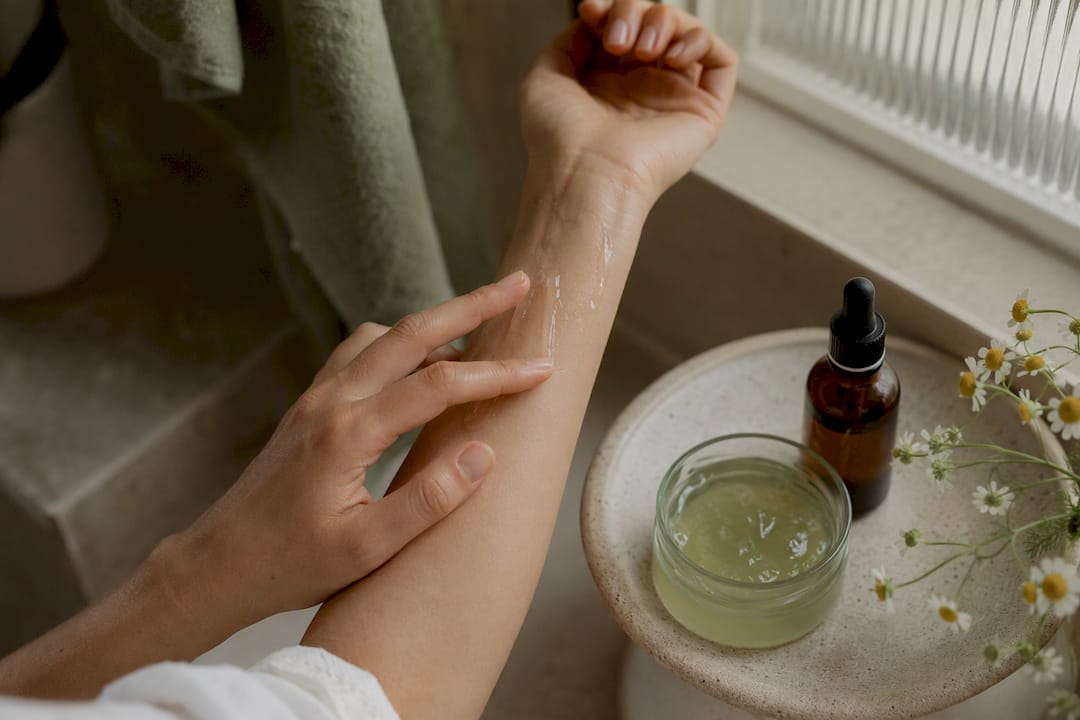
L-ascorbic acid is the most researched and most potent form, but it’s also the least stable. It needs a low pH to stay active, oxidizes quickly once exposed to air or light, and can clash with the gentler pH of a soothing aloe base if the formulation isn’t engineered carefully. Magnesium ascorbyl phosphate and ascorbyl glucoside are milder derivatives that tolerate a wider pH range and hold up better in water-rich, aloe-forward formulas, though they typically convert to active ascorbic acid more slowly on skin. Formulators who want potency without instability often pair vitamin C with stabilizing partners like ferulic acid or vitamin E, a strategy Wirecutter’s testing of top vitamin C serums has repeatedly flagged as the difference between a serum that performs and one that browns in the bottle within weeks.
Here’s how to decide between a combined aloe and vitamin C product versus layering two separate items:
- Choose a combined formula when the brand clearly states the vitamin C form, its concentration, and the aloe preparation used. Transparency here signals the formulator solved the stability problem rather than ignoring it.
- Layer separately if you want a potent L-ascorbic acid serum in the morning and prefer applying a pure aloe gel or aloe-based moisturizer afterward to calm any tingling. Apply the vitamin C serum to clean, dry skin first, wait a minute or two for absorption, then follow with your aloe layer.
- Always finish with sunscreen during the day. Vitamin C supports your skin’s antioxidant defenses against environmental stress, but it does not replace SPF.
A few ground rules apply regardless of which route you pick. Patch test any new combination on your inner forearm for 24 hours before applying it to your face. Keep both ingredients away from the eyelid skin, which is thinner and more reactive than the rest of your face. If you have reactive or easily irritated skin, look for sensitive-skin formulation guidance before introducing a new active, and consider timing your vitamin C application within a routine designed for your skin type and age rather than adding it randomly.
Pro Tip: If a vitamin C serum turns brown or smells sour, it has oxidized and lost most of its potency. Aloe will not rescue a degraded formula, so check the color and scent before every use, not just at purchase.
Should You Take Aloe and Vitamin C Supplements Together?
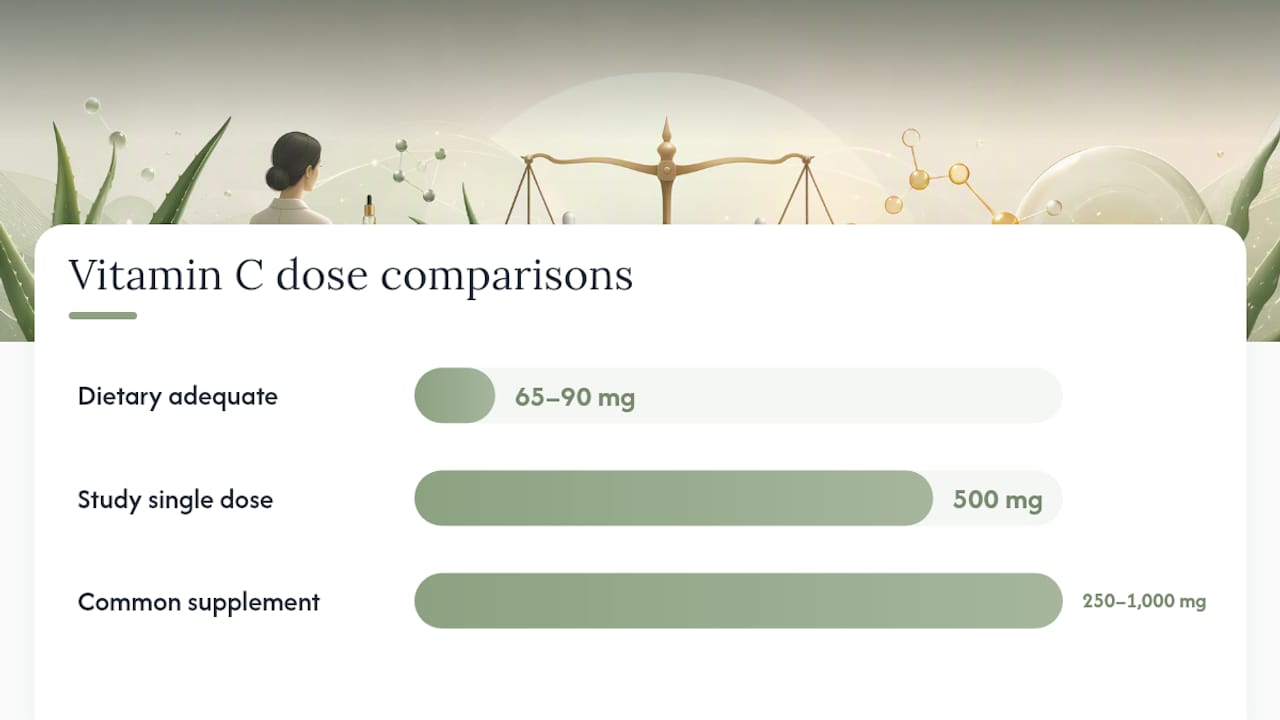
The evidence for oral aloe and vitamin C is real, but it’s thinner than most product marketing implies. The crossover study behind most of the current claims tested exactly eight subjects, comparing a single 500 milligram dose of vitamin C alone against the same dose combined with aloe gel or whole-leaf extract, then tracked plasma levels over 24 hours. That’s a legitimate pharmacokinetic finding, but it’s a single-dose, small-sample design. It tells you what happens after one combined dose, not what happens after months of daily use, and it says nothing directly about immune outcomes or collagen synthesis.
Here’s what that distinction means for the claims you’ll see on product labels:
- Supported by evidence: Aloe gel can extend how long vitamin C remains elevated in your bloodstream after oral intake.
- Not yet supported: Claims that this translates into stronger immune response, faster wound healing, or measurable collagen increases. Those require larger, longer trials that don’t currently exist for the combination.
- Reasonable to expect: A more sustained antioxidant presence throughout the day, which may complement (not replace) a generally nutrient-adequate diet.
On dosing, most adults get adequate vitamin C from 65 to 90 milligrams a day through diet alone, with many supplement products offering doses in the 250 to 1,000 milligram range for those seeking more. Adding aloe gel to a vitamin C supplement does not require you to increase your dose. If anything, the slower absorption curve means you may not need to re-dose as frequently to maintain elevated levels.
The bigger caution is aloe latex, the yellow, bitter compound found just under the outer leaf skin. It’s a stimulant laxative that has been associated with gastrointestinal cramping and, in documented cases, liver injury with prolonged use, according to NCCIH’s consumer guidance. Drugs finds no widely recognized adverse interaction between aloe vera and vitamin C specifically, but that clearance doesn’t cover latex exposure or chronic high-dose use, both of which deserve a conversation with a clinician if you’re combining multiple supplements long term.
Choosing a Quality Aloe and Vitamin C Product
Processing decides whether an aloe product delivers on its promise or falls flat. Inner fillet gel, harvested from the clear center of the leaf, is the preparation most closely tied to the beneficial phytochemicals reviewed in the 2025 Frontiers analysis. Whole-leaf extracts include more of the outer leaf, which raises the risk of latex contamination unless the manufacturer specifically decolorizes and purifies the extract.
When you’re comparing labels, a few signals separate a well-made product from a weak one:
- Named vitamin C form and concentration. “Vitamin C” with no form listed and no percentage tells you nothing useful.
- Stated aloe preparation. Look for “inner fillet gel” or “purified aloe extract,” rather than a vague “aloe vera” listing with no processing detail.
- Third-party testing or a Certificate of Analysis. This is especially important for oral products, where contamination risk is higher.
- Realistic claims. Anything promising to “cure,” “treat,” or “eliminate” a medical condition is a red flag regardless of how clean the ingredient list looks.
- Proprietary blends with no amounts listed. If a label hides dosages behind a blend name, you can’t judge whether the active ingredients are present in meaningful quantities.
A guide to plant-based skincare ingredients can help you get more comfortable reading these labels critically, especially if botanical actives are new territory for your routine.
Is It Safe? Side Effects and Interactions to Know
Topical use of aloe and vitamin C is low-risk for most people, but it isn’t risk-free. Contact dermatitis from aloe is uncommon but documented, and vitamin C’s acidity, particularly in L-ascorbic acid form, can cause tingling or redness on sensitive or compromised skin barriers. Always patch test, and keep both away from the eye area unless the product is formulated specifically for that zone.
Oral use carries more nuance. NCCIH’s overview notes that topical aloe has reasonable support for burns and wound care, but oral aloe latex has been tied to gastrointestinal upset and, in some documented cases, acute hepatitis.
Oral aloe products vary enormously in what they actually contain. A well-processed inner-gel supplement and a poorly filtered whole-leaf extract can carry very different risk profiles, even when both are labeled simply as “aloe vera.” Transparency about processing is what separates the two.
A few groups should be more cautious than average, and this applies whether you’re considering a topical product used near broken skin or an oral supplement:
- Pregnant or breastfeeding individuals should avoid oral aloe latex products entirely and check with a doctor before oral aloe supplementation generally.
- Anyone with liver disease should treat oral aloe with the same caution as any supplement with documented hepatic case reports.
- Anyone on multiple medications should run a quick interaction check, since Drugs.com’s database covers aloe alongside a wide range of common prescriptions, not just vitamin C.
Stop use and seek medical advice if you notice persistent stomach cramping, unusual fatigue, or yellowing of the skin or eyes after starting an oral aloe product.
LaTerraTales’ Approach to Botanical Actives
We formulate around a simple rule: name what’s in the bottle and back it up. Every LaTerraTales product lists its active ingredients and their sourcing plainly, because we think that’s the baseline a shopper deserves, not a bonus feature…
Our approach in practice looks like this:
- We favor gentle, well-tolerated actives suited to reactive or sensitive skin, rather than chasing the highest concentration on the shelf.
- We keep ingredient lists short and legible, so you can actually evaluate what you’re applying.
- We disclose sourcing and processing choices, the same transparency this article recommends you look for in any aloe or vitamin C product.
If you want a soothing, botanical option formulated with this philosophy, our Natural Arnica Lip Balm & Cheek Tint reflects the same gentle-formulation standard we apply across the brand.
Pro Tip: When you’re comparing any two skincare products, read the first five ingredients on each label side by side. That’s usually enough to tell you which one actually prioritizes the active you’re shopping for.
What This Guide Gets Right That Most Advice Misses
Most articles on this topic treat “aloe plus vitamin C” as a marketing pairing rather than a pharmacokinetic one. That’s backward. The actual evidence describes a specific, measurable timing shift, not a magic potency boost, and conflating the two sets shoppers up to expect the wrong thing from a product.
Where conventional advice really falls short is oral safety messaging. Plenty of supplement copy treats “aloe” as a single, interchangeable ingredient, when the difference between inner fillet gel and unpurified whole-leaf extract is the difference between a well-tolerated antioxidant boost and a documented liver risk. That’s not a minor labeling nuance. It’s the single most important thing to check before buying an oral aloe product.
If you take one thing from this guide, prioritize reading the processing details on any label before you look at price or marketing claims. A cheaper, poorly processed extract isn’t a bargain. It’s a different product wearing the same name.
Find Gentle, Transparent Skincare That Does What It Says
If the formulation caveats in this guide have you double-checking labels, you already know why LaTerraTales exists. We built our natural skincare collection around the same transparency standard we just walked you through: named actives, clear concentrations, and formulas designed for reactive or sensitive skin rather than the broadest possible market.
You won’t find proprietary blends hiding behind vague ingredient names on our shelves. Our 100% Natural Handmade Cleanser Bar and the rest of our lineup are built for people who read labels the way this article just taught you to. If you’re ready to see what a fully disclosed, sensitive-skin-first formula looks like, browse the collection and pick the product that matches what your skin actually needs.
Frequently Asked Questions
Does aloe vera gel contain vitamin C? Yes, in small amounts, along with trace vitamin A and E, but the quantities are too low to serve as a meaningful vitamin C source on their own. Aloe’s main value comes from its polysaccharides and flavonoids, not its vitamin content.
Can I use a vitamin C serum and an aloe vera gel in the same routine? Yes. Apply your vitamin C serum to clean, dry skin first, let it absorb for a minute or two, then follow with an aloe-based product to soothe any tingling. Finish with sunscreen during the day.
Is aloe vitamin C good for sensitive skin? Often, yes, since aloe’s soothing properties can offset some of the irritation potential of stronger vitamin C forms like L-ascorbic acid. Still, patch test any new combination first, since sensitivity varies from person to person.
Are there risks to taking aloe and vitamin C supplements together? No widely recognized adverse interaction exists between the two, according to Drugs.com, but oral aloe products containing latex carry separate risks, including gastrointestinal upset and rare liver injury with chronic use.
What is the best vitamin C form to pair with aloe in skincare? Stabilized derivatives like magnesium ascorbyl phosphate or ascorbyl glucoside tend to hold up better in watery, aloe-based formulas than pure L-ascorbic acid, which requires a low pH and degrades faster once exposed to air.
This article is general information, not a substitute for advice from a qualified doctor. Consult a qualified healthcare professional about your own circumstances before acting on anything here.
Sources
- Effect of Aloe vera preparations on the human bioavailability of vitamins C and E
- The green healer: an updated review on the phytochemical profile and therapeutic potential of Aloe vera
- Aloe vera - National Center for Complementary and Integrative Health (NCCIH)
- Drugs
Recommended
يشارك


