

Repair Dry Hands from Washing in 1–3 Nights with a Dermatologist Backed Routine
Frequent handwashing dries your hands because soap and hot water strip the natural oils and lipids that hold your skin barrier together, leading to xerosis and irritant contact dermatitis. The single best fix is simple: rinse with lukewarm water, pat your hands until just damp, and immediately apply a thick, fragrance-free moisturizer or petrolatum ointment while that moisture is still on your skin.
TL;DR:
- Washing with hot water and vigorous towel rubbing accelerates skin barrier damage and moisture loss, making lukewarm water and gentle drying essential.
- Applying a thick, fragrance-free moisturizer immediately after handwashing helps trap residual water and supports barrier repair.
- People with sensitive skin or frequent water exposure should use ceramide-rich or occlusive products and wear gloves to prevent cracks and infections.
- Choosing thicker textures like ointments over lotions, avoiding fragrances, dyes, and sulfates, can reduce irritation risk and improve healing.
- Consistent habits, including pre-season preventive treatment and environmental control, are key to repairing and maintaining healthy hands.
Table of Contents
- Your Quick-Relief Checklist For Dry Hands After Washing
- Why Does Washing Make Your Hands So Dry?
- The Full Prevention and Repair Routine
- What To Look For (And Avoid) In Hand Products
- When Dry Hands Need a Dermatologist
- The LaTerraTales Approach To Hand Barrier Repair
- Our Take: Hygiene and Skin Health Aren’t Competing Goals
- Give Your Hands a Gentler Wash-and-Repair Routine
- Sources
Your Quick-Relief Checklist For Dry Hands After Washing
Keep this routine near your sink and repeat it after every wash or sanitizer use. Small, consistent habits do more for your hands than any single miracle product.
- Wash with lukewarm water for at least 20 seconds, covering every surface, including between fingers.
- Pat dry gently with a towel instead of rubbing, and stop while skin is still slightly damp.
- Apply a thick, fragrance-free cream or petrolatum ointment right away, while skin is damp, not after it dries out.
- Reapply moisturizer after every hand sanitizer use, and wear gloves for dishes, cleaning, or anything involving detergents.
- At night, layer on a heavier ointment and slip on cotton gloves if cracking is severe.
Pro Tip: Keep a small tube of ointment at your kitchen sink, your car, and your desk. The hands you forget to treat are always the ones that crack first.
Why Does Washing Make Your Hands So Dry?
Every time you lather up, surfactants in soap grab onto oil and dirt, but they also pull water-binding lipids and proteins out of your stratum corneum, the skin’s outermost layer. Do that dozens of times a day, and your barrier stops holding onto moisture the way it should. That’s the mechanism behind xerosis, the clinical term for abnormally dry, rough skin, and it can tip into irritant contact dermatitis when the barrier breaks down enough to trigger redness and inflammation.
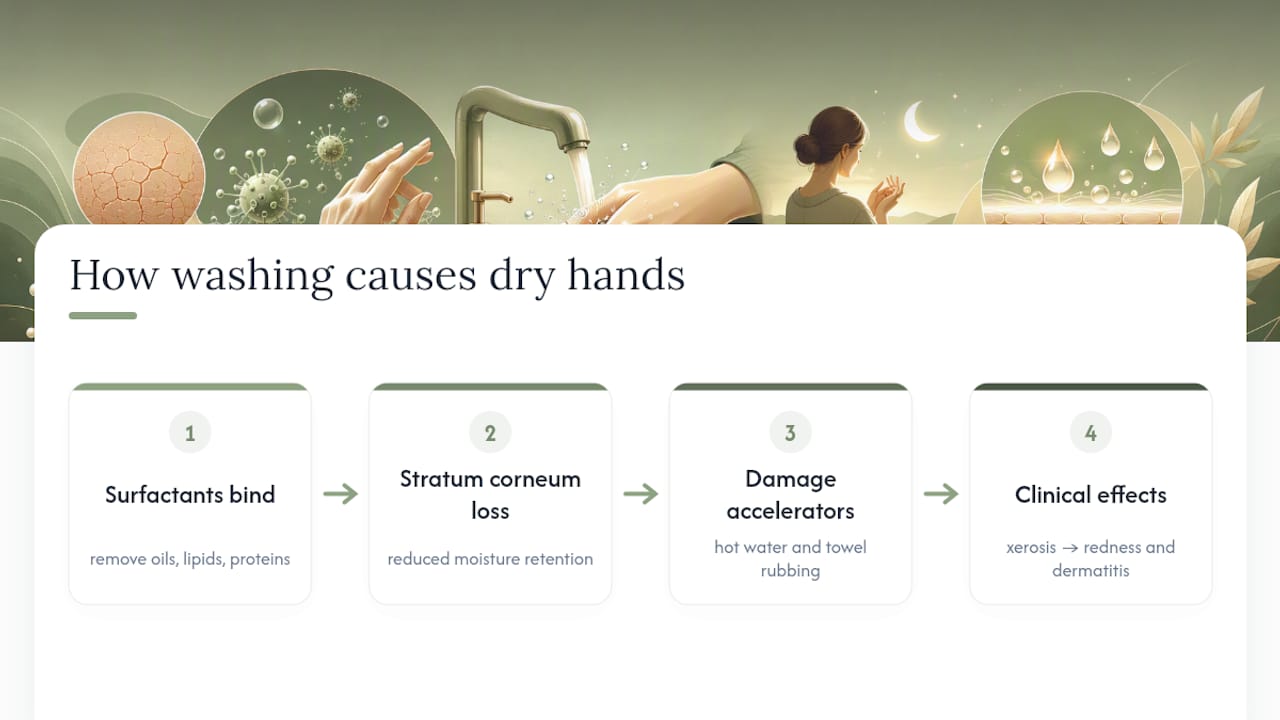
Hot water speeds up the damage. It feels satisfying, but it also increases transepidermal water loss, meaning your skin loses hydration faster than it can replace it. Vigorous towel rubbing adds mechanical micro-trauma on top of that chemical stress. Cooler water cleans just as effectively as hot, so there’s no hygiene trade-off in turning down the temperature.
Alcohol-based hand sanitizer is not automatically worse than soap. The CDC recommends sanitizer with at least 60% alcohol when soap and water aren’t available, and some formulas are actually gentler than harsh detergent-based soaps used repeatedly. The catch is frequency: any product used dozens of times a day will wear down your barrier without diligent moisturizing.
Some people are more vulnerable than others. If you have a history of atopic dermatitis or eczema, work in healthcare or food service, or wear gloves for hours at a stretch, your skin is already fighting an uphill battle before the tenth wash of the day even happens.
The Full Prevention and Repair Routine
Fixing dry hands from washing is not about finding one perfect cream. It’s about stacking small, correct habits so your barrier gets a chance to rebuild between exposures.
- Wash smart. Use lukewarm water, a mild cleanser, and 20 seconds of contact time. Skip scalding water and skip scrubbing.
- Dry gently. Pat, don’t rub, and stop before your skin is bone dry.
- Moisturize immediately. Apply your product within seconds of drying, while skin is still slightly damp, so humectants like glycerin can trap that residual water instead of letting it evaporate.
- Escalate when needed. If a regular lotion isn’t cutting it, switch to a denser ointment or balm built around ceramides, petrolatum, or mineral oil, ingredients that reinforce the lipid layer rather than just sitting on top of it.
- Go occlusive overnight. For cracked knuckles or fissures, apply a heavy ointment and sleep in cotton gloves. This kind of overnight occlusion can produce noticeable repair within one to three nights for even stubborn cases.
- Control your environment. Running a humidifier at moderate indoor humidity gives your skin less dry air to fight against, especially in winter or air-conditioned offices.
If your job or home life means constant water and detergent exposure, gloves are non-negotiable. Wear waterproof gloves for dishes and cleaning, and if you’re in healthcare, food service, or another high-wash occupation, build in moisturizing breaks rather than waiting until your shift ends. Reapply moisturizer every time you wash or sanitize, not just once a day. Watch for cracks near the cuticles specifically. They’re slow to heal because that skin flexes constantly, and they’re also the most common entry point for infection if left untreated.
Pro Tip: If your hands crack in the same one or two spots every winter, treat that spot preventively before the season starts, not after it’s already split open.
What To Look For (And Avoid) In Hand Products
Not every “moisturizing” label means the same thing. Look for ceramides, glycerin, hyaluronic acid, petrolatum, or mineral oil on the ingredient list. These either rebuild the lipid barrier or lock existing moisture in.
- Favor thicker textures in tubes or jars. As a rule, jar and tube formulas skew more occlusive than pump lotions, which matters when you need real staying power against water and friction.
- Skip added fragrance and dyes, both common triggers for contact irritation on already-compromised skin.
- Avoid sodium lauryl sulfate in your hand soap if your skin is already reactive; it’s an effective degreaser, which is exactly the problem.
- Skip antibacterial claims on hand soap unless a specific health situation calls for them. Plain gentle soap and proper technique do the hygiene work.
- Patch test anything new on your inner forearm for two to three days before committing your hands to a week-long trial.
When Dry Hands Need a Dermatologist
Home care handles most cases, but certain signs mean it’s time to call a professional. Watch for bleeding fissures, spreading redness, pus, fever, or dryness that isn’t improving after two to three weeks of consistent care.
A dermatologist may prescribe topical corticosteroids or nonsteroidal anti-inflammatory creams to calm inflammation, oral antibiotics if a crack has become infected, or patch testing if they suspect an allergic reaction to a specific ingredient rather than plain irritation. Telederm visits are a practical option if an in-person appointment isn’t easy to schedule. Bring a simple timeline: when the dryness started, which products you’ve used, and any prior history of eczema or sensitive skin.
The LaTerraTales Approach To Hand Barrier Repair
The approach builds formulas around minimal, skin-restorative ingredient sets rather than long lists of fillers, because sensitive, barrier-stressed skin does better with fewer, more purposeful ingredients — a principle echoed in this Skincare Routine Simplification Checklist for Beginners. Ceramide-supportive textures and botanical oils are chosen for how they behave on damp skin, not just how they smell in a jar.
Use these products the same way dermatologists recommend using any barrier repair step: apply to slightly damp skin right after washing, and reach for the heavier textures at night if your hands need overnight occlusion. It’s the routine that matters more than any single product, which is why consistency counts more than switching formulas every few weeks.
Our Take: Hygiene and Skin Health Aren’t Competing Goals
The most common mistake we see isn’t washing too much. It’s treating moisturizer as optional, an afterthought reserved for when hands already hurt. The research here is consistent: dermatology sources from Harvard to the AAD frame moisturizing as a step that belongs in the same category as washing itself, not a separate, skippable luxury.
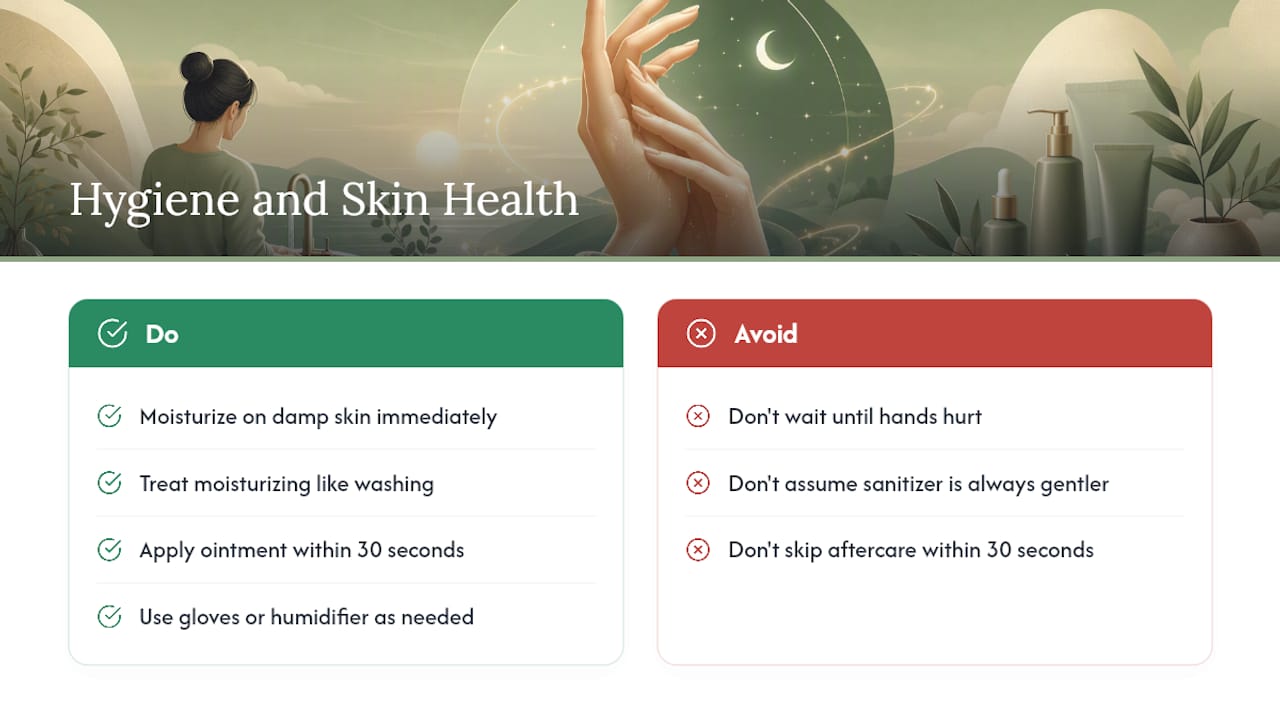
Where conventional advice falls short is nuance around sanitizer. Plenty of people assume sanitizer is the gentler option and soap is the enemy, or the reverse. Neither is universally true. What matters is total exposure and what you do in the thirty seconds after.
If you take one thing from this, prioritize the damp-skin application rule above everything else. It’s the cheapest, fastest change you can make, and it costs nothing beyond a bottle of ointment already sitting in your cabinet. Everything else, gloves, humidifiers, ingredient swaps, builds on that one habit.
— LaTerraTales
Give Your Hands a Gentler Wash-and-Repair Routine
If you’re tired of harsh soaps undoing every bit of progress your hands make overnight, the fix usually isn’t a stronger cream. It’s switching to a gentler cleanser in the first place, so you’re not fighting the same damage twice a day. LaTerraTales makes that swap easy with a solid cleanser bar formulated without the sulfates and fragrance that keep irritated skin from healing, paired with a dry oil light enough to layer under gloves or wear alone between washes.

As with any new product, patch test first and give the routine outlined above a real week before judging results. If you want to see the full range built for reactive, barrier-stressed skin, browse the natural skincare collection for sensitive skin and pick the texture that fits how often your hands actually see water each day.
This article is general information, not a substitute for advice from a qualified doctor. Consult a qualified healthcare professional about your own circumstances before acting on anything here.
Sources
- Soap vs. hand sanitizers and 7 recommendations to avoid dry hands — Cleveland Clinic consult QD
- Scrubbing your hands dry? Soaps, moisturizers, and tips to help keep skin healthy — Harvard Health
- Dry skin relief from handwashing — American Academy of Dermatology
- Frequent Hand Washing for COVID-19 Prevention Can Cause Hand Dermatitis: Management Tips — PMC (review)
- When and how to wash your hands — CDC
Recommended
يشارك


