
How to Evaluate Natural Product Efficacy Ingredients
For sensitive skin, the verdict is simple: prioritize barrier-restoring lipids and ceramides plus proven anti-inflammatory actives like panthenol and standardized Centella asiatica. Treat most single-botanical “miracle extract” claims with real skepticism. That is how you evaluate natural product efficacy ingredients without needing a chemistry degree.
Before you buy anything, run this quick checklist:
- Look for human clinical data measuring TEWL (transepidermal water loss) or corneometry, not just marketing copy.
- Check for a documented patch-test or clinical tolerance history on the specific formula.
- Confirm the brand discloses concentration or standardization for its key actives.
- Scan for barrier lipids (ceramides, cholesterol, fatty acids), not just a trendy botanical name.
- Make sure fragrance and known sensitizers like unrefined essential oils sit low on the ingredient list or are absent.
The fastest move at the shelf: flip the label and hunt for three things: ceramides or lipids, a named percentage on the active botanical, and no heavy “parfum” near the top.
Key Takeaways
Sensitive skin benefits most from formulas combining barrier lipids like ceramides with clinically studied anti-inflammatory botanicals, not isolated novelty extracts.
| Point | Details |
|---|---|
| Prioritize barrier repair | Look for ceramides, lipids, and humectants listed before any botanical extract. |
| Rank your evidence | Human trials with TEWL or corneometry data outrank marketing claims or small testimonials every time. |
| Watch for sensitizers | Fragrance, undiluted essential oils, and linalool carry real sensitization risk despite “natural” labeling. |
| Patch test everything new | Wait 72 hours minimum, and up to two weeks if you have a sensitization history. |
| Choose transparent formulas | LaTerraTales’ sensitive-skin collection discloses actives like ceramide, panthenol, and standardized Centella asiatica. |
Table of Contents
- Why sensitive skin needs a different evaluation framework
- What evidence should you actually trust?
- Which natural ingredients actually hold up?
- What label language should worry you?
- How do you patch test a new product safely?
- Does formulation matter more than the botanical itself?
- What’s the fastest way to check a product before buying?
- How LaTerraTales applies this evidence standard
- Ready to put this checklist to work?
- Frequently asked questions
- Sources
Why sensitive skin needs a different evaluation framework
Sensitive skin has two real jobs: rebuild the barrier and calm inflammation. Everything else is secondary. Clinical researchers track this with objective measures, mainly TEWL and stratum corneum hydration via corneometry, because skin that “feels” better isn’t always measurably better.
Botanicals complicate this picture. The same plant extract can help or hurt depending on how it’s processed, because raw plant material carries volatile organic compounds and terpenes, linalool being a well-studied example, that trigger reactions in some people even at low doses. A soothing-sounding ingredient isn’t automatically a safe one.
The practical takeaway: choose formulas built around validated barrier actives paired with well-studied botanicals, rather than betting everything on one exotic extract. Commentary in recent formulation literature backs this combination approach over single-ingredient bets for sensitive-skin outcomes.
Pro Tip: Read the first five ingredients after water. If you see a lipid or humectant (glycerin, squalane, ceramide) before any botanical extract, the formula is likely built for barrier support, not just scent or story.
What evidence should you actually trust?
Not all proof is equal, and knowing the hierarchy saves you from being swayed by a nice-looking bottle. Rank evidence like this, from strongest to weakest:
- Human clinical trials measuring TEWL, corneometry, or validated symptom scales like SS-10.
- Well-documented patch-test or clinical tolerance history on the finished product.
- Controlled consumer-use studies with a real comparison group.
- In vitro assays and Weight-of-Evidence conclusions for botanicals with limited human data.
- Mechanistic or basic lab studies (cell-based, not skin-based).
- Marketing claims with no testing behind them at all.
For botanicals specifically, three in vitro assays matter: Sens‑Is, h‑CLAT, and KeratinoSens. Sens‑Is screens for direct skin reactivity, h‑CLAT looks at how immune cells respond to a compound, and KeratinoSens checks whether an ingredient activates stress pathways linked to allergic reactions. Used together in a sequential strategy, this combination reportedly reached 96 to 97% accuracy against known in vivo sensitization data, with sensitivity near 100%.
That accuracy matters for Weight-of-Evidence, or WoE, assessments. When a botanical has thin human trial data but strong in vitro results across multiple assays, a WoE framework built on a reference set of botanicals lets researchers classify it as a strong, moderate, or weak sensitizer with reasonable confidence, rather than dismissing it for lack of a single “gold standard” trial.
Pro Tip: Before trusting any study a brand cites, ask three questions: How many people were tested? Was there a placebo or control group? How long did the study run? A two-week trial on 15 people is a signal, not proof.
Which natural ingredients actually hold up?
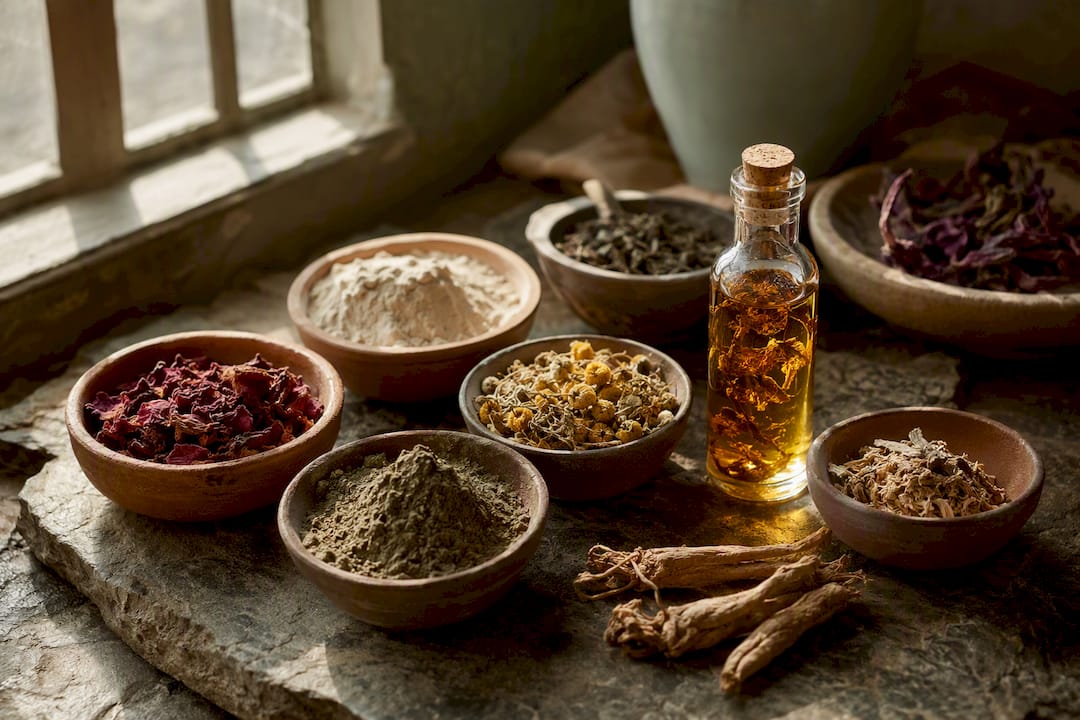
Realistic expectations start with knowing what each ingredient group can and can’t do. Here’s how the most common sensitive-skin ingredients stack up on evidence and risk.
| Ingredient | Primary benefit | Evidence strength | Sensitization risk | Typical use context |
|---|---|---|---|---|
| Ceramides | Barrier repair | Strong human clinical data | Very low | 1 to 5% in barrier creams |
| Panthenol (provitamin B5) | Anti-inflammatory, hydration | Strong human clinical data | Very low | 1 to 5% in moisturizers |
| Centella asiatica | Anti-inflammatory, barrier support | Strong when standardized | Low | Often combined with ceramide, panthenol |
| Bakuchiol | Cosmetic anti-aging effect | Moderate human clinical data | Low to moderate | 1 to 2% in serums/moisturizers |
| Essential oils (general) | Fragrance, perceived benefit | Weak to none for efficacy | Moderate to high | Rarely disclosed by concentration |
| Linalool (specific compound) | None (fragrance component) | Not applicable | Known sensitizer | Found in many essential oil blends |
A clinical study on 88 sensitive-skin participants found that a cream combining Centella asiatica extract, ceramide NP, and panthenol measurably reduced sensitivity scores, lowered TEWL, and improved hydration over two to four weeks. That’s the kind of endpoint-backed data worth looking for on a label or brand page.
Bakuchiol tells a similar story on the tolerability side. A four-week study on sensitive-skin subjects found the ingredient well tolerated with measurable moisture gains, suggesting it can work as a gentler alternative when the surrounding formula is built for sensitive skin.
Here’s the catch with plant names on labels: “Centella asiatica extract” from one supplier can carry a completely different phytochemical profile than the same name from another, depending on how the plant was grown, harvested, and processed. Standardization to a marker compound percentage is what actually tells you the extract is consistent batch to batch. Without it, the name on the label is more a suggestion than a specification.
What label language should worry you?
Certain phrases and omissions predict weak evidence or higher irritation risk more reliably than you’d think:
- Vague terms like “botanical blend” or “natural complex” with no named extract or percentage.
- Fragrance or parfum listed high in the ingredient order, especially with no essential oil breakdown.
- Essential oils listed with no dilution or concentration guidance at all.
- No preservative disclosure, which raises contamination and stability concerns over time.
- Claims that lean on small, vague testimonials instead of any measured clinical outcome.
Stronger labels look different. You’ll see a standardized extract name with a marker compound percentage, a named clinical endpoint like TEWL or corneometry, a stated active concentration, and specific study details behind any “dermatologist-tested” language.
One especially sneaky red flag: a “80% plant extract” claim on its own tells you almost nothing, because it doesn’t say what that 80% is standardized to. Ingredient-decoding resources point out that INCI names for extracts routinely obscure this, since the same botanical name covers wildly different chemical profiles depending on processing. If you want a deeper breakdown of which specific ingredients to avoid outright, LaTerraTales’ guide to reactive-skin triggers walks through the worst offenders by name.
How do you patch test a new product safely?
Home patch testing is the single best tool you have before committing your whole face to a new formula. Here’s the protocol:
- Apply a small amount to the inside of your forearm or behind your ear.
- Leave it uncovered and avoid washing the area for 24 hours.
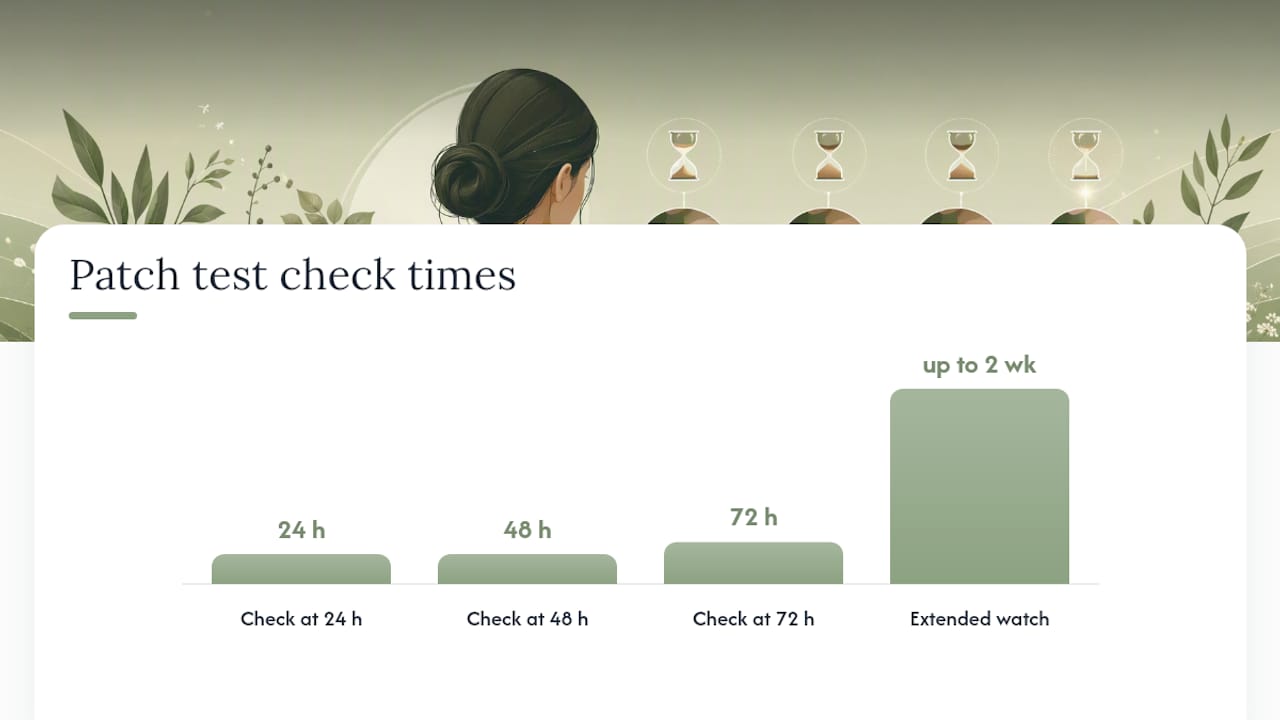
- Check at 24, 48, and 72 hours for redness, itching, or bumps.
- If clear at 72 hours, continue daily use on that same small patch for up to two weeks.
- Watch specifically for delayed reactions, since true allergic sensitization can take up to two weeks to appear, not just the first 72 hours.
If you notice a delayed reaction, or a history of reacting to fragrance and plant extracts generally, that’s your cue to see an allergist or dermatologist for formal patch testing. Bring the full ingredient list, the product’s lot number, and notes on any past reactions.
Pro Tip: Test multi-ingredient finished products the way you’ll actually use them. Testing an isolated single ingredient tells you about that compound alone, but most reactions come from how ingredients interact in the final formula.
Does formulation matter more than the botanical itself?
Often, yes. The vehicle carrying an active ingredient determines whether it actually reaches living skin cells or just sits on the surface. Ceramides and lipids don’t just soothe on their own, they also improve how well other actives penetrate and stay put, which is part of why combination formulas consistently outperform single extracts in barrier function testing. Humectants like glycerin and hyaluronic acid pull water in; occlusives seal it there. Skip either half and even a well-chosen botanical underperforms.
Trustworthy brands show their work: full INCI transparency, disclosed concentrations, standardized extract sourcing, and stability testing on the finished product, not just the raw ingredient. Before buying, it’s fair to ask a brand directly where an extract is sourced, whether it’s standardized, and what clinical endpoints (if any) were measured. For more on how natural and synthetic actives actually compare on delivery, this breakdown of formulation approaches is worth a read.
What’s the fastest way to check a product before buying?
Keep this short list on your phone for shelf and checkout decisions:
- Must-have signals: a named clinical endpoint (TEWL, corneometry), a disclosed active concentration, and a documented patch-test history.
- Ingredient exclusions: skip anything with undisclosed fragrance blends or undiluted essential oils high on the list.
- Concentration heuristic: active ingredients usually sit in the first half of the INCI list, not buried near preservatives.
- Always patch test for at least 72 hours before full-face use, longer if you have a sensitization history.
One-line rapid check: ceramide or lipid, named percentage, no heavy fragrance. If a product fails two of three, put it back. For the longer version of this framework with more label examples, LaTerraTales’ full guide to choosing natural products for sensitive skin covers additional edge cases.
How LaTerraTales applies this evidence standard
We build formulas the same way this article asks you to evaluate them: barrier lipids and ceramides first, botanicals chosen for documented tolerance second, fragrance minimized by design. Sustainability and minimal ingredient lists matter to us, but they never replace the question of whether an active actually does something measurable. Internally, we lean on the same categories of endpoints, hydration, barrier measures, tolerance feedback, that the clinical literature uses, and we’re upfront when a claim is based on formulation logic rather than a published trial.
Ready to put this checklist to work?
You now have the framework, evidence hierarchy, and red flags. Skip the guesswork and see it applied: our natural skincare collection built for sensitive skin leads with ceramides, panthenol, and standardized Centella, the exact combination this article flags as clinically supported, and every formula lists its actives without vague “botanical blend” language.
If you’re starting simple, our natural cleansing bar is a low-risk entry point, since a rinse-off product carries less prolonged contact than a leave-on serum. Whatever you choose, patch test it first using the protocol above, then browse the collection to compare ingredient concentration and formulation notes for yourself before you commit to a full routine.
Frequently asked questions
What’s the fastest way to evaluate natural product efficacy ingredients before buying? Check for a disclosed active concentration, a named clinical endpoint like TEWL or corneometry, and confirmation that fragrance or undiluted essential oils aren’t high on the ingredient list.
Are essential oils safe for sensitive skin? Some are well tolerated in low, disclosed concentrations, but many contain compounds like linalool that are documented sensitizers, so treat undiluted or undisclosed essential oil blends with caution.
How long should I patch test a new natural skincare product? Watch for immediate irritation within 72 hours, but continue monitoring for up to two weeks, since true allergic sensitization can develop later.
Does a high percentage of “natural” ingredients mean a product is more effective? Not necessarily. A percentage claim on a whole extract without standardization to a marker compound tells you very little about actual potency or consistency.
What ingredients should sensitive skin prioritize over trendy botanicals? Ceramides, panthenol, and standardized Centella asiatica have the strongest human clinical data for barrier repair and calming inflammation in sensitive-skin populations.
This article is general information, not a substitute for advice from a qualified doctor. Consult a qualified healthcare professional about your own circumstances before acting on anything here.
Sources
- A botanical reference set illustrating a weight of evidence approach for skin sensitization risk assessment
- Strategy to Avoid Skin Sensitization: Application to Botanical Cosmetic Ingredients
- Clinical evaluation of a cream containing Centella asiatica, ceramide NP, and panthenol in sensitive skin
- Clinical evaluation of a nature-based bakuchiol anti-aging moisturizer for sensitive skin
- INCIDecoder - Decode your skincare ingredients


