

Gentle Skincare Routine Steps for Sensitive Skin
A gentle skincare routine is defined as a minimalist, barrier-focused regimen of 3–5 steps designed to calm reactive skin without triggering inflammation. Dermatologists and estheticians consistently recommend this approach for sensitive skin because fewer products mean fewer potential irritants. The core gentle skincare routine steps are cleansing, moisturizing, and applying broad-spectrum mineral sunscreen. Active treatments come only after the skin barrier has stabilized, typically after a 4–6 week settling period. Patience and consistency, not product quantity, are what actually calm reactive skin over time.
1. Why gentle cleansing is the first step in any sensitive skin routine
Cleansing is the foundation of every effective skincare regimen, and for sensitive skin, how you cleanse matters as much as what you use. The goal is to remove dirt and excess sebum without stripping the skin’s natural oils or disrupting its acid mantle.
Choose the right cleanser formula. Cream, milk, and oil-based cleansers work best for reactive skin. They lift impurities without the aggressive surfactants found in foaming formulas. Look for these qualities:
- pH-balanced between 5.0 and 5.5 to match your skin’s natural acidity
- Free of synthetic fragrance, alcohol, and sulfates
- Short ingredient lists with no essential oils or botanical concentrates that can sensitize skin
- Labeled fragrance-free, not just “unscented” (unscented products can still contain masking fragrances)
Over-cleansing in the morning is one of the most common mistakes people with sensitive skin make. Rinsing with lukewarm water alone in the morning preserves the acid mantle that your skin rebuilt overnight. Save your actual cleanser for the evening, when you need to remove sunscreen, pollution, and makeup.
Pro Tip: Pat your face dry with a clean, soft cloth instead of rubbing. Friction alone can trigger redness in reactive skin.

When you do cleanse, use lukewarm water. Hot water dilates capillaries and increases redness. Cold water can shock reactive skin. Lukewarm is the neutral zone your barrier prefers.
2. How to moisturize for real barrier repair
Moisturizing is not optional for sensitive skin. It is the step that repairs and reinforces the skin barrier between every exposure to wind, pollution, and temperature change.
The most effective moisturizers for reactive skin contain a combination of these ingredient types:
- Humectants like hyaluronic acid and panthenol draw water into the skin
- Emollients like squalane and plant-based oils fill gaps between skin cells
- Occlusives like shea butter or beeswax seal moisture in
- Barrier-active compounds like ceramides and beta-glucan rebuild the lipid structure of the skin
Barrier-supporting ingredients such as ceramides, hyaluronic acid, panthenol, and niacinamide at low concentrations actively soothe and strengthen reactive skin. This matters because sensitive skin often has a compromised lipid barrier that allows irritants to penetrate more easily.
Apply moisturizer on damp skin immediately after cleansing or rinsing, while your face still holds some water. That moisture gets locked in rather than lost to evaporation. Apply morning and night for consistent barrier support.
Pro Tip: If your skin feels tight after applying moisturizer, you likely need a richer formula. Tightness signals that the barrier is not yet sealed.
Centella asiatica and beta-glucan are two natural ingredients worth seeking out. Centella asiatica, also called cica, reduces redness and supports collagen production. Beta-glucan, derived from oats or yeast, calms inflammation and hydrates deeply. Both are well-tolerated by most reactive skin types.
Avoid moisturizers with fragrance, essential oils, or long ingredient lists. A simpler formula with five to ten ingredients is almost always safer for sensitive skin than a complex one with twenty.
3. Why mineral sunscreen is non-negotiable for reactive skin
UV radiation is one of the most consistent triggers of redness, inflammation, and barrier breakdown in sensitive skin. Skipping sunscreen is not a neutral choice. It actively sets back your skin’s recovery.
Daily broad-spectrum SPF reduces redness and flares in reactive skin by preventing UV-induced inflammation. That protection compounds over time, meaning consistent daily use produces calmer, more resilient skin month after month.
For sensitive skin, mineral filters are the clear choice:
- Zinc oxide sits on the skin surface and physically deflects UVA and UVB rays
- Titanium dioxide provides additional UVB protection with minimal skin contact
- Both are best tolerated by reactive skin compared to chemical filters like oxybenzone or avobenzone, which absorb into skin and can trigger stinging or allergic reactions
Choose a broad-spectrum mineral SPF 30 or SPF 50, fragrance-free formula. Apply it as the final step in your morning routine, layered over moisturizer. Give your moisturizer two minutes to absorb before applying sunscreen so neither product is diluted.
Before using any new sunscreen on your face, test it on your inner arm for 24 hours. Reactive skin can respond to even mineral formulas if they contain added fragrance, alcohol, or silicones.
Reapply every two hours when outdoors. Indoors near windows, a single morning application is generally sufficient for daily protection.
4. When and how to add active ingredients safely
Active ingredients are the performance drivers of skincare: retinol, niacinamide, azelaic acid, and similar compounds that target specific concerns like uneven tone, texture, or fine lines. For sensitive skin, timing and method matter more than the actives themselves.
Wait until your skin barrier feels calm and stable before introducing any active. That typically means 4–6 weeks on a basic cleanse, moisturize, and SPF routine with no flare-ups, no persistent redness, and no tightness.
When you are ready, follow this sequence:
- Choose a gentle active. Niacinamide at 2–5%, azelaic acid at 10%, and low-strength retinaldehyde are the best starting points for reactive skin. They deliver results with a lower irritation risk than high-percentage retinol or glycolic acid.
- Patch test first. Apply a small amount to your inner arm or behind your ear for 48 hours. No reaction means you can proceed to your face.
- Start twice weekly. Apply on non-consecutive nights to give your skin recovery time between exposures.
- Buffer with moisturizer. Apply your moisturizer first, wait two minutes, then apply the active on top. This technique, called buffering, minimizes irritation while maintaining efficacy.
- Increase frequency slowly. Move from twice weekly to every other night only after four weeks with no reaction. Never rush this timeline.
Introduce one active at a time. Adding two or more simultaneously makes it impossible to identify which product caused a reaction, and reactive skin rarely tolerates the combined load. Patience here is not passive. It is the most effective strategy you have.
Stop immediately and return to your basic routine if you notice burning, peeling, or persistent redness. Those are signals that your barrier is not ready, not that the product is defective.
LaTerraTales offers a Bakuchiol serum as a natural retinol alternative. Bakuchiol delivers similar skin-renewing benefits to retinol with significantly less irritation risk, making it one of the most practical first actives for reactive skin.
5. How to choose natural products that are actually safe for sensitive skin
“Natural” does not automatically mean gentle. Many botanical ingredients, including essential oils, citrus extracts, and high-concentration plant actives, are among the most common sensitizers in skincare. The label alone tells you nothing about how your skin will respond.
Many natural ingredients such as essential oils and botanical concentrates can sensitize reactive skin. The priority is barrier-supporting ingredients, not a natural label. This distinction matters because reactive skin responds to chemistry, not marketing categories.
When reading labels, look for products that are:
- Free of synthetic and natural fragrance (both can trigger reactions)
- Free of alcohol denat., which dries and irritates
- Free of high-concentration plant extracts not specifically tested for sensitive skin
- Formulated with recognizable, minimal ingredient lists
A useful resource for identifying specific ingredients to avoid is LaTerraTales’ guide on ingredients to avoid for sensitive skin. It breaks down common irritants by category so you can shop with confidence rather than guesswork.
Eco-friendly packaging is a separate consideration from formula safety. A product can be sustainably packaged and still contain irritating ingredients. Evaluate the formula first, then the packaging.
6. How to build a consistent morning routine that actually sticks
The morning routine is where most people either protect their skin or undo the repair work from the night before. Keeping it short makes it sustainable.
A complete morning routine for sensitive skin takes under five minutes:
- Rinse with lukewarm water (skip the cleanser unless you sweat heavily overnight)
- Apply moisturizer on damp skin
- Apply mineral SPF 30 or 50 as the final step
That is the full routine. Three steps, five minutes, and your barrier is protected for the day. Consistency and fewer products are more effective at calming sensitive skin than complex multi-step regimens. Simplicity is not a compromise. It is the method.
If you want to add a serum or active, do it at night when your skin is in repair mode and you are not layering it under sunscreen. Morning is for protection. Night is for treatment.
Pro Tip: Keep your morning products in a single visible spot. Reducing the friction of your routine increases the chance you will actually do it every day.
Key Takeaways
A gentle skincare routine built on cleansing, moisturizing, and daily mineral SPF is the most effective foundation for calming reactive, sensitive skin.
| Point | Details |
|---|---|
| Start with three steps | Cleanse, moisturize, and apply mineral SPF before adding anything else. |
| Cleanse gently and selectively | Use a pH-balanced, fragrance-free cream or milk cleanser only in the evening. |
| Moisturize on damp skin | Apply immediately after rinsing to lock in hydration and support barrier repair. |
| Choose mineral SPF daily | Zinc oxide and titanium dioxide protect reactive skin without chemical filter irritation. |
| Add actives slowly | Wait 4–6 weeks on a stable routine, then introduce one active at a time, twice weekly. |
What simplicity in skincare has taught us at LaTerraTales
The most common mistake we see is people adding products to solve problems that fewer products would fix. Reactive skin flares up, and the instinct is to reach for something new. A calming serum, a targeted treatment, a trending ingredient. But reactive skin almost always responds better to subtraction than addition.
At LaTerraTales, we built our formulas around this reality. Every product we create is designed to do one job well, with the fewest ingredients necessary to do it. That philosophy came directly from watching what actually works for sensitive skin over time. Calm skin is not the result of a complex regimen. It is the result of a consistent, minimal one.
The other thing experience confirms: calm skin ages better. Chronic inflammation accelerates visible aging. Every time you protect your barrier and avoid unnecessary irritation, you are also investing in how your skin looks five and ten years from now. That is a more motivating frame than chasing a viral trend.
Treat your routine as support, not a project. It should take five minutes in the morning and ten at night. If it takes longer, something is probably unnecessary.
— LaTerraTales
LaTerraTales products designed for sensitive, reactive skin
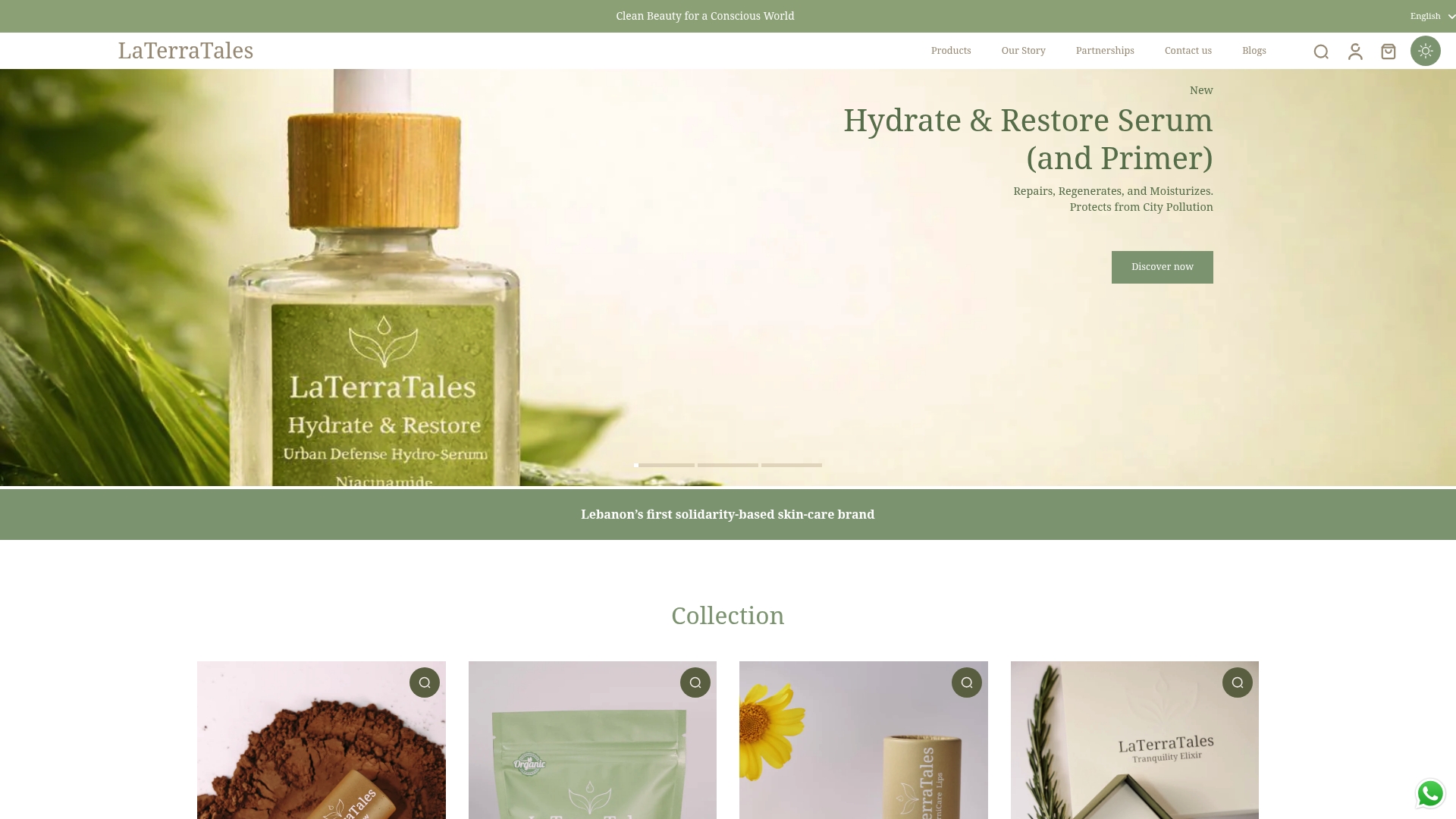
LaTerraTales formulates every product with sensitive skin as the baseline, not an afterthought. The natural skincare collection includes a handmade gentle cleanser bar that removes makeup and impurities without stripping the barrier, moisturizing formulas built around ceramides and squalane, and the Bakuchiol Lift & Calm serum as a low-irritation retinol alternative for reactive skin. Every formula is fragrance-free, eco-consciously packaged, and developed to work with your skin’s natural chemistry. If you are ready to simplify your regimen with products made for your skin type, the LaTerraTales collection is a practical place to start.
FAQ
What are the basic gentle skincare routine steps for sensitive skin?
The core steps are cleansing with a pH-balanced, fragrance-free cleanser, moisturizing with a barrier-supporting formula, and applying broad-spectrum mineral SPF 30 or higher daily. This 3-step foundation calms reactive skin before any active treatments are introduced.
How long should I wait before adding actives to a sensitive skin routine?
Wait 4–6 weeks on a stable cleanse, moisturize, and SPF routine with no flare-ups before introducing any active ingredient. Start with one active at a time, applied twice weekly, and patch test before applying to your face.
Are natural skincare products always safe for sensitive skin?
No. Many natural ingredients, including essential oils and botanical concentrates, are common sensitizers for reactive skin. Prioritize fragrance-free, minimal-ingredient formulas over products marketed simply as “natural.”
Is mineral sunscreen really better than chemical SPF for reactive skin?
Yes. Mineral filters like zinc oxide and titanium dioxide sit on the skin surface and physically block UV rays, making them far less likely to cause stinging or allergic reactions than chemical filters that absorb into skin.
Can I skip cleansing in the morning if I have sensitive skin?
Rinsing with lukewarm water in the morning is often enough for sensitive skin. Using a cleanser twice daily can over-strip the acid mantle, so many estheticians recommend reserving your cleanser for the evening routine only.


