

Match Herbal Tea for Bloating to Your Symptom: Evidence Based Picks
Peppermint, ginger, and fennel tea are the most reliable first-line choices for everyday bloating, each suited to a different trigger. Peppermint calms cramping and gas but can aggravate acid reflux. Ginger works best when nausea or a sluggish stomach comes with the bloat, and fennel is the gentlest all-around option, though pregnant readers should get a clinician’s nod first. A warm cup sipped 20 to 30 minutes after a meal tends to help the most.
TL;DR:
- Peppermint tea effectively relieves cramping and gas but may worsen acid reflux, so it is unsuitable for those with heartburn issues.
- Ginger tea works best when bloating is accompanied by nausea or slow digestion, and should be consumed 30 to 60 minutes before a meal.
- Fennel tea is a gentle, all-around option that helps expel trapped gas and is safe for most, though pregnant individuals should consult a clinician first.
- High doses of ginger and licorice root can cause health issues such as blood thinning and increased blood pressure, requiring caution for certain users.
- Drinking herbal tea 20 to 30 minutes after meals, using single-herb bags, and limiting intake to 2-3 cups daily optimize relief and safety.
Table of Contents
- Which Herbal Tea Is Best for a Bloated Stomach?
- How Does Herbal Tea Actually Relieve Bloating?
- When Is the Best Time to Drink Bloating Tea?
- Is Herbal Tea Safe for Everyone With Bloating?
- Our Take: Why Ingredient Selection Matters More Than the Herb List
- A Gentler Way to Try This: LaTerraTales Gut-Skin Axis Tea
- Sources
Which Herbal Tea Is Best for a Bloated Stomach?
Not every bloated stomach has the same cause, so the tea that helps your coworker might do nothing for you. Someone whose belly tightens up after a heavy dinner needs a different herb than someone who feels queasy and full for hours. Matching the plant to the symptom, rather than reaching for whatever “detox tea” is trending, is the difference between a cup that actually works and one that just tastes nice.
Here’s how the most commonly recommended herbs for bloating relief stack up, symptom by symptom.
- Peppermint: Best for cramping and gassy, spasming discomfort. Peppermint relaxes smooth muscle in the gut wall, and it’s one of the most-studied botanicals for bloating and cramping. The catch: that same muscle-relaxing action can loosen the sphincter that keeps stomach acid down, so it’s a poor pick if you deal with heartburn or reflux.
- Ginger: Best when bloating shows up alongside nausea or that “food is just sitting there” feeling. Ginger tea has real support for easing nausea and speeding up gastric emptying, which makes it the better choice over peppermint when your stomach feels slow rather than just gassy. High doses can interact with blood thinners, so keep it to normal tea strength if you’re on anticoagulants.
- Fennel: The classic carminative, meaning it helps trapped gas move through and out. Fennel is a traditional remedy for gas and bloating with a gentle enough profile that many people tolerate it better than peppermint, though pregnant readers should check with a clinician before making it a daily habit.
- Chamomile and lemon balm: Less about the gut directly and more about the gut-brain axis. Both have a calming effect that can ease the kind of bloating that flares up with stress or anxiety, since a tense nervous system slows digestion and traps gas. Neither has the volume of clinical trial evidence that peppermint or ginger does, but their traditional use for digestive upset is well established.
- Dandelion and hibiscus: More niche picks, often used for mild water retention and as a light bitter that can stimulate digestive secretions before a meal. Evidence here leans more on tradition than randomized trials, so treat these as complementary, not primary.
- Licorice root: Sometimes included in digestive blends for its soothing effect on the gut lining, but it can raise blood pressure with regular use. Anyone managing hypertension should skip it or stick to products where it’s a minor, blended ingredient rather than a standalone daily tea.
A review of herbal remedies used across traditional medicine systems lists all seven of these herbs for bloating relief, but the strength of the evidence isn’t uniform. Clinical evidence summaries for digestive herbs consistently rank peppermint and ginger higher than the others, largely because they’ve been through more controlled trials. That doesn’t make chamomile or fennel useless. It just means you should expect a milder, more gradual effect rather than the faster relief peppermint or ginger can bring on.
Pro Tip: If you’re not sure which symptom is driving your bloat, start with fennel. It’s the mildest of the group and rarely causes a reaction, which makes it a safe way to test whether herbal tea helps you at all before you commit to a more targeted pick.
How Does Herbal Tea Actually Relieve Bloating?
Three separate mechanisms are doing the work here, and knowing which one you need narrows your choice fast. Antispasmodic herbs, like peppermint, relax the smooth muscle lining your intestines, which eases the cramping that comes from gut spasms. Carminative herbs, like fennel, help break up and expel trapped gas rather than relaxing muscle directly. Prokinetic herbs, like ginger, speed up how quickly your stomach empties its contents, which matters when bloating comes from food sitting too long rather than gas buildup.
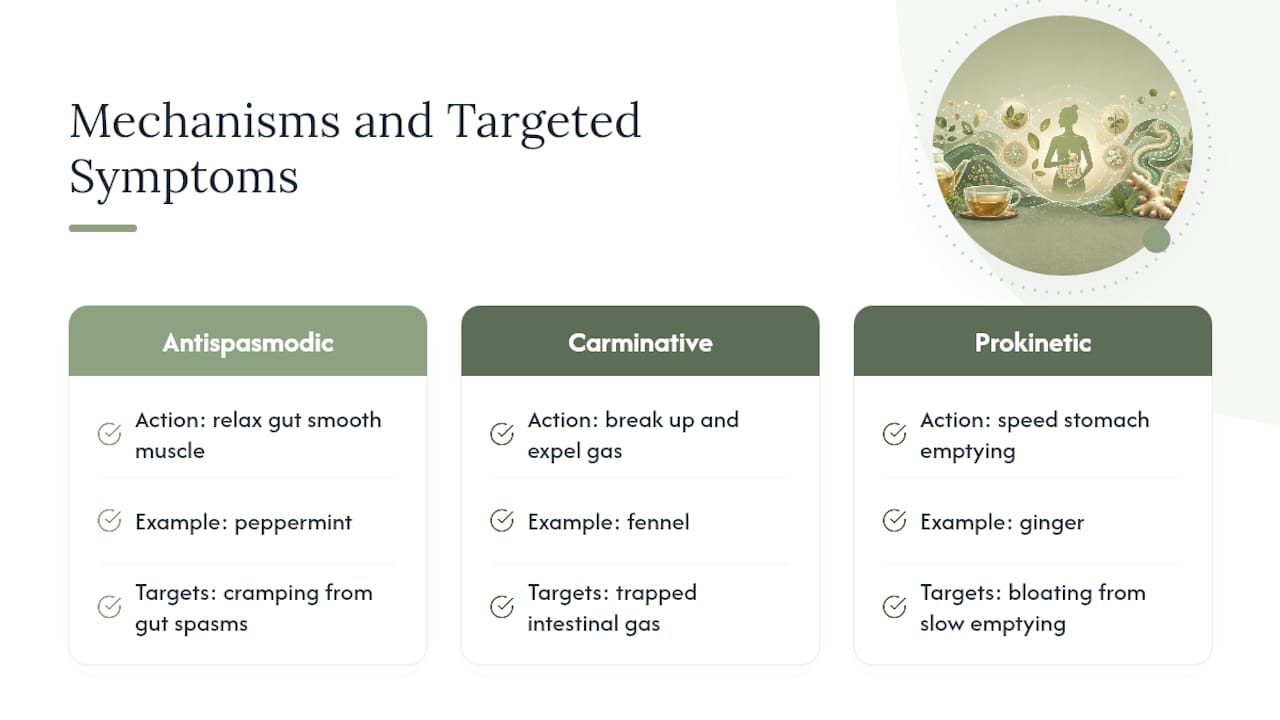
None of this is exotic. It’s the same logic behind why an antacid and a laxative treat completely different problems even though both show up in the same “digestive aisle.” The mismatch happens when someone with slow gastric emptying reaches for peppermint tea expecting ginger’s effect, and wonders why nothing changes.
Worth keeping in perspective: peppermint and ginger have the deepest bench of randomized trials behind them, while chamomile, fennel, and lemon balm rest more on centuries of traditional use plus smaller studies. That doesn’t mean they don’t work. It means your expectations should scale to the evidence: expect a noticeable, describable effect from peppermint or ginger, and a subtler, cumulative one from the rest.
When Is the Best Time to Drink Bloating Tea?
Timing changes the outcome almost as much as the herb itself.
- For general bloating and gas, drink a cup 20 to 30 minutes after eating, once digestion is already underway.
- For nausea-led bloating, drink ginger tea 30 to 60 minutes before the meal you’re worried about, since its prokinetic effect works best ahead of the load it needs to move.
- Steep covered, always. The volatile oils that make peppermint and fennel effective evaporate fast, and a covered mug for 7 to 10 minutes keeps more of them in your cup instead of your kitchen air, a point echoed in Harvard’s rundown of tea’s active compounds.
- Choose single-herb bags over big blends when you’re trying to identify what’s actually helping. Once you know your herb, blends are fine.
- Cap it at 2 to 3 cups a day and give any new herb a three-day trial before switching. If nothing’s changed after three days, move to a different herb rather than assuming tea doesn’t work for you.
Pro Tip: Pair the tea with the basics that actually move the needle: chewing slowly, skipping distracted eating, and taking a short walk after meals measurably improve bloating on their own. Tea helps more when it’s not doing all the work by itself.
Is Herbal Tea Safe for Everyone With Bloating?
Herbal tea is low-risk for most healthy adults, but “low-risk” isn’t the same as “risk-free,” and a few specific combinations deserve real caution.
- Peppermint can worsen acid reflux and heartburn by relaxing the same muscle that keeps stomach acid where it belongs.
- Ginger in high, concentrated doses can amplify the effect of blood-thinning medication, though ordinary tea strength is rarely a problem.
- Licorice root can raise blood pressure with regular use, which matters if you’re already managing hypertension.
- Fennel and several other herbs warrant a clinician’s go-ahead during pregnancy or breastfeeding, since data on regular use in these groups is thinner than for the general population.
- Anyone on daily prescription medication should mention any herbal tea habit to their pharmacist or doctor, since interactions aren’t always obvious from the outside.
Most bloating resolves with home remedies and simple lifestyle shifts, and herbal tea fits comfortably into that first line of response. But bloating that’s severe, doesn’t let up, or comes with unexplained weight loss, blood in your stool, or persistent pain is not a tea problem. Those symptoms call for a clinician, and possibly diagnostic tools like a hydrogen breath test or a supervised elimination diet, not another cup of chamomile.
Our Take: Why Ingredient Selection Matters More Than the Herb List
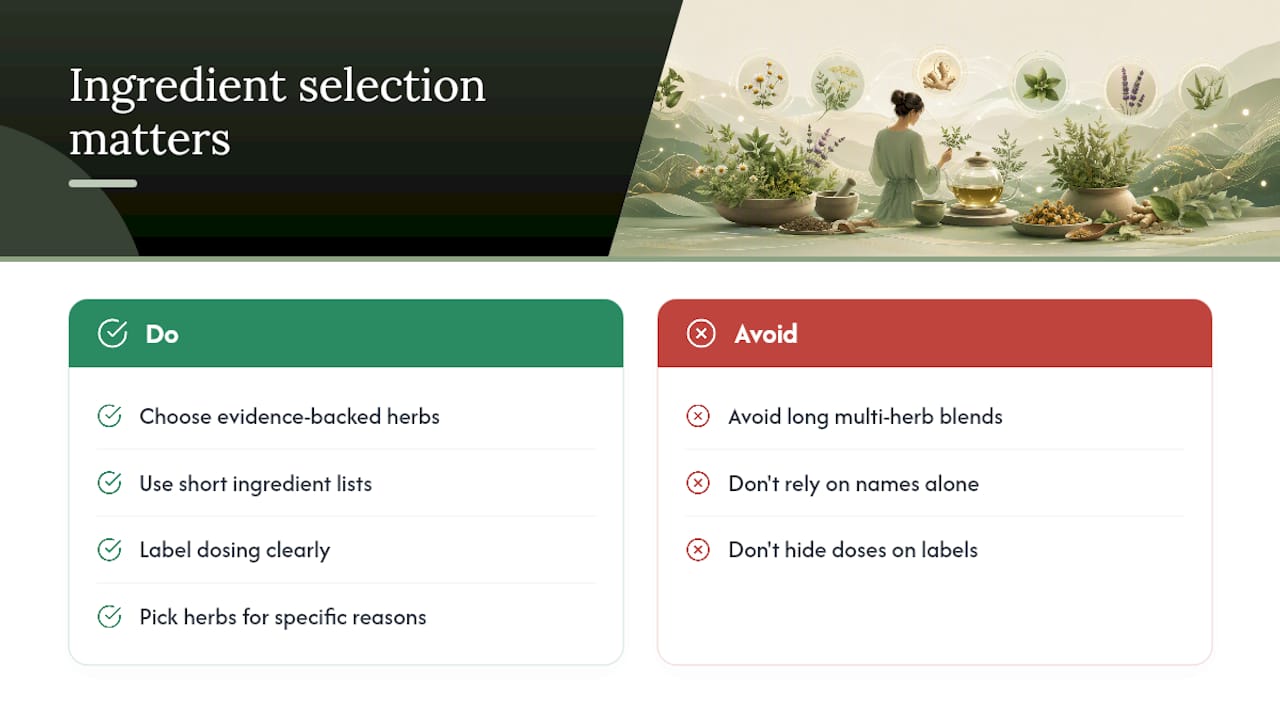
Most advice on bloating tea stops at naming the herbs. What actually determines whether a tea helps you is what’s in the cup, at what concentration, and how clearly that’s labeled. At LaTerraTales, we build our wellness infusions around a simple standard: pick herbs with real evidence behind them, keep the ingredient list short enough that you can actually reason about what you’re drinking, and label dosing clearly enough that someone managing reflux or blood pressure can make an informed call before their first sip.
That single-ingredient clarity is the part most commercial “detox” blends skip. A jar with fourteen herbs sounds thorough, but it makes it nearly impossible to know which one helped, or which one caused a reaction. Our approach, and the one we’d recommend to any reader building a habit around herbal tea, favors fewer ingredients chosen for a specific reason over a long list chosen to look impressive on the label. If you want a deeper look at how gut health shows up in skin, we’ve written about the connection between bloating and skin flare-ups as well.
— LaTerraTales
A Gentler Way to Try This: LaTerraTales Gut-Skin Axis Tea
If you’d rather not stock three separate tins of peppermint, ginger, and fennel while you figure out what your body responds to, our Gut-Skin Axis Tea blends evidence-backed digestive herbs into one cup designed around the same symptom-matching logic covered above, minus the guesswork of building your own rotation.
The blend is formulated with a short, legible ingredient list, so you can check it against the safety notes in this article before making it a daily habit, particularly if you’re managing reflux, blood pressure, or pregnancy. It’s built for the same after-meal window that works best for most bloating: steep it covered, sip it warm, and give it a few days before judging the results. If you’re curious about pairing it with a broader routine, our guide to building a self-care ritual at home walks through how digestion, rest, and skin care connect. Browse the full wellness and self-care collection to see where it fits alongside the rest of your routine, or go straight to the product page to check current availability.
Sources
- PubMed: Systematic reviews and clinical evidence for peppermint in GI conditions
- PMC review on ginger’s effects on nausea and gut motility
- Cleveland Clinic: Bloated stomach — causes and home remedies
- Harvard Health: How to get rid of bloating — tips for relief
This article is general information, not a substitute for advice from a qualified doctor. Consult a qualified healthcare professional about your own circumstances before acting on anything here.
Recommended
يشارك


