

Fade Dark Spots in 1–3 Months with Natural Remedies for Sensitive Skin
Yes, but with real limits: natural ingredients like azelaic acid, licorice extract, arbutin, and niacinamide can produce modest, gradual fading for some types of hyperpigmentation when you use them consistently. None of it works without daily sunscreen, which is the step that actually protects your progress. If a spot is new, changing shape, or looks irregular, see a healthcare provider before treating it at home.
TL;DR:
- Natural ingredients like azelaic acid, niacinamide, licorice extract, and arbutin are supported by clinical evidence and can produce modest improvement with consistent daily use.
- Sun protection through daily, rigorous sunscreen application is essential to preserve progress and prevent further pigmentation, especially when using active ingredients.
- Combining different mechanisms—tyrosinase inhibition, antioxidant protection, and gentle exfoliation—yields better results than relying on a single approach.
- Patch testing before use and limiting active ingredients to one at a time helps prevent irritation and identify the most effective and tolerable options.
- Visible improvements generally take one to three months, emphasizing patience and routine consistency over potency or frequency.
Table of Contents
- Hyperpigmentation Natural Remedies That Have Real Evidence Behind Them
- How These Natural Skin Brighteners Actually Work
- How to Use Home Remedies Safely and When to Expect Results
- What to Avoid, and Signs You Need a Dermatologist
- A Gentle, Sensitive-Skin Routine That Balances Results and Tolerance
- Why Patience Beats Potency Here
- A Gentler Alternative When DIY Isn’t Practical
- Where to Learn More
- Sources
- FAQ
Hyperpigmentation Natural Remedies That Have Real Evidence Behind Them
Not every ingredient your aunt swears by has data behind it. A systematic review looking at natural options for hyperpigmentation found consistent clinical support for a specific shortlist: azelaic acid, soy, lignin peroxidase, arbutin, ellagic acid, licorice extracts, and niacinamide. That’s your starting point. Everything else, including the pantry staples people love to recommend, ranges from “gentle and plausible” to “mostly folklore.” Here’s how to think about each one.
Aloe vera (aloesin). The compound aloesin, found in aloe vera, has shown promise for interrupting pigment production in early research. Apply pure aloe gel at night to clean skin and leave it on. It’s one of the gentlest options on this list, which makes it a reasonable starting point if your skin reacts to almost everything, though it’s also one of the milder performers.
Green tea extract (EGCG). The antioxidant EGCG in green tea helps counter the UV-driven oxidative stress that triggers excess pigment. You can apply cooled, brewed green tea as a compress a few times a week, or look for creams that list green tea extract high on the ingredient panel, since brewed tea alone is a weaker, less concentrated delivery method.
Licorice extract (glabridin and liquiritin). Licorice root contains two active compounds, glabridin and liquiritin, that have shown clinical trial support for melasma and UV-induced dark spots specifically. Glabridin interferes with pigment-producing enzymes, while liquiritin appears to help disperse existing melanin. Look for licorice extract in serums rather than trying to extract it yourself. Our guide to plant-based skincare ingredients breaks down how licorice compares to other botanical brighteners.
Turmeric (curcumin). Curcumin brings genuine anti-inflammatory benefits, which matters because inflammation is often what triggers post-inflammatory hyperpigmentation in the first place. A simple mask of turmeric powder mixed with plain yogurt, left on for 10 to 15 minutes, is the most common home application. Fair warning: turmeric stains skin, clothing, and countertops a temporary yellow, so patch test on a small area and rinse thoroughly.
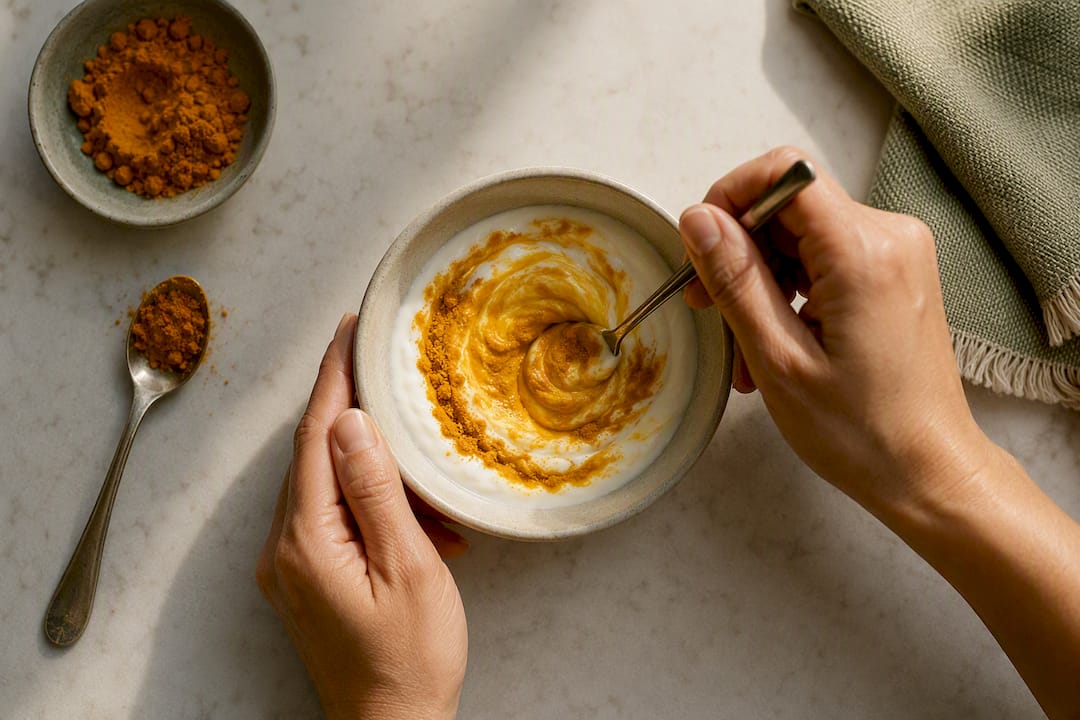
Lactic acid from yogurt or buttermilk. Lactic acid is a mild alpha hydroxy acid that gently exfoliates the top layer of skin, helping shed pigmented cells faster than they would naturally slough off. Plain yogurt or buttermilk applied for 10 to 15 minutes, two to three times a week, is enough. More isn’t better here. Daily use of an acid this mild still risks irritation on already-sensitive skin.
Kojic acid and arbutin. Both work by inhibiting tyrosinase, the enzyme your skin uses to produce melanin. The catch: kojic acid is notoriously unstable, breaking down with light and heat exposure, and it can irritate skin at high concentrations over time. Arbutin is more stable but still works best in a properly buffered formula. This is one case where a well-formulated product beats a DIY mix; raw kojic acid powder is hard to stabilize and easy to overuse.
Niacinamide and azelaic acid. Niacinamide interrupts the transfer of melanin from pigment-producing cells to surface skin cells, and it does this while being one of the most tolerable actives available, even for reactive or rosacea-prone skin. Azelaic acid works similarly and carries some of the strongest clinical backing on this entire list. Both pair well with almost everything else here.
Vitamin C. Ascorbic acid is a genuine antioxidant that can brighten tone and interfere with pigment formation, but only in a stabilized form. Vitamin C degrades quickly when exposed to air and light, so a serum that’s turned orange or brown has likely lost most of its potency.
- Aloe vera: nightly gel application, best for sensitive skin
- Green tea: compress or formulated cream, antioxidant action
- Licorice extract: serum form, targets melasma specifically
- Turmeric: 10 to 15 minute mask, watch for staining
- Lactic acid (yogurt/buttermilk): 2 to 3 times weekly exfoliation
- Kojic acid and arbutin: prefer stabilized commercial formulas
- Niacinamide and azelaic acid: well-tolerated, work for most skin types
- Vitamin C: stabilized, low-strength forms for sensitive skin
Pro Tip: Introduce only one new active ingredient at a time and wait two weeks before adding another. Layering five “natural” actives at once makes it nearly impossible to tell what’s working and what’s causing the redness you’re now dealing with.
How These Natural Skin Brighteners Actually Work
Every ingredient above earns its spot through one of three mechanisms, and knowing which one you’re targeting helps you pick the right combination instead of guessing.
Tyrosinase inhibition stops pigment production at the source. Tyrosinase is the enzyme that converts an amino acid called tyrosine into melanin. Kojic acid, arbutin, and the glabridin found in licorice extract all block this enzyme to varying degrees, which is why they’re the go-to choices for active, ongoing pigment production rather than old, settled spots.
Antioxidant protection works differently. Compounds like EGCG in green tea and vitamin C mop up the free radicals that UV exposure generates, and that oxidative damage is a major trigger for new pigment formation. Think of antioxidants as prevention more than correction. They’re most valuable if sun exposure or inflammation is what’s driving your discoloration in the first place.
Exfoliation takes a more physical approach. Lactic acid and enzymes like papain speed up the shedding of pigmented skin cells sitting near the surface, which is why lactic acid tends to show faster surface-level results than tyrosinase inhibitors, even though it doesn’t touch the underlying pigment production.
A fourth mechanism, melanosome transfer inhibition, is where niacinamide does its work. Instead of blocking pigment production or removing pigmented cells, it interrupts the handoff of pigment granules to the skin’s surface layer.
- Tyrosinase inhibitors: kojic acid, arbutin, licorice (glabridin)
- Antioxidants: green tea (EGCG), vitamin C
- Exfoliants: lactic acid, papain
- Melanosome transfer blockers: niacinamide
Combining ingredients from different categories, rather than five variations on the same mechanism, is generally more effective than relying on a single approach. A routine pairing an antioxidant with a tyrosinase inhibitor and gentle exfoliation covers prevention, active correction, and cell turnover at the same time.
How to Use Home Remedies Safely and When to Expect Results
Getting the mechanism right doesn’t mean much if you skip the safety basics. Here’s the practical sequence.
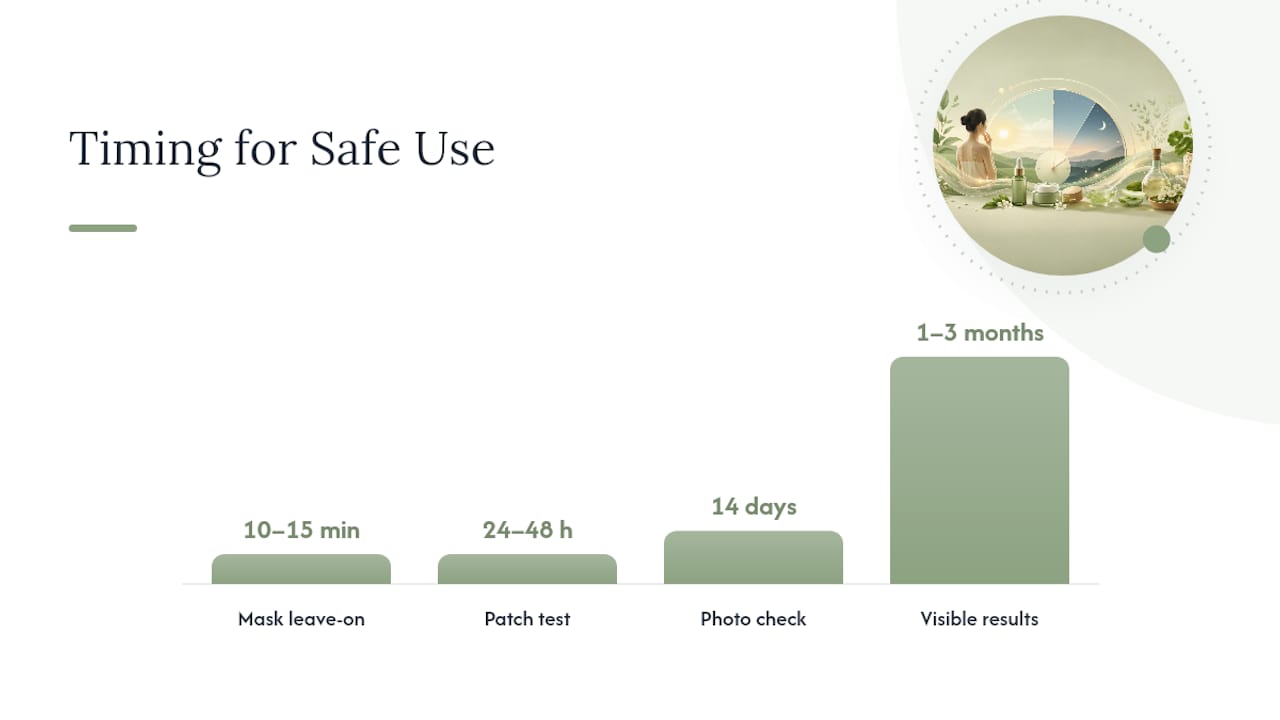
- Patch test first, always. Apply a small amount of any new ingredient, whether it’s turmeric paste or a licorice serum, to the inside of your forearm and wait 24 to 48 hours. Stop immediately if you see redness that doesn’t fade, swelling, itching, or small bumps.
- Respect leave-on versus rinse-off timing. Masks like turmeric or yogurt typically stay on for 10 to 15 minutes before rinsing. Serums and gels containing niacinamide, vitamin C, or licorice extract are formulated to stay on and absorb, so don’t wash those off.
- Schedule sun-sensitizing actives for nighttime. Lactic acid and vitamin C in particular can increase how easily your skin burns or reacts to UV light, so proper aftercare and photoprotection is essential after treatment. Apply these in the evening and follow with sunscreen every single morning, no exceptions, because strict photoprotection is what stops new pigmentation from forming while you’re treating the old.
- Set your timeline expectations now. Most natural remedies need one to three months of consistent use before you’ll see visible change, since they work through your skin’s natural renewal cycle rather than an instant chemical reaction. Our piece on why natural skincare takes longer to work walks through why that timeline isn’t a flaw, it’s how skin biology actually functions.
Pro Tip: Take a photo under the same lighting, same time of day, every two weeks. Day-to-day skin tone shifts with hydration, sleep, and even what you ate, and it’s easy to mistake normal variation for either progress or failure without a consistent baseline.
If you’re pregnant or nursing, treat this list with extra caution. Retinoid alternatives and high-strength acids are generally discouraged during pregnancy, and while most of the ingredients here are milder, check with your doctor before starting anything new, especially licorice extract and concentrated vitamin C serums.
What to Avoid, and Signs You Need a Dermatologist
Some popular “natural” advice does more harm than good. Undiluted lemon juice, for instance, is acidic enough to cause chemical burns and can actually worsen post-inflammatory hyperpigmentation instead of fading it. Raw, unbuffered acids in general belong on this avoid list.
Over-exfoliating is another common mistake. Stacking lactic acid, a physical scrub, and a retinol-adjacent product in the same week irritates skin, and irritated skin produces more pigment, not less. Layering multiple strong actives without understanding how they interact is how a mild dark spot turns into a stubborn, inflamed patch.
- Skip undiluted lemon juice and other raw citrus acids
- Don’t combine more than one strong exfoliant per routine
- Avoid unformulated, high-concentration kojic acid powders
- Watch for asymmetry, irregular borders, color changes, rapid growth, or bleeding in any spot
- Persistent inflammation that doesn’t respond to gentle care needs a professional look
That last point matters more than any ingredient choice on this page. Suspicious pigmented lesions that change shape, bleed, or grow quickly should be evaluated by a healthcare provider to rule out skin cancer before you treat them as cosmetic. Natural remedies are appropriate for stable, cosmetic hyperpigmentation, not for spots your doctor hasn’t looked at. Prescription options like hydroquinone or tretinoin exist for more stubborn cases, but they require clinician supervision.
A Gentle, Sensitive-Skin Routine That Balances Results and Tolerance
We build routines around one principle: the most effective ingredient is the one your skin can actually tolerate every single day. A brightening acid that causes a flare-up every third use isn’t outperforming a milder one you can apply consistently for three months straight.
A simple sequence works for most sensitive skin types. Start with a gentle cleanse that doesn’t strip your skin’s natural barrier. Follow with an antioxidant serum, such as a stabilized low-strength vitamin C, to handle UV-driven damage. Add a calming layer, like a lightweight botanical oil or aloe-based gel, to soothe and support the barrier while the actives work. Finish every morning with sunscreen, without exception.
Pairing matters as much as ingredient choice. Niacinamide and azelaic acid combine well because both are tolerable and target complementary mechanisms. If you’re using a tyrosinase inhibitor like arbutin, pair it with a calming oil such as jojoba to offset any dryness. Avoid stacking vitamin C directly with strong exfoliating acids in the same session, since that combination is a common source of unnecessary irritation.
- Cleanse gently, without sulfates or harsh foaming agents
- Apply antioxidant serum in stabilized, low-strength form
- Follow with a calming oil or aloe gel to support the skin barrier
- Finish daytime routines with broad-spectrum sunscreen, always
Pro Tip: When shopping for formulated products, prefer stable derivatives and lower concentrations over “maximum strength” claims. A 10 to 15% stabilized vitamin C paired with a soothing carrier ingredient will usually outperform a harsh, high-percentage version that you end up using once a week out of fear.
Why Patience Beats Potency Here
The conventional wisdom on hyperpigmentation treats it like a race for the strongest active ingredient. That’s backwards. The clinical evidence points to a different priority: photoprotection first, tolerable actives second, potency a distant third. A powerful serum you use twice a week because it stings is weaker, in practice, than a mild one you use nightly without issue.
Most people also underestimate how much sunscreen does. It’s not a supporting player, it’s the mechanism that determines whether anything else on this list works at all. Skip it, and you’re refilling the pigment reservoir every time you fade it. That single habit shift, worn daily rather than “when I remember,” changes outcomes more than swapping one brightening serum for another.
Where most guides fall short is timeline honesty. They promise fast results, then leave readers disappointed at week three when nothing dramatic has happened. Skin renewal takes time. Set your expectations at one to three months, track your progress in photos instead of the mirror, and treat consistency as the actual active ingredient.
— LaTerraTales
A Gentler Alternative When DIY Isn’t Practical
Mixing turmeric masks and stabilizing your own vitamin C serum takes time, and getting the ratios wrong can leave you with more irritation than improvement. LaTerraTales built its natural skincare collection around the same principle covered above: formulated, stabilized versions of the ingredients that actually have evidence behind them, at concentrations designed for sensitive skin rather than guesswork.
If your routine needs a calming layer to pair with a brightening active, the natural cleanser bar is a low-irritant place to start your day, and it skips the sulfates that can undo progress on already-reactive skin. For a lightweight oil to soothe skin between active applications, the Prestige Oriental dry oil offers a fast-absorbing option without a greasy finish. Whatever you choose, read the ingredient list on the product page first and match it against your skin’s tolerance, the same way you would patch test a DIY recipe. Browse the full collection and pick one product to add to your current routine this week.
Where to Learn More
The clinical and dermatological grounding behind this guide comes from a small set of sources worth bookmarking if you want to dig deeper than any single article can go.
- The systematic review on natural ingredients for hyperpigmentation remains the most comprehensive clinical evidence roundup for this topic
- Healthline’s home remedy guide covers practical application details and realistic timelines
- Research on photoprotection and hyperpigmentation explains why sunscreen is non-negotiable in any treatment plan
- Mechanistic research on natural compounds breaks down how tyrosinase inhibition and antioxidant action differ
Sources
- Are Natural Ingredients Effective in the Management of Hyperpigmentation? A Systematic Review
- How to Treat Skin Hyperpigmentation Naturally
- Dermatologic perspectives on hyperpigmentation and photoprotection
FAQ
Can hyperpigmentation be treated naturally?
Yes, for stable, cosmetic hyperpigmentation, ingredients like azelaic acid, niacinamide, licorice extract, and arbutin have shown clinical support, though results are typically modest and require one to three months of consistent use.
What worsens hyperpigmentation?
Sun exposure without sunscreen is the biggest driver of new and worsening pigmentation, and over-exfoliating or applying undiluted acids like raw lemon juice can trigger inflammation that darkens skin further.
What should you drink to help with pigmentation?
No drink treats hyperpigmentation directly, but staying hydrated and supporting overall skin health with a balanced diet can complement a topical routine; some people include gut-supporting herbal infusions alongside their skincare as a general wellness habit.
How do people get rid of hyperpigmentation using gentle, natural routines?
Many gentle skincare routines popular for hyperpigmentation combine antioxidant serums, mild exfoliants like lactic acid, and diligent sunscreen use rather than any single miracle ingredient.
How long does it take to see results from natural remedies?
Most natural remedies take one to three months of consistent, daily use before visible fading appears, since they work with your skin’s natural renewal cycle rather than producing immediate change.


