

A Pregnancy Safe Skincare Routine That Actually Works
A pregnancy-safe skincare routine is a gentle AM cleanse, an optional antioxidant, moisturizer, and SPF 30+ in the morning, followed by a gentle cleanse, a targeted safe active like azelaic acid or niacinamide, and moisturizer at night, with retinoids, hydroquinone, and strong salicylic acid peels off the table entirely.
That’s the whole framework. You don’t need twelve steps or a cabinet full of serums to protect your skin for the next nine months. You need a short, reliable routine built on ingredients with a track record of safety, backed by dermatologist guidance on pregnancy skin care.
Your AM checklist:
- Gentle, non-foaming cleanser
- Antioxidant serum (vitamin C), optional
- Lightweight moisturizer
- Broad-spectrum sunscreen, SPF 30 or higher
Your PM checklist:
- Gentle cleanser (double cleanse if you wore makeup)
- Targeted safe active if needed: azelaic acid or niacinamide
- Moisturizer or occlusive as your skin needs
Pro Tip: Skip anything with retinoids, hydroquinone, or high-strength salicylic acid peels for now. If a product label doesn’t list its active concentrations, that’s your cue to set it aside until you can check with your provider.
Key Takeaways
A safe, effective pregnancy skincare routine relies on gentle cleansing, daily sunscreen, and proven low-risk actives like azelaic acid and niacinamide instead of retinoids or hydroquinone.
| Point | Details |
|---|---|
| Keep the routine minimal | Cleanse, moisturize, and use SPF 30+ daily rather than layering many actives at once. |
| Drop retinoids immediately | Stop all topical retinoid use as soon as you’re pregnant or trying to conceive. |
| Watch hydroquinone exposure | Its 35% to 45% systemic absorption rate is why experts recommend minimizing use. |
| Lean on azelaic acid and niacinamide | Both treat acne and uneven tone with strong, well-documented safety profiles. |
| Choose minimal, fragrance-free formulas | LaTerraTales’ sensitive-skin line avoids retinoids, hydroquinone, and added fragrance by design. |
A Note From LaTerraTales
We built this brand around a simple belief: your skin doesn’t need more, it needs better. That philosophy matters most during pregnancy, when your skin is more reactive and the stakes of getting a formula wrong feel higher than usual. We formulate with that in mind, keeping ingredient lists short and steering clear of the actives that don’t belong in your routine right now. If you’re looking for products built around that same restraint, our natural skincare collection for sensitive skin is a good place to start.
— LaTerraTales
A Gentler Routine Starts With the Right Products
Building a pregnancy safe skincare routine is easier when the products themselves aren’t working against you. That’s the gap LaTerraTales set out to close: formulas without the retinoids, hydroquinone, or synthetic fragrance you’re now avoiding, so you’re not stuck reading ingredient labels line by line every time you shop.
Our natural, sensitive-skin cleansing bar makes a fitting first swap if your current cleanser feels too harsh or stripping right now. It’s a solid bar rather than a liquid formula, which means fewer preservatives are needed to keep it stable, and it lathers gently enough for daily use through every trimester. If you’d rather browse the full range and build your routine piece by piece, our complete product collection covers cleansers, moisturizers, and body care formulated with the same minimal, sensitive-skin-first approach. Pick one product to start with today and see how your skin responds before adding the next.
This article is general information, not a substitute for advice from a qualified doctor. Consult a qualified healthcare professional about your own circumstances before acting on anything here.
Table of Contents
- Building Your Pregnancy Safe Skincare Routine Step by Step
- What Skincare to Avoid During Pregnancy
- Can I Use Retinol While Pregnant, and What Should I Use Instead?
- Pregnancy Skin Changes: Acne, Melasma, and Sensitivity
- Layering, Patch-Testing, and Introducing New Products Safely
- Sources
Building Your Pregnancy Safe Skincare Routine Step by Step
Your skin isn’t behaving the way it used to, and that’s not in your head. Hormonal shifts during pregnancy change oil production, pigmentation, and barrier function, sometimes within the same week. The fix isn’t a complicated new regimen. It’s a smaller, smarter one.
Morning: protect and simplify
Start with a cleanser that doesn’t strip your skin. Amino-acid based or cream cleansers clean without disrupting your skin barrier, which matters more now because pregnancy skin tends to react faster to harsh surfactants. If you want an antioxidant boost, a stable vitamin C serum is a reasonable, well-tolerated addition, but it’s optional, not mandatory.
Follow with a lightweight moisturizer suited to your current skin type. Many people find their skin gets oilier in the first and second trimester and drier again later, so don’t assume the product that worked in week eight still fits in week thirty.
Then sunscreen, every single day, rain or shine, and this is the step you cannot skip. Daily broad-spectrum SPF 30+ is the single most effective step you can take against pregnancy pigmentation, because melasma triggered by hormonal changes gets dramatically worse with UV exposure. Dermatology reviews consistently point to consistent daily sunscreen use as the primary preventive measure against melasma, and the filter type (mineral vs. chemical) matters far less than whether you actually put it on every morning.
If you wear makeup, look for mineral-based formulas with minimal fragrance, and avoid heavy, pore-clogging foundations if you’re dealing with pregnancy breakouts. A tinted moisturizer with SPF built in solves two problems at once.
Evening: cleanse, treat, restore
At night, cleanse again, and double cleanse if you wore sunscreen or makeup during the day. An oil-based cleanser followed by your gentle everyday cleanser removes residue without over-scrubbing.
This is where a targeted active comes in, if you need one. Azelaic acid and niacinamide are the two workhorses of a pregnancy safe skincare routine because both have strong safety profiles and versatile benefits, covering everything from breakouts to uneven tone. Apply your treatment to clean, dry skin, then follow with a moisturizer or a heavier occlusive like an oil-based balm if your skin is feeling tight or dehydrated.
Weekly extras, used conservatively:
- Low-concentration glycolic acid (5% or under), once or twice weekly at most, for gentle surface renewal.
- Non-occlusive clay or hydrating masks, once weekly, to support texture without heavy buildup.
- Gentle exfoliation limited to one to two sessions weekly. More than that tends to backfire on already-reactive skin.
The instinct to do more when your skin acts up is understandable, but restraint is the smarter move here. A minimal routine done consistently outperforms a complicated one done inconsistently, especially on skin that’s already working overtime to grow a person.
What Skincare to Avoid During Pregnancy
Some ingredients need to leave your routine for the next several months, full stop. Others just need dose or formulation adjustments. Knowing the difference keeps you from either panicking over your entire shelf or ignoring a genuine risk.
Retinoids, in every form. Retinol, tretinoin, adapalene, and other vitamin A derivatives are the clearest “no” on this list. Even though topical absorption is generally low, reviews on skincare safety during pregnancy consistently recommend avoiding them because of potential developmental risks and the simple fact that the safety data isn’t robust enough to take chances with. Pause retinoids the moment you’re trying to conceive, not after a positive test.
Hydroquinone. This one surprises people because it’s such a common pigmentation treatment. But hydroquinone shows notably high systemic absorption, estimated at 35% to 45% within 24 hours after topical application of a standard 2% cream. That’s a meaningfully higher absorption rate than most skincare actives, which is why clinicians recommend minimizing its use during pregnancy even though it isn’t classified as an outright hazard.
High-dose or occluded salicylic acid peels. Here’s where nuance matters. A rinse-off cleanser with a low percentage of salicylic acid is a different exposure scenario than an in-office chemical peel left on the skin under occlusion. Clinical guidance draws that distinction directly, recommending you restrict occluded, high-concentration BHA treatments while treating a low-dose, rinse-off product with far less concern.
Other ingredients worth limiting:
- Certain essential oils used undiluted or in high concentrations, some of which have uterine-stimulating reputations in traditional use, even without strong clinical data either way.
- Parabens and phthalates, preservatives and fragrance carriers that the FDA has flagged for ongoing review in cosmetic formulations. They’re not proven dangerous at cosmetic-use levels, but minimizing exposure is a reasonable, low-effort precaution.
- Formaldehyde-releasing preservatives, which show up in some nail and hair products more than skincare, but worth a label check regardless.
If you’re auditing what’s currently in your bathroom, LaTerraTales’ clean beauty ingredient checklist walks through exactly what to flag and what’s fine to keep.
Can I Use Retinol While Pregnant, and What Should I Use Instead?
No. Retinol and its relatives are the one category with near-universal agreement to avoid, which makes the “what instead” question the most useful one you can ask.
Azelaic acid does more of retinol’s job than people expect. It’s a naturally occurring dicarboxylic acid with anti-inflammatory and mild pigment-correcting properties, and it comes with a genuinely reassuring safety profile. Reviews on azelaic acid describe it as a safe, effective first-line option for pregnancy-related acne and pigmentation, with low dermal absorption across common topical strengths. Over-the-counter formulas typically run 10%, while prescription versions reach 15% to 20%.
Niacinamide earns its spot for a different reason: barrier support. It strengthens the skin’s protective outer layer, calms redness, and helps regulate oil production, all without any of the irritation risk that comes with stronger actives. Concentrations between 2% and 10% work well for most people, and niacinamide layers easily with almost everything else in your routine.
Vitamin C, in stable forms like ascorbic acid or sodium ascorbyl phosphate, brightens tone and adds antioxidant protection against environmental stress.
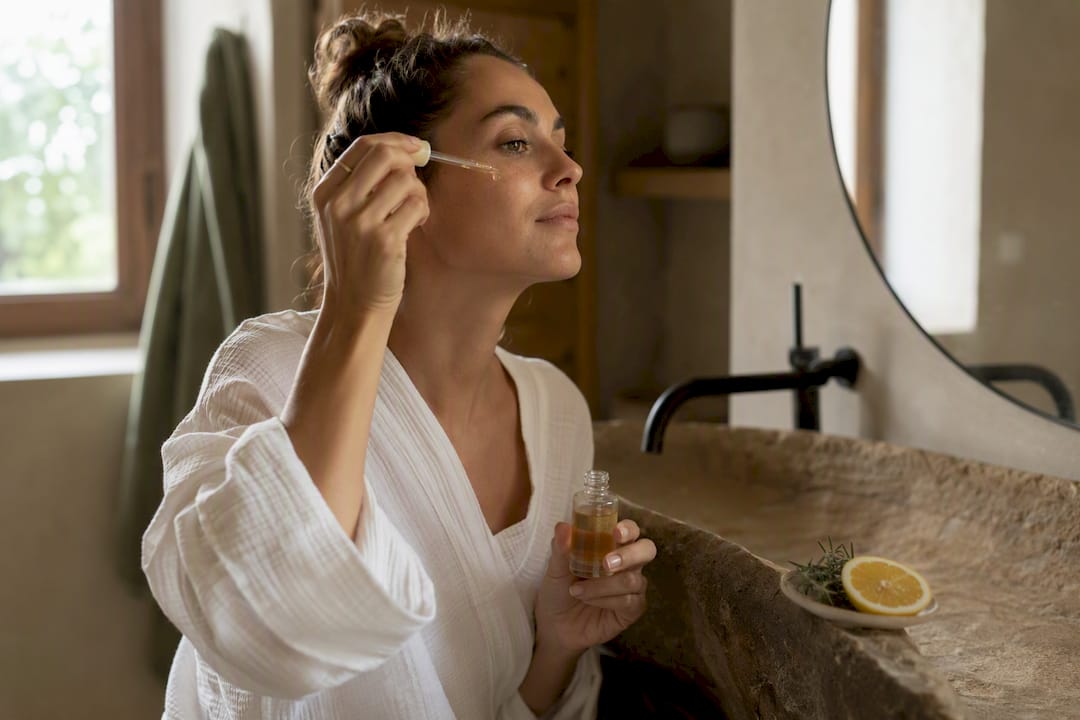
Benzoyl peroxide at low doses (2.5% to 5%), used as a spot treatment rather than an all-over wash, is generally considered acceptable for breakouts, and rinse-off salicylic acid cleansers at low concentrations fall into the same lower-risk category as the peels discussion above.
Pro Tip: Introduce one new active at a time and give it two full weeks before judging whether it’s working. Pregnancy skin changes fast enough on its own, so you want a clean read on what’s actually helping versus what’s just coinciding with a hormonal shift.
The common thread across every ingredient on this list: low systemic absorption and a documented safety record, not just a marketing claim of being “natural” or “clean.”
Pregnancy Skin Changes: Acne, Melasma, and Sensitivity
Your skin isn’t imagining things, and neither are you. Rising progesterone increases oil gland activity, which is why so many people who never struggled with breakouts suddenly find themselves dealing with pregnancy acne in the first trimester. Estrogen and melanocyte-stimulating hormone, meanwhile, drive melasma, the patchy brown or gray-brown pigmentation that tends to show up on the forehead, cheeks, and upper lip.
Hormonal acne. Reach for low-dose benzoyl peroxide spot treatments or a gentle salicylic acid cleanser before anything stronger. If breakouts are persistent, cystic, or leaving scarring, that’s worth a conversation with a dermatologist, who may prescribe topical antibiotics like clindamycin, which carries a well-established safety profile in pregnancy.
Melasma. Prevention beats treatment here, and it’s not close. Daily sunscreen is your single best defense, since UV exposure is the primary trigger for pigment flare-ups. Azelaic acid and vitamin C both offer safe topical support if pigmentation is already showing, though full resolution often waits until after delivery when hormone levels settle.
Increased sensitivity. Skin that tolerated fragrance and heavier formulas before pregnancy may suddenly sting, flush, or react. This is the moment to strip your routine down to fragrance-free, short-ingredient-list products. Dermatologist guidance on pregnancy skin care points specifically to fragrance-free formulations and avoiding harsh sulfates and alcohols as the fastest way to calm reactive skin.
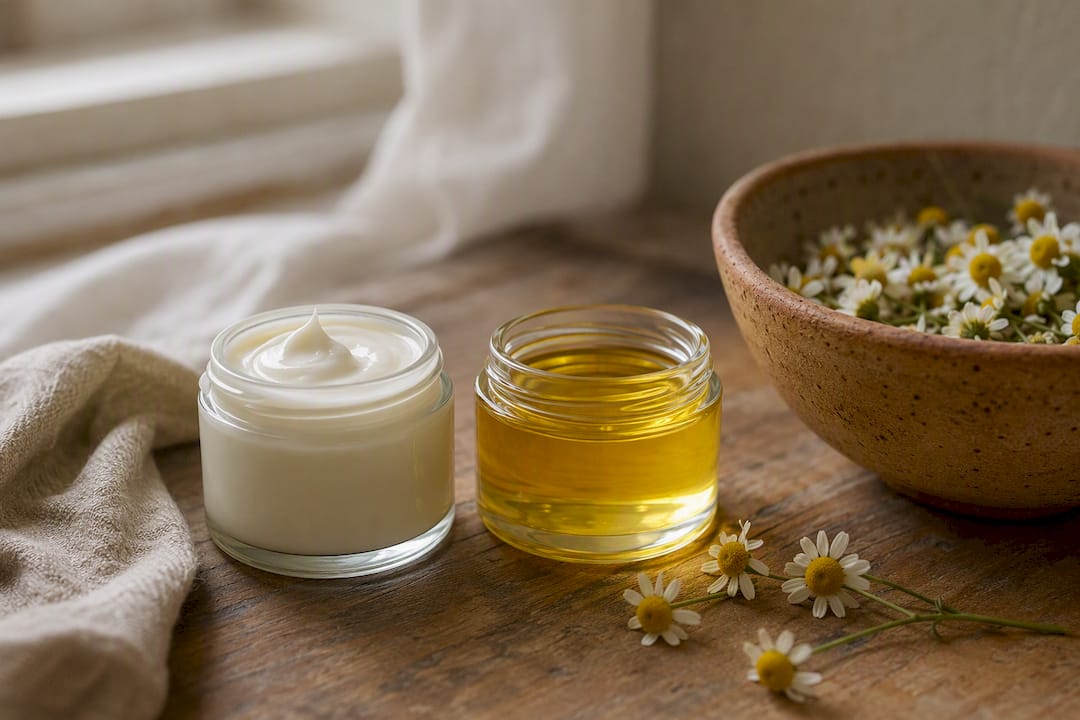
Stretch marks. No topical product prevents them entirely, genetics and skin elasticity play the largest role, but consistent moisturizing with oils or rich creams keeps skin supple and may ease itching as your belly grows. Set realistic expectations here rather than chasing a miracle cream.
Layering, Patch-Testing, and Introducing New Products Safely
The order you apply products in affects how well they work and how much irritation you risk. The rule is simple: thinnest to thickest.
- Cleanse first, always, on both dry and freshly washed skin.
- Apply thin treatments and serums (vitamin C, niacinamide) directly after cleansing while skin is slightly damp.
- Follow with thicker serums or targeted treatments, like azelaic acid.
- Seal everything in with a moisturizer suited to your current skin type.
- Finish with sunscreen in the morning, always the last step before makeup.
Some actives need separation rather than stacking. Vitamin C and niacinamide generally play well together despite older myths suggesting otherwise. Azelaic acid pairs fine with most moisturizers and sunscreens. If you’re adding glycolic acid, use it on nights you’re not also using azelaic acid, at least until you know how your skin responds to both.
Pro Tip: Patch-test every new product on the inside of your forearm for 48 hours before applying it to your face. Pregnancy skin can develop new sensitivities overnight, so a product you tolerated last month isn’t guaranteed to behave the same way this month.
Introduce anything new slowly: once every three days for the first two weeks, then daily if there’s no reaction. Stop immediately if you notice a rash, burning, or worsening redness, and don’t try to push through it hoping it’ll settle on its own.
When to See a Dermatologist or OB-GYN
Most pregnancy skin changes are manageable at home, but a few situations call for professional input rather than another product swap.
See a clinician if you notice:
- Infected-looking acne lesions (pus-filled, painful, or spreading rapidly)
- A severe flare of eczema, rosacea, or an existing skin condition that isn’t responding to gentle care
- Pigmentation that’s darkening or spreading unusually fast, which occasionally warrants ruling out other causes
- Any rash accompanied by itching severe enough to disrupt sleep, which can sometimes signal a pregnancy-specific condition worth checking
If you do see a dermatologist, they may offer prescription-strength azelaic acid or topical clindamycin for acne, both considered acceptable options during pregnancy. What they’ll avoid prescribing: oral or topical retinoids, oral tetracyclines, and hydroquinone at anything beyond minimal short-term use.
Bring your current product labels or a written ingredient list to the appointment. It saves time and helps your provider give you a precise answer instead of a generic one, especially if you’re already using something like azelaic acid or a vitamin C serum and just want confirmation it’s fine to continue.
How LaTerraTales Formulates for Pregnancy-Conscious Skin
Every LaTerraTales formula starts from the same question: does this ingredient need to be here? That minimalist approach happens to line up closely with what pregnancy skin needs most, short ingredient lists, no unnecessary fragrance load, and a clear avoidance of higher-risk actives like retinoids and hydroquinone.
What that looks like in practice:
- Formulas built around a small number of purposeful ingredients rather than long, filler-heavy lists
- No retinoids, no hydroquinone, and no synthetic fragrance in our sensitive-skin lines
- Sustainable, minimal packaging that reflects the same “less but better” philosophy applied to what goes in the jar
If you’re rebuilding your routine from scratch, our guide on choosing natural products for sensitive skin and our breakdown of why fragrance-free formulas matter both dig deeper into the reasoning behind formulation choices like ours. For a second professional opinion on active ingredients and routine structure, this pregnancy-safe skincare guide offers a useful complementary perspective.
| Formulation Principle | What It Means for You |
|---|---|
| Minimal ingredient lists | Fewer variables that could trigger new sensitivities |
| No retinoids or hydroquinone | One less label to double check before you buy |
| Fragrance-free options | Lower irritation risk for hormonally reactive skin |


