

Smooth in 2–4 Weeks: Shampoo Bar Transition Without Waxy Buildup
Yes, you can usually avoid a rough shampoo bar transition. The key is choosing a pH-balanced, syndet formula instead of a soap-based bar, then using a thorough wet, lather, massage, and rinse routine. Most people adjust within a few weeks, and your scalp’s oil production simply needs time to recalibrate.
TL;DR:
- Using a pH-balanced or syndet shampoo bar is essential, especially in hard water areas or for sensitive scalps, to prevent waxy buildup and residue.
- Proper technique, including thorough rinsing, scalp-focused massage, and conditioner application from mid-length to ends, significantly improves transition success.
- Most people see noticeable improvement within four weeks, with oil distribution becoming more even and waxy build-up fading during this period.
- Switching from soap-based bars to syndet formulas reduces the risk of residue and scalp irritation, which are the main culprits of transition issues.
- Formulation quality, including surfactant choice and pH level, is the key factor in a smooth shampoo bar transition, not brand, scent, or price.
Table of Contents
- What Do You Need for a Smooth Shampoo Bar Transition?
- Soap-Based Bars vs. Syndet Bars: Why Formulation Decides Everything
- Your First Two to Four Weeks: The Step-by-Step Routine
- What to Expect Week by Week During Your Transition
- Fixing the Most Common Shampoo Bar Complaints
- How LaTerraTales Supports an Easier Shampoo Bar Transition
- What the Data Actually Tells You to Prioritize
- Try a LaTerraTales Starter Bar and Skip the Guesswork
- Sources
What Do You Need for a Smooth Shampoo Bar Transition?
You do not need a shopping cart full of backup products, but a few smart picks now save you weeks of frustration later.
Start with a labeled pH-balanced or syndet shampoo bar. If your scalp runs sensitive or reactive, look for a gentle formula built specifically for that skin type. Add a silicone-free conditioner to your cart, since silicone buildup is one of the biggest reasons bars feel like they are not rinsing clean. Keep diluted apple cider vinegar on hand too, in case you need an occasional clarifying rinse.
Before your first wash, consider one prep step. If you use heavy styling silicones or have product buildup, clarify once beforehand, or schedule your first two washes closer together than usual so your scalp does not have time to feel unbalanced in between.
On wash day, work the bar into a lather (either in your hands or lightly on your scalp), massage for a full 60 seconds, then rinse until the water runs completely clear, not just clear-looking after a quick pass.
- A pH-balanced or syndet bar suited to your scalp type
- A silicone-free rinse-out conditioner
- Diluted apple cider vinegar for occasional clarifying
- A backup bar in case your first pick is not the right match
Pro Tip: Keep your old liquid shampoo in the shower for week one. If your scalp feels overwhelmed, you can alternate washes instead of quitting cold turkey.
Soap-Based Bars vs. Syndet Bars: Why Formulation Decides Everything
The single biggest factor in whether your shampoo bar transition feels smooth or miserable is not the brand, the scent, or the price. It is whether the bar is soap-based or syndet.
Traditional soap-based bars are made through saponification, the same chemistry behind bar soap for skin. They typically land at a pH between 9 and 10, well above your scalp’s natural range of roughly 4.5 to 5.5. Syndet bars (short for “synthetic detergent”) use milder cleansing agents formulated closer to that natural range, which is why surfactant choice and pH balance determine how well a cleanser suits your skin.
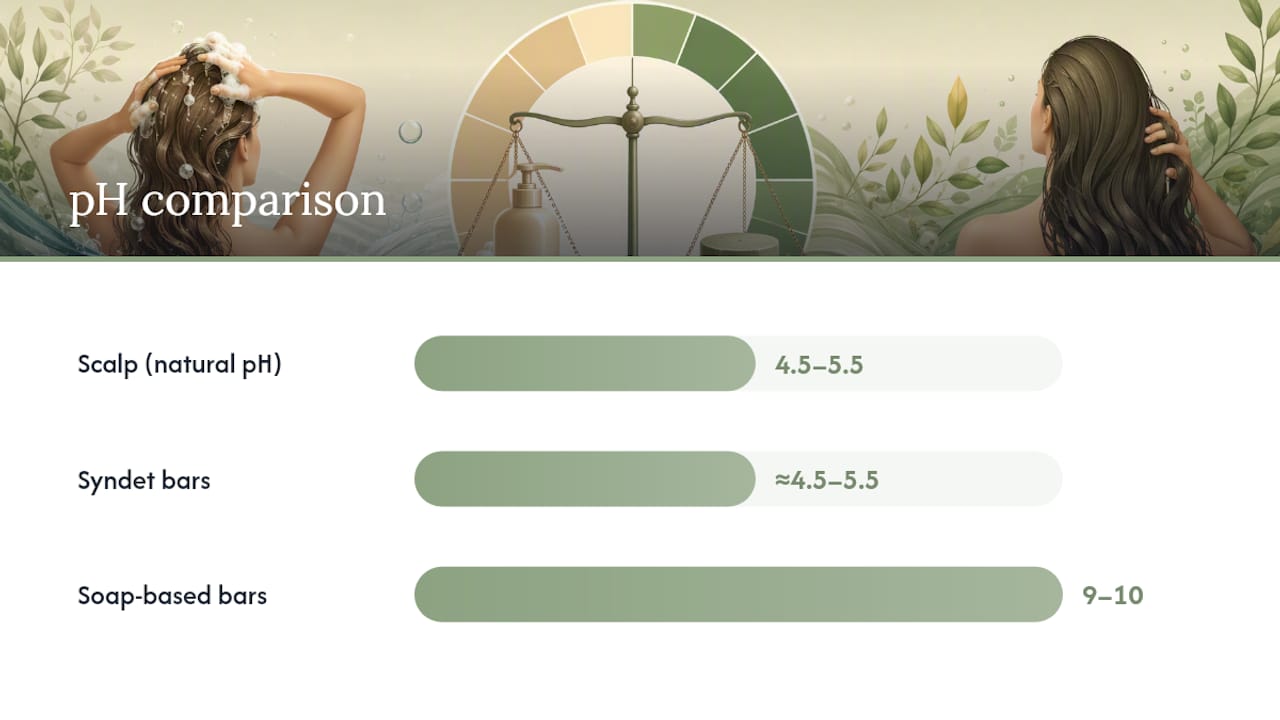
That pH gap explains the waxy, filmy feeling so many people blame on “shampoo bars” generally, when really it is a soap problem. Hard water contains calcium and magnesium ions that react with soap-based surfactants to form an insoluble residue, essentially soap scum, on your hair strands. Syndet bars mostly sidestep this because their surfactants do not react with mineral ions the same way, which is why they tend to rinse cleaner and feel closer to a liquid shampoo experience.
Reading a label helps you spot the difference before you buy. Ingredient lists heavy with sodium tallowate, sodium cocoate, or other “-ate” salts point to a soap base. Look instead for names like sodium cocoyl isethionate, disodium laureth sulfosuccinate, or cocamidopropyl betaine. Bars that also list citric acid or another pH adjuster are usually signaling a formulated, pH-controlled product rather than a straight soap bar.
- Soap-based bars: pH 9 to 10, prone to residue in hard water
- Syndet bars: pH closer to 4.5 to 5.5, closer to liquid shampoo feel
- Watch for “-ate” salt names as a soap-base clue
- Watch for isethionates, sulfosuccinates, or betaines as syndet clues
If you live somewhere with hard water, or you already know you have sensitive skin, skip soap-based bars entirely and start with a syndet formula. It removes the biggest variable in a difficult transition before you even get in the shower.
Your First Two to Four Weeks: The Step-by-Step Routine
Technique matters as much as formulation, and this is where most people quietly sabotage their own results.
- Prep your scalp. If you use heavy silicones or dry shampoo regularly, do one clarifying wash before you start. A quick scalp massage with a soft brush also loosens flakes and buildup so the bar can work on a cleaner surface.
- Choose your lather method. Lathering the bar in your hands first, then applying the foam, gives you more control and less direct friction on strands. Rubbing the bar straight onto your scalp lathers faster but can feel harsh on fine or fragile hair. Try both in week one to see which your hair prefers.
- Massage with intention. Spend a full 60 to 90 seconds massaging your scalp with your fingertips, not your nails. Focus on the scalp first, not the length. Buildup and oil live at the roots, and a scalp-first approach cleans more efficiently than dragging suds down the strands.
- Rinse until it is actually clear. Keep rinsing until the water runs clear, not just visually foam-free. Residual bar left behind is the number one cause of that “waxy” complaint, especially with soap-based formulas.
- Condition strategically. Apply a silicone-free conditioner from mid-length to ends only, right after rinsing out the bar. Skip the roots entirely, since conditioner near your scalp is what causes greasy-feeling roots the next day.
- Clarify occasionally, not constantly. Once every one to two weeks, rinse with diluted apple cider vinegar (about 1 to 2 tablespoons per cup of water) to cut mineral buildup. Never use it undiluted, and stop if your scalp feels irritated.
Pro Tip: Set a timer for your first few scalp massages. Sixty seconds feels longer than you think, and most people stop rinsing or massaging way too early.
What to Expect Week by Week During Your Transition
Your scalp is not broken during a shampoo bar transition. It is adjusting, and that adjustment follows a fairly predictable pattern.
Right after your first wash, hair may feel unfamiliar, sometimes dry, sometimes slightly rougher than the liquid shampoo texture you are used to. That is normal, not a warning sign. During week one, your scalp’s oil production starts recalibrating, which can temporarily mean greasier roots than usual. Clinical research on cleansers confirms that switching products measurably alters skin barrier function and lipid dynamics, which is exactly why this recalibration period exists at all.
By weeks two through four, most people notice real improvement. Waxy buildup fades, oil distributes more evenly across the scalp instead of pooling at the roots, and the bar starts to feel routine rather than experimental.
- Immediate: unfamiliar texture, possible dryness
- Week 1: oil production recalibrates, roots may feel greasier
- Weeks 2 to 4: waxy feeling fades, oil distributes more evenly
- Week 4+: hair typically settles into its new normal
If you are past week four with no improvement, especially in hard water or with heavily chemically processed hair, that is your signal to try a different bar formulation or check in with a dermatologist instead of waiting it out longer.
Fixing the Most Common Shampoo Bar Complaints
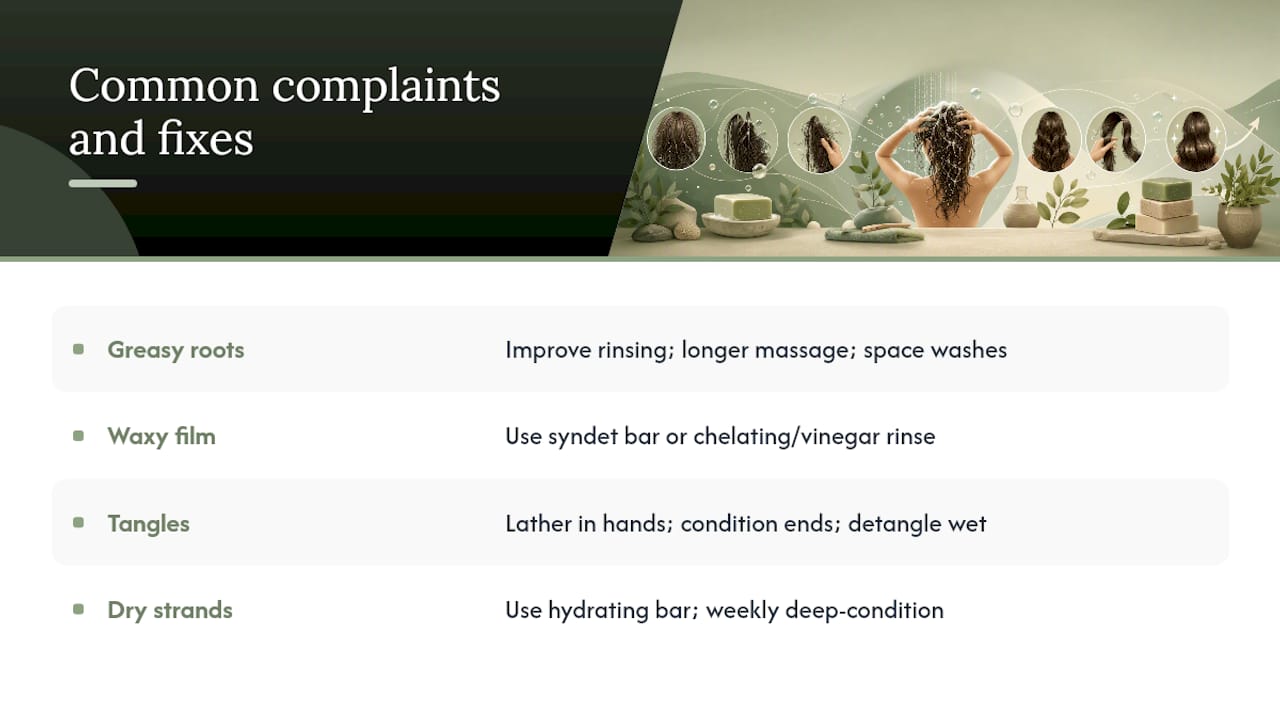
Every complaint about switching to shampoo bars traces back to one of four fixable causes. Change one variable at a time so you actually know what worked.
Greasy roots. Check your rinse first; incomplete rinsing is the most common culprit. Also check your massage time and consider spacing out washes slightly to let oil production settle rather than washing daily out of habit.
Waxy or sticky film. This is almost always soap plus hard water reacting into scum. Switch to a syndet bar, or add a chelating or diluted vinegar rinse to strip the mineral residue. One interview-based industry observation notes that a chelating rinse can help in hard-water areas, but it treats a symptom; switching formulations solves the underlying chemistry.
Tangles. Lather the bar in your hands instead of on your hair, apply conditioner from mid-length to ends, and detangle while hair is still wet and conditioned, never dry.
Dry or brittle strands. Move to a gentler, more hydrating bar formula and add a weekly deep-conditioning treatment or a lightweight oil on the ends only.
Shampoo bars can be genuinely gentler and more eco-friendly than many liquid shampoos, and they may suit certain sensitive-scalp conditions well. But if irritation is severe or you notice actual hair loss rather than typical shedding, stop experimenting and see a dermatologist. No amount of technique adjustment should override a real skin reaction.
How LaTerraTales Supports an Easier Shampoo Bar Transition
Formulation is the lever most people never think to pull, and it is the one that matters most.
LaTerraTales builds solid cleansing bars around minimal-ingredient, sensitive-skin-friendly formulas, the same philosophy behind our approach to high-performance natural formulas. Choosing mild surfactants and controlling pH is not a marketing detail. It directly reduces the odds of the waxy residue and scalp irritation that derail most people’s switch.
A cleanser’s surfactant profile and pH balance are what determine whether your scalp reacts calmly or resists the switch. Get that formulation right, and the technique adjustments described above do the rest.
If you are rethinking your whole routine, not just your shampoo, our guide on switching from conventional to natural skincare walks through the same gradual-swap logic. And if reducing plastic is part of your motivation, our room-by-room plastic swap guide shows where solid bars fit into a lower-waste bathroom.
- Minimal-ingredient formulas reduce common irritation triggers
- pH-conscious cleansing supports a shorter adjustment window
- Educational guides help you plan the full routine, not just the bar
What the Data Actually Tells You to Prioritize
Most shampoo bar advice online treats every bar as interchangeable and blames the format itself when things go wrong. That is backwards. The evidence points to formulation, not the bar concept, as the real variable behind a rough transition.
Conventional wisdom tells people to “give it time” and push through weeks of greasy roots or waxy strands. Sometimes that patience is warranted, since your scalp genuinely needs time to recalibrate its oil production. But patience without a formulation check is guesswork. If you are still struggling past week four, the fix usually is not more waiting. It is switching from a soap-based bar to a syndet one.
Prioritize your purchase decision before your patience. Pick a pH-balanced bar suited to your water hardness and scalp type first, then apply the technique fixes in this guide. Do both, and most of the “transition problems” people write entire forum threads about simply never show up in the first place.
— LaTerraTales
Try a LaTerraTales Starter Bar and Skip the Guesswork
Some brands offer formulation-first, minimal-ingredient, sensitive-skin-friendly cleansing bars built with pH balance in mind, helping users avoid troubleshooting soap problems disguised as “bar problems.”

Start small. Try our solid cleanser bar as your entry point, pair it with a silicone-free conditioner, and follow the wet, lather, massage, and rinse routine outlined earlier in this guide. If you want to browse the full range of sensitive-skin formulas before committing, our natural skincare collection is the place to compare options and find the pairing that fits your hair type and water conditions.
Sources
A few sources back the science behind this guide, and each one supports a different part of the transition process.
- Benefits of Shampoo Bars: What You Should Know — Healthline
- Surfactants and skin irritation — NCBI/PMC
- Effects of cleansers on skin barrier — NCBI/PMC
Recommended
يشارك


