
Ingredient Transparency in Beauty: What You Need to Know
Ingredient transparency in beauty means a brand publicly discloses every intentional ingredient in a product using its INCI (International Nomenclature of Cosmetic Ingredients) name, explains what each ingredient does in plain language, and shares relevant sourcing or testing information so you can make a genuinely informed choice. It is the industry term for what conscious shoppers have been asking for all along: no hidden formulas, no vague “proprietary blend” deflections, no mystery.
TL;DR:
- A transparent product lists all ingredients in INCI order, from highest to lowest concentration.
- Plain-language explanations of ingredient function sit alongside the technical names.
- Sourcing notes or “naturally derived vs. synthetic” distinctions are provided for key actives.
- Third-party certifications or test results back safety and purity claims.
Quick 3-point transparency check:
- Can you find a complete ingredient list on the product page or packaging right now?
- Does the brand explain what at least the key ingredients actually do for your skin?
- Is there a third-party seal, lab report, or sourcing note you can verify independently?
If you answered “no” to any of these, the brand has room to do better.
Table of Contents
- Why ingredient transparency matters for your health, wallet, and the planet
- What genuine ingredient transparency looks like on a product page
- How to evaluate a brand’s ingredient transparency step by step
- What U.S. law requires — and where the gaps are
- How LaTerraTales puts ingredient transparency into practice
- Key Takeaways
- Why we believe transparency is non-negotiable
- Transparent beauty products from LaTerraTales
- Authoritative sources and further reading
Why ingredient transparency matters for your health, wallet, and the planet
The stakes here go well beyond label aesthetics. For people with sensitive skin, reactive skin, or known allergies, an opaque ingredient list is a genuine health risk. When a product lists only “fragrance” instead of the dozens of individual aromatic compounds that term can conceal, you have no way to know whether it contains a known allergen like linalool, limonene, or eugenol. Consumer Reports highlights that the FDA regulates far fewer cosmetic chemicals than the EU does, placing a disproportionate burden on shoppers to protect themselves.
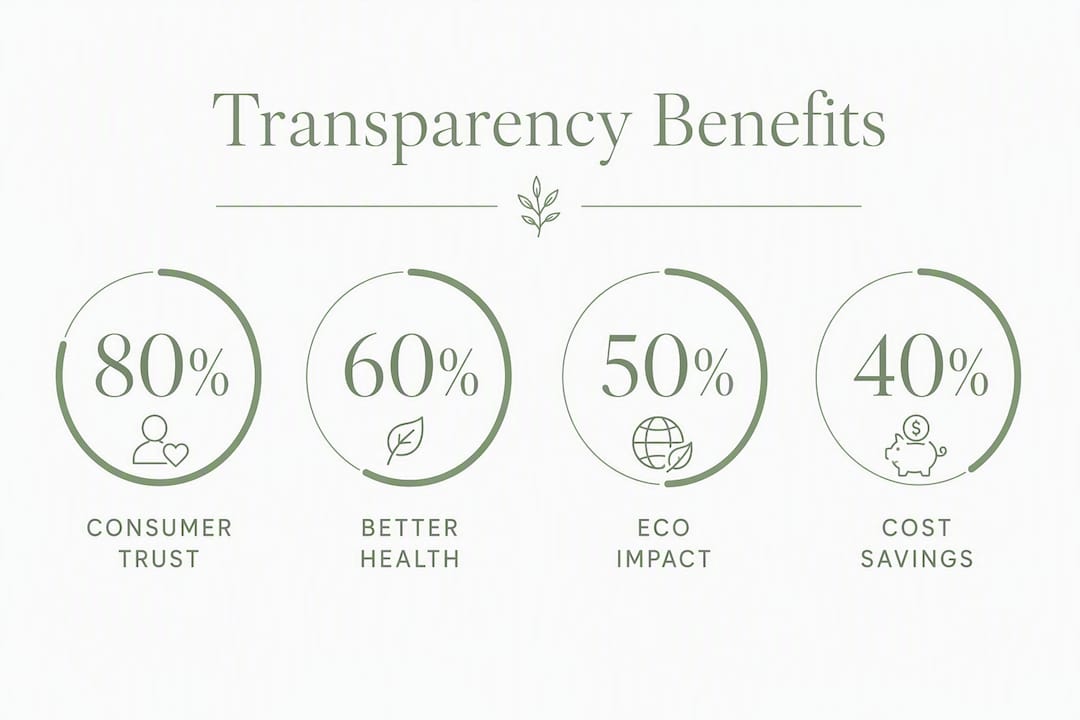
The environmental and ethical dimensions are equally real. Ingredient disclosure connects directly to supply-chain accountability: a brand that names its botanical actives and their origins is also signaling that it has traced those materials back to their source. That matters for biodiversity, fair labor practices, and deforestation risk. Vague ingredient storytelling, by contrast, is one of the most common vehicles for greenwashing, where a brand uses words like “natural” or “clean” without any verifiable basis.
Consumer demand is driving this shift. Research from the NPD Group, reported by Beauty Independent, found that over half of women seek skincare with organic ingredients, and 46% actively avoid sulfates, phthalates, and gluten when choosing products. Brands that communicate ingredient stories clearly are gaining measurable share of mind as a result.
What genuine ingredient transparency looks like on a product page
There is a meaningful difference between legal compliance and real transparency. Compliance means printing an INCI list on the back of the box. Real transparency means giving that list context so it actually helps you.

The baseline: INCI order and what it tells you
Every cosmetic sold in the U.S. must list ingredients in descending order of predominance, per 21 CFR §701.3. Ingredients present at 1% or less may be listed in any order after those above 1%. That structure is useful once you know how to read it, but INCI names like “Butyrospermum Parkii” (shea butter) or “Helianthus Annuus Seed Oil” (sunflower oil) are opaque to most people without a reference guide.
Going further: plain-language glossaries and function statements
The most transparent brands pair every INCI name with its common name and a one-line description of what it does. “Niacinamide (Vitamin B3) — brightens uneven tone and supports the skin barrier” is infinitely more useful than a bare INCI entry. Some brands extend this to QR codes on packaging that link to a full ingredient glossary, batch test reports, or sourcing notes for key botanicals.
Sourcing and the “naturally derived” distinction
“Natural” and “naturally derived” are not the same thing, and a transparent brand explains the difference. A naturally derived ingredient has been chemically processed from a plant or mineral source; the original material is natural, but the finished ingredient may look nothing like it. Brands that specify origin (“rosehip oil cold-pressed in Chile,” “shea butter sourced from women’s cooperatives in Ghana”) give you something concrete to evaluate. For a deeper look at how sourcing intersects with ingredient choice, LaTerraTales’s guide on natural vs. synthetic skincare ingredients walks through the practical tradeoffs.

Third-party certifications that actually mean something
Certifications vary widely in what they verify. The Clean Label Project tests finished products for contaminants like heavy metals and pesticide residues that would never appear on an ingredient list. EWG Verified screens formulas against the Environmental Working Group’s database of flagged chemicals. Made Safe certifies that no known harmful chemicals are present. NSF/ANSI organic certifications verify the percentage of organic content. None of these seals is perfect, but each adds a layer of independent verification that a brand’s own claims cannot provide.
One important caveat: an ingredient list discloses intentional inputs, not a full chemical assay of the finished product. Trace contaminants, manufacturing by-products, and most fragrance sub-ingredients may be present but unlisted. That is not a reason to distrust transparent brands; it is a reason to value the ones that go further with third-party contaminant testing.
How to evaluate a brand’s ingredient transparency step by step
Use this workflow whether you are shopping online or standing in a store aisle.
- Find the full ingredient list. It should be on the product page, not buried in a PDF or available only on request. If it is missing online, that is a red flag.
- Check for plain-language explanations. Does the brand explain what the key ingredients do, or just list INCI names? A glossary, ingredient page, or hover-tooltip counts.
- Look for sourcing or origin notes. Even one or two sentences about where a key botanical comes from signals that the brand has thought about its supply chain.
- Verify third-party seals. Click through to confirm the seal is current and covers the specific product, not just the brand generally.
- Contact the brand. Ask one specific question: “Can you tell me the origin of [key ingredient] and whether this product has been tested for heavy metals?” A transparent brand answers within a reasonable timeframe with specifics, not marketing language.
Tools that do the heavy lifting for you
- INCIDecoder: Paste any ingredient list and get plain-language function descriptions for every entry. It is the fastest way to understand what is actually in a product.
- EWG Skin Deep: — The Environmental Working Group’s database rates thousands of cosmetic ingredients on hazard data, with sourced citations. Useful for flagging specific concerns.
For sensitive skin specifically, LaTerraTales’s guide on ingredients to avoid pairs well with INCIDecoder for a quick double-check.
Red flags that signal low transparency
- “Clean,” “natural,” or “non-toxic” claims with no ingredient list or certification to back them.
- “Fragrance” or “parfum” listed with no further breakdown, especially in products for sensitive skin.
- Ingredient storytelling that changes between the website, packaging, and social media.
- No response, or a vague PR response, when you ask a direct sourcing or safety question.
Pro Tip: For your everyday routine products, run the full five-step check above. For a one-off purchase, at minimum paste the ingredient list into INCIDecoder and scan for any flagged allergens or irritants before you commit.
What U.S. law requires — and where the gaps are
Federal cosmetics law in the U.S. sets a floor, not a ceiling. Here is what that floor looks like today.
The FDA’s cosmetics labeling requirements mandate that every retail cosmetic carry a complete ingredient declaration in INCI order, with one significant exception: “fragrance” and “flavor” may be listed as single blanket terms under 21 CFR §701.3, concealing potentially dozens of individual compounds. Most cosmetics do not require premarket approval or safety review by the FDA before they go on sale.
The Modernization of Cosmetics Regulation Act (MoCRA), signed into law in December 2022, updated several requirements. Manufacturers must now register facilities and list products with the FDA, report serious adverse events, and maintain safety substantiation records. MoCRA also gave the FDA new authority to recall unsafe products. What it did not do is eliminate the fragrance exception or require disclosure of trace contaminants.
Pending legislation like the Cosmetic Supply Chain Transparency Act of 2025 and a companion bill focused on website disclosure of ingredients would go further, but neither has been enacted as of mid-2026.
| Label element | Status under U.S. law |
|---|---|
| Full INCI ingredient list in descending order | Required (21 CFR §701.3) |
| Fragrance sub-ingredient disclosure | Not required (trade-secret exception) |
| Contaminant or manufacturing by-product disclosure | Not required |
| Premarket safety approval by FDA | Not required for most cosmetics |
| Facility registration and product listing (MoCRA) | Required (phased in the early 2020s) |
| Adverse event reporting (MoCRA) | Required for serious events |
| Third-party certification or testing | Voluntary |
| Sourcing or origin information | Voluntary |
The practical implication: U.S. law gives you a starting point, not a complete picture. Third-party verification and brand-level transparency practices fill the gaps that regulation leaves open.
- Watch for “fragrance” on any leave-on product, especially serums, moisturizers, and eye creams.
- Contaminants like lead, arsenic, and PFAS have been detected in some cosmetics but are not required to appear on labels.
- MoCRA strengthened enforcement tools but did not change what must appear on your label today.
How LaTerraTales puts ingredient transparency into practice
Seeing transparency principles applied to a real brand makes them easier to evaluate elsewhere. LaTerraTales builds ingredient transparency into its product pages and educational content from the ground up, not as an afterthought.
Every LaTerraTales product page pairs the INCI list with common names and plain-language function notes, so you know that “Rosa Canina Fruit Oil” is rosehip oil and that it delivers vitamin A and essential fatty acids for skin renewal. Key botanicals carry sourcing context where available, connecting the ingredient back to its origin rather than leaving it as an anonymous entry on a list. The brand’s commitment to evidence-based natural beauty means that ingredient choices are explained in terms of their documented function, not just their marketing appeal.
The educational blog goes further, covering topics like biodegradable ingredients and plant-based actives so you can understand not just what is in a product but why it belongs there and what happens to it after it leaves your skin.
Transparency signals to look for on any brand’s site:
- Full INCI list visible on the product page without clicking through to a separate document.
- Common names and function descriptions alongside INCI entries.
- Sourcing notes for at least the primary actives.
- Blog or knowledge content that explains ingredient rationale, not just ingredient names.
- A contact channel that answers specific ingredient or safety questions.
Pro Tip: When evaluating any brand, send one direct question about a specific ingredient’s origin or a contaminant test result. The quality and specificity of the response tells you more about a brand’s actual transparency than any seal or marketing claim.
Key Takeaways
Ingredient transparency in beauty requires a full INCI list, plain-language function explanations, sourcing context for key actives, and independent verification through third-party testing or certification.
| Point | Details |
|---|---|
| Transparency goes beyond the label | A complete INCI list is the legal minimum; real transparency adds function, sourcing, and test results. |
| Fragrance is the biggest gap | U.S. law allows “fragrance” to hide dozens of compounds; ask brands to disclose sub-ingredients. |
| Use independent tools | INCIDecoder, EWG Skin Deep, and Clean Label Project each verify different aspects of a product’s safety profile. |
| MoCRA raised the floor, not the ceiling | Facility registration and adverse event reporting are now required, but contaminant disclosure and fragrance sub-ingredients remain voluntary. |
| LaTerraTales as a model | LaTerraTales pairs INCI names with common names, function notes, and sourcing context on every product page. |
Why we believe transparency is non-negotiable
At LaTerraTales, we think the beauty industry’s transparency conversation has too often stayed at the surface level, celebrating brands for publishing an ingredient list as though that were the finish line. It is the starting line. The real work is explaining why each ingredient is there, where it came from, and what it does for your skin specifically. That kind of honesty takes more effort, but it is the only kind that actually earns your trust.
We built our product pages and knowledge resources around that standard because we believe you deserve to understand exactly what you are putting on your skin, not just that it passed a minimum legal threshold. If you have a question about a specific ingredient in any LaTerraTales product, its origin, or how it was tested, we want to hear it. Reach out directly or explore the knowledge section of our site for deeper ingredient guides.
Transparent beauty products from LaTerraTales
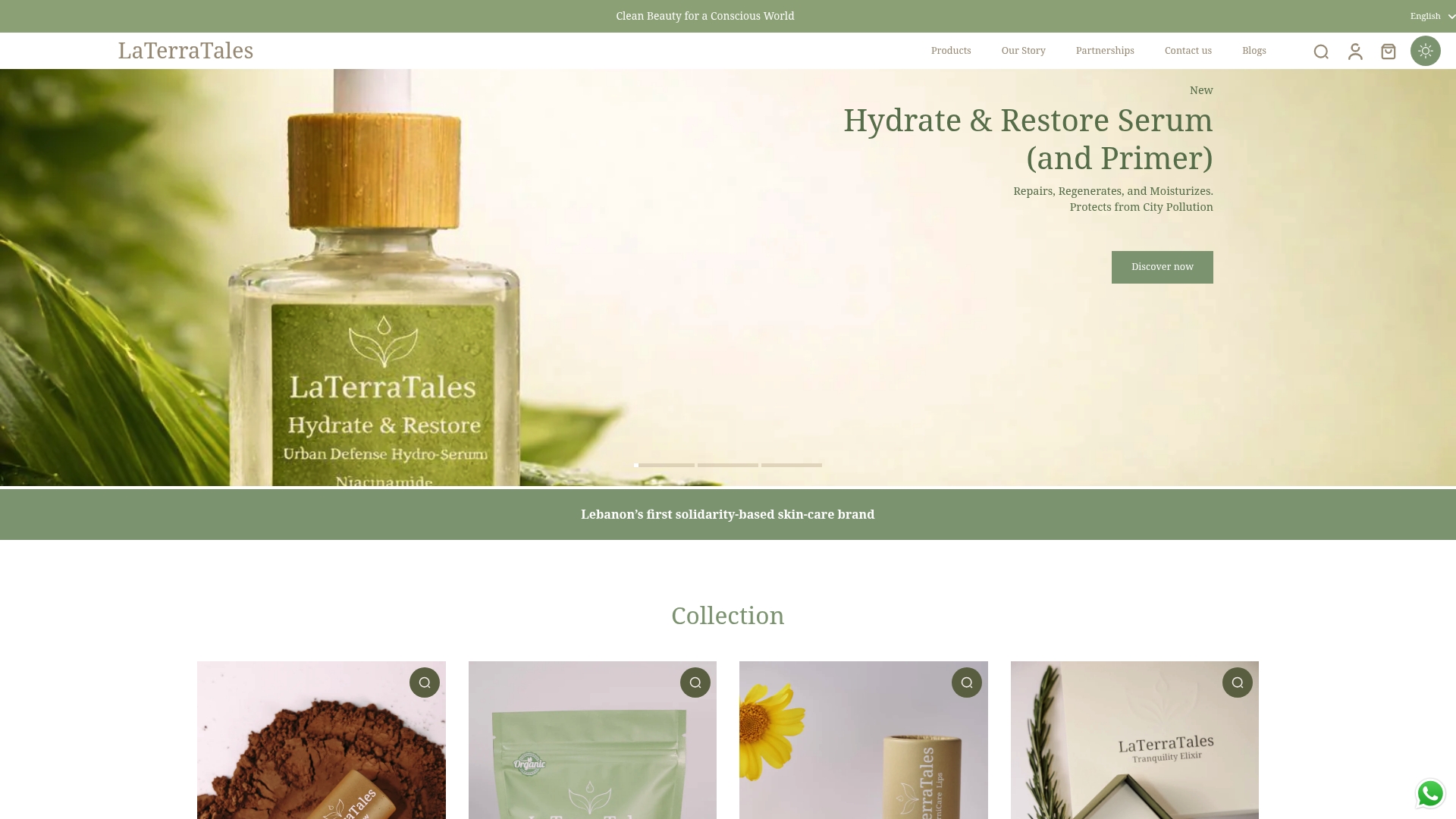
If you want to see ingredient transparency in action rather than just read about it, LaTerraTales’s natural skincare collection for sensitive skin is a good place to start. Every product in the range lists its full INCI ingredients alongside plain-language descriptions, and the formulas are built around minimal, purposeful ingredients rather than long lists of fillers. The natural makeup remover and cleanser bar is a particularly clear example: a short, readable ingredient list where every entry has a documented function and nothing is hidden behind a blanket term.
Browse the collection, read the ingredient details, and if anything raises a question, the knowledge blog and contact page are there to give you a real answer.
Authoritative sources and further reading
These are the primary databases, regulatory pages, and independent resources worth bookmarking for ongoing ingredient research.
- FDA Summary of Cosmetics Labeling Requirements: The official FDA page explaining what must appear on a cosmetic label under current U.S. law.
- 21 CFR §701.3 via Cornell LII: The full legal text of the ingredient designation rule, including the fragrance exception.
- INCIDecoder: Paste any ingredient list for instant plain-language function breakdowns. The fastest consumer tool for decoding INCI names.
- EWG Skin Deep Database: Rates cosmetic ingredients on hazard data with sourced citations; useful for flagging specific concerns.
- Clean Label Project: Tests finished products for contaminants like heavy metals and pesticide residues not captured by ingredient lists.
- Consumer Reports: Concerning Ingredients in Cosmetics: A clear, consumer-facing overview of ingredients that warrant scrutiny and the regulatory gaps that leave shoppers exposed.
- Cosmetic Supply Chain Transparency Act of 2025 (Congress.gov): The text of pending federal legislation that would expand supply-chain disclosure requirements for cosmetics.
For batch or lab test reports, contact the brand directly and ask for the specific document by name. A transparent brand will either share it or explain clearly why it is not publicly available. Silence or deflection is your answer.


