

Layering Skincare Products: The Right Order for Real Results
Layering skincare products means applying each product in a deliberate sequence, from the thinnest, most water-like textures to the richest, most occlusive ones. This technique, sometimes called a skincare layering routine, exists for one straightforward reason: your skin can only absorb what you let it reach. Apply a heavy cream before a lightweight serum, and that serum never actually penetrates. The active ingredients you paid for sit on top of a barrier, doing very little.
Getting the sequence right matters for three reasons: absorption, efficacy, and skin barrier health. When products land on skin in the correct order, each one does its specific job without interfering with the next.
The core principles at a glance:
- Apply products from thinnest to thickest consistency
- Layer water-based formulas before oil-based ones
- Respect pH: low-pH actives (like vitamin C or AHAs) go before higher-pH products
- Give each layer 30–60 seconds to absorb before applying the next
- Use only one potent active per session to avoid irritation
- The standard sequence: cleanser, toner or essence, serums or treatments, eye cream, moisturizer, face oil (optional), sunscreen (morning only)
Table of Contents
- The key rules for layering skincare products correctly
- Step-by-step layering order for your morning and evening routine
- Common layering mistakes that undermine your routine
- What dermatologists say about layering and skin barrier health
- LaTerraTales makes clean, gentle layering easier for your skin
- Key Takeaways
The key rules for layering skincare products correctly
Knowing the rules before you memorize a sequence saves you from the most common mistakes. These three principles cover the vast majority of layering decisions you’ll ever face.
-
Thinnest to thickest. Lightweight liquids absorb quickly and carry active ingredients deeper into skin. Heavier creams and oils sit closer to the surface and seal everything in. Reversing this order means heavier creams block lighter serums, preventing absorption and wasting product.
-
Water-based before oil-based. Water and oil don’t mix. If you apply a face oil first, it creates an occlusive layer that water-based serums and moisturizers simply cannot penetrate. Always finish with oils as your final nourishing seal, after all water-based steps are complete.
-
Low pH before high pH. Actives like vitamin C (ascorbic acid) and AHAs work best at a low pH, around 3–4. Applying them after a higher-pH product can neutralize their effectiveness. Start with your low-pH treatments, let them absorb, then move to neutral or higher-pH formulas.
-
One active per session. Experts recommend using only one active ingredient per skincare session. Stacking retinoids, AHAs, BHAs, and vitamin C in a single routine doesn’t multiply benefits. It multiplies irritation risk and pH disruption.
-
Wait between layers. Rushing through your routine causes pilling and dilution. Waiting 30 to 60 seconds between each step allows the previous product to settle so it absorbs properly rather than mixing with what comes next.
-
Adjust for your skin type. Oily skin benefits from lightweight, gel-based moisturizers and minimal oil use. Dry or sensitive skin needs richer creams and may benefit from a face oil as a final seal. Your routine should reflect your skin’s actual needs, not a one-size-fits-all template.
Pro Tip: Heavier products applied too early act like a physical plug. If your moisturizer goes on before your serum, the serum’s active ingredients, whether that’s hyaluronic acid, niacinamide, or salicylic acid, have nowhere to go. The order isn’t a suggestion; it’s the mechanism.
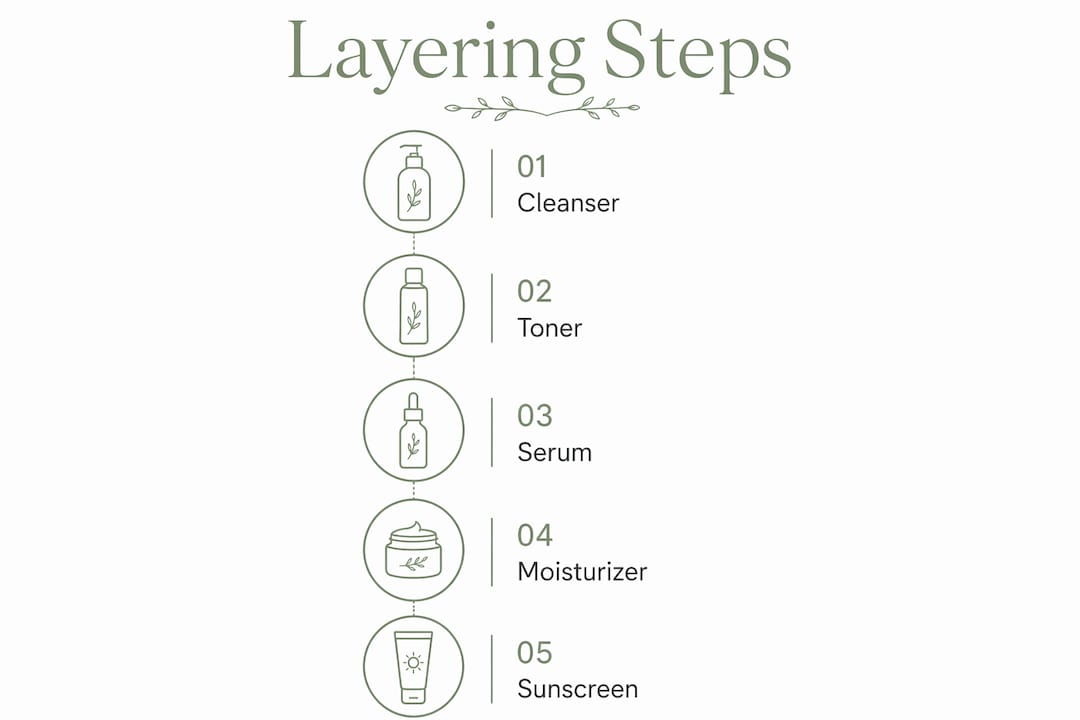
Step-by-step layering order for your morning and evening routine
The standard layering sequence recommended by dermatologists follows a clear logic: prep, treat, protect. Here’s how to apply it in practice.
Morning routine
-
Cleanser. Start with a gentle cleanser to remove overnight buildup, excess sebum, and any residue. Clean skin is the only surface that lets everything else absorb properly. For sensitive skin, a mild, sulfate-free bar or gel cleanser works without stripping the moisture barrier.
-
Toner or essence. These lightweight, watery formulas deliver a first wave of hydration and prep the skin so subsequent layers absorb more evenly. Press gently into skin rather than wiping. If you use both a toner and an essence, apply the toner first.
-
Serums and treatments. This is where targeted ingredients live: vitamin C for brightening and antioxidant protection, hyaluronic acid for deep hydration, niacinamide for pore refinement and redness. Apply one or two drops and spread evenly. Give each serum about 20–30 seconds before layering the next. For antioxidant actives like vitamin C, morning is the ideal time since they reinforce your sunscreen’s UV defense.
-
Eye cream. The skin around your eyes is thinner and more delicate than the rest of your face. Apply eye cream with your ring finger using a gentle tapping motion, never rubbing. It goes on after serums but before moisturizer so it can absorb without being blocked by heavier formulas.
-
Moisturizer. Lock in everything underneath. Choose a formula suited to your skin type: a lightweight gel for oily skin, a richer cream for dry or combination skin. Ceramides and glycerin are particularly effective barrier-support ingredients.
-
Face oil (optional). Applying face oil before moisturizer blocks hydration because oils create an occlusive barrier that prevents moisturizers from penetrating. Always apply oil after moisturizer, as a final nourishing seal. For a deeper look at when each one earns its place, the face oil vs. moisturizer question is worth understanding before you decide.
-
Sunscreen. Sunscreen is always the final step in any daytime routine. SPF 30 minimum, applied across the full face, neck, and ears. Nothing goes over it except makeup. Skipping this step undermines every active ingredient you applied before it.
Evening routine adjustments
The evening sequence follows the same logic with one key shift: swap sunscreen for your overnight treatments, and introduce retinoids here rather than in the morning.
- Retinoids (retinol, tretinoin, retinaldehyde) go on after serums and before moisturizer. They are photosensitive and work best at night.
- AHAs and BHAs (glycolic acid, lactic acid, salicylic acid) also belong in the evening routine, applied after cleansing and toning, before heavier treatments.
- A richer moisturizer or a nourishing face oil as the final step supports overnight skin repair.
Introducing new products safely:
- Patch test any new product on the inside of your wrist or behind your ear for 24–48 hours before applying it to your face
- Add one new product at a time, waiting at least one week before introducing another
- Start retinoids two to three nights per week and build up gradually to avoid barrier disruption
Seasonal and environmental adjustments:
- In humid summers, lighter layers and gel textures prevent congestion
- In dry winters, add a hydrating essence and a richer moisturizer to compensate for moisture loss
- Simplifying your routine and adapting product choices seasonally improves both layering efficiency and results
Common layering mistakes that undermine your routine
Even a well-intentioned routine can work against you when certain errors creep in. These are the ones dermatologists see most often.
Mistakes to avoid:
- Applying products in the wrong order, particularly moisturizer before serum, which blocks active ingredient absorption
- Using too many actives in one session, such as layering retinol, AHAs, and vitamin C together, which causes irritation and pH disruption
- Not waiting between layers, leading to pilling, dilution of actives, and uneven absorption
- Applying face oil before moisturizer, which prevents hydration from reaching deeper skin layers
- Skipping sunscreen or applying it before other products in the morning routine
- Over-layering with too many products, which can overwhelm the skin barrier and cause sensitivity
Ingredient combinations to avoid in the same session:
- Retinol + AHAs or BHAs: Both are exfoliating and can cause significant irritation, redness, and barrier damage when used together. Separate these by time, using AHAs/BHAs in the morning and retinoids at night, or on alternate days.
- Vitamin C + benzoyl peroxide: These can oxidize and deactivate each other, reducing the effectiveness of both.
- Multiple high-strength actives in one routine: Niacinamide and vitamin C can be used together at lower concentrations, but stacking multiple high-potency actives in one session generally causes more harm than benefit.
Seasonal and sensitivity challenges:
Skin changes with the seasons, with hormonal shifts, and with stress. A routine that works perfectly in October may cause dryness or breakouts by February. Check in with your skin regularly and adjust product richness, the number of layers, and active ingredient frequency accordingly. For those managing sensitive skin layering, fewer products and gentler formulas almost always outperform a complex multi-step routine.
What dermatologists say about layering and skin barrier health
Dermatologists consistently point to one insight that most skincare guides understate: layering is as much about what you omit as what you apply. Applying products out of sequence or too quickly causes heavier products to block lighter actives, neutralizing their benefits before they ever reach the target skin layer.

The skin barrier, the outermost layer of the epidermis, is the foundation everything else depends on. It protects against environmental damage and maintains hydration. Correct layering supports barrier function by allowing active ingredients to reach their target layers without disrupting the barrier itself. Incorrect layering, particularly overloading with actives or applying products in the wrong sequence, does the opposite.
Timing between layers matters more than most people realize. Leaving skin slightly tacky but not wet before applying the next product prevents pilling and stops actives from diluting each other. The 30–60 second window is practical, not precious. It takes less time than most people think.
Dermatologist consensus: Applying vitamin C in the morning and retinoids at night, rather than stacking them, maximizes the benefit of both while protecting the skin barrier from unnecessary stress.
The skincare routine sequencing principle also applies to how you build a routine over time. Introducing one new product at a time, patch testing, and monitoring your skin’s response gives you real information about what works for your specific skin, rather than guessing.
LaTerraTales builds its formulations around this philosophy: gentle, eco-conscious ingredients that work with the skin barrier rather than against it. Natural botanical oils, plant-based actives, and carefully selected concentrations mean each product layers cleanly without the irritation risk that comes with harsh synthetic formulas. For sensitive skin in particular, this approach makes the difference between a routine that calms and one that compounds stress.
Pro Tip: If your skin feels tight, red, or reactive after layering, the most likely culprit is either too many actives in one session or not enough time between layers. Simplify before you add. One well-chosen serum applied correctly outperforms five competing actives applied carelessly.
LaTerraTales makes clean, gentle layering easier for your skin
Building a layering routine that actually works starts with products formulated to layer well. LaTerraTales offers a natural skincare collection designed specifically for sensitive skin, with gentle, eco-conscious formulas that absorb cleanly at each step of your routine without causing irritation or pilling.

The handmade natural cleanser bar gives you a clean, balanced starting surface without stripping your moisture barrier, which is exactly what every effective layering routine needs at step one. From there, botanical oils, targeted treatments, and the Bright & Tight Eye Cream for dark circles and puffiness slot naturally into the sequence this article describes.
Every LaTerraTales formula is created with ingredient compatibility in mind, so you spend less time worrying about clashes and more time seeing results. Browse the full collection and find the products that fit your skin’s needs right now.
Key Takeaways
Layering skincare products in the correct sequence, from thinnest to thickest, water-based before oil-based, with 30–60 seconds between each step, is the single most effective way to maximize absorption and protect your skin barrier.
| Point | Details |
|---|---|
| Order determines absorption | Thinnest to thickest is the rule; heavier creams applied first block lighter serums from penetrating. |
| Timing between layers | Wait 30–60 seconds between each product so skin is tacky but not wet before the next step. |
| One active per session | Stacking retinoids, AHAs/BHAs, and vitamin C together increases irritation risk without multiplying benefits. |
| Face oil goes last | Apply face oil after moisturizer; oil applied first creates an occlusive barrier that blocks hydration. |
| LaTerraTales for sensitive layering | LaTerraTales’s natural, gentle formulas are designed to layer cleanly without irritating the skin barrier. |


