
What Is Luxury Natural Beauty? Your 2026 Guide
Luxury natural beauty is defined as the integration of premium, scientifically validated botanical formulations with sustainable sourcing, ethical practices, and a philosophy that supports skin’s natural functions rather than overriding them. This concept goes far beyond swapping synthetic ingredients for plant-based ones. It demands ingredient provenance, formulation depth, and transparent proof of efficacy. The global beauty market is projected to reach $590 billion by 2030, and the fastest-growing segment within it is proof-based, origin-focused natural luxury. If you are exploring what luxury natural beauty actually means in practice, this guide covers the market forces, the science, and the daily habits that make it real.
How is the luxury natural beauty market evolving in 2026?
The personal luxury beauty segment, including fragrance, color, hair, and skin, reached 78 billion EUR in mid-2026. That number signals a market that has matured past novelty and into expectation. Consumers no longer treat natural beauty as a niche preference. They treat it as a baseline standard.

The market definition problem is real, though. Valuations for “natural” products range from $11 billion to $191 billion depending on which certification standard you apply. That gap reflects how inconsistently the word “natural” is used across brands, regulators, and retailers. It also explains why discerning consumers are shifting their trust from marketing claims to ingredient transparency and third-party certification.
The clearest trend in 2026 is the move from excess to intention. Luxury is redefining itself around ingredient origin, scientific proof, and transparency rather than volume or prestige branding. A 10-step routine is no longer a status symbol. A three-product regimen built around barrier repair and botanical actives is. This shift rewards brands that can explain exactly what is in their formulas and why it works.
| Market signal | What it means for you |
|---|---|
| 78 billion EUR luxury beauty segment | Natural luxury is now a mainstream expectation, not a premium add-on |
| $11B–$191B valuation range for “natural” | Certification definitions vary widely; ingredient transparency matters more than labels |
| Shift to minimalist routines | 3–5 product regimens focused on barrier repair are replacing excess |
| Proof-based purchasing | Consumers prioritize clinical validation over brand heritage alone |
What sets luxury natural beauty apart from conventional and generic natural products?
Conventional luxury beauty built its reputation on heritage, packaging, and exclusivity. Luxury natural beauty builds its reputation on something harder to fake: ingredient integrity and scientific validation. The distinction is not about price. It is about proof.
Generic natural products vary enormously in quality. A product can legally carry a “natural” label while containing only a small percentage of botanical ingredients. True luxury natural beauty uses genomic validation and advanced extraction methods like CO2 extraction and cold-pressing to preserve bioactivity. These methods protect fragile plant compounds that standard manufacturing destroys. The result is a formula that actually delivers what the ingredient is capable of.
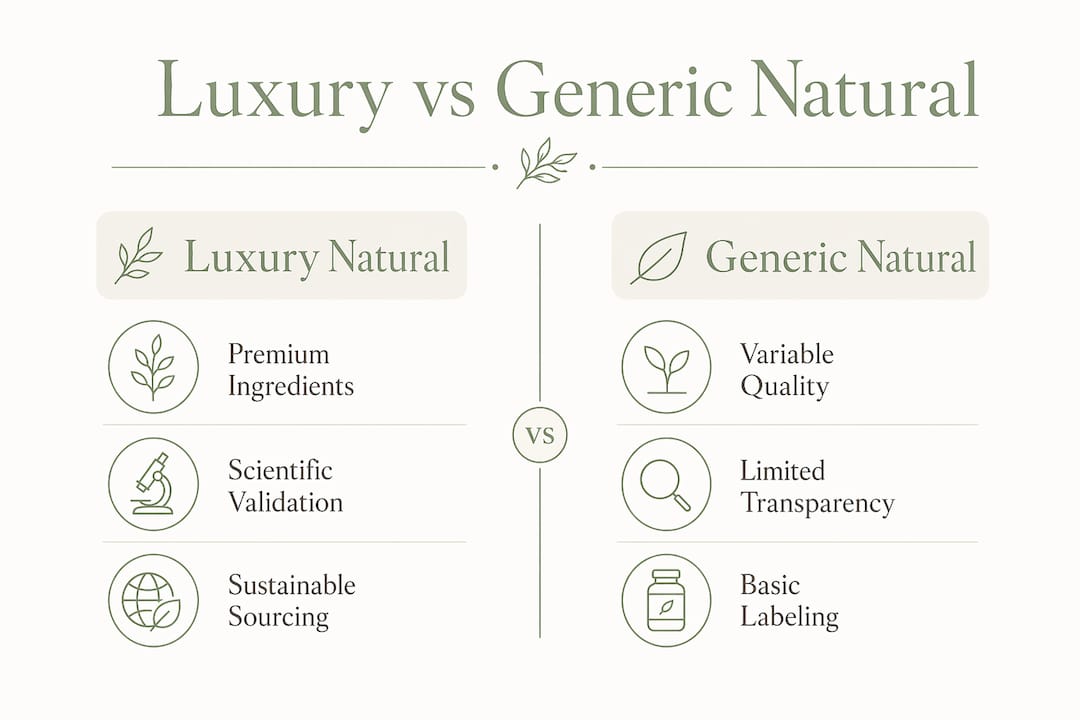
The formulation philosophy also differs. Luxury natural beauty follows a “support, not replacement” principle, using botanical nutrients that mirror skin’s own processes. Oils that replicate sebum composition, herbs with documented anti-inflammatory action, and actives that reinforce the lipid barrier all fit this model. The goal is to work with your skin, not to override it.
Environmental responsibility has become a core pillar, not an afterthought. Modern luxury branding now incorporates ingredient origin, formula knowledge, and transparent proof as defining markers of prestige. Sustainable sourcing, waterless formulas, and responsible packaging are no longer optional features. They are part of what makes a product genuinely luxurious.
Pro Tip: When evaluating a luxury natural product, look for extraction method disclosures on the brand’s website or packaging. CO2-extracted or cold-pressed actives signal genuine formulation investment, not just marketing language.
What science-backed natural actives actually do in luxury formulations?
The most cited example in clinical literature right now is bakuchiol. At 0.5% concentration, bakuchiol shows comparable effects to retinol on wrinkles and hyperpigmentation after 12 weeks, with significantly better skin tolerance. That finding matters because it closes the efficacy gap that skeptics used to dismiss natural beauty entirely. You get retinol-level results without the irritation, peeling, or sun sensitivity.
Other botanicals with strong clinical backing include:
- Rosehip seed oil: Rich in trans-retinoic acid and essential fatty acids that support cell turnover and barrier repair.
- Niacinamide (from niacin): Reduces hyperpigmentation, strengthens the lipid barrier, and calms redness across all skin types.
- Squalane (plant-derived): Mirrors skin’s natural sebum, delivering deep hydration without clogging pores.
- Centella asiatica (cica): Clinically shown to reduce inflammation and accelerate wound healing, making it ideal for sensitive or reactive skin.
- Sea buckthorn oil: Exceptionally high in omega-7 fatty acids and carotenoids, supporting skin elasticity and radiance.
Concentration and formulation technique determine whether these actives actually work. A botanical ingredient listed tenth on a INCI list delivers little benefit. Luxury natural formulations prioritize waterless or advanced extraction methods that concentrate actives and protect them from oxidation. That is the difference between a product that performs and one that simply smells pleasant.
Pro Tip: Check the INCI list order before purchasing. Active botanicals should appear in the top half of the ingredient list to confirm a meaningful concentration.
How to build a luxury natural beauty routine that actually works
The foundation of an effective luxury natural routine is simplicity. Minimalist 3–5 product regimens focused on barrier repair outperform complex multi-step routines for most skin types. Fewer products mean less risk of ingredient conflict, lower environmental impact, and a clearer picture of what is actually working.
- Cleanse gently. Choose a solid cleansing bar or oil-based cleanser free from synthetic sulfates and microplastics. Your cleanser should remove impurities without stripping the skin’s acid mantle.
- Treat with a validated active. A bakuchiol serum or a botanical oil serum addresses your primary concern, whether that is aging, hyperpigmentation, or sensitivity. Apply to damp skin for better absorption.
- Seal with a barrier-supporting oil. Botanical oils used in luxury skincare like rosehip, marula, and sea buckthorn lock in moisture and reinforce the lipid barrier. Learn how to use facial oils correctly to avoid pilling or overloading the skin.
- Protect in the morning. A mineral SPF completes the routine without synthetic chemical filters.
- Support from within. Wellness infusions and gut-supportive teas address the gut-skin axis, which directly affects skin clarity and inflammation.
Patience is non-negotiable. Natural ingredients require a calibration period of 4–12 weeks as skin adapts and builds response. Skipping this window leads most people to conclude that natural products do not work. They do. They just work on skin’s timeline, not a synthetic shortcut’s timeline.
Ingredient transparency is your best purchasing tool. Look for brands that disclose sourcing regions, extraction methods, and third-party testing. Sustainable packaging, refillable formats, and cruelty-free certification signal that a brand’s ethics match its formulas. For age-specific routine guidance, the approach to barrier repair shifts as skin matures, so adapt your regimen accordingly.
Pro Tip: Introduce one new product at a time and wait two weeks before adding another. This makes it easy to identify what your skin responds to and what it does not.
Key Takeaways
Luxury natural beauty works because it combines scientifically validated botanical actives, transparent ingredient sourcing, and sustainable formulation methods that support skin’s natural functions rather than disrupting them.
| Point | Details |
|---|---|
| Definition matters | Luxury natural beauty is defined by ingredient integrity and scientific proof, not price or packaging alone. |
| Market is proof-driven | The $11B–$191B valuation gap shows that certification definitions vary; prioritize transparency over labels. |
| Bakuchiol is clinically validated | At 0.5% concentration, bakuchiol matches retinol results after 12 weeks with better skin tolerance. |
| Minimalism outperforms excess | A 3–5 product barrier-focused routine delivers better results than complex multi-step regimens. |
| Patience is required | Natural actives need a 4–12 week calibration period; consistency determines whether they work. |
Why I believe luxury natural beauty is the most honest form of skincare
At LaTerraTales, we have watched the beauty conversation shift in a way that feels genuinely meaningful. For years, luxury meant more: more steps, more ingredients, more packaging. What we see now is a different kind of confidence. Consumers are asking harder questions, and they deserve honest answers.
The part that excites us most is the science. When clinical research confirms that bakuchiol matches retinol performance, it validates what botanical formulation has always been capable of. The challenge was never whether plants could perform. The challenge was proving it rigorously enough to change minds shaped by decades of synthetic-first thinking.
The hardest part of this space is navigating the noise. “Natural” and “clean” are used so loosely that they have nearly lost meaning. We built LaTerraTales around evidence-based natural beauty precisely because we believe that trust is earned through transparency, not through aesthetic branding. Every ingredient we choose has a reason, and we are willing to explain it.
What we find most rewarding is hearing from people who finally feel good in their skin after years of chasing the next synthetic fix. Luxury natural beauty is not about deprivation or compromise. It is about choosing products that respect your skin’s intelligence and the planet’s limits at the same time. That combination is worth every ounce of formulation effort.
— LaTerraTales
LaTerraTales: where luxury natural beauty meets real results
At LaTerraTales, every formula starts with a question: does this ingredient earn its place? Our collection of clean natural skincare is built for sensitive skin and designed around the principles this article covers: botanical actives at effective concentrations, sustainable packaging, and zero compromise on ingredient integrity.
Our Bakuchiol Serum Lift & Calm delivers clinically validated retinol-alternative results with squalane for barrier support. Our botanical oils and solid cleansing bars complete a minimalist routine that your skin and your conscience will both appreciate. If you are ready to invest in skincare that works with your skin rather than against it, LaTerraTales is the place to start.
FAQ
What is luxury natural beauty, exactly?
Luxury natural beauty is the combination of premium, scientifically validated botanical ingredients with sustainable sourcing and ethical formulation practices. It prioritizes ingredient integrity and proof of efficacy over branding or price alone.
Are natural beauty products as effective as synthetic ones?
Yes, when formulated correctly. Bakuchiol at 0.5% concentration matches retinol’s effects on wrinkles and hyperpigmentation after 12 weeks, with better skin tolerance. The key is concentration, extraction method, and consistent use over a 4–12 week calibration period.
What are natural beauty products made from?
Natural beauty products use plant-derived ingredients such as botanical oils, herbal extracts, and naturally occurring actives like squalane and niacinamide. High-end formulations use CO2 extraction or cold-pressing to preserve the bioactivity of these ingredients.
How do I know if a luxury natural product is genuine?
Look for disclosed sourcing regions, extraction methods, third-party certifications, and INCI lists where active botanicals appear in the top half of the ingredient list. Brands that explain their formulation choices publicly are the most trustworthy.
What is the difference between luxury organic skincare and regular natural skincare?
Luxury organic skincare uses certified organic ingredients, advanced extraction techniques, and sustainable packaging, while regular natural skincare may contain only a small percentage of botanical ingredients with no certification. The formulation philosophy and ingredient concentration separate the two categories.


