

Why Gut Health Affects Skin: Your 2026 Guide
The gut-skin axis is a biological communication system where your gut microbiome directly shapes your skin’s health through immune signaling, metabolic pathways, and barrier function. When this system works well, your skin stays calm, clear, and resilient. When it breaks down, conditions like acne, atopic dermatitis, and psoriasis often follow. Understanding why gut health affects skin is the first step toward addressing skin problems at their source rather than just their surface.
Why gut health affects skin: the gut-skin axis explained
The gut-skin axis is the term researchers use to describe the two-way communication between your digestive system and your skin. Your gut microbiome, the trillions of bacteria, fungi, and other microorganisms living in your intestines, produces metabolites, regulates immune cells, and maintains the intestinal barrier. Each of these functions has a direct downstream effect on your skin.
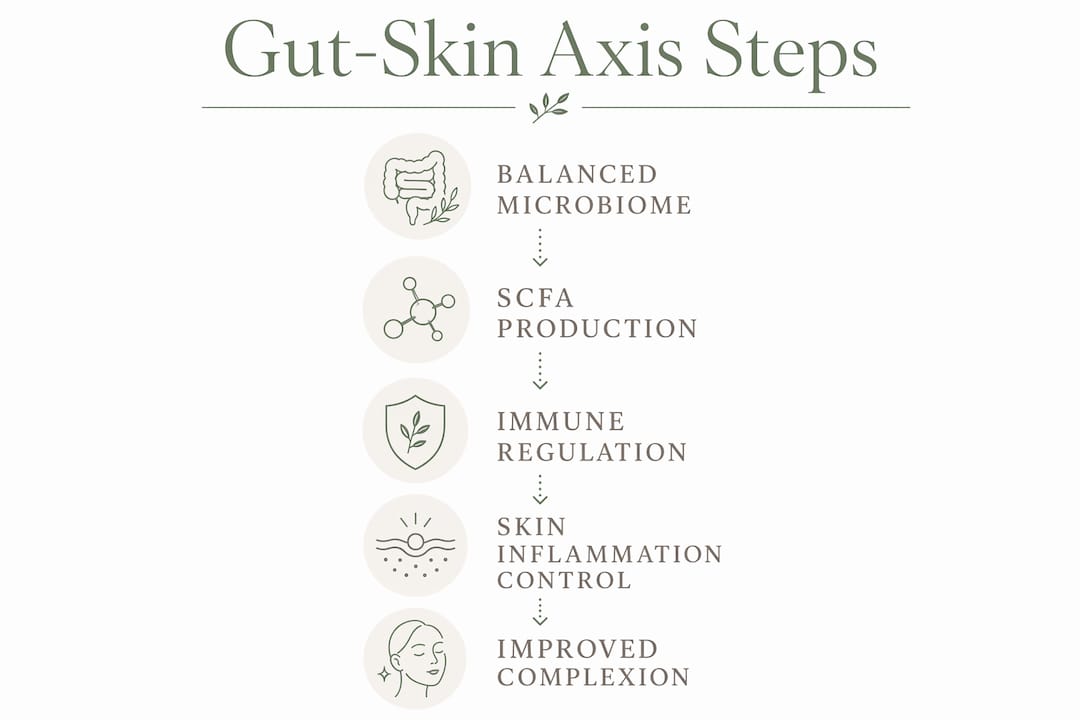
When your gut microbiome is balanced, it produces anti-inflammatory compounds like short-chain fatty acids (SCFAs), keeps your intestinal lining tight, and trains your immune system to respond proportionately. When balance is lost, a state called dysbiosis, the consequences show up on your skin. Cytokines like TNF-α and IL-6 rise, immune cells become overactive, and your skin barrier weakens. The gut-skin connection is not a wellness trend. It is a well-documented biological pathway with growing clinical evidence behind it.

How does gut dysbiosis cause skin inflammation?
Gut dysbiosis is a microbial imbalance where beneficial bacteria decline and harmful species overgrow. The most direct consequence is a breakdown in intestinal barrier integrity. Tight junctions and the mucus layer that normally keep gut contents contained begin to fail. This allows bacterial endotoxins, particularly lipopolysaccharide (LPS), to leak into the bloodstream.
Once LPS circulates systemically, it triggers a cascade of immune activity. Dysbiosis drives LPS leakage and cytokine-driven inflammation that directly affects skin immune cells and barrier function. Elevated TNF-α and IL-6 levels are consistently linked with worsened atopic dermatitis, psoriasis, and acne through immune cell trafficking between the gut and skin.
The skin conditions most clearly tied to gut dysbiosis include:
- Atopic dermatitis: Reduced microbial diversity and low SCFA production correlate with higher disease severity.
- Psoriasis: Elevated systemic inflammation from gut-derived cytokines worsens plaque formation and skin immune dysregulation.
- Acne: Dysbiosis alters androgen metabolism and promotes inflammatory signaling that drives sebaceous gland overactivity.
- Rosacea: Gut permeability and small intestinal bacterial overgrowth are frequently observed alongside rosacea flares.
Dysbiosis also activates neuroendocrine pathways. Gut microbes produce neuroactive metabolites including serotonin and GABA, which influence stress responses and mood. This creates a feedback loop where gut imbalance worsens stress, and stress worsens gut imbalance, with your skin caught in the middle.
Pro Tip: If your skin flares after a course of antibiotics, gut dysbiosis is a likely contributor. Antibiotics disrupt microbial balance significantly, and supporting your microbiome with fermented foods or targeted probiotics during and after treatment can reduce the skin impact.
What role do SCFAs play in skin health?
Short-chain fatty acids, especially butyrate, are the most important metabolites your gut bacteria produce. They are made when beneficial microbes ferment dietary fiber. Their effects extend far beyond the gut wall.
SCFAs do four things that directly protect your skin:
- Regulate immune tolerance. Butyrate promotes the differentiation of regulatory T-cells (Tregs), which suppress excessive immune responses. Fewer Tregs means more unchecked inflammation reaching the skin.
- Reinforce the intestinal barrier. SCFAs strengthen tight junction proteins, reducing LPS leakage and the systemic inflammation that follows.
- Support the skin barrier. SCFAs promote epithelial barrier function and immune regulation, with reduced production linked to disease severity in atopic dermatitis and psoriasis.
- Exert epigenetic effects. Butyrate inhibits histone deacetylases (HDACs), altering gene expression in immune cells and reducing pro-inflammatory signaling at a cellular level.
“Gut-skin signaling is systemic and improvements require multilayer alignment of barrier function, immune tone, and microbiota ecology.” — Microbiome and Skin Health Review
When dysbiosis reduces SCFA production, every one of these protective mechanisms weakens simultaneously. Your skin loses immune protection from the inside out. Eating a fiber-rich diet with diverse plant foods is the most direct way to support SCFA production. Legumes, oats, Jerusalem artichokes, and leafy greens all feed the bacteria that make butyrate. The role of natural ingredients in supporting skin barrier strength aligns closely with this internal approach.
What does the clinical evidence say about gut-skin treatments?
Clinical research on the gut-skin axis has grown substantially. A review of 60 randomized controlled trials (RCTs) showed significant reductions in SCORAD and PASI severity scores for atopic dermatitis and psoriasis with probiotic and microbiome-targeted treatments. Results for acne and melasma remain inconclusive, highlighting the need for adjunctive treatment rather than standalone gut-focused therapy.
| Intervention | Skin condition | Evidence strength |
|---|---|---|
| Probiotics (strain-specific) | Atopic dermatitis | Strong (multiple RCTs) |
| Prebiotics and fiber | Psoriasis | Moderate |
| Synbiotics | Eczema in children | Promising |
| Topical isosorbide diesters | Pediatric atopic dermatitis | Strong (single RCT) |
| Dietary pattern change | Acne, rosacea | Emerging |
One particularly notable study tested topical isosorbide diesters with colloidal oatmeal lotion in children with atopic dermatitis. The RCT showed higher EASI 50 and EASI 75 rates, lower topical steroid use, and measurable shifts in skin microbial populations after 8 weeks. This demonstrates that targeting the microbiome topically, not just internally, can produce real clinical improvements.
Probiotic effects vary significantly by strain, dose, and the specific skin condition being treated. Clinical benefits should be measured by disease severity improvements rather than assuming any probiotic will work universally. The evidence supports using gut-targeted approaches as part of a broader skin care plan, not as a replacement for dermatological treatment.
Pro Tip: When choosing a probiotic for skin support, look for strains with published RCT data for your specific condition. Lactobacillus rhamnosus GG and Lactobacillus acidophilus have the most evidence for atopic dermatitis. Generic “skin probiotic” blends without strain transparency are rarely worth the investment.
How do stress and lifestyle affect the gut-skin axis?
Psychological stress activates the hypothalamic-pituitary-adrenal (HPA) axis, which alters gut microbiota composition and increases intestinal permeability. Stress worsens gut barrier permeability via neuroendocrine pathways, amplifying skin inflammation through the brain-gut-skin axis. This is not a metaphor. It is a measurable physiological process.
The relationship runs in both directions. Gut inflammation signals back to the brain through vagal nerve pathways and microbial metabolites like serotonin and GABA. This means skin flares can worsen mood, and poor mood can worsen skin flares, creating a cycle that is hard to break with topical treatments alone.
Lifestyle factors that most directly affect the gut-skin axis include:
- Diet: A low-fiber, high-sugar diet reduces microbial diversity and SCFA production within days. A Mediterranean-style diet rich in vegetables, legumes, and fermented foods supports microbiome balance.
- Antibiotic use: Even a single course of antibiotics can reduce gut microbial diversity for months, with corresponding effects on skin immune tone.
- Sleep quality: Poor sleep elevates cortisol, which increases gut permeability and systemic inflammation.
- Physical activity: Regular moderate exercise increases microbial diversity and reduces systemic inflammatory markers.
- Alcohol and smoking: Both reduce beneficial bacteria and increase intestinal permeability, directly worsening skin inflammatory conditions.
Sustained lifestyle patterns that support microbiome diversity and gut barrier integrity produce better skin health outcomes than short-term interventions. A two-week probiotic course followed by a return to a low-fiber diet will not hold the gains. The gut-skin axis responds to consistent, long-term inputs. Addressing stress and gut permeability together is more effective than targeting either in isolation.
Key Takeaways
The gut-skin axis works through immune signaling, microbial metabolites, and intestinal barrier integrity, meaning skin health cannot be fully addressed without considering gut health.
| Point | Details |
|---|---|
| Gut dysbiosis triggers skin inflammation | LPS leakage from a compromised gut raises TNF-α and IL-6, directly worsening acne, eczema, and psoriasis. |
| SCFAs are the key protective metabolite | Butyrate from fiber fermentation regulates immune tolerance and reinforces both gut and skin barriers. |
| Clinical evidence supports adjunctive use | Probiotics and dietary interventions reduce severity in atopic dermatitis and psoriasis but work best alongside conventional treatment. |
| Stress compounds gut-skin breakdown | The brain-gut-skin axis means chronic stress worsens both gut permeability and skin inflammation simultaneously. |
| Long-term lifestyle changes outperform quick fixes | Sustained diet, sleep, and stress management produce more durable skin improvements than short-term supplementation. |
LaTerraTales’ perspective on gut health and skin clarity
The gut-skin axis is one of the most misunderstood concepts in natural beauty. People hear “fix your gut, fix your skin” and expect a probiotic to clear their acne in two weeks. That is not how this works. The gut-skin axis acts as a disease modifier, not a sole driver. Your gut health shapes the conditions your skin lives in. It raises or lowers the threshold for inflammation. It does not single-handedly cause or cure skin disease.
What we have seen, both in the research and in the feedback from people who use our products, is that the most meaningful skin improvements come from people who commit to the full picture. They eat more fiber, manage stress with intention, sleep consistently, and support their skin barrier with clean, gentle topical care. They do not expect overnight results. They build a foundation.
The biggest pitfall we see is people cycling through expensive probiotic supplements without changing the diet that feeds their microbiome. Probiotics are transient. They pass through. The bacteria that actually colonize your gut long-term are fed by what you eat every day. Fiber is not optional. It is the substrate your gut microbiome runs on.
Skin-only treatments miss upstream drivers like gut barrier disruption and microbial metabolite shifts, which fluctuate with diet, stress, and antibiotic use. If your skin keeps flaring despite good topical care, look inward. Not as a last resort. As a parallel strategy from the start.
— LaTerraTales
Natural products that support your gut-skin health
Your skin reflects what is happening inside, and the right products can support both sides of that equation.
LaTerraTales formulated the Gut-Skin Axis Tea specifically to support microbiome balance and promote a clearer complexion from within. It is a practical, daily ritual that works alongside your topical routine rather than replacing it. For the outside, the natural skincare collection for sensitive skin offers gentle, clean formulas designed to support a compromised skin barrier without disrupting the delicate balance your microbiome is working to maintain. Every product is eco-conscious, dermatologically considered, and free from ingredients that stress sensitive skin. When your gut and your skincare routine work in the same direction, your skin has the best possible conditions to stay calm and radiant.
FAQ
What is the gut-skin axis?
The gut-skin axis is the biological communication network between your gut microbiome and your skin, operating through immune signaling, microbial metabolites, and the intestinal barrier. Imbalances in this system drive systemic inflammation that worsens skin conditions like acne, eczema, and psoriasis.
Can improving gut health clear acne?
Gut health influences acne through inflammation and androgen metabolism, but clinical evidence for acne specifically remains inconclusive. Improving gut health is best used as an adjunctive approach alongside targeted skincare and, where needed, dermatological treatment.
Which foods most directly support the gut-skin axis?
Fiber-rich foods like legumes, oats, and leafy greens feed the bacteria that produce butyrate and other SCFAs, which regulate skin immune responses. Fermented foods like yogurt, kefir, and kimchi also support microbial diversity and gut barrier integrity.
How long does it take to see skin improvements from gut changes?
Meaningful changes in microbiome composition and skin inflammation typically take weeks to months of consistent dietary and lifestyle shifts. Short-term interventions rarely produce lasting results without sustained changes to diet, stress management, and sleep.
Does stress really affect skin through the gut?
Yes. Stress activates the HPA axis, which increases gut permeability and alters microbial balance, raising systemic inflammation that directly worsens skin conditions. Managing stress is a clinically relevant part of any gut-skin health strategy.


