
Benefits of Natural Baby Skincare for Sensitive Infant Skin
When it comes to your newborn’s skin, what you leave out matters just as much as what you put in. The benefits of natural baby skincare go well beyond a pleasant scent or a clean-sounding label. Thoughtfully formulated natural products protect your infant’s delicate skin barrier, reduce the risk of irritation, and keep your baby away from synthetic chemicals that have no place on such sensitive skin. Here is a quick look at what genuinely sets natural baby skincare apart:
- Gentle moisturizing that supports the stratum corneum without disrupting its natural balance
- Hypoallergenic formulas that lower the risk of allergic reactions and contact dermatitis
- No harsh synthetic chemicals such as parabens, PEGs, or synthetic fragrances that are common irritants in conventional products
- Environmental responsibility through sustainably sourced, biodegradable ingredients
- Long-term skin health by minimizing cumulative chemical exposure during a critical developmental window
These advantages are not marketing language. They are grounded in clinical research, pediatric guidance, and transparent formulation practices that responsible brands follow.
Table of Contents
- What the science says about natural baby skincare benefits
- Practical benefits natural baby skincare products offer your newborn
- How to pick baby skincare naturally and with confidence
- What experts say about natural baby skincare labels and safety
- Common misconceptions about natural baby skincare worth knowing
- LaTerraTales brings clean, gentle formulas to conscious caregivers
- Key Takeaways
What the science says about natural baby skincare benefits
The evidence behind natural baby skincare is more concrete than many parents realize. A published clinical study found that a 4-week regimen of natural baby lotion and wash composed of at least 95% naturally derived ingredients improved stratum corneum hydration by 48% in full-term infants and toddlers. Over 90% of parents in that study rated the products as mild and gentle. Those are not soft impressions; they are measurable outcomes.
Formulation quality is the real differentiator. A product can carry a “natural” label and still contain synthetic preservatives or harsh surfactants. What the clinical data consistently shows is that products with high concentrations of naturally derived actives, minimal synthetic additives, and no known irritants perform better on infant skin than conventional alternatives. The “natural” label alone tells you nothing; the ingredient list and the clinical testing behind it tell you everything.
Botanicals like calendula and chamomile have well-documented soothing and anti-inflammatory properties, and pediatric recommendations support their use for calming redness and reactive skin. These are not folk remedies. They are ingredients with a real body of evidence behind them.
| Measure | Finding | Source |
|---|---|---|
| Stratum corneum hydration | 48% improvement after 4-week natural regimen | Dove Press clinical study |
| Parent-reported tolerability | Over 90% rated products as mild and gentle | Dove Press clinical study |
| Ingredient threshold | ≥95% naturally derived for clinically tested products | Dove Press clinical study |
| Botanicals with evidence | Calendula, chamomile: anti-inflammatory, soothing | Bounty Parents / pediatric guidance |
Key considerations when reading the evidence:
- Clinical testing on infant skin specifically is the gold standard; adult skin data does not transfer directly
- Products tested on full-term, healthy infants provide the most relevant safety baseline
- Hydration improvement in the stratum corneum directly supports the skin barrier, which is thinner and more permeable in newborns than in older children
- Dermatological assessment combined with parent-reported outcomes gives a fuller picture than lab data alone
Practical benefits natural baby skincare products offer your newborn
Newborn skin is not simply small adult skin. It is thinner, more permeable, and still developing its acid mantle, which means it absorbs more of what you apply and has less capacity to buffer irritants. That biological reality is exactly why the natural baby skincare advantages below matter so much in the first months of life.
Moisturizing and skin barrier support
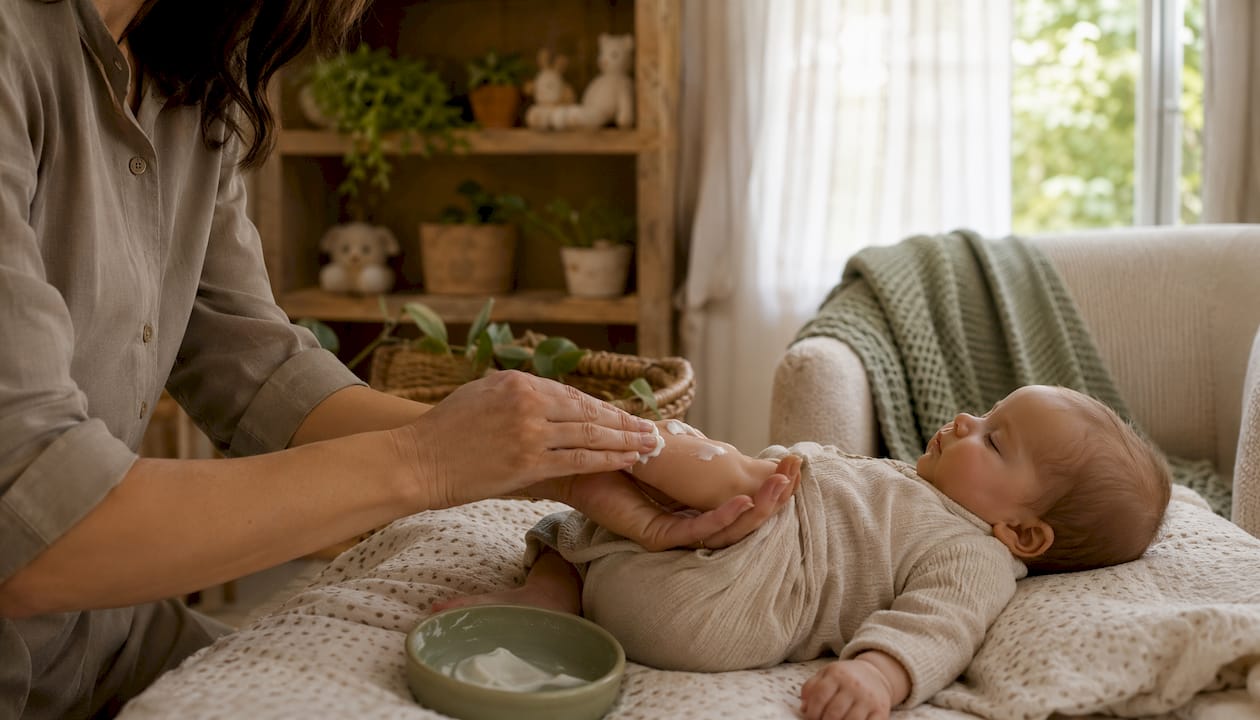
Creams and ointments are generally more effective than thin lotions for moisturizing infant skin, according to pediatric guidance. Natural formulas built around plant-based emollients like shea butter, jojoba oil, or sunflower seed oil deliver that occlusive protection without synthetic film-formers. Worth noting: many newborns do not need lotion immediately after birth, as their skin is still exfoliating. Once dryness appears, a nourishing natural cream becomes genuinely useful.
Reduction of irritation and allergic reactions
Synthetic fragrances are among the most common contact allergens in cosmetics. Parabens and phenoxyethanol, widely used as preservatives in conventional baby products, have raised enough concern that many pediatric dermatologists now recommend avoiding them on infant skin. Natural formulas that skip these ingredients reduce the cumulative irritant load on skin that is still building its own defenses.
Freedom from harsh surfactants
Conventional baby washes often rely on sulfates for lather. These strip the skin’s natural lipids and compromise the barrier function that keeps moisture in and pathogens out. Natural alternatives use mild, plant-derived cleansers that clean without that stripping effect.
Support for sensitive and reactive skin types
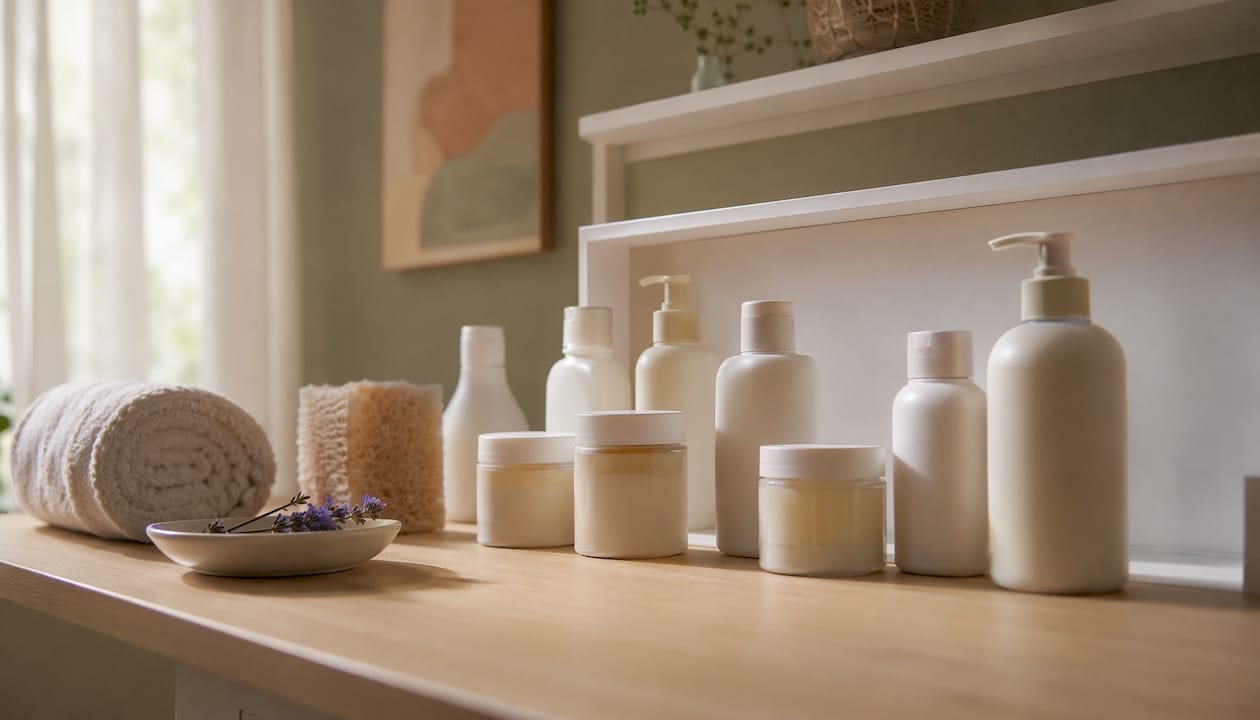
Babies with a family history of eczema, atopic dermatitis, or contact allergies benefit most from fragrance-free, paraben-free formulas. A simple, short ingredient list makes it far easier to identify and eliminate a trigger if a reaction does occur.
Alignment with environmental values
Sustainably sourced ingredients and biodegradable formulas reduce the environmental footprint of your baby’s daily routine. Brands holding B Corp certifications or similar eco-credentials demonstrate that their commitment to ethical sourcing goes beyond the label. Choosing natural baby products is, in this sense, a decision that extends beyond your child’s skin.
How to pick baby skincare naturally and with confidence
Knowing the benefits of organic baby lotions and natural washes is one thing. Knowing how to identify a genuinely safe product on a crowded shelf is another. These criteria cut through the noise.
- Check the ingredient list first. A trustworthy natural baby product leads with plant-derived ingredients and keeps the synthetic additives to a minimum. If the first five ingredients are unrecognizable chemical names, the “natural” claim on the front is doing a lot of heavy lifting.
- Choose fragrance-free or naturally scented. Synthetic fragrance is listed simply as “fragrance” or “parfum” on U.S. labels and can represent a blend of dozens of undisclosed chemicals. Naturally scented products using essential oils are a better option, though even these should be used sparingly on newborns.
- Look for third-party certifications. Because the FDA does not regulate the term “natural” on skincare in the U.S., certifications like NATRUE and recognized ecolabels provide independent verification that a product meets defined natural standards. These are not decorative badges; they require audited compliance.
- Avoid known irritants. Parabens, PEGs, sulfates, and synthetic dyes have no functional advantage over their natural alternatives on infant skin and carry documented irritation risks. A clean beauty ingredient checklist can help you cross-reference what to avoid.
- Prioritize products clinically tested on infants. Adult tolerability data is not a substitute. Look for products that have been dermatologically tested specifically on sensitive or infant skin.
- Consider the format. Creams and ointments outperform thin lotions for barrier support. For cleansing, a gentle, sulfate-free wash or a plant-based cleansing bar formulated for sensitive skin is worth considering.
Pro Tip: Before applying any new product across your baby’s body, do a patch test on a small area of the inner arm or behind the knee. Wait 24 hours and check for redness, swelling, or any change in texture. This one step can prevent a full-body reaction and helps you build a safe routine with confidence.
What experts say about natural baby skincare labels and safety
The most important thing to understand about “natural” baby skincare in the U.S. is that the word carries no legal definition from the FDA. A product can call itself natural while containing synthetic preservatives, artificial dyes, or petrochemical derivatives. That gap between marketing language and formulation reality is where parents need to be most alert.
Dermatologists and pediatric skincare specialists consistently point to two real safety indicators: clinical testing on infant skin and transparent ingredient disclosure. A short, readable ingredient list is not just a design choice. It is a functional tool that lets you, as a caregiver, understand exactly what you are applying and identify a potential sensitizer if a reaction occurs. Transparent labeling with recognizable ingredients gives parents genuine control, which no marketing claim can replicate.
Responsible sourcing and third-party certification add another layer of accountability. Brands that pursue ecolabels or ethical sourcing audits are making verifiable commitments, not just aspirational ones. That matters both for your baby’s skin and for the broader environmental standards you want to support.
The key insight from industry experts: Formulation quality and the absence of known irritants are more reliable indicators of safety for infant skin than any “natural” label alone. Clinical dermatological assessment, combined with a transparent and minimal ingredient list, is what genuinely separates a well-made natural product from one that simply uses the word. Parents are best served by reading ingredient lists carefully and choosing products that have been tested specifically on sensitive infant skin, not just marketed toward it.
Common misconceptions about natural baby skincare worth knowing
The growing popularity of natural baby products has brought some persistent myths along with it. Understanding where the real limitations lie helps you make smarter choices rather than simply trusting a label.
“Natural” automatically means safe. This is the most widespread misconception. Some natural substances, including certain essential oils, nut-derived ingredients, and botanical extracts, can trigger allergic reactions in sensitive infants. Poison ivy is natural. So is latex. The source of an ingredient does not determine its safety profile on its own. Patch testing and clinical safety validation remain non-negotiable regardless of how clean a formula sounds.
All conventional products are harmful. That framing is too broad to be useful. Some conventional baby products are formulated carefully and have strong safety records. The more productive question is whether a specific product contains known irritants or endocrine-disrupting chemicals, not whether it carries a natural or conventional label.
Natural products do not need preservatives. Every water-based product requires some form of preservation to prevent microbial growth. Natural preservatives like rosemary extract or certain plant-derived antimicrobials can do this job effectively, but a product with no preservation at all is a safety risk, not a virtue. The goal is effective, gentle preservation, not the absence of it.
Organic certification equals better skincare. Organic certification speaks to how an ingredient was grown, not how the final product was formulated or tested. A product can be certified organic and still be poorly formulated for infant skin. Certification is one useful data point, not the whole picture.
More ingredients means more benefit. On infant skin, the opposite is usually true. A shorter, simpler formula gives you fewer potential sensitizers and makes it easier to identify the cause of any reaction. The best natural skincare for infants tends to be the most restrained, not the most complex.
LaTerraTales brings clean, gentle formulas to conscious caregivers
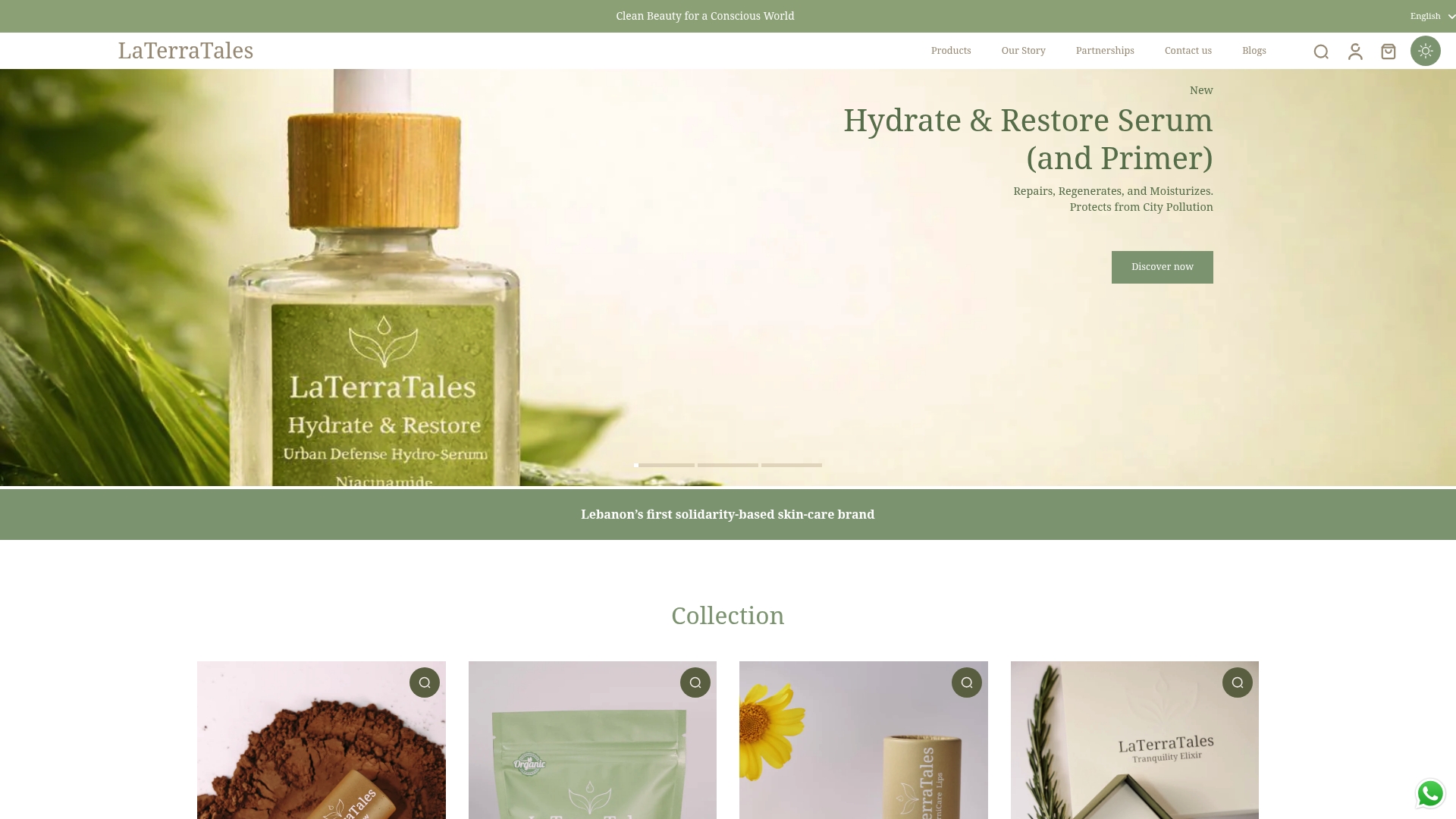
If you have spent time reading ingredient lists and second-guessing “natural” claims, LaTerraTales was built for exactly that kind of careful thinking. As a French-Lebanese sustainable beauty brand, LaTerraTales formulates every product around naturally derived, carefully selected ingredients, with sustainable packaging and a commitment to transparency that goes beyond the label. The same principles that make a formula right for sensitive adult skin, gentle actives, no synthetic fragrances, no parabens, and no unnecessary fillers, apply directly to the delicate skin you are caring for.
The natural skincare collection is formulated for sensitive skin and built on the kind of ingredient integrity this article has been describing: short lists, recognizable botanicals, and formulas that have been developed with real skin science in mind. Whether you are building a gentle daily routine or looking for products you can trust without a chemistry degree, LaTerraTales gives you a clear, honest starting point.
Browse the full collection and find the right fit for your family’s routine at LaTerraTales.
Key Takeaways
Natural baby skincare products formulated with at least 95% naturally derived ingredients, free from parabens and synthetic fragrances, and clinically tested on infant skin offer the most reliable combination of safety, efficacy, and skin barrier support.
| Point | Details |
|---|---|
| Clinically validated hydration | A 4-week natural regimen improved stratum corneum hydration by 48% in full-term infants. |
| “Natural” is not FDA-regulated | Third-party certifications like NATRUE are the most reliable way to verify natural claims in the U.S. |
| Formulation quality over label | Absence of parabens, PEGs, and synthetic fragrances matters more than any marketing claim on the front of the pack. |
| Patch testing is non-negotiable | Even natural ingredients can cause reactions; always test on a small skin area before full use. |
| LaTerraTales for sensitive skin | LaTerraTales offers a naturally derived, transparent-ingredient collection formulated for sensitive skin. |
Recommended
Partager


