

24 Hour Barrier Repair: Ceramide Moisturizers for Sensitive Skin
Ceramide moisturizers work because they restore the lipids your skin barrier actually needs, not just water it’s missing. Clinical research shows ceramide-based creams significantly decrease water loss and boost hydration for up to 24 hours, even in skin already compromised by dryness or eczema. Most skin types, including sensitive and barrier-impaired skin, can use one daily with confidence.
TL;DR:
- Ceramide moisturizers provide up to 24 hours of hydration and reduce water loss by restoring the lipid barrier, especially in dry or eczema-prone skin.
- Formulations with longer-chain ceramides (C24 to C30) and proper delivery systems significantly improve barrier repair and hydration compared to shorter-chain options.
- The strongest evidence shows a single application of ceramide creams can lower transepidermal water loss and increase hydration, with benefits sustained throughout the day.
- Use ceramide moisturizer on damp skin once or twice daily, layering water-based serums beforehand, and avoid combining with strong acids or retinoids to prevent lipid stripping.
- Look for products with specific ceramide types (NP, AP, EOP), cholesterol, and fatty acids, in fragrance-free, pH-balanced formulas with proven delivery systems for best results.
Table of Contents
- What Are the Main Benefits of a Ceramide Moisturizer?
- How Do Ceramides Actually Work in Skin?
- What Does the Clinical Evidence Actually Show?
- Who Should Use a Ceramide Moisturizer, and When?
- What Should You Pair With Ceramides, and What Should You Avoid?
- How Do You Choose a Ceramide Moisturizer That Actually Works?
- Why Gentleness and Formulation Precision Guide Our Approach
- Ready to Put This Into Practice?
- Sources
What Are the Main Benefits of a Ceramide Moisturizer?
Your skin barrier is only as good as the lipids holding it together, and ceramides make up roughly half of that lipid mix. When they’re depleted by weather, harsh cleansers, or age, water escapes faster than your skin can replace it. That process has a name: transepidermal water loss, or TEWL. Ceramide moisturizers work by slowing that loss, which is why the effects show up as softer texture and fewer flaky patches within days, not weeks.
The benefits compound the longer you stay consistent:
- Lower sensitivity and flare risk. A repaired barrier reacts less to wind, pollution, and product changes, which matters most for eczema-prone skin.
- Faster recovery from irritants. Skin bouncing back from retinoids, acids, or harsh weather rebuilds its defenses faster with ceramide support.
- Smoother-looking fine lines. Better hydration plumps the surface, which softens the appearance of fine lines without touching collagen production.
- Protected sunscreen performance. An intact barrier holds actives, including SPF, closer to the skin instead of letting them evaporate off with lost moisture.
None of this replaces sunscreen. It protects the environment sunscreen needs to work well in.
How Do Ceramides Actually Work in Skin?
Picture your skin cells as bricks. Ceramides are the mortar between them, a lipid structure that locks moisture in and keeps irritants out. Without enough of that mortar, the wall stays standing, but the gaps let everything through: water out, allergens and bacteria in.
Not all ceramides behave the same way. Research comparing chain lengths found that longer-chain ceramides, in the C24 to C30 range, produced significantly stronger barrier recovery and hydration than shorter-chain versions. Chain length isn’t a marketing footnote. It’s a measurable difference in how well the product performs.
Formulation matters just as much as chain length. Ceramides that stay undissolved and crystalline in a formula lose their protective effect entirely, while properly dispersed, lamellar-structured ceramides integrate into the skin and calm inflammation. A jar can list ceramides high on the ingredient panel and still underperform if the lab never solved this delivery problem.
- Look for ceramides paired with cholesterol and fatty acids, not standing alone.
- Favor products that describe a lamellar or lipid-complex delivery system.
- Treat “ceramide complex” on a label as a starting point, not proof of performance.
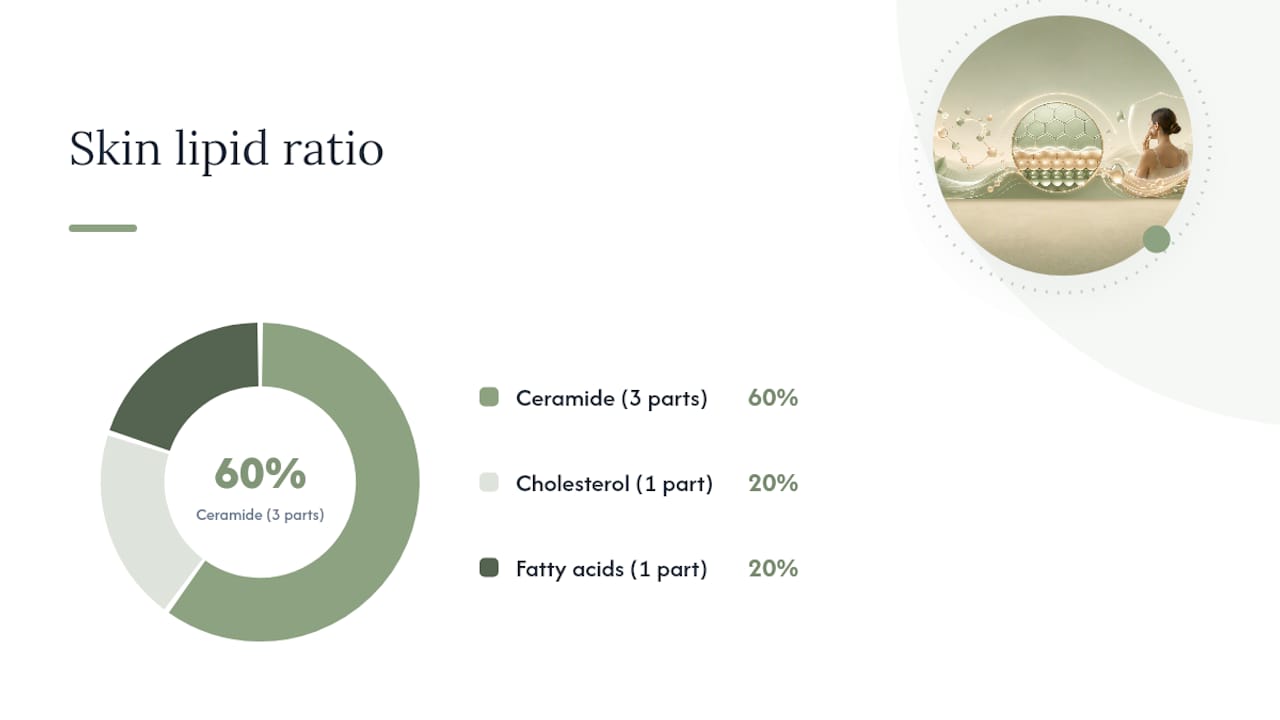
Pro Tip: A well-designed barrier cream often mirrors your skin’s own lipid ratio, roughly three parts ceramide to one part cholesterol to one part fatty acid. That balance, more than any single ingredient, is what makes a formula behave like your own skin instead of sitting on top of it.
What Does the Clinical Evidence Actually Show?
The strongest data on ceramide moisturizer benefits comes from controlled trials measuring two things directly: transepidermal water loss and skin hydration, using corneometry.
One controlled trial found a ceramide-based cream produced a significant decrease in TEWL (P<0.001) sustained for up to 24 hours, alongside significantly greater hydration than reference moisturizers at the same 24 hour mark.
That’s a full day of measurable barrier support from a single application, tested against products without the same lipid profile.
The evidence extends beyond healthy skin. A qualitative review of controlled studies concluded that ceramide-containing preparations improve dry skin and barrier function, with particular benefit in atopic dermatitis. Separate randomized trials found ceramide-based topical therapies delayed flares in pediatric atopic dermatitis and reduced xerosis symptoms with regular use.
A few caveats keep this evidence grounded rather than oversold:
- Formulations vary widely between studies, so results from one cream don’t automatically transfer to another.
- Sample sizes in several trials are modest, and researchers themselves call for larger randomized studies.
- A product’s marketing claims should match the actual formulation tested in the cited research, not just share an ingredient name.
Who Should Use a Ceramide Moisturizer, and When?
Dry, sensitive, and aging skin all respond well to ceramide moisturizers, and so does skin recovering from acne treatments that strip the barrier. If you’re managing active dermatitis or another diagnosed skin condition, check with a clinician before layering in new actives, since some prescription therapies interact with what else you put on your skin.
Application timing changes how much benefit you get:
- Apply your ceramide moisturizer to skin that’s still damp from cleansing or a shower. Damp skin absorbs and locks in more moisture than dry skin does.
- Use it once or twice daily depending on how dry your skin runs. Very dry or barrier-stressed skin often benefits from both a morning and evening application.
- Layer water-based serums, like a hyaluronic acid formula, before your ceramide moisturizer, never after.
- Patch-test any new formula on your inner arm for 24 to 48 hours if you have reactive or eczema-prone skin.
If you’re not sure your barrier is compromised in the first place, the signs of barrier damage are worth reviewing before you build a routine around repair.
What Should You Pair With Ceramides, and What Should You Avoid?
Ceramides work best in a supporting cast. Humectants like hyaluronic acid and glycerin pull water into the skin, while ceramides, cholesterol, and fatty acids seal it there. Gentle occlusives, such as squalane, add an extra layer of protection on top.
What undermines the effect is just as important to know:
- Strong acids and physical exfoliation, used too often, strip the very lipids ceramides are trying to replace. Space them out instead of applying on the same pass.
- Retinoids and other prescription actives can cause irritation when layered directly with barrier repair products. If you notice redness or stinging, alternate nights instead of combining them.
- Fragrance and denatured alcohols raise irritation risk for sensitive skin, even in products that otherwise look clean on paper. Fragrance-free formulas are the safer default.
Pro Tip: If your skin is mid-flare from an acid or retinoid, skip the fragranced “soothing” serum. A plain ceramide moisturizer applied on its own does more repair work than a longer, more complicated routine.
A hyaluronic acid and niacinamide serum applied first, followed by a ceramide moisturizer, covers both the humectant and barrier-repair steps without overcomplicating things.
How Do You Choose a Ceramide Moisturizer That Actually Works?
Reading the ingredient list is the fastest way to separate an effective formula from a marketing claim. Look for a named ceramide in the INCI list, such as Ceramide NP, AP, or EOP, rather than a vague “ceramide complex” with no specifics. Cholesterol and fatty acids listed nearby signal a formula built around real skin lipid ratios, not a single ingredient added for the label.
- Prioritize fragrance-free, pH-balanced, non-comedogenic formulas, especially for sensitive or acne-prone skin.
- Look for brands that reference clinical testing or dermatologist review, even briefly.
- Be skeptical of “ceramide-infused” claims that never mention formulation or delivery method.
- Check ingredient order: a ceramide buried near the bottom of a long list is present in a token amount.
| What to check | Why it matters |
|---|---|
| Named ceramide (NP, AP, EOP) in INCI | Confirms a specific, studied ceramide type rather than a vague blend |
| Cholesterol and fatty acids nearby | Signals a lipid ratio closer to your skin’s own composition |
| Fragrance-free, pH-balanced | Lowers irritation risk, especially for barrier-impaired skin |
| Mention of lamellar or solubilized delivery | Indicates the ceramide can actually integrate into the skin |
If you’re deciding between a facial oil and a moisturizer for your next step, face oil versus moisturizer breaks down which one your skin actually needs.
Why Gentleness and Formulation Precision Guide Our Approach
We build every formula around the same question this article keeps circling back to: does the lipid actually integrate into skin, or does it just sit on the ingredient label? That means keeping ingredient lists short, choosing functional lipids with real evidence behind them, and never assuming a sensitive-skin customer wants fewer safeguards, just fewer unnecessary additions. Formulation care and sustainable packaging aren’t separate priorities for us. They’re the same discipline applied twice.
— LaTerraTales
Ready to Put This Into Practice?
Everything in this guide points to one thing: a moisturizer only helps if it’s gentle enough to use daily and formulated well enough to work. That’s the exact standard behind our natural skincare collection for sensitive skin, built with minimal ingredient lists and functional lipids instead of long lists of filler.
If you’re rebuilding a routine from the ground up, pairing a barrier-focused moisturizer with a gentle, sulfate-free cleanser gives your skin fewer things to react to and more consistency day to day. Sensitive skin and active conditions like eczema or rosacea still deserve a dermatologist’s input, especially if you’re introducing new actives alongside a ceramide moisturizer. Patch-test first, always. When you’re ready to see how a barrier-first formula feels on your own skin, browse the sensitive-skin skincare collection and start with one product before building out the rest of your routine.
Recommended
Partager


