
Common Synthetic Ingredients to Avoid in Your Skincare
The synthetic ingredients that show up most often on ingredient labels, and deserve real scrutiny, are: parabens (endocrine disruption), phthalates (hormone interference), PFAS (persistence and contamination), formaldehyde-releasers (carcinogenic concern), oxybenzone and benzophenones (endocrine and allergy risk), triclosan (resistance and hormone effects), fragrance/parfum (undisclosed chemical blends), SLS/SLES (irritation), ethoxylated ingredients (1,4-dioxane contamination), and coal-tar dyes with heavy metals (contamination and accumulation).
Here’s your working list before you shop:
- Parabens (methylparaben, propylparaben) — mimic estrogen in the body
- Phthalates — linked to hormone interference, often hidden inside “fragrance”
- PFAS — persistent “forever chemicals” tied to immune and metabolic effects
- Formaldehyde-releasers (DMDM hydantoin, quaternium-15) — carcinogenic concern at higher exposure
- Oxybenzone/benzophenones — endocrine activity and contact allergy
- Triclosan — antibacterial resistance and hormone disruption
- Fragrance/parfum — a legal loophole for dozens of undisclosed chemicals
- SLS/SLES — skin barrier irritation, especially in leave-on products
- Ethoxylated compounds/PEGs — risk of 1,4-dioxane contamination
- Coal-tar dyes and heavy metals — accumulation risk in pigmented products
Two names worth trusting immediately: the EWG’s Skin Deep database rates individual products against its “Toxic Twelve” list, and the FDA’s cosmetics guidance spells out what’s restricted in the United States. LaTerraTales builds its own formulas around the same avoidance principles, which is why you’ll see short, legible ingredient lists across the collection instead of ten-syllable fillers.
Key Takeaways
Cumulative exposure to synthetic ingredients like parabens, phthalates, PFAS, and formaldehyde-releasers, not any single product, drives the real long-term risk to your skin and hormones.
| Point | Details |
|---|---|
| Prioritize leave-on products | Moisturizers, serums, and sunscreens carry higher cumulative exposure than rinse-off items, so swap these first. |
| Watch for “fragrance” | This single word can legally hide dozens of undisclosed chemicals, including phthalates. |
| Use a database before buying | Check unfamiliar products against the EWG Skin Deep database rather than trusting label claims alone. |
| Heavy metals hide in pigments | Lipstick and hair dye carry the highest contamination risk; rotate brands and favor tested formulas. |
| Choose minimal formulations | LaTerraTales builds short, evidence-based ingredient lists designed specifically to reduce exposure for sensitive skin. |
Table of Contents
- What “Synthetic” Actually Means, and Why Dose Matters
- Which Products Tend to Hide Which Chemicals
- Preservatives to Avoid: Parabens, Formaldehyde-Releasers, and MI/MCI
- Surfactants and Ethanolamines: When Foaming Agents Become a Problem
- Endocrine Disruptors and Plasticizers: Phthalates, BPA, and PFAS
- Sunscreen Chemicals Worth a Second Look
- Antimicrobials: Triclosan and Where the Line Should Sit
- Fragrance and the “Parfum” Loophole
- Colorants, Coal-Tar Dyes, and Heavy-Metal Contaminants
- Ethoxylation, 1,4-Dioxane, and Microplastics
- What the Latest Evidence Actually Confirms
- Your Practical Avoidance Checklist
- Solvents and Carriers Hiding in Plain Sight
- Balancing Real Risk With Real Life
- How LaTerraTales Approaches Ingredient Safety
- Frequently Asked Questions
- Sources
What “Synthetic” Actually Means, and Why Dose Matters
“Synthetic” simply means an ingredient manufactured through chemical processing rather than extracted directly from a plant, mineral, or animal source. Not every synthetic ingredient is harmful. Plenty are inert and well-tolerated. The problem is a specific subset that interacts with your hormones, irritates skin, or accumulates in the body over years of daily use.
Exposure happens three ways: dermal absorption through the skin barrier, inhalation of sprays and powders, and occasional ingestion from lip products, as detailed in Why Avoid Chemical Creams: Safer Skin Starts Here. A body wash, lotion, or deodorant applied daily doesn’t act in isolation. It layers onto whatever else touched your skin that morning, and that’s the real concern researchers raise: cumulative, low-dose exposure to chemical mixtures, not any single product in isolation.
That framing matters more than any one ingredient. A 2021 analysis found PFAS in 52% of 231 cosmetics tested across the U.S. and Canada, often without PFAS appearing anywhere on the label. Multiply that across a full routine and the exposure adds up quietly.
Which Products Tend to Hide Which Chemicals
Certain product categories are repeat offenders. Knowing where to look first saves you from auditing your entire bathroom cabinet at once.
- Lipsticks and lip liners — heavy-metal pigments and lead contamination from color additives
- Chemical sunscreens — oxybenzone, homosalate, and octinoxate as active UV filters
- Gel and acrylic nail products — toluene, formaldehyde, and acrylates
- Permanent hair dyes — coal-tar dyes and p-phenylenediamine (PPD)
- Foaming cleansers and shampoos — SLS/SLES and ethoxylated surfactants
- Antiperspirants and hand sanitizers — triclosan and related antimicrobials
When you flip a bottle over, scan for suffixes like “-paraben,” the word “phthalate” (rarely spelled out, more often implied by “fragrance”), and “PEG-” prefixes. Color additives list as “CI” followed by a five-digit number, and that’s your cue to check it against a database rather than guess.
Pro Tip: Marketing words like “waterproof,” “long-lasting,” and “transfer-resistant” often correlate with PFAS use, since fluorinated compounds are what gives products that slick, stay-put performance.
Preservatives to Avoid: Parabens, Formaldehyde-Releasers, and MI/MCI
Preservatives exist for a legitimate reason: they stop mold and bacteria from growing in water-based formulas. The issue isn’t preservation itself, it’s which chemicals brands lean on to do it.
Parabens (methyl-, propyl-, butyl-, and ethylparaben) have been shown to mimic estrogen, and a large toxicological review documents repeated associations between parabens, phthalates, and formaldehyde-releasers and endocrine disruption, genotoxicity, and reproductive effects across multiple ingredient classes. Formaldehyde-releasing preservatives work by slowly emitting small amounts of formaldehyde, a recognized human carcinogen, and they hide behind names like:
- DMDM hydantoin
- Quaternium-15
- Imidazolidinyl urea
- Diazolidinyl urea
Methylisothiazolinone (MI) and methylchloroisothiazolinone (MCI) don’t raise the same cancer concerns, but they’re among the most common causes of contact allergy in personal care products, enough that the European Union has restricted their use in leave-on formulas while the United States has been slower to follow.
BHA and BHT, used as antioxidant preservatives, carry their own endocrine-disruption flags in animal studies. Phenoxyethanol sits in a gray zone: it’s a common paraben alternative, generally considered lower-risk in small concentrations, but still worth limiting if you’re formula-sensitive or pregnant.
Pro Tip: Shorter ingredient lists usually mean fewer preservative combinations stacked on top of each other, which lowers your total exposure without you having to memorize a chemistry glossary.
Surfactants and Ethanolamines: When Foaming Agents Become a Problem
Sodium lauryl sulfate (SLS) and sodium laureth sulfate (SLES) are what make shampoo and cleanser lather. They’re effective degreasers, and that’s exactly the problem for sensitive or compromised skin barriers. They strip natural oils along with dirt, which can trigger dryness, redness, and irritation with repeated use.

Ethanolamine compounds, listed as DEA, MEA, or TEA, raise a separate concern: they can react with other ingredients to form nitrosamines, compounds with carcinogenic potential in animal studies.
The practical distinction is contact time. SLS/SLES in a rinse-off cleanser you wash away in seconds poses far less risk than the same surfactant in a leave-on lotion or serum. If you have eczema, rosacea, or generally reactive skin, prioritize swapping leave-on products first and treat rinse-off cleansers as lower priority.
Endocrine Disruptors and Plasticizers: Phthalates, BPA, and PFAS
Phthalates soften plastics and, in cosmetics, they’re most often used to make fragrance last longer or nail polish stay flexible without chipping. They rarely appear by name on ingredient lists. Instead, they hide inside the word “fragrance,” which functions as a legal shield around dozens of undisclosed compounds. BPA shows up less in formulas and more in packaging linings, where it can migrate into a product over time.
PFAS is the group generating the most urgent research attention. These “forever chemicals” don’t break down in the environment or the body, and the Agency for Toxic Substances and Disease Registry links PFAS exposure to immune, developmental, and metabolic effects. It reflects how routinely PFAS enters formulas through raw material contamination rather than deliberate addition, a problem covered in more depth in LaTerraTales’s PFAS explainer.
Evidence strength varies here. Phthalate and BPA research is well-established across decades of endocrine studies. PFAS research in cosmetics specifically is newer and still expanding, though the broader PFAS health literature is deep. Your best label cues: skip “fragrance” when a fragrance-free option exists, and look for brands that publish third-party PFAS-free testing rather than a vague “clean” claim.
Sunscreen Chemicals Worth a Second Look
Oxybenzone and other benzophenone derivatives absorb UV rays chemically rather than blocking them physically, and that absorption process is exactly what raises concern. Studies have detected oxybenzone in blood and breast milk after topical use, and it’s flagged for both endocrine activity and a comparatively high rate of contact allergy. Homosalate and octinoxate carry similar, though generally milder, endocrine-disruption questions.
Mineral filters, zinc oxide and titanium dioxide, sit on top of skin and reflect UV rays instead of absorbing them. They’re generally the better call for reactive or sensitive skin, and they carry the added benefit of reef safety, since Hawaii and several other jurisdictions have restricted oxybenzone and octinoxate specifically over coral reef damage. If a mineral sunscreen feels chalky, look for a micronized or tinted formula. The tradeoff is real, but shrinking fast as formulations improve.
Antimicrobials: Triclosan and Where the Line Should Sit
Triclosan earned its scrutiny honestly: it’s linked to hormone disruption and has contributed to antibacterial resistance patterns significant enough that the FDA has restricted its use in over-the-counter antiseptic washes. Benzalkonium chloride, another common antimicrobial, carries its own irritation profile, particularly around eyes and mucous membranes.
The nuance worth holding onto: antimicrobials aren’t universally bad. Surgical scrubs and certain wound-care products genuinely need them. Your daily hand soap or body wash does not. For everyday hygiene, plain soap and water, or alcohol-based sanitizers (without added antibacterial actives), do the job without the resistance tradeoff.
Fragrance and the “Parfum” Loophole
“Fragrance” or “parfum” on an ingredient list can legally represent a proprietary blend of dozens of chemicals, phthalates frequently among them, none of which the manufacturer has to disclose. That’s not a labeling oversight. It’s a legal carve-out that protects fragrance formulas as trade secrets.
Here’s the distinction that trips people up: “unscented” can still contain masking fragrance chemicals added to cancel out a raw material smell, while “fragrance-free” means no fragrance compounds were added at all. If you’re scent-sensitive, only the second label actually delivers what you’re expecting.
Pro Tip: Before committing to a new fragrance-free product, patch-test it on your inner forearm for 48 hours. Reactions to hidden fragrance components often show up as delayed redness rather than an immediate sting.
Colorants, Coal-Tar Dyes, and Heavy-Metal Contaminants
Lipstick, hair dye, and eye makeup carry the highest heavy-metal contamination risk in the entire category. The FDA has documented average lead levels above 1 ppm in major lipstick brands, against a 10 ppm threshold used for risk context, and unregulated skin-lightening creams remain a recurring source of mercury exposure internationally.
Coal-tar dyes and p-phenylenediamine (PPD), common in permanent hair dye, are associated with allergic reactions and, in the case of coal-tar derivatives, carcinogenic concern at high exposure levels. On labels, colorants appear as “CI” followed by a five-digit number, or as “lake” pigments. Neither format tells you the contamination risk on its own, which is why checking a product against a database matters more than reading the label alone.
Practical steps: favor brands that publish third-party heavy-metal testing, avoid unregulated imported skin-lightening products entirely, and rotate lipstick shades and hair dye brands rather than using the identical pigment source daily for years.
Ethoxylation, 1,4-Dioxane, and Microplastics
Ethoxylation is a manufacturing process that makes harsh surfactants gentler by reacting them with ethylene oxide. The tradeoff is contamination risk: the process can leave behind 1,4-dioxane, a probable human carcinogen, as an unlisted byproduct. Ingredients ending in “-eth” (sodium laureth sulfate) or starting with “PEG” are your signal to check further.
Microplastics, historically used as exfoliating beads in scrubs, persist in waterways long after rinsing down the drain, which is why most major markets have phased them out of rinse-off products. Nanoparticle forms of titanium dioxide and zinc oxide, used in some sunscreens for a less chalky finish, remain an active research question. Current evidence doesn’t show meaningful skin penetration, but environmental accumulation is still being studied.
What the Latest Evidence Actually Confirms
Some of these ingredient concerns rest on decades of consistent toxicological data. Others are newer findings still being refined. It’s worth knowing the difference.
- Well-established: parabens and phthalates as endocrine disruptors, formaldehyde as a carcinogen, lead as a neurotoxin with no safe exposure threshold
- Strong and growing: PFAS persistence and health effects, backed by the 52% prevalence finding and ATSDR’s health-effects summary
- Still under active study: long-term nanoparticle behavior, low-dose mixture effects across dozens of simultaneous exposures
A comprehensive toxicological review also flags a structural problem underneath all of this: regulatory gaps. The 2022 Modernization of Cosmetics Regulation Act improved U.S. oversight by requiring adverse-event reporting and better recordkeeping, but it still doesn’t mandate the kind of premarket safety testing the EU requires. That gap is exactly why third-party databases and certifications carry so much practical weight for shoppers, since they fill a verification role regulation hasn’t caught up to.
Your Practical Avoidance Checklist
- Start with leave-on products (moisturizer, serum, sunscreen) before touching rinse-off items, since leave-on formulas carry higher cumulative exposure.
- Search each product in the EWG Skin Deep database before repurchasing, not just before a first buy.
- Scan labels for red-flag suffixes: “-paraben,” “-eth,” “PEG-,” and the word “fragrance” where a fragrance-free version exists.
- Favor third-party certifications like MADE SAFE or EWG Verified over a brand’s own “clean” or “natural” label, since those terms carry no legal definition.
- Check for published batch testing, particularly on pigmented products like lipstick and eyeshadow.
- Replace items in order of contact time and frequency: daily leave-on products first, occasional-use items last.
For a deeper walk-through of label terminology specifically, LaTerraTales’s ingredient checklist guide breaks down exactly which claims are regulated and which aren’t.
Solvents and Carriers Hiding in Plain Sight
Beyond active ingredients, the base of a formula, its solvent or carrier, deserves its own scrutiny. Mineral oil, a petroleum byproduct, is cheap and effective at sealing in moisture, but it’s also occlusive enough to trap bacteria and sweat against skin prone to breakouts. It’s not inherently toxic in cosmetic-grade form, but it offers zero nutritive value and can feel heavy on reactive skin.
PEG compounds (polyethylene glycols) function as thickeners, softeners, and penetration enhancers, letting other ingredients absorb deeper into skin than they otherwise would. That penetration-enhancing property is exactly what raises concern: PEGs can carry along whatever contaminants (including 1,4-dioxane residue) formed during their own manufacturing.
Polyvinylpyrrolidone (PVP), common in hairsprays and styling products, is a synthetic polymer with a decent safety profile on skin but a documented respiratory irritation risk when inhaled repeatedly in aerosol form.
None of these carriers are automatic dealbreakers the way lead or PFAS are. But when a product’s entire base relies on petrochemical fillers rather than plant oils or butters, you’re paying for volume, not performance. Formulas built around botanical carriers, like shea butter, jojoba, or squalane, tend to deliver the same texture without the occlusive downside or contamination question mark.
Balancing Real Risk With Real Life
You don’t need to purge your bathroom in a weekend. That approach backfires, mostly because it’s expensive and unsustainable, and because a handful of the ingredients on this list carry meaningfully more evidence behind them than others. PFAS and lead contamination deserve urgent attention. Phenoxyethanol in trace amounts, less so.
The smarter approach: audit your most frequently used, longest-contact-time products first, your daily moisturizer beats your once-a-month hair dye for priority, and swap gradually while patch-testing new products for 48 hours. Formulation quality matters as much as any single ingredient. A poorly preserved “natural” product that grows mold in the jar isn’t safer than a well-formulated synthetic one. LaTerraTales formulates around this exact tension, building short, evidence-based ingredient lists specifically for skin that reacts to everything else on the shelf.
How LaTerraTales Approaches Ingredient Safety
Every LaTerraTales formula starts from the same question this article just walked you through: does this ingredient earn its place, or is it filler that adds risk without adding benefit? That’s what “minimal, evidence-based formulation” actually means in practice, not a marketing tagline, but a formulation constraint applied to every product before it ships.
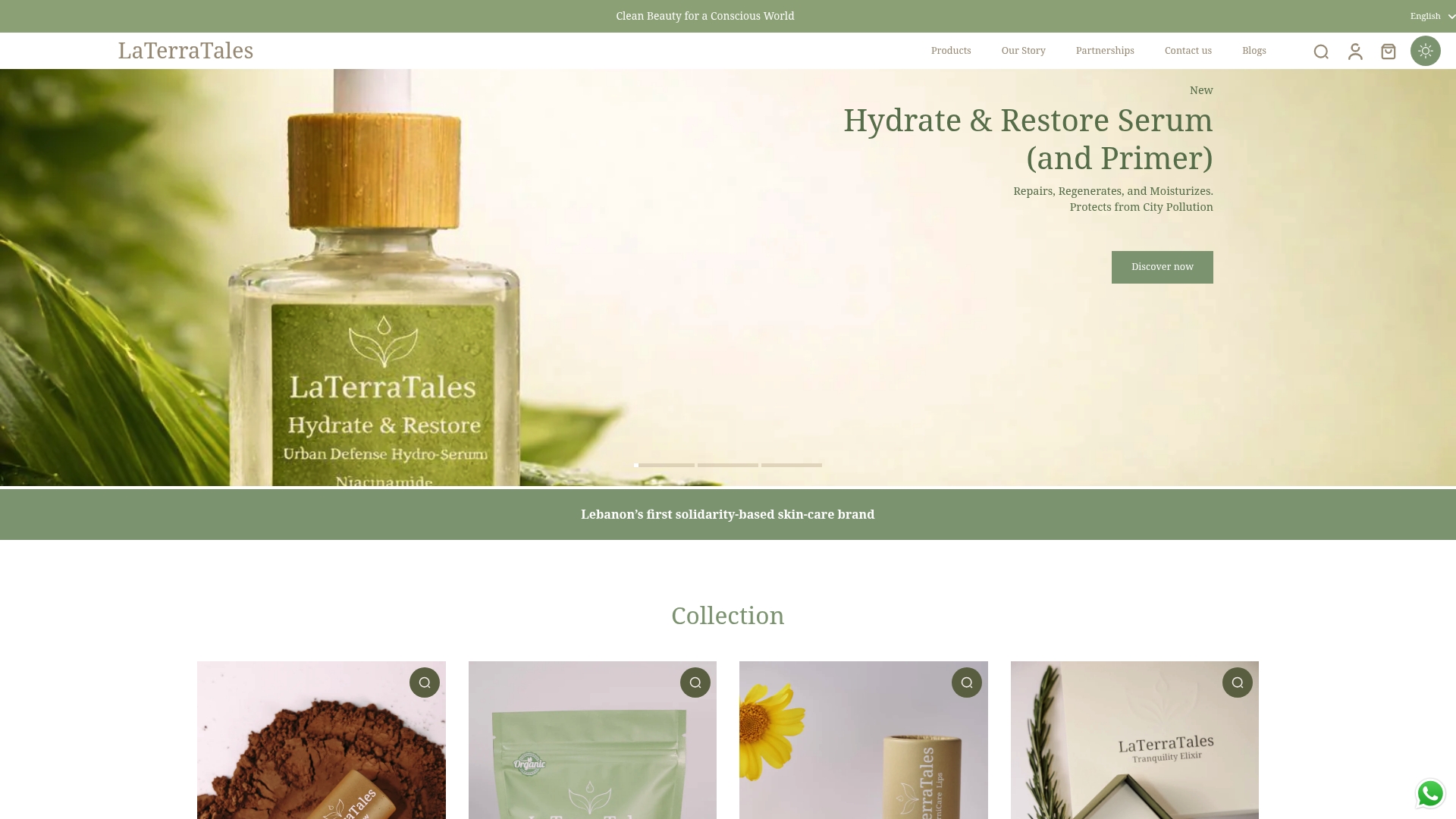
If you’re looking for a place to start your swap list, the sensitive-skin cleanser bar replaces a foaming, sulfate-based cleanser with a solid, minimal-ingredient alternative your skin barrier will actually thank you for. If lipstick pigments are your bigger concern, the natural lip balm skips the heavy-metal-prone colorants entirely. And if you want to browse the full range built around this same philosophy, the natural skincare collection is the place to look. Pick one product, replace it, and see how your skin responds before moving to the next.
Frequently Asked Questions
What are the most common synthetic ingredients to avoid in skincare? Parabens, phthalates, PFAS, formaldehyde-releasers, oxybenzone, triclosan, fragrance/parfum, SLS/SLES, and coal-tar dyes appear most consistently across toxicology reviews and consumer databases as ingredients worth limiting.
Are all synthetic ingredients bad for your skin? No. Many synthetic ingredients are stable, well-tested, and safer than their natural counterparts. The concern applies to a specific subset tied to endocrine disruption, contamination, or allergy, not synthetic chemistry as a category.
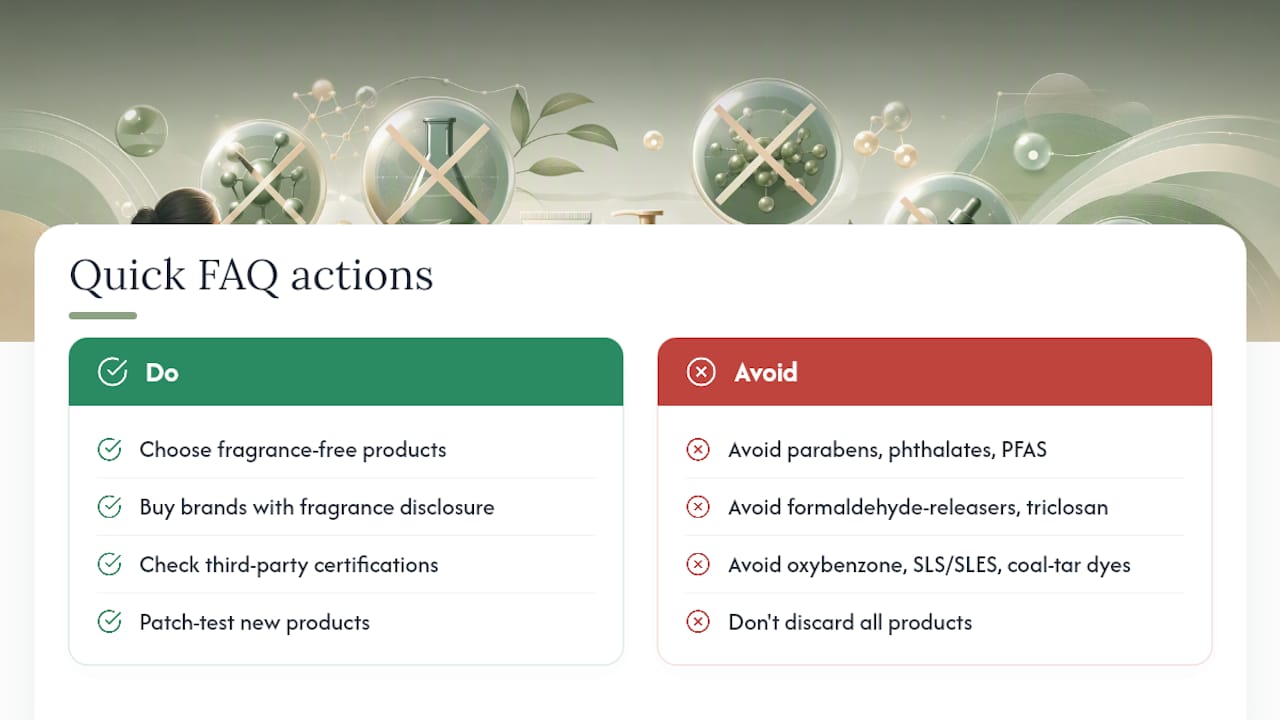
How do I know if fragrance in a product contains phthalates? You generally can’t tell from the label alone, since “fragrance” isn’t required to list its components. Choosing “fragrance-free” products, or brands that publish full fragrance disclosure, is the more reliable route.
Is “clean beauty” a regulated term? No. “Clean,” “natural,” and “non-toxic” carry no legal definition in the United States, which is why third-party certifications like MADE SAFE or EWG Verified matter more than the marketing claim itself.
Do I need to throw out all my current products right away? No. Prioritize your most frequently used, longest-contact-time products first, moisturizers and serums before occasional-use items, and swap gradually while patch-testing anything new.
This article is general information, not a substitute for advice from a qualified doctor. Consult a qualified healthcare professional about your own circumstances before acting on anything here.
Sources
- Toxic chemicals hide in many beauty products, new analysis finds
- A comprehensive review of health hazards, toxicological risks, and regulatory gaps in cosmetic and personal care products


