

Barrier First Double Cleansing for Sensitive Skin: When to Skip
Yes, sensitive skin can handle double cleansing, but only under specific conditions. It works when you’re removing sunscreen, makeup, or excess oil, and only with fragrance-free, low-surfactant formulas followed by immediate moisturizing. If you have active rosacea, eczema, or a compromised barrier, proceed with real caution or skip it. An effective approach to sensitive-skin cleansing is based on this kind of restraint.
TL;DR:
- Double cleansing is suitable for sensitive skin only when removing sunscreen, makeup, or excess oil with fragrance-free, low-surfactant formulas, followed by immediate moisturizing.
- People with active rosacea, eczema, or a compromised barrier should avoid or proceed with extreme caution to prevent further irritation and barrier damage.
- Using lukewarm water, gentle massaging, and patting dry with moisturizer immediately after cleansing minimizes barrier stress during double cleansing.
- Watch for signs of barrier imbalance such as stinging, redness, or tightness, and stop or simplify routines to prevent worsening sensitivity.
- Choose cleansers low in fragrance, sulfates, alcohol, and high-pH surfactants, preferring balms, creams, or minimal-ingredient options to protect sensitive skin.
Table of Contents
- Who benefits from double cleansing sensitive skin routines, and who should avoid it
- How to double cleanse gently without stripping sensitive skin
- Choosing cleansers for sensitive skin: what to avoid and what to seek
- What to do if double cleansing causes stinging or redness
- Why LaTerraTales favors a barrier-first, minimal cleansing philosophy
- LaTerraTales’ cleanser bar as a gentle double-cleansing option
- Our take: double cleansing is a tool, not a virtue
- Sources
Who benefits from double cleansing sensitive skin routines, and who should avoid it
Not every face needs two rounds of cleansing every night. The method earns its place when there’s actual residue to remove, not as a default ritual.
You’re a good candidate if you fall into one of these groups:
- Daily sunscreen wearers whose mineral or chemical SPF needs a lipid-based first step to fully lift off.
- Regular makeup users, especially with long-wear or waterproof formulas that a single water-based wash won’t budge.
- Oily or congested skin, where a second cleanse helps clear pore-clogging buildup without over-scrubbing.
On the other side, board-certified dermatologists advise real caution for anyone with active rosacea, eczema, or a compromised barrier, because the added surfactant exposure and rubbing can push already-irritated skin further off balance. The same caution applies if you’ve recently had a chemical peel, laser treatment, or you’re using retinoids, since those thin the surface layer and make it more reactive to cleansing agents.
Watch for the warning signs in real time: stinging within seconds of applying a cleanser, blotchy redness that lingers past a few minutes, or a tight, papery feeling after rinsing. Any of those mean it’s time to simplify, not push through.
How to double cleanse gently without stripping sensitive skin
The order matters, and so does the timing. Rushing either step is where most barrier damage happens.
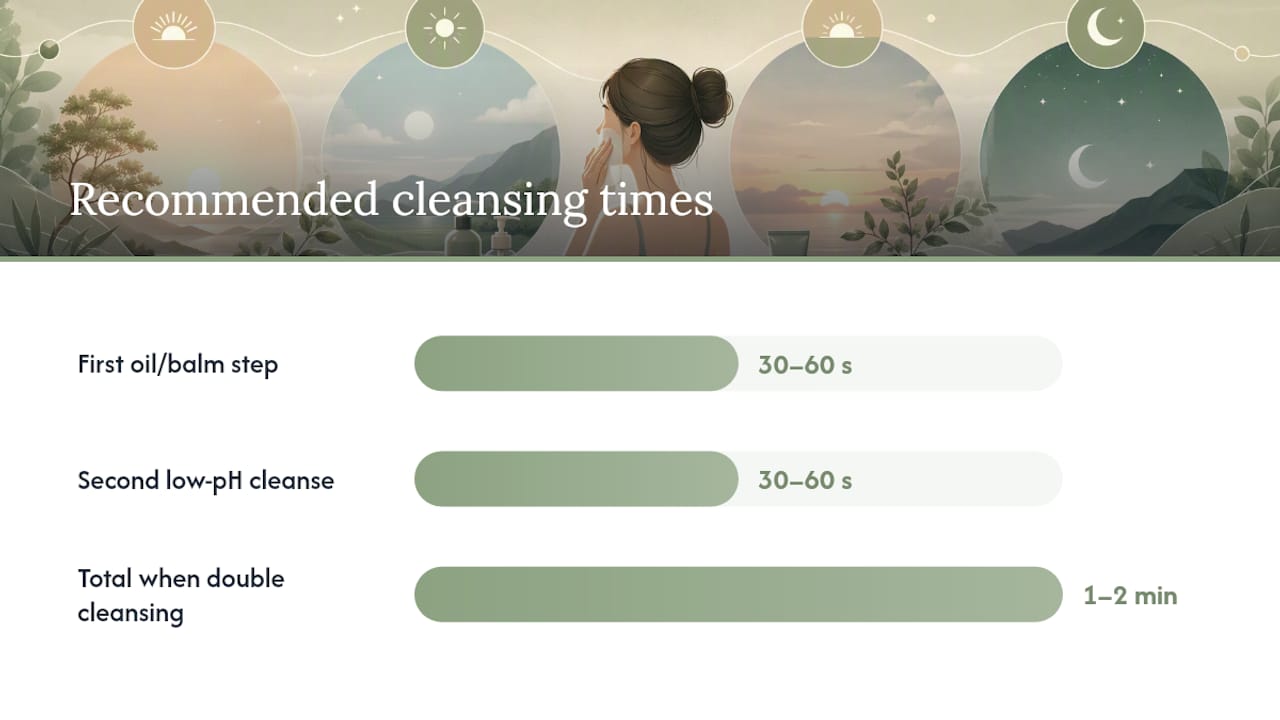
- Apply a fragrance-free oil, balm, or cleansing milk to dry skin. Massage it in circular motions for no more than 30 to 60 seconds, just long enough to dissolve sunscreen, makeup, or sebum. Skip anything listing essential oils or citrus extracts near the top of the ingredient list. They smell nice, but natural doesn’t automatically mean gentle, and these compounds are common triggers for reactive skin.
- Emulsify with lukewarm water. Add small splashes and keep massaging until the oil turns milky, then rinse fully. Hot water strips lipids you actually want to keep.
- Follow with a low-pH, low-foaming cleanser. Use a cream or milk texture rather than a foaming gel, work it in for another 30 to 60 seconds, and rinse with lukewarm water again. No washcloths, no textured sponges, no scrubbing motion.
- Pat dry and apply a ceramide-rich moisturizer immediately. Damp skin absorbs better, and you want to close the barrier gap fast.
- In the morning, follow with mineral SPF if the first cleanse is even needed at all.
That last point deserves emphasis: mornings usually call for a single gentle cleanse, since there’s no makeup or sunscreen buildup to remove yet. Save the double cleanse for nights when the day actually left something behind.
Pro Tip: If your skin has felt tight or reactive lately, skip the second cleanse entirely for a few nights and let the oil or balm step do all the work. One clean, unhurried step often protects the barrier better than two rushed ones.
Choosing cleansers for sensitive skin: what to avoid and what to seek
Reading a label matters more than reading a marketing claim. A few ingredient categories consistently cause trouble, no matter how the product is packaged.
Avoid these on sight:
- Fragrance and parfum, listed or hidden inside “natural fragrance,” a leading cause of contact irritation.
- SLS and SLES, sulfates that generate a satisfying foam at the cost of stripping surface lipids.
- Denatured alcohol, which dries and can heighten sensitivity with repeated use.
- Concentrated essential oils and citrus extracts, common in “natural” oil cleansers but frequent irritant triggers.
- High-pH surfactants that push skin’s naturally acidic surface toward alkaline, weakening its defenses.
Look instead for squalane, glycerin, hydrogenated plant oils, and ceramide-supportive formulations, all of which clean without leaving skin raw. Non-comedogenic balms and cream cleansers tend to outperform gels and foams for reactive skin types.
One coherent body of evidence points to why: surfactants can linger in the skin’s outer layer and disrupt barrier structure, and repeated harsh cleansing raises surface pH, making the acid mantle less effective at holding moisture and fending off irritants.
Before committing to a new product, patch-test it on your inner forearm for 48 hours, introduce only one new item at a time into your routine, and favor labels stating “fragrance-free” or “suitable for sensitive skin” over vague “natural” claims. LaTerraTales’ guide to problem ingredients breaks down label language that’s worth knowing before you shop.
What to do if double cleansing causes stinging or redness
Stinging within the first few seconds, redness that doesn’t fade after several minutes, flaking, or a burning sensation after rinsing all point to the same thing: your barrier is compromised, not just adjusting.
The fix is immediate simplification:
- Stop both cleansing steps and any active ingredients (retinoids, acids, exfoliants) right away.
- Switch to a water-only rinse or a single mild cream cleanser for several days.
- Apply a barrier-repair moisturizer generously, more than you’d normally use, to rehydrate fast.
- If redness or burning persists beyond a week, see a dermatologist rather than experimenting further.
Once your skin calms down, reintroduce products one at a time with patch tests, leaving one to two weeks between additions so you can trace any reaction to its actual source. LaTerraTales’ recovery guide for reactive skin walks through this rebuild process step by step.
Why LaTerraTales favors a barrier-first, minimal cleansing philosophy
A cleansing philosophy is built around one belief: the skin barrier is the asset worth protecting, not the obstacle to scrub past. That’s why our sensitive-skin routine guide leads with fewer steps and simpler formulas rather than a longer regimen.
A fragrance-free, minimal-ingredient cleansing bar can work two ways in a routine: as the first oil-based step that lifts sunscreen and makeup, or as a standalone cleanse on days the skin needs less. Patch-test any new bar on your inner arm first, store it dry between uses, and rub it briefly between wet hands to build a light lather before applying rather than scrubbing the bar directly on your face.
LaTerraTales’ cleanser bar as a gentle double-cleansing option
If you’re rebuilding your routine around fewer, better-chosen products, our Sensitive Natural Makeup Remover Cleanser Bar is designed to work as either your first-step remover or your only cleansing step, depending on what your skin needs that day.
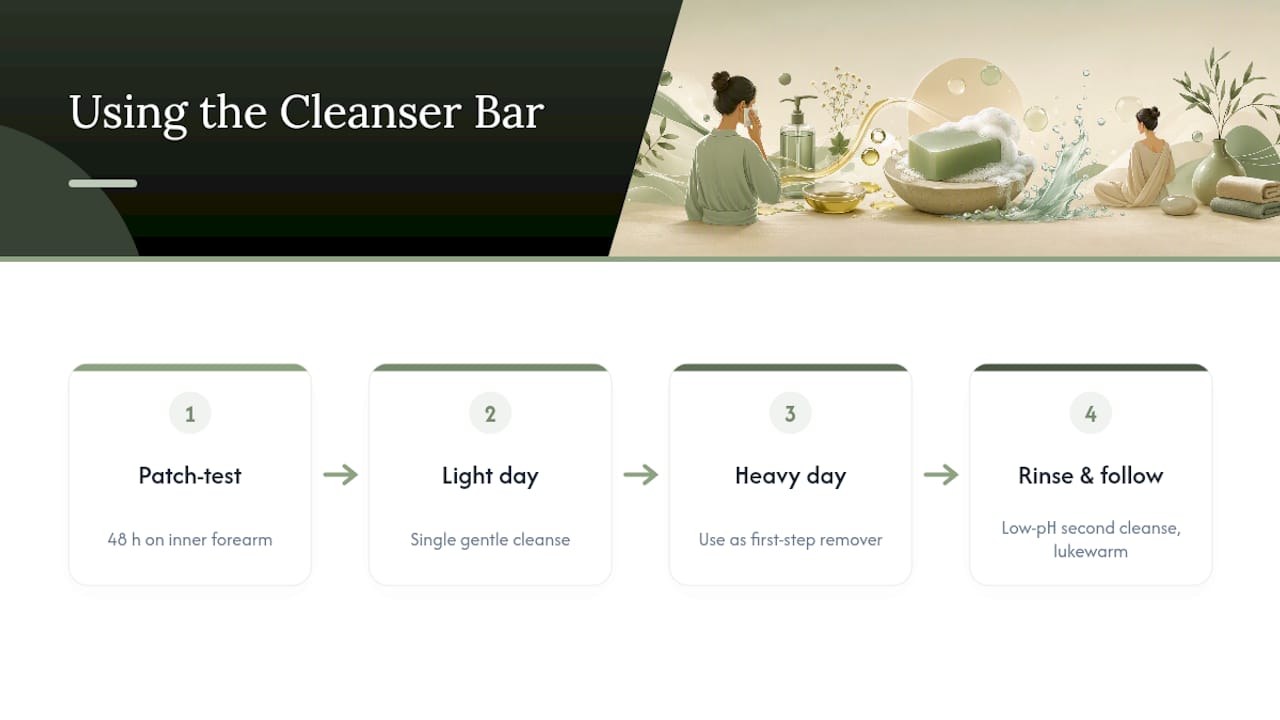
The bar is formulated fragrance-free with a minimal lipid base, built to lift sunscreen and makeup residue without the aggressive foam of a sulfate-heavy face wash. On lighter days, when there’s no makeup or heavy SPF to remove, it works fine as a single gentle cleanse on its own. On heavier days, follow it with a low-pH, low-foaming second cleanser and rinse with lukewarm water, exactly the sequence outlined earlier in this guide.
Before adding it to your nightly routine, patch-test it on your inner forearm for 48 hours, same as you would with any new product touching reactive skin. If you want to see the fuller range of fragrance-free, sensitive-skin formulas we’ve built this philosophy around, our natural skincare collection for sensitive skin is worth a look before you check out.
Our take: double cleansing is a tool, not a virtue
Most skincare marketing treats double cleansing as a discipline you either commit to or fail at. That framing does real damage to sensitive skin. The honest position is that double cleansing is a tool matched to a specific problem, heavy sunscreen, stubborn makeup, excess oil, and using it when that problem isn’t present is where people talk themselves into irritation they didn’t need.
We’d rather see someone skip the second step four nights a week and use it only when their skin actually has something to remove. That’s not a compromise. It’s the more accurate reading of what a barrier can tolerate. The people who struggle most with sensitive skin aren’t usually under-cleansing. They’re over-cleansing with the wrong assumption that more steps always mean better results.
If there’s one thing worth unlearning from conventional skincare advice, it’s that consistency in a routine matters less than whether each step in it earns its place on your face that day.
— LaTerraTales
Sources
Recommended
Partager


