
Evidence-Based Natural Beauty: What It Really Means
Evidence-based natural beauty is defined as skincare formulation and practice grounded in peer-reviewed clinical research and pharmacological standards, not marketing trends or ingredient origin. It asks one question before anything else: does this ingredient work at this concentration, in this formula, for this skin concern? Brands like Laterratales build their entire product philosophy around this standard, selecting botanicals like Centella Asiatica and actives like niacinamide only when the clinical evidence supports their use. This approach separates genuine skin health from the noise of “clean” and “natural” labels that dominate beauty shelves today.
What is evidence-based natural beauty, really?
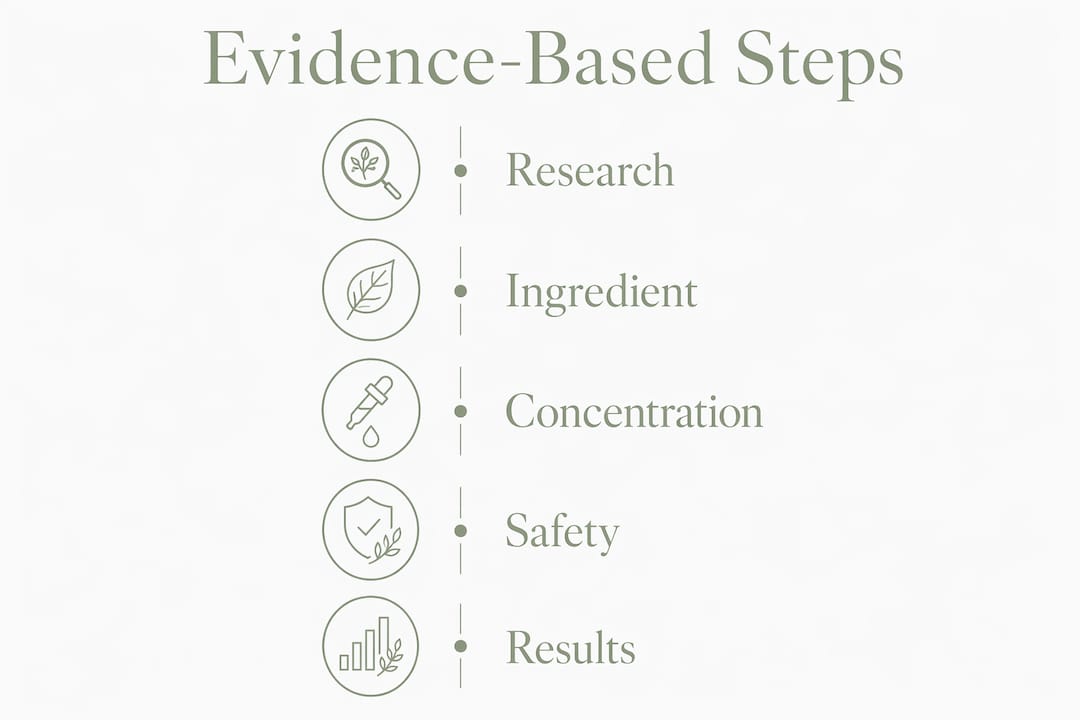
Evidence-based natural beauty moves beyond natural vs. synthetic to focus on three core criteria: cellular mechanism, therapeutic threshold, and bioavailability. A botanical extract does not earn its place in a formula because it comes from a plant. It earns its place because clinical trials confirm it acts on a specific skin pathway at a measurable, effective concentration.
Centella Asiatica is a strong example. Its active compounds, asiaticoside and madecassoside, have documented effects on collagen synthesis and barrier repair at specific concentrations. That is evidence-based use of a natural ingredient. Contrast that with a product listing “botanical blend” without disclosing concentrations or citing any research. That is marketing, not science.

Retinoids illustrate the other side of this principle. They are gold standard for collagen stimulation and skin renewal, supported by decades of controlled trials. Some consumers avoid them because they are synthetic. Evidence-based thinking rejects that reasoning. The question is never “natural or synthetic?” It is always “proven or unproven?”
How does “clean beauty” differ from evidence-based skincare?
“Clean beauty” is a marketing term with no scientific consensus and no independent certification body. A product can carry a “clean” label while containing ingredients with zero clinical backing or, worse, known allergens at irritating concentrations.
The table below shows how common beauty claims stack up against evidence-based criteria:
| Claim | Regulatory Status | Evidence Standard | Risk |
|---|---|---|---|
| “Natural” | Unregulated | None required | Allergens, irritants possible |
| “Clean” | Unregulated | None required | No safety guarantee |
| “Organic” | Partially regulated (USDA) | Agricultural, not clinical | Efficacy not assessed |
| “Evidence-based” | No label, self-applied | Peer-reviewed clinical data | Requires consumer verification |
| “Dermatologist-tested” | Unregulated | Varies widely | Minimal without published data |
The core problem is this: consumers assume “natural” means safe and effective. Neither assumption holds. Poison ivy is natural. So is arsenic. The evidence-based standard cuts through that confusion by demanding documented proof of both safety and efficacy before an ingredient makes it into your routine.
Key distinctions to keep in mind:
-
Efficacy requires proof. An ingredient must show measurable results in controlled human trials, not just in vitro cell studies.
-
Safety is not implied by origin. Plant-derived does not mean hypoallergenic or non-irritating.
-
Concentration matters as much as presence. An ingredient listed on a label may be present at a level too low to do anything meaningful.
-
Transparency is non-negotiable. Brands committed to evidence-based practices disclose concentrations and cite research, not just ingredient names.
What scientific principles guide ingredient selection?
Evaluating ingredients based on molecular structure, concentration, and bioavailability leads to better outcomes than choosing by origin. This is the foundation of evidence-based formulation, and it applies whether the ingredient is a synthetic peptide or a cold-pressed botanical oil.
Four principles govern how ingredients are selected and formulated:
-
Therapeutic concentration. Sub-therapeutic levels render ingredients ineffective. Niacinamide, for example, shows meaningful results for hyperpigmentation and barrier support at concentrations of 4–5%, not at trace amounts added for label appeal.
-
Cellular mechanism. A credible ingredient has a defined pathway. Retinoids bind to nuclear receptors to regulate gene expression for collagen production. Vitamin C inhibits tyrosinase to reduce melanin synthesis. Knowing the mechanism tells you what to expect and what not to.
-
Bioavailability and stability. An ingredient must survive the formula and penetrate the skin at the right depth. Vitamin C as L-ascorbic acid is highly effective but unstable. Derivatives like ascorbyl glucoside are more stable but less potent. Evidence-based formulation weighs that trade-off explicitly.
-
Safety profile across skin types. Botanical ingredients work best as supportive foundations, not primary agents for complex dermatological issues. Treating moderate acne or significant wrinkles requires pharmaceutical-grade actives, not botanical blends alone.
Pro Tip: When a product claims to contain an active ingredient, search for the ingredient name plus its effective concentration range. If the label does not disclose the percentage and the brand cannot provide it, the concentration is likely sub-therapeutic.
Bakuchiol is a useful case study here. It is a plant-derived compound from Psoralea corylifolia with published evidence showing retinol-like effects on fine lines and skin texture. It does not match retinoids in effect size, but it offers a well-tolerated, evidence-supported alternative for people who cannot use retinoids. That is honest, evidence-based positioning of a natural ingredient.
Are natural ingredients always safe for sensitive skin?
Natural ingredients are not inherently safe, and this is one of the most consequential misconceptions in beauty. Plant-derived fragrance materials appeared in nearly 37% of natural formulations studied, and many of those materials are documented contact allergens. Lavender oil, citrus extracts, ylang-ylang, and tea tree oil all appear regularly on dermatology watchlists for sensitization.
For people with eczema, rosacea, or reactive skin, this matters enormously. The skin barrier in these conditions is already compromised. Introducing fragrant botanicals or high-terpene essential oils can trigger contact dermatitis, worsen redness, or cause lasting sensitization.
Evidence-based skincare for sensitive skin follows a clear set of priorities:
-
Fragrance-free formulations. Both synthetic fragrance and natural fragrance (listed as “parfum” or “aroma”) carry sensitization risk. Fragrance-free is the safest standard.
-
Minimal ingredient lists. Fewer ingredients mean fewer potential triggers. A formula with 8 well-chosen, clinically supported ingredients outperforms a 30-ingredient “botanical complex” for reactive skin.
-
Patch testing before full use. Apply a new product to the inner forearm for 48 hours before using it on your face. This is standard dermatological practice, not optional caution.
-
Avoid high-terpene essential oils on broken or inflamed skin. Eucalyptus, peppermint, and citrus oils are common culprits for sensitization in compromised skin.
Pro Tip: On an ingredient label, look for linalool, limonene, citronellol, geraniol, and eugenol. These are naturally occurring fragrance compounds that must be declared separately in the EU and are among the most common contact allergens in natural beauty products.
Effective skincare respects the skin barrier, avoids known triggers, and delivers predictable results. That standard applies equally to natural and synthetic formulas.
What does an evidence-based natural beauty routine look like?
Evidence-based beauty is a mindset that treats skin health as a long-term investment, built on three non-negotiable pillars: consistent sun protection, hydration, and gentle cleansing. Everything else, including actives and botanicals, layers on top of that foundation.
Photoprotection is non-negotiable. Up to 90% of visible skin aging is attributed to UV exposure. Apply at least 2 mg/cm² of broad-spectrum sunscreen 15 minutes before sun exposure and reapply every 2 hours, or after sweating or swimming. No serum or botanical oil compensates for skipping this step.
The table below outlines evidence-based routine examples for three common skin types:
| Skin Type | Morning | Evening |
|---|---|---|
| Dry / Sensitive | Gentle cleanser, hyaluronic acid serum, ceramide moisturizer, SPF 50 | Oil cleanser, Centella Asiatica serum, barrier repair cream |
| Oily / Acne-Prone | Gel cleanser, niacinamide 5% serum, lightweight moisturizer, SPF 50 | Salicylic acid cleanser, retinoid or bakuchiol serum, oil-free moisturizer |
| Normal / Combination | Gentle cleanser, vitamin C serum, moisturizer, SPF 50 | Micellar or gel cleanser, niacinamide or bakuchiol serum, hydrating moisturizer |
A few principles apply across all skin types:
-
Layer from thinnest to thickest. Water-based serums go before oils and creams. This preserves absorption and prevents occlusion of lighter actives.
-
Introduce one new active at a time. Wait 2–3 weeks before adding another. This lets you identify what is working and what is causing a reaction.
-
Use botanicals as supportive elements. Squalane, rosehip oil, and Centella Asiatica extract are excellent for barrier support and soothing. They complement actives; they do not replace them for treating acne, hyperpigmentation, or significant aging.
The Laterratales Bakuchiol Serum fits directly into this framework as a natural retinol alternative with documented tolerability, especially for sensitive skin types that cannot use conventional retinoids.
Why i think the beauty industry gets “natural” backwards
The beauty industry has spent years convincing consumers that “natural” is a quality standard. It is not. Natural is a sourcing descriptor. Quality is determined by clinical evidence, formulation rigor, and transparent ingredient disclosure.
At Laterratales, we see this play out constantly. Customers arrive having used botanical-heavy products for months with no improvement, sometimes with new sensitivities they did not have before. When we look at what they were using, the pattern is consistent: high-fragrance formulas, undisclosed concentrations, and ingredient lists built for marketing appeal rather than skin function.
The uncomfortable truth is that the most effective natural skincare requires more scientific discipline, not less. Choosing a plant-derived active like bakuchiol or Centella Asiatica and formulating it at a clinically meaningful concentration, in a stable, fragrance-free base, is harder and more expensive than loading a product with exotic-sounding botanicals at trace levels.
We also think consumers deserve more credit. When you understand that niacinamide at 4% does something specific to your skin barrier, and that a “botanical brightening complex” at an undisclosed concentration probably does not, you make better choices. That knowledge is not intimidating. It is freeing. Evidence-based skincare is not about rejecting nature. It is about respecting your skin enough to demand proof.
— LaTerraTales
How LaTerraTales puts evidence-based beauty into practice
LaTerrataTes formulates every product around the same standard this article describes: clinically supported ingredients, transparent concentrations, and fragrance-free or low-irritant bases designed for sensitive skin.
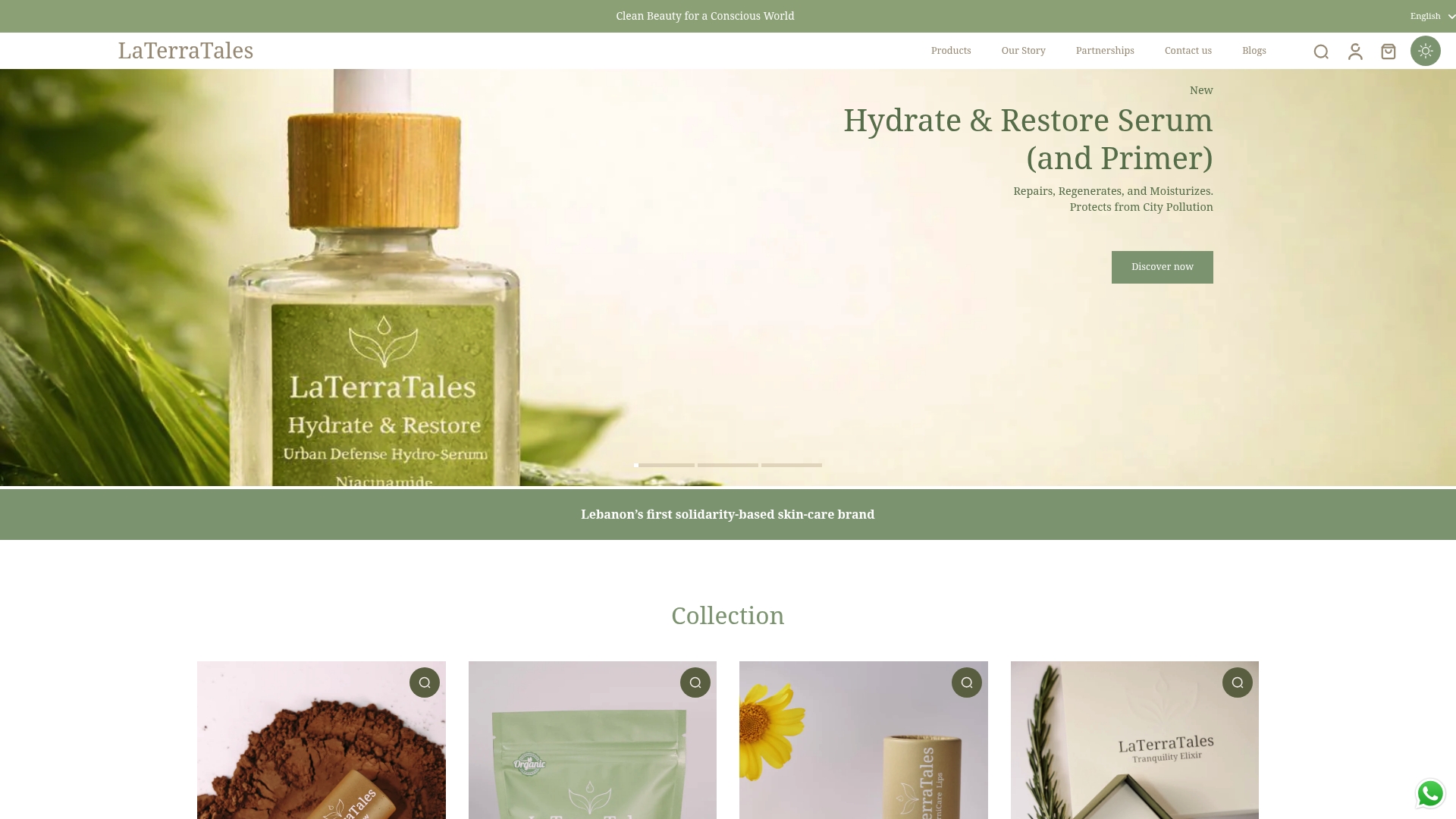
If you are ready to build a routine grounded in real science, start with our natural skincare collection, formulated specifically for sensitive and reactive skin with full ingredient transparency. Not sure where to begin? Contact LaTerraTales to get personalized product recommendations matched to your skin type and concerns. From our Bakuchiol Serum to our Hyaluronic Acid and Niacinamide Serum, every formula is built to deliver results you can see and feel, without the guesswork.
Key takeaways
Evidence-based natural beauty works because it prioritizes clinical proof, therapeutic concentration, and skin barrier safety over ingredient origin or marketing labels.
| Point | Details |
|---|---|
| Definition is clinical, not marketing | Evidence-based natural beauty requires peer-reviewed proof of efficacy and safety at meaningful concentrations. |
| “Natural” and “clean” are unregulated | Neither label guarantees safety or efficacy; evaluation must be based on clinical data, not origin. |
| Concentration determines results | Sub-therapeutic ingredient levels render even well-researched actives ineffective in a formula. |
| Natural does not mean hypoallergenic | Plant-derived fragrance materials are among the most common contact allergens in skincare products. |
| Sun protection is the foundation | Up to 90% of visible skin aging comes from UV exposure, making SPF the most evidence-backed daily step. |
FAQ
What is evidence-based natural beauty in simple terms?
Evidence-based natural beauty is skincare that uses ingredients proven effective and safe through clinical research, regardless of whether those ingredients are natural or synthetic. It prioritizes mechanism, concentration, and validated outcomes over marketing claims.
How do i know if a natural beauty product is truly evidence-based?
Look for disclosed ingredient concentrations, published clinical references, and fragrance-free or low-irritant formulations. Brands that cannot provide this information are likely relying on marketing rather than science.
Is bakuchiol a good natural alternative to retinol?
Bakuchiol is a plant-derived compound with published evidence showing retinol-like effects on fine lines and texture, and it is better tolerated by sensitive skin. It does not match retinoids in effect size, but it is a credible, evidence-supported option.
Can natural ingredients cause skin reactions?
Yes. Plant-derived fragrance materials appeared in nearly 37% of natural formulations studied, and many are documented contact allergens. Lavender, citrus, and tea tree oil are among the most common triggers for sensitive or compromised skin.
What are the core steps in an evidence-based skincare routine?
The foundation is daily broad-spectrum sun protection, consistent hydration, and gentle cleansing. Targeted actives like niacinamide, vitamin C, or bakuchiol layer on top based on your specific skin concerns and type.


