

How to Choose Natural Products for Sensitive Skin
Choosing the right natural skincare for sensitive skin means selecting gentle, scientifically supported ingredients that protect your skin barrier and soothe reactivity. The term “natural skincare” refers to formulas derived from plant, mineral, or botanical sources, but origin alone does not determine safety. Dermatological guidelines consistently point to ceramides, niacinamide, and fragrance-free formulations as the gold standard for sensitive skin care. The most common mistake people make is assuming that “natural” equals “gentle.” This article gives you a clear, practical framework to choose natural products for sensitive skin without guesswork or irritation.
What are the safest natural ingredients for sensitive skin?
Gentle natural ingredients like aloe vera, chamomile, calendula, colloidal oatmeal, squalane, glycerin, hyaluronic acid, and niacinamide are the most reliably soothing options for reactive skin. Each one works differently, but they share one quality: they support the skin barrier without triggering inflammation.
Aloe vera delivers immediate hydration and reduces redness after environmental stress. Chamomile contains bisabolol, a compound that calms irritation at the cellular level. Calendula is rich in flavonoids that reduce inflammation and support wound repair. Colloidal oatmeal is an FDA-recognized skin protectant that physically soothes itching and dryness. Squalane is a lightweight, stable oil that mimics your skin’s own sebum, making it one of the least reactive moisturizing ingredients available. Glycerin and hyaluronic acid are humectants that draw water into the skin without clogging pores. Niacinamide (vitamin B3) strengthens the skin barrier, reduces redness, and regulates oil production, making it one of the most versatile ingredients for sensitive skin.

| Ingredient | Primary benefit | Caution |
|---|---|---|
| Aloe vera | Soothes redness and hydrates | Rare latex allergy in some people |
| Chamomile | Calms inflammation | Avoid if allergic to ragweed |
| Calendula | Repairs and protects barrier | Patch test if allergic to daisies |
| Colloidal oatmeal | Relieves itch and dryness | Generally very well tolerated |
| Squalane | Lightweight moisture, non-reactive | None known |
| Glycerin | Deep hydration, barrier support | None known |
| Hyaluronic acid | Plumps and retains moisture | None known |
| Niacinamide | Strengthens barrier, reduces redness | High concentrations may flush some skin |
One important distinction: “natural” describes where an ingredient comes from, not how your skin will respond to it. A plant-derived ingredient can still cause a reaction if your skin is sensitized to that botanical family.
Pro Tip: Always patch test a new ingredient on the inside of your wrist or behind your ear for 24–48 hours before applying it to your face. This single step prevents the majority of adverse reactions.
Which ingredients should sensitive skin avoid, even if they’re natural?
Natural labels do not guarantee safety. Many plant-derived ingredients are volatile, potent, and well-documented triggers for allergic contact dermatitis in sensitive skin. The fact that something grows in a garden does not make it safe for your face.
The following ingredients appear frequently in natural and organic products, but dermatologists consistently flag them as problematic for sensitive skin:
- Essential oils (lavender, tea tree, peppermint, citrus): Volatile compounds that penetrate the skin barrier and trigger reactions. Even diluted concentrations cause irritation in reactive skin types. Learn more about essential oil risks before using them.
- Fragrance (natural or synthetic): The single most common cause of contact dermatitis in skincare. “Natural fragrance” is not safer than synthetic fragrance for sensitive skin.
- Sulfates (SLS/SLES): Surfactants that strip the skin’s natural oils and disrupt the moisture barrier. Common in natural cleansers and shampoos.
- Parabens: Preservatives linked to skin sensitization in some people, though the science remains debated.
- Alcohol (denatured or SD alcohol): Dries out the skin and weakens the barrier over time. Fatty alcohols like cetyl alcohol are different and generally well tolerated.
- High-allergen botanical extracts: Arnica, St. John’s Wort, and certain citrus extracts have higher allergenic potential and should be used with caution.
Fragrance, sulfates, parabens, and alcohol can cause inflammation and worsen skin sensitivities, even when sourced from natural origins. This is why reading the full ingredient list matters more than reading the front label.
Pro Tip: If a product lists “parfum,” “fragrance,” or “aroma” anywhere in its ingredients, treat it as a red flag regardless of whether the brand markets itself as natural or clean.
How to choose natural skincare products: a step-by-step guide
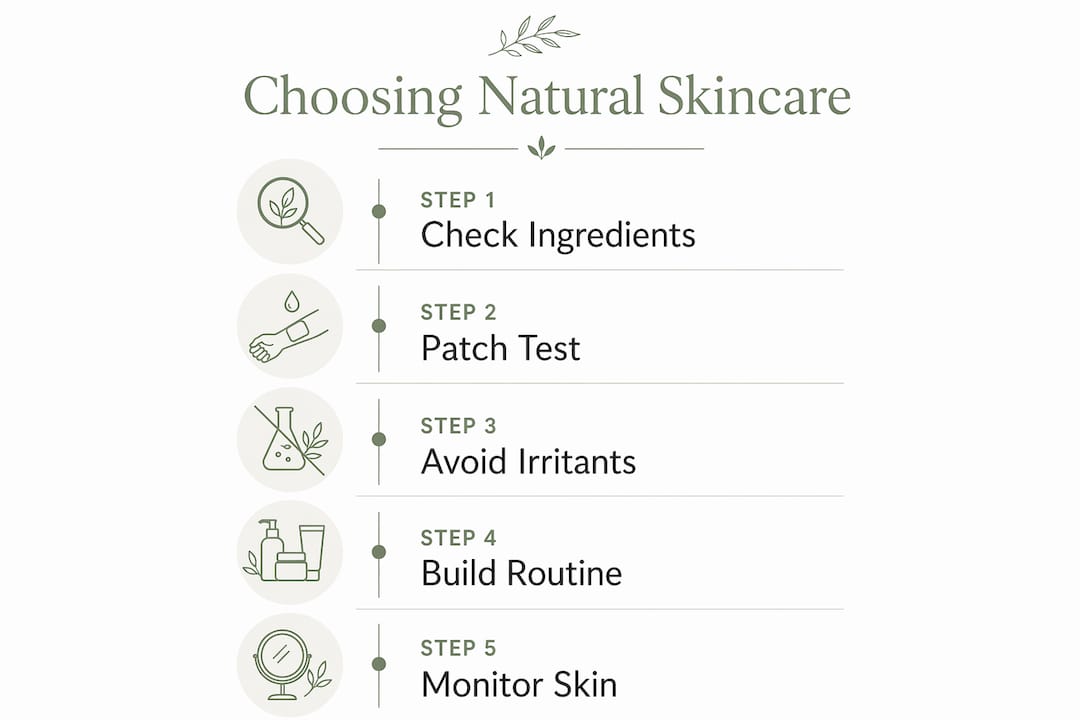
Selecting safe natural skincare for sensitive skin starts with the ingredient list, not the packaging. The front of a bottle is marketing. The back is the truth.
Reading ingredient lists
Ingredients appear in descending order of concentration. The first five to seven ingredients make up the bulk of the formula. If any of the irritants listed above appear in the top half of the list, the concentration is likely high enough to cause a reaction. Look for short ingredient lists with recognizable, gentle actives. A product with fewer than 15 ingredients is generally a safer starting point for sensitive skin.
Understanding label claims
Labels like “fragrance-free,” “hypoallergenic,” and “noncomedogenic” indicate formulations designed to minimize irritation risks. However, these terms are not uniformly regulated, which means brands can use them without meeting a defined standard.
| Label claim | What it means | What it does not guarantee |
|---|---|---|
| Fragrance-free | No added fragrance compounds | May still contain masking agents |
| Hypoallergenic | Formulated to reduce allergy risk | Not allergy-proof; no legal standard |
| Noncomedogenic | Won’t clog pores | Not tested on all skin types |
| Organic | Ingredients grown without pesticides | Does not mean gentle or non-irritating |
| Natural | Derived from natural sources | Does not mean safe for sensitive skin |
| Naturally derived | Processed from natural starting materials | May be heavily modified from original source |
“Naturally derived,” “organic,” and “natural” have different meanings and are not regulated uniformly. Understanding these distinctions is the most underrated skill in sensitive skin care.
Patch testing and product introduction
Patch testing new products is the single most effective way to prevent adverse reactions. Apply a small amount to your inner wrist or behind your ear. Wait 24–48 hours. If no redness, itching, or swelling appears, the product is likely safe to use on your face. Introduce one new product at a time, spaced at least one week apart. This way, if a reaction occurs, you know exactly which product caused it.
For deeper guidance on interpreting natural product claims, the evidence-based natural beauty framework offers a dermatologically grounded approach to reading labels.
How to build a gentle natural skincare routine for sensitive skin
A simple, fragrance-free regimen focusing on moisture barrier repair with ceramides and niacinamide outperforms complex natural routines for sensitive skin. The goal is not a 10-step ritual. The goal is a consistent, minimal routine your skin can tolerate every day.
A well-structured routine for sensitive skin follows four steps:
- Cleanse gently. Use a mild, sulfate-free cleanser or a solid cleansing bar formulated for sensitive skin. Avoid foaming cleansers with SLS. Lukewarm water is less irritating than hot. Pat dry with a soft cloth rather than rubbing.
- Moisturize immediately. Apply your moisturizer within 60 seconds of cleansing while your skin is still slightly damp. Look for ceramides, glycerin, hyaluronic acid, or squalane as primary ingredients. These lock in moisture and repair the barrier.
- Apply sunscreen daily. Mineral sunscreens with zinc oxide or titanium dioxide are the preferred choice for sensitive skin. Chemical UV filters like oxybenzone and avobenzone are more likely to cause irritation. A broad-spectrum SPF 30 or higher is sufficient for daily use.
- Add serums selectively. If your skin is stable and tolerating your base routine well, you can introduce a targeted serum. Niacinamide and hyaluronic acid serums are the safest starting points. Avoid retinol, AHAs, and BHAs until your barrier is fully repaired.
Common mistakes that disrupt sensitive skin routines include over-exfoliation, switching products too frequently, and layering multiple new products at once. Excessive switching or layering overwhelms sensitive skin and disrupts the moisture barrier. Stick with a routine for at least four weeks before evaluating whether it works. Skin barrier repair takes time, not variety.
For a personalized breakdown of how to structure each step based on your skin type, the skin types treatment checklist offers a practical, minimal-ingredient approach that works well alongside natural product selection.
Key Takeaways
The most effective approach to natural skincare for sensitive skin is a minimal, fragrance-free routine built around barrier-repairing ingredients like ceramides, niacinamide, and squalane.
| Point | Details |
|---|---|
| “Natural” does not mean safe | Many plant-derived ingredients, including essential oils and botanical extracts, can trigger reactions in sensitive skin. |
| Prioritize barrier repair | Ceramides, niacinamide, squalane, and glycerin are the most reliable natural ingredients for sensitive skin. |
| Read the ingredient list | The back label reveals the formula; the front label is marketing. Short lists with gentle actives are safer. |
| Patch test every new product | Apply to your wrist or behind your ear for 24–48 hours before using on your face. |
| Keep your routine minimal | Introduce one product at a time and wait at least one week between additions to identify any triggers. |
What LaTerraTales has learned about sensitive skin and natural products
The most persistent myth in natural skincare is that a longer ingredient list signals a better product. Brands load formulas with botanical extracts because they look impressive on packaging. But for sensitive skin, every additional ingredient is another potential trigger. The brands that genuinely understand sensitive skin are the ones that edit ruthlessly.
At LaTerraTales, we have seen this pattern repeatedly. Customers come to us after reacting to products marketed as “100% natural” or “full-spectrum botanical.” When we look at the formulas together, the culprit is almost always an essential oil blend, a high-allergen botanical, or a natural fragrance compound buried in the middle of the list. The “natural” label gave them false confidence.
The approach that actually works is unglamorous: a three to four step routine, fragrance-free throughout, with ingredients your skin already recognizes. Aloe vera, niacinamide, squalane, and a mineral SPF. That is not a marketing story. It is a barrier repair protocol. Patience matters more than product variety. Your skin does not need a new serum every month. It needs consistency and the absence of irritants.
The one piece of advice we give every sensitive skin customer: treat your skincare routine like an elimination diet. Start with the minimum. Add one thing at a time. If your skin reacts, you will know exactly why.
— LaTerraTales
Natural skincare for sensitive skin from LaTerraTales
LaTerraTales builds every product around the principle that sensitive skin deserves fewer, better ingredients, not more.
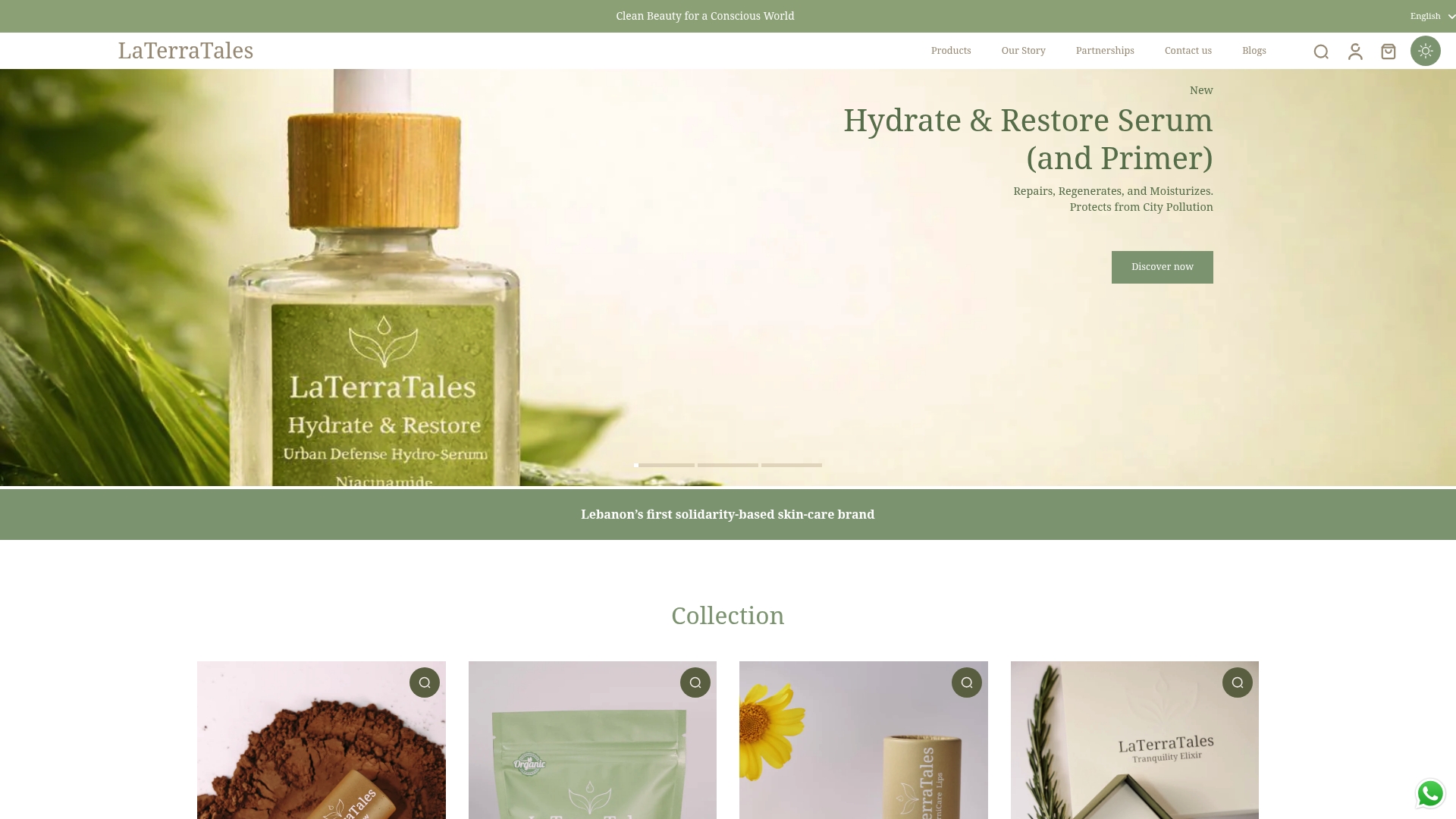
The natural skincare collection is formulated specifically for reactive and sensitive skin, featuring the gentle actives discussed throughout this article: niacinamide, hyaluronic acid, squalane, and calendula. The Hydrate & Restore serum combines hyaluronic acid and niacinamide in a fragrance-free formula designed to repair the moisture barrier without irritation. The natural cleansing bar is a sulfate-free, handmade option for daily cleansing that respects sensitive skin. Every formula is eco-conscious, sustainably packaged, and built to simplify your routine while protecting your skin.
FAQ
What does “natural” mean in skincare?
“Natural” refers to ingredients derived from plant, mineral, or botanical sources. The term is not regulated, so it does not guarantee a product is gentle or safe for sensitive skin.
Are natural skincare products better for sensitive skin?
Not automatically. Natural ingredients can soothe or irritate depending on the specific compound. Ingredients like niacinamide, squalane, and colloidal oatmeal are well-tolerated, while essential oils and botanical fragrances are common irritants.
How do I patch test a new skincare product?
Apply a small amount of the product to your inner wrist or behind your ear. Leave it on for 24–48 hours without washing. If no redness, itching, or swelling appears, the product is likely safe to use on your face.
What ingredients should sensitive skin avoid?
Sensitive skin should avoid fragrance (natural or synthetic), sulfates (SLS/SLES), denatured alcohol, essential oils, and high-allergen botanical extracts. These ingredients can disrupt the skin barrier and trigger inflammation.
How many products does sensitive skin actually need?
A cleanser, a moisturizer, and a mineral sunscreen cover the core needs of sensitive skin. Serums with niacinamide or hyaluronic acid can be added once your baseline routine is stable and well-tolerated.


