

How to Strengthen Your Sensitive Skin Barrier
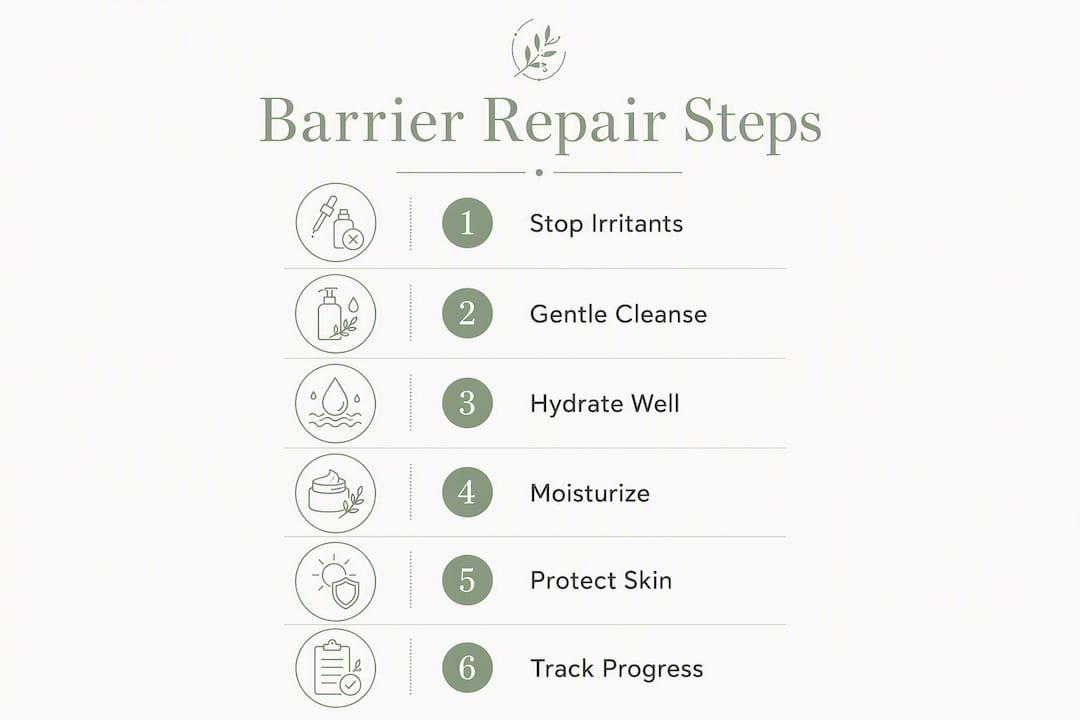
You can strengthen a sensitive skin barrier starting today by doing three things: simplifying your routine to the bare minimum, applying a moisturizer that layers a humectant, an emollient, and an occlusive, and stopping every known irritant immediately. That combination addresses the root problem, not just the symptoms.
Start here, right now:
- Stop all exfoliants (physical scrubs, AHAs, BHAs), retinoids, and fragranced products
- Switch to a gentle, pH-balanced cleanser (no sulfates, no soap bars with high pH)
- Apply a glycerin or hyaluronic acid serum on slightly damp skin, follow with a ceramide-rich moisturizer, and seal with a thin layer of petrolatum or squalane on the driest areas
- Add a broad-spectrum SPF 30+ every morning
- Patch-test any new product on your inner arm for 24–48 hours before applying it to your face
Most people notice reduced stinging and tightness within a few days of consistent care. Visible improvement in texture and redness typically takes several weeks. Deeper lipid restoration for chronically compromised skin can take longer, and that is completely normal.
Table of Contents
- Why does your skin barrier matter so much for sensitive skin?
- How to tell if your skin barrier is damaged
- What causes barrier damage, and what should you stop first?
- Which ingredients actually help repair a sensitive skin barrier?
- A simple AM and PM routine to repair your barrier
- What should you avoid when your barrier is compromised?
- How long does barrier repair take, and how do you track it?
- When should you see a dermatologist?
- How LaTerraTales approaches formulation for sensitive skin
- Key Takeaways
- Why “less is more” is the most underrated advice for sensitive skin
- Gentle, ready-to-use options from LaTerraTales for barrier repair
- Useful sources and further reading
Why does your skin barrier matter so much for sensitive skin?
The skin barrier, technically the stratum corneum, is the outermost layer of your skin. Think of it as a brick-and-mortar wall: skin cells (corneocytes) are the bricks, and a lipid matrix of ceramides, cholesterol, and fatty acids fills the mortar joints between them. That lipid matrix is what keeps moisture in and irritants out.
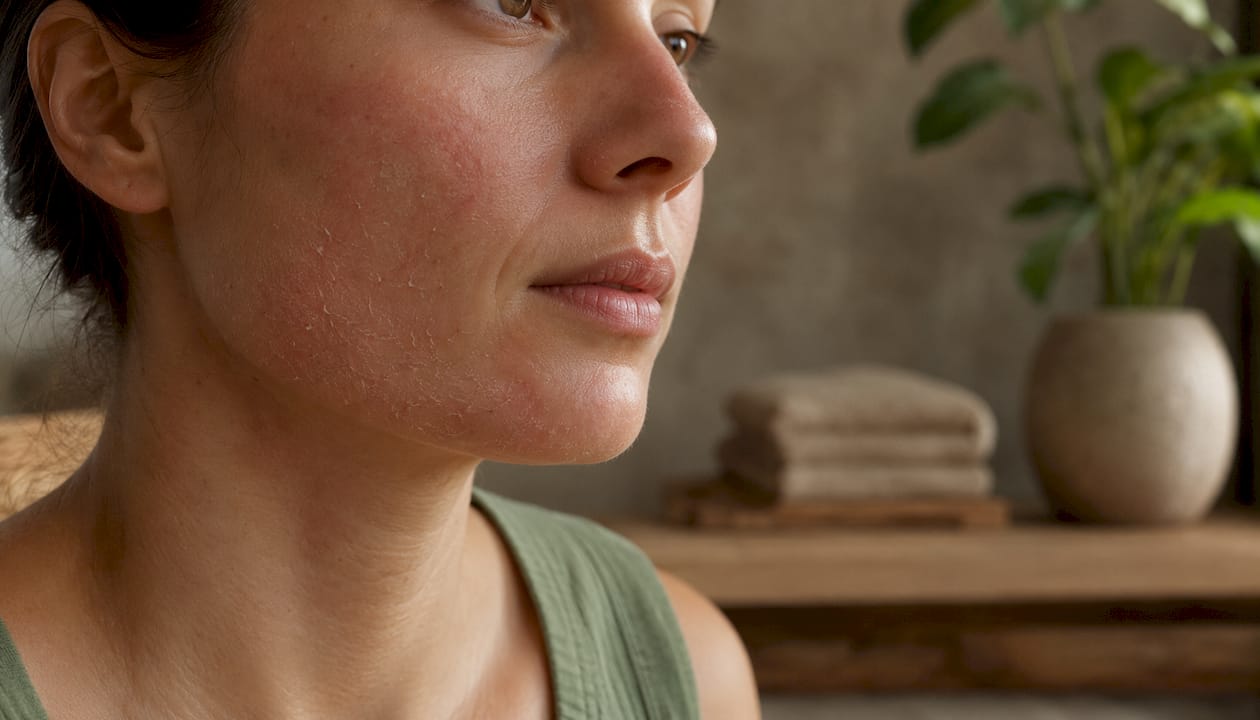
When the barrier is intact, it maintains the acid mantle, a thin protective film with a pH between 4.0 and 5.8. That slightly acidic environment keeps harmful bacteria in check and supports the enzymes that regulate normal skin-cell turnover. Cleansers with a higher pH disrupt this balance, thinning the lipid mortar and leaving skin reactive.
A weakened barrier loses water faster than it can retain it, a process called transepidermal water loss (TEWL). Elevated TEWL is the measurable signature of a compromised barrier, and it shows up as tightness, flaking, and an almost immediate sting when you apply anything new. For people with sensitive skin, this cycle of water loss and reactivity is the central problem to solve.
How barrier function connects to what you feel:
- High TEWL → persistent dryness and tightness that no amount of water drinking seems to fix
- Disrupted acid mantle → increased susceptibility to bacteria and environmental irritants
- Depleted ceramides → flaking, rough texture, and a burning sensation from products that used to feel fine
How to tell if your skin barrier is damaged
Barrier damage has a recognizable pattern. The signs below, compiled from clinical symptom checklists, are the most reliable indicators:
- Stinging or burning when you apply water, toner, or serum (even gentle ones)
- Persistent tightness that returns within minutes of cleansing
- Redness or flushing that appears without an obvious trigger
- Flaking or rough patches that don’t resolve with standard moisturizer
- Increased product sensitivity — products you’ve used for months suddenly irritate
- Slow healing of minor nicks or blemishes
If you check three or more of these boxes, your barrier is likely compromised. A single symptom that appeared after introducing a new product points more to a contact reaction than systemic barrier damage, and that distinction matters for how you respond.
When to treat it as a red flag: If you see broken skin, a spreading rash, or symptoms that worsen after 48 hours of stopping all actives, skip the self-care phase and go straight to a dermatologist. You can also check a localized symptom guide for a more detailed self-assessment.
Pro Tip: Patch-test every new product on your inner forearm for 24–48 hours before applying it to your face. A reaction there is far easier to manage than one across your cheeks.
What causes barrier damage, and what should you stop first?
Dermatologists identify triggers as the essential first step before choosing any treatment. The most common causes of barrier damage fall into two categories: product-related and environmental.
Product and ingredient culprits
Sodium lauryl sulfate (SLS) in cleansers strips the lipid layer with every wash. Alcohol denat, used as a texture agent in many toners and serums, evaporates quickly and takes skin lipids with it. High-concentration AHAs and BHAs (think 10%+ glycolic acid or 2%+ salicylic acid used daily) accelerate cell turnover faster than a compromised barrier can keep up with. Retinoids, even at low strengths, increase TEWL during the adjustment period and should be paused entirely until the barrier is stable. Fragrance and essential oils are among the most common contact sensitizers in cosmetics, and they appear in products marketed as “natural” just as often as in conventional ones.
Environmental and lifestyle triggers
Hot showers feel soothing but dissolve the lipid mortar faster than lukewarm water. Low humidity, especially in winter or in air-conditioned spaces, accelerates TEWL. Stress elevates cortisol, which has been shown to reduce the skin’s ability to repair its lipid barrier. Travel is a particularly underestimated trigger: hotel soaps are almost always high-pH and heavily fragranced, and the combination of recycled cabin air and unfamiliar products can push a borderline barrier into full reactivity within 24 hours. Bringing travel-sized versions of your known-safe products is one of the most practical protective habits you can build.
Quick-stop list:
- Pause all exfoliants and retinoids immediately
- Replace your cleanser with a sulfate-free, fragrance-free option
- Switch to lukewarm water for all face washing
- Avoid any product with “fragrance,” “parfum,” or essential oils in the ingredient list
For a deeper look at what’s driving your sensitivity, this root-cause guide breaks down triggers by type.
Which ingredients actually help repair a sensitive skin barrier?
Moisturizers with ceramides, humectants, and occlusives are the evidence-backed foundation of barrier repair. Here’s how to think about each group and how to use them.
Humectants: draw water into the skin
- Glycerin is the most studied and cost-effective humectant; look for it in the top three ingredients
- Hyaluronic acid attracts water from the environment and deeper skin layers; apply it on damp skin for best results
- Panthenol (provitamin B5) hydrates and has mild anti-inflammatory properties, making it especially useful for reactive skin
Barrier lipids: rebuild the mortar
- Ceramides are the most critical structural lipid; look for ceramide NP, AP, or EOP on the label
- Cholesterol and fatty acids (linoleic acid, palmitic acid) work synergistically with ceramides; a blend of all three repairs faster than ceramides alone
- Squalane is a stable, non-comedogenic emollient derived from olives or sugarcane that mimics the skin’s own sebum
Occlusives: seal everything in
- Petrolatum is the gold standard occlusive and can block nearly all transepidermal water loss when applied as the final step
- Botanical oils low in linolenic acid (such as rosehip or jojoba) can serve as lighter occlusives for those who prefer plant-based options; choose cold-pressed, dark-bottled oils to minimize oxidation risk
Calming actives to add once the barrier is stabilizing
- Niacinamide at 2–5% strengthens the barrier and reduces redness without the irritation risk of higher concentrations; wait until acute stinging resolves before introducing it
- Peptides support collagen and barrier proteins with very low irritation potential
- Colloidal oatmeal is FDA-recognized as a skin protectant and is one of the safest calming ingredients for reactive skin
Pro Tip: Layer in this order: apply your humectant serum to slightly damp skin, follow with a ceramide-rich moisturizer (emollient), and finish with a thin layer of petrolatum or squalane on the driest patches (occlusive). This sequence locks in moisture at every level and is the single most effective repair protocol for compromised skin. For guidance on layering skincare products correctly, the sequence matters more than the number of products.
A simple AM and PM routine to repair your barrier
Follow this routine consistently for 2–8 weeks before evaluating results. Consistency matters far more than product count.
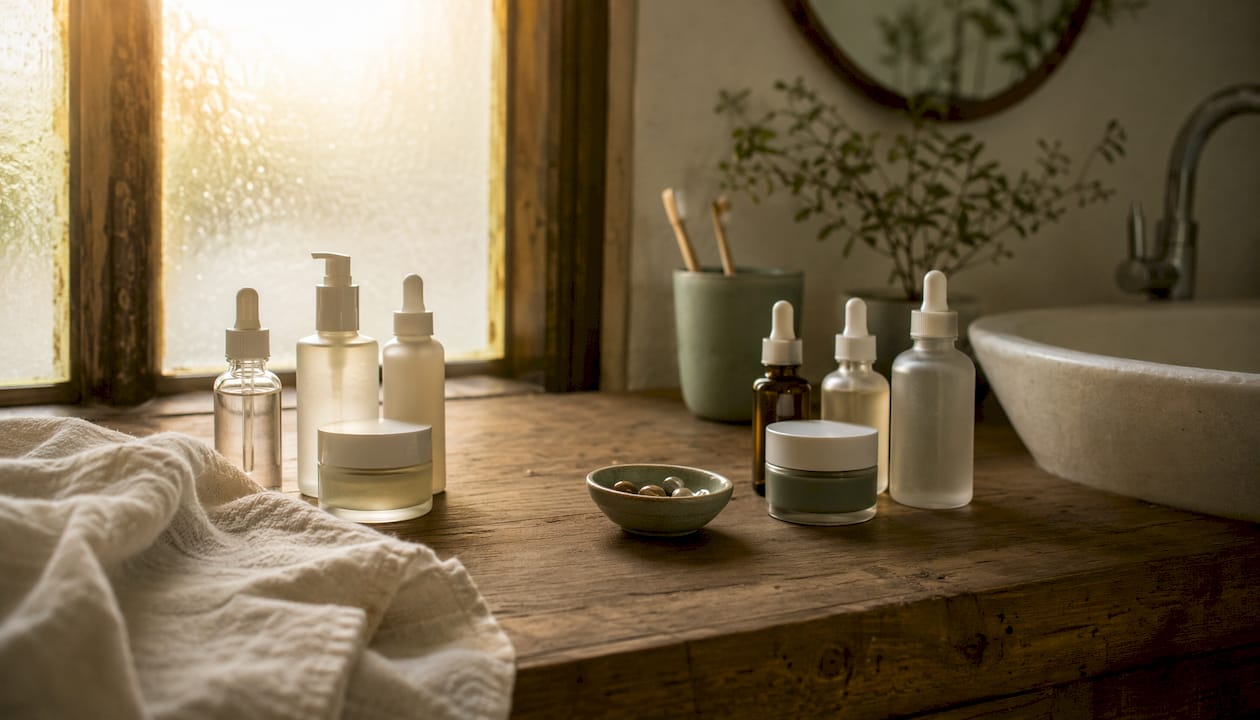
| Step | AM Routine | PM Routine |
|---|---|---|
| Cleanse | Gentle, sulfate-free, pH-balanced cleanser (or rinse with lukewarm water only if skin is very reactive) | Same gentle cleanser; consider skipping the AM cleanse entirely on reactive days |
| Treat | Glycerin or hyaluronic acid serum on damp skin | Panthenol or glycerin serum; hold all retinoids and acids until barrier is stable |
| Moisturize | Ceramide-rich moisturizer with fatty acids | Ceramide-rich moisturizer; add petrolatum or squalane on dry patches as the final step |
| Protect | Broad-spectrum SPF 30+ (mineral SPF is gentler for most sensitive skin types) | No SPF needed; focus on occlusive sealing |
| Extras | Avoid hot water; use lukewarm for all cleansing | Prioritize adequate sleep; lower room humidity to reduce dust mite exposure |
Behavioral habits that accelerate repair:
- Keep showers under 10 minutes and use lukewarm, not hot, water
- Change your pillowcase twice a week to reduce friction and bacterial load
- Stay hydrated; dehydration reduces the skin’s ability to maintain its water gradient
- In winter or low-humidity environments, pair a richer occlusive with your ceramide moisturizer
For a complete gentle skincare routine tailored to sensitive skin, step-by-step guidance is available on the LaTerraTales blog.
What should you avoid when your barrier is compromised?
Short answer: anything that disrupts the lipid layer or raises skin pH. Here is the practical blacklist, with one-line reasons for each:
- Fragrance and parfum — the leading cause of contact sensitization in cosmetics; present in many “natural” products
- Essential oils — concentrated plant compounds that frequently trigger reactions even at low concentrations
- SLS and SLES — anionic surfactants that strip lipids and raise skin pH above the acid mantle range
- Alcohol denat — evaporates rapidly and carries skin lipids with it, increasing TEWL
- High-strength AHAs/BHAs — glycolic acid above 5%, salicylic acid above 1%, or any acid used daily on a compromised barrier
- Physical scrubs — micro-tears in already-fragile skin accelerate water loss and inflammation
- Mixing multiple actives at once — stacking vitamin C, retinol, and an acid in the same routine makes it impossible to identify what is causing a reaction
The practical substitution is straightforward: swap harsh surfactants for glucoside-based or amino acid cleansers, choose fragrance-free formulations across the board, and review your full ingredient list before adding anything new. When the barrier is acutely irritated, pausing actives and using occlusives on fissured areas is the fastest way to stop further water loss.
How long does barrier repair take, and how do you track it?
Realistic timelines vary by how compromised the barrier is, but the general pattern holds across most cases.
Days 1–5: Stinging and acute sensitivity reduce when you stop irritants and start consistent moisturization. This is the fastest and most encouraging phase.
Weeks 2–4: Redness calms, flaking decreases, and skin starts tolerating your routine products without reactivity. This is when most people feel tempted to reintroduce actives. Wait.
Weeks 4–8: Texture improves, the barrier tolerates gentle reintroduction of one active at a time, and TEWL normalizes. For chronically compromised skin (long-term eczema, rosacea, or years of over-exfoliation), full lipid restoration can take several months.
How to monitor progress:
- Keep a brief symptom diary: rate stinging, tightness, and redness on a 1–10 scale every three days
- Take photos in consistent lighting at day 1, week 2, and week 6
- Log every product change and any reaction, so you can identify patterns when reintroducing actives
- In low-humidity months, consider adding a richer occlusive layer at night, since cold, dry air accelerates TEWL even in a healing barrier
If symptoms are not improving after four weeks of a simplified, irritant-free routine, that is a signal to seek professional evaluation rather than add more products.
When should you see a dermatologist?
Self-care works for most cases of product-triggered barrier damage. But some situations call for a professional evaluation, and recognizing them early saves weeks of unnecessary discomfort.
See a dermatologist if you experience:
- Broken skin, open sores, or weeping areas that don’t close within a few days
- A spreading rash, hives, or swelling (possible allergic contact dermatitis)
- Fever alongside skin symptoms (a sign of secondary infection)
- No meaningful improvement after 2–4 weeks of a simplified, irritant-free routine
- Symptoms that match eczema, rosacea, or psoriasis patterns (chronic, cyclical flares)
What a dermatologist may recommend:
- Short-course topical corticosteroids to reduce acute inflammation quickly
- Topical immunomodulators (tacrolimus or pimecrolimus) for longer-term management without steroid side effects
- Prescription-strength emollients or barrier creams
- Patch testing to identify specific contact allergens in your current products
- Phototherapy for chronic inflammatory conditions
Prepare for your visit: Bring a list of every product you use (including sunscreen and makeup), a symptom log with dates, and photos showing the skin at its worst. That information helps a dermatologist distinguish between contact dermatitis, eczema, rosacea, and other conditions that can look similar. Identifying triggers before your appointment makes the visit significantly more productive.
This article is general information, not medical advice. Confirm current guidance with a board-certified dermatologist for your specific situation.
How LaTerraTales approaches formulation for sensitive skin
At LaTerraTales, the formulation philosophy starts with one question: does this ingredient earn its place? Every product in the sensitive-skin collection is built around minimal, evidence-backed ingredient lists that prioritize barrier lipids and humectants over fragrance, filler, and trend-driven actives.
That means choosing plant oils with stable fatty acid profiles, ones low in polyunsaturated fats that oxidize quickly and can trigger inflammation on reactive skin. It means using preservative systems that prevent contamination without relying on high concentrations of alcohol or parabens. And it means keeping formulas pH-balanced so they work with the acid mantle rather than against it. When selecting plant-based ingredients for sensitive skin, oxidation stability is one of the most overlooked factors in consumer choices.
Sustainable packaging matters here too. Airtight, opaque containers protect botanical oils from light and air degradation, which keeps the formula effective from the first use to the last. A beautiful oil in a clear bottle that oxidizes within weeks is not a gentle product, regardless of what the label says.
Pro Tip: When reading an ingredient list, look for glycerin in the top three ingredients, ceramide NP or AP anywhere in the list, and “fragrance-free” (not just “unscented,” which can still contain masking fragrance). Those three signals together are a reliable shorthand for a barrier-supportive formula.
For guidance on choosing natural products for sensitive skin, the LaTerraTales blog walks through label-reading in plain language.
Key Takeaways
Repairing a sensitive skin barrier requires stopping irritants first, then rebuilding with a consistent humectant-emollient-occlusive routine for 2–6 weeks before reintroducing any actives.
| Point | Details |
|---|---|
| Stop irritants immediately | Pause all exfoliants, retinoids, fragrance, and SLS-based cleansers before adding anything new. |
| Layer three moisturizer types | Apply humectant on damp skin, ceramide moisturizer over it, and petrolatum or squalane to seal. |
| Give it 2–6 weeks | Stinging eases in days; visible texture and redness improvement takes 2–6 weeks of consistent care. |
| Patch-test every reintroduction | Add one new or paused active at a time, test on the inner arm first, and wait a full week before adding another. |
| LaTerraTales gentle collection | Minimal-ingredient, fragrance-free formulas built around barrier lipids and humectants for sensitive skin repair. |
Why “less is more” is the most underrated advice for sensitive skin
The instinct when skin is struggling is to add: a new serum, a targeted treatment, a richer cream. That instinct is almost always wrong. Every new product is a new variable, and when your barrier is compromised, you cannot tell what is helping and what is making things worse.
Pausing actives does not set your skin back. Niacinamide, retinol, and vitamin C will all be there when your barrier is ready for them. What actually sets skin back is continuing to layer products onto a barrier that cannot process them, which extends the repair timeline and increases the risk of developing a new sensitization.
The conservative approach, two to three products maximum during the repair phase, is not a sacrifice. It is the fastest route to stable skin. And if four weeks of genuine simplification does not move the needle, that is not a failure of the approach. It is useful information that a dermatologist can act on.
Gentle, ready-to-use options from LaTerraTales for barrier repair
If you want a ready-made starting point that fits the barrier-repair checklist, the LaTerraTales sensitive-skin collection is built exactly for this moment. Every product in the line is fragrance-free, formulated with minimal ingredients, and centered on the humectants and barrier lipids this article recommends.
A good place to start is the natural cleanser bar, a gentle, sulfate-free solid cleanser designed for sensitive and reactive skin. It removes makeup and daily buildup without stripping the lipid layer, which makes it the right first step in any repair routine. From there, the sensitive-skin collection includes moisturizers and botanical oils selected for their barrier-supportive profiles.
Start with one product, patch-test it on your inner arm for 48 hours, and introduce it into your routine before adding anything else. That single step, choosing a clean, minimal-ingredient product and giving it time to work, is where real, lasting improvement begins.
Useful sources and further reading
The claims in this article draw from peer-reviewed dermatology research and guidance from major health organizations. The sources below are worth bookmarking if you want to go deeper.
| Source | What it covers | Why it matters |
|---|---|---|
| National Eczema Association | Skin barrier basics, eczema connection | Accessible, patient-facing explainer from a leading US advocacy organization |
| Healthline: Skin Barrier | TEWL, acid mantle, moisturizer types, occlusive efficacy | Comprehensive overview with dermatologist input; covers the three-part moisturizer strategy |
| Cleveland Clinic: Sensitive Skin | Causes, triggers, lifestyle factors, travel tips | Authoritative clinical resource covering overlooked environmental contributors |
| Mountain Dermatology Blog | Symptom identification, patch testing, when to see a dermatologist | Practical, dermatologist-authored guide for self-assessment and escalation |
| Allure PH: Dermatologist Guide | Trigger identification, tailored regimens, expert quotes | Useful for understanding the difference between inherent sensitivity and product-triggered damage |
| NIH: Stratum Corneum | Biochemistry of the stratum corneum and lipid matrix | Primary scientific reference for the barrier’s structure and function |
| PMC: Barrier Research | Peer-reviewed barrier repair and lipid restoration studies | Supports the evidence base for ceramide and lipid-focused repair strategies |
| AAD: Safe Exfoliation | Exfoliation frequency and safety for sensitive skin | American Academy of Dermatology guidance on avoiding over-exfoliation |
Recommended
Partager


