
The Role of Essential Oils in Skincare Explained
Essential oils are volatile plant extracts with documented antimicrobial, anti-inflammatory, and antioxidant properties that make them genuinely useful ingredients in skincare. The role of essential oils in skincare goes well beyond fragrance. These concentrated botanicals interact with skin at a cellular level, supporting barrier function, calming irritation, and fighting acne-causing bacteria. Understanding how they work, and how to use them safely, separates real results from wishful thinking. This guide covers the science, the safety, and the practical steps you need to get the most from botanical oils in your routine.
What are the key benefits of essential oils for skin health?
Essential oils deliver three core benefits to skin: antimicrobial protection, anti-inflammatory calming, and antioxidant defense. Each benefit is tied to specific compounds within the oil, which is why the type of oil matters as much as how you use it.
Antimicrobial activity is the most clinically documented benefit. Tea tree oil, derived from Melaleuca alternifolia, acts against Cutibacterium acnes, the primary bacteria responsible for acne breakouts. That makes it the best-evidenced essential oil for acne-prone skin, with randomized trial support backing its use as a complementary treatment.
Anti-inflammatory effects are where lavender and rosemary shine. Both oils contain compounds like linalool and rosmarinic acid that reduce redness and calm reactive skin. Lavender is particularly well-suited for sensitive skin because it soothes without clogging pores.
Antioxidant protection is the third pillar. Oxidative stress accelerates skin aging by breaking down collagen and damaging cell membranes. Essential oils rich in phenolic compounds neutralize free radicals, giving your skin a layer of defense against environmental damage. This is the mechanism behind the anti-aging claims you see attached to oils like rosemary and frankincense.
Some oils also support hydration and skin barrier repair. Carrier oils such as rosehip, jojoba, and argan are antioxidant-rich and non-comedogenic, meaning they hydrate without blocking pores. These are often used to dilute essential oils while adding their own complementary benefits.
- Antimicrobial: tea tree oil targets acne-causing bacteria
- Anti-inflammatory: lavender and rosemary reduce redness and irritation
- Antioxidant: phenolic-rich oils protect against oxidative skin aging
- Hydrating: rosehip, jojoba, and argan support barrier function without clogging pores
Pro Tip: Not all essential oils suit all skin types. If your skin is sensitive or reactive, start with lavender diluted in jojoba oil before trying stronger options like tea tree or rosemary.
How should essential oils be safely used in skincare routines?
Safe use of essential oils in skincare depends almost entirely on concentration and formulation. Applying a neat (undiluted) essential oil directly to your face is rarely appropriate and often counterproductive.
The EU Scientific Committee on Consumer Safety (SCCS) sets concentration limits for cosmetics that reflect real safety data. For tea tree oil specifically, the limits are 0.1% in face creams, 1% in facial cleansers, and 2% in shampoos. These numbers exist because safety depends on both the oil’s potency and how long it stays on your skin.
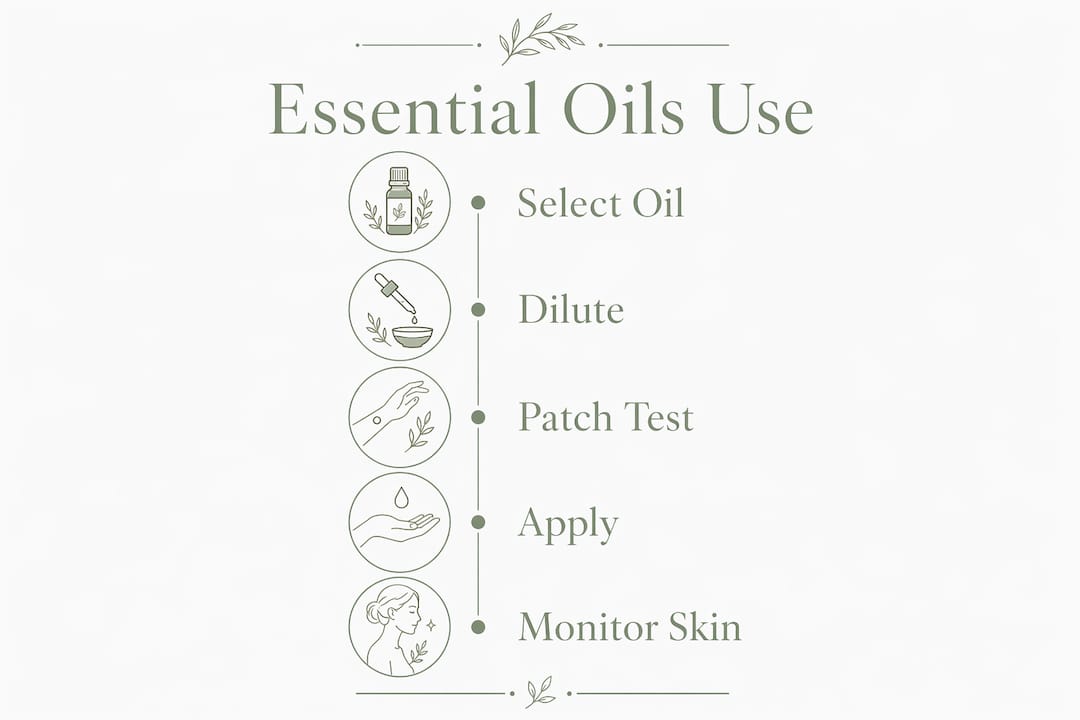
Here is a practical framework for safe use:
- Dilute before applying. Mix essential oils with a carrier oil such as jojoba, sweet almond, or rosehip before applying to your face. A 1% dilution (roughly 6 drops per ounce of carrier oil) is appropriate for facial use.
- Spot treat with caution. Pure tea tree oil on spots is a common practice, but limit this to individual blemishes and avoid surrounding skin.
- Patch test first. Apply your diluted blend to the inside of your wrist and wait 24 hours before using it on your face.
- Avoid phototoxic oils in daytime routines. Citrus oils like bergamot and lemon can cause burns and blisters when skin is exposed to sunlight after application. Use them only in nighttime formulas or rinse-off products.
- Check your products’ ingredient lists. Professionally formulated products control concentration and stability. Consumer-blended recipes carry more variability and risk.
Formulation advances like encapsulation have changed how essential oils are delivered in skincare products. Encapsulation protects volatile compounds from oxidation and allows controlled release of active ingredients, improving both safety and effectiveness compared to raw application.
Pro Tip: If you are pregnant, nursing, or managing a skin condition like eczema or rosacea, consult a dermatologist before adding any essential oil to your routine. Some oils that are gentle for healthy skin can trigger flares in reactive skin.
Which essential oils work best for acne and aging?
The right essential oil depends on your skin concern. Matching the oil to the problem is what separates a genuinely useful addition from a random experiment.
Essential oils for acne-prone skin
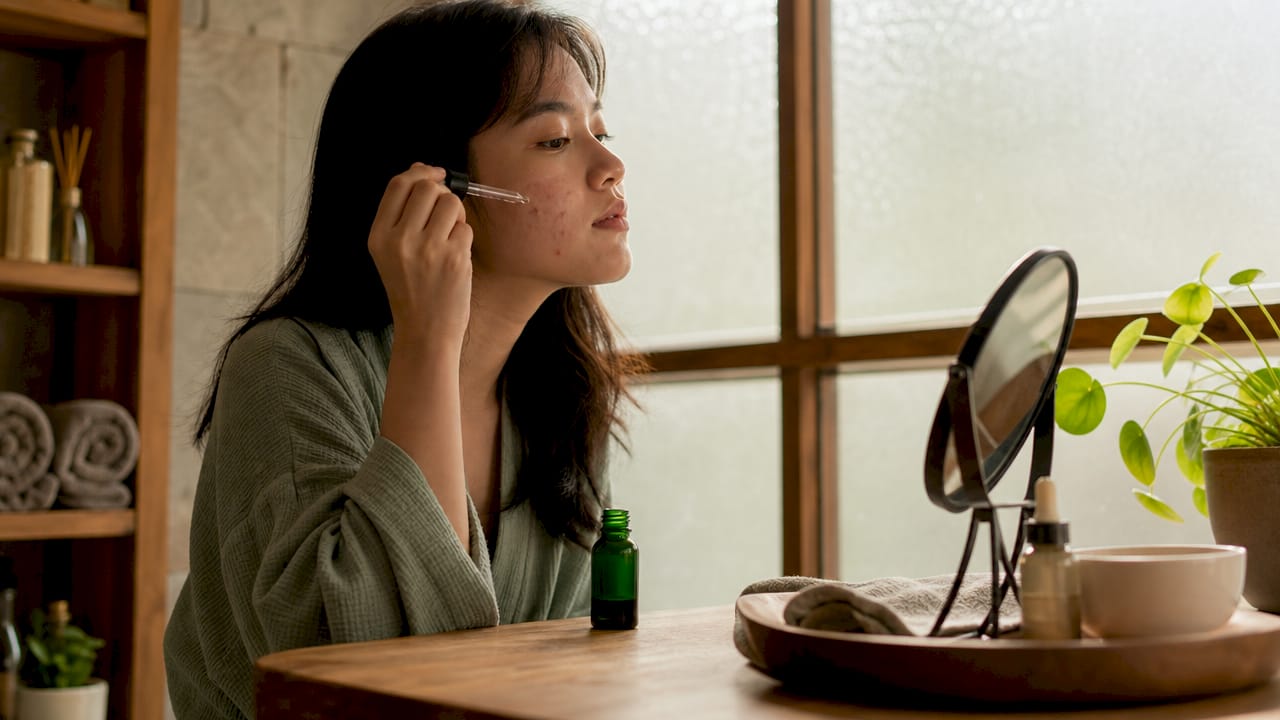
Tea tree oil is the clear leader for acne. Its antimicrobial and anti-inflammatory effects target the two main drivers of breakouts: bacterial overgrowth and skin inflammation. Use it as a complementary treatment alongside proven actives like salicylic acid or niacinamide, not as a standalone solution. Lavender oil also helps with acne-related redness and can calm post-breakout irritation without the drying effect of stronger treatments.
Essential oils for aging and hydration
For anti-aging, the botanical oils guide points to rosehip, argan, and jojoba as top performers. Rosehip is rich in vitamin A and essential fatty acids that support cell turnover. Argan delivers vitamin E and squalene, both of which protect against oxidative damage. Jojoba closely mimics the skin’s natural sebum, making it an excellent carrier and a hydrating ingredient in its own right. For a deeper look at how these oils support aging skin, the facial oils for aging skin resource covers the mechanisms in detail.
Oils to avoid for sensitive skin
Cinnamon and clove oils carry cytotoxicity risk at higher doses. Even at low concentrations, they can cause irritation in sensitive skin. Citrus oils carry phototoxicity risk. If your skin is reactive, stick to lavender, chamomile, or frankincense, all of which have gentler profiles.
| Essential Oil | Primary Benefit | Best For | Caution |
|---|---|---|---|
| Tea tree | Antimicrobial, anti-inflammatory | Acne-prone skin | Dilute; moderate allergen potential |
| Lavender | Soothing, anti-inflammatory | Sensitive, reactive skin | Generally well-tolerated |
| Rosemary | Antioxidant, stimulating | Dull or aging skin | Avoid during pregnancy |
| Rosehip (carrier) | Hydrating, vitamin A-rich | Aging, dry skin | Can oxidize quickly; store properly |
| Argan (carrier) | Antioxidant, vitamin E-rich | Dry, aging, acne-prone | Non-comedogenic; widely tolerated |
| Citrus (bergamot, lemon) | Brightening | Evening routines only | Phototoxic; avoid sun exposure after use |
What challenges exist in formulating skincare with essential oils?
Formulating with essential oils is harder than it looks. The same properties that make them bioactive also make them chemically unstable and difficult to work with in a finished product.
| Formulation Challenge | Cause | Industry Solution |
|---|---|---|
| Volatility | Compounds evaporate quickly at room temperature | Encapsulation, airtight packaging |
| Oxidation | Exposure to air degrades active compounds | Antioxidant stabilizers, dark glass packaging |
| Photodegradation | UV light breaks down key molecules | Opaque or UV-protective containers |
| Low water solubility | Oils and water do not mix | Emulsifiers, carrier oil blends |
| Uncontrolled release | Compounds absorb unevenly on skin | Polymeric nanoformulation, encapsulation |
Stability and delivery challenges like oxidation and photodegradation directly reduce how well an essential oil performs on your skin. A product that was potent when manufactured may lose much of its efficacy by the time it reaches you, if it was not properly stabilized. This is why professional formulation matters far more than the presence of an oil on an ingredient list.
Consumer-blended essential oil recipes carry real risk. When you mix your own blend at home, you cannot control for oxidation, concentration accuracy, or skin absorption rate. Professionally formulated products use encapsulation and tested carrier systems to protect the active compounds and deliver them where they are needed. That is not a reason to avoid DIY entirely, but it is a reason to keep concentrations low and to store your blends in dark, airtight containers away from heat.
How to incorporate essential oils into your skincare routine
Adding essential oils to your routine works best when you treat them as targeted additions rather than wholesale replacements for your existing products.
- Choose quality oils from reputable sources. Look for oils labeled with their botanical name, country of origin, and extraction method. Cold-pressed or steam-distilled oils retain more active compounds than solvent-extracted versions.
- Always dilute for facial use. A 1% concentration in a carrier oil is the standard starting point for face application. That is roughly 6 drops of essential oil per ounce of carrier.
- Patch test every new oil. Apply to your inner wrist, wait 24 hours, and check for redness, itching, or swelling before applying to your face.
- Use the right carrier oil for your skin type. Jojoba suits oily and combination skin. Rosehip works well for dry or aging skin. Argan is a good all-rounder for most skin types.
- Incorporate into existing products carefully. Adding a drop of lavender to your moisturizer is lower risk than applying a DIY blend directly. Pre-formulated products already account for compatibility and stability.
- Know when to stop. If you experience persistent redness, stinging, or breakouts after introducing an essential oil, discontinue use. Some reactions are delayed, so give it a full week of observation before drawing conclusions.
For a broader look at switching to natural skincare, including how to phase in botanical ingredients without disrupting your skin barrier, that resource covers the transition thoughtfully.
Key takeaways
Essential oils deliver real skin benefits when used at the right concentration, in the right formulation, for the right skin concern.
| Point | Details |
|---|---|
| Bioactive properties | Essential oils provide antimicrobial, anti-inflammatory, and antioxidant effects backed by research. |
| Concentration matters | EU SCCS limits tea tree oil to 0.1% in face creams; exceeding safe levels causes irritation. |
| Tea tree leads for acne | Tea tree oil has the strongest clinical evidence for acne management among essential oils. |
| Formulation protects efficacy | Encapsulation and proper carriers prevent oxidation and improve how oils deliver to skin. |
| Phototoxicity is a real risk | Citrus oils cause burns and blisters on sun-exposed skin; use them only in nighttime products. |
What Laterratales has learned about essential oils and skincare
The conversation around essential oils in skincare often falls into two camps: uncritical enthusiasm and blanket skepticism. Neither serves you well.
What I have seen, working with botanical formulations at Laterratales, is that essential oils are genuinely powerful ingredients. But their power is conditional. Tea tree oil at 0.1% in a well-stabilized face cream behaves very differently from tea tree oil applied neat from a dropper bottle. The oil is the same. The outcome is not. Formulation is where the real work happens, and it is also where most DIY approaches fall short.
The natural beauty space sometimes treats “pure” and “undiluted” as synonyms for “better.” They are not. A neat essential oil is not more potent in a useful sense. It is more likely to irritate, oxidize on contact with skin, and absorb unevenly. The evidence-based natural beauty framework we follow at Laterratales treats essential oils as precision ingredients, not bulk additives.
My honest recommendation: trust the science on concentration limits, invest in well-formulated products, and treat essential oils as one tool in a broader routine rather than a complete solution. They complement actives like niacinamide and salicylic acid. They do not replace them. That balance, between the appeal of nature and the rigor of science, is what makes a skincare routine actually work.
— Laterratales
Natural skincare formulated with care, not compromise
At Laterratales, every product that includes botanical oils is formulated to meet the same concentration and stability standards that the science demands. The natural skincare collection includes options designed specifically for sensitive skin, with essential oil blends that are tested, stabilized, and balanced for real-world use. If you want the benefits of essential oils without the guesswork of DIY dilution, these products give you a safe, effective starting point. For a calming, aromatherapy-focused option, the Tranquility Elixir demonstrates how essential oils perform when formulation science is done right.
FAQ
What is the role of essential oils in skincare?
Essential oils act as antimicrobial, anti-inflammatory, and antioxidant agents in skincare, supporting acne management, soothing irritation, and protecting skin from oxidative damage. Their effectiveness depends on the oil type, concentration, and how the product is formulated.
Are essential oils safe for sensitive skin?
Most essential oils require dilution before facial use, and some, like cinnamon, clove, and citrus oils, carry irritation or phototoxicity risks that make them unsuitable for sensitive skin. Lavender and chamomile are the gentlest options for reactive skin types.
How do I use essential oils for acne treatment?
Tea tree oil is the best-evidenced choice for acne, used as a spot treatment or diluted to 1% in a carrier oil for broader application. It works best as a complement to proven actives like salicylic acid, not as a standalone treatment.
What concentration of essential oil is safe in face cream?
The EU SCCS recommends a maximum of 0.1% tea tree oil in face creams, reflecting the balance between bioactivity and irritation risk. Always follow concentration guidelines specific to the oil and product type you are using.
Can essential oils replace anti-aging skincare products?
Essential oils like rosehip and argan provide antioxidant and hydrating benefits that support aging skin, but they work best alongside dedicated anti-aging actives. They are a complementary ingredient, not a complete anti-aging solution on their own.


