

What Causes Skin Sensitivity: A Clear Guide
Skin sensitivity is defined as heightened skin reactivity caused by impaired barrier function and neurovascular inflammation, not simply an allergic response. Your skin reacts with burning, stinging, redness, or itching when its protective barrier breaks down and nerve signaling becomes overactive. Dr. Adam Friedman, chair of dermatology at George Washington University, describes sensitive skin syndrome as a neurovascular inflammatory disorder. Understanding what causes skin sensitivity is the first step toward calming it and keeping it calm for the long term.
What are the main causes of skin sensitivity?
Skin sensitivity starts with a compromised skin barrier. The outermost layer of your skin, called the stratum corneum, acts as a shield. When it weakens, moisture escapes and irritants penetrate more easily. That combination triggers inflammation and heightened nerve responses, which produce the burning and stinging you feel.
Neurovascular dysfunction plays an equally central role. Overactive nerve fibers in the skin send exaggerated pain and itch signals in response to stimuli that would not bother most people. This is why sensitive skin reacts to temperature shifts, certain fabrics, or even water pressure in the shower.
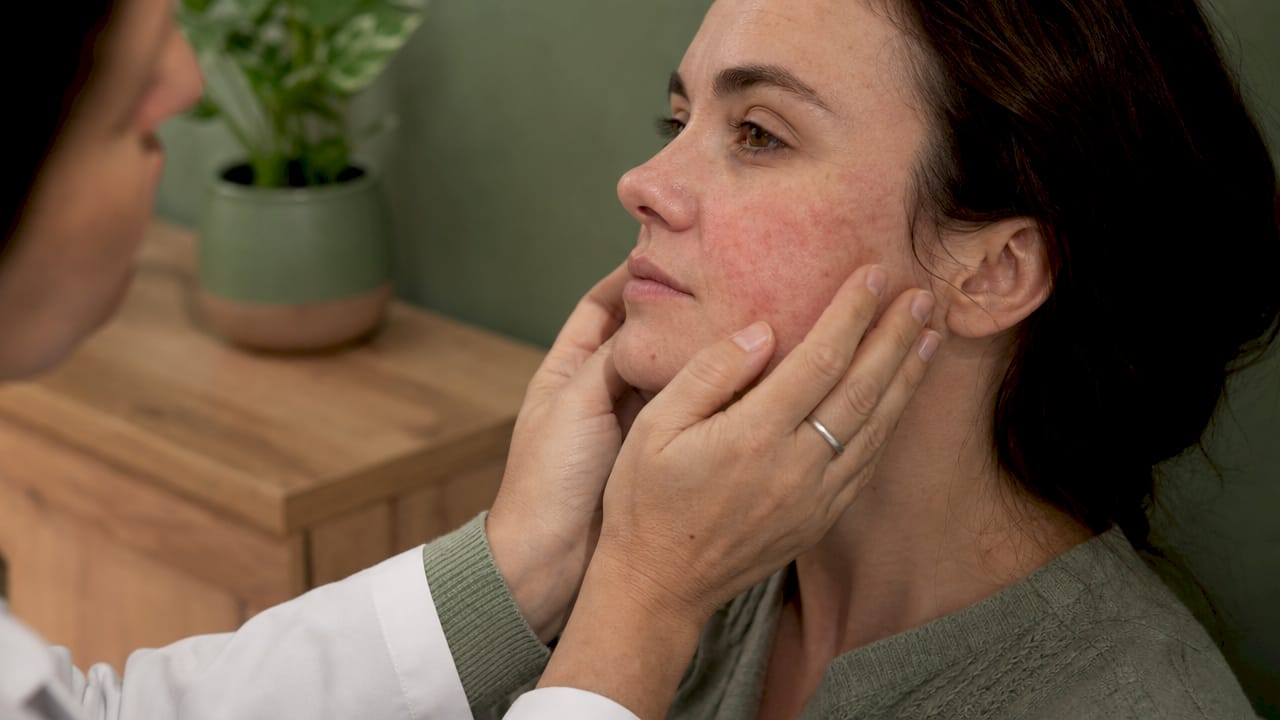
Pre-existing skin conditions amplify the problem significantly. People with a history of eczema, rosacea, or contact dermatitis have a 140% higher likelihood of seeking medical care for skin sensitivity. That statistic shows how closely underlying dermatological conditions and sensitivity are linked. Sensitive skin syndrome is distinct from rosacea, which involves Demodex mite overgrowth, but the two conditions can overlap and reinforce each other.
| Physiological cause | What it means for your skin |
|---|---|
| Barrier dysfunction | Moisture loss and easier irritant penetration |
| Neurovascular inflammation | Overactive nerve signals causing burning and stinging |
| Impaired lipid production | Reduced natural oils, leaving skin dry and reactive |
| Pre-existing skin conditions | Eczema, rosacea, or dermatitis increase baseline reactivity |
| Genetic predisposition | Some people inherit a thinner or more permeable barrier |
How do environmental and lifestyle factors trigger sensitive skin?
Temperature changes are the single most common trigger for sensitive skin flare-ups. A global dermatological survey ranked heat as the No. 1 trigger, ahead of cosmetics, stress, and dietary factors. Moving from an air-conditioned room into summer heat, or stepping out of a hot shower into a cold bathroom, can cause immediate redness and stinging.
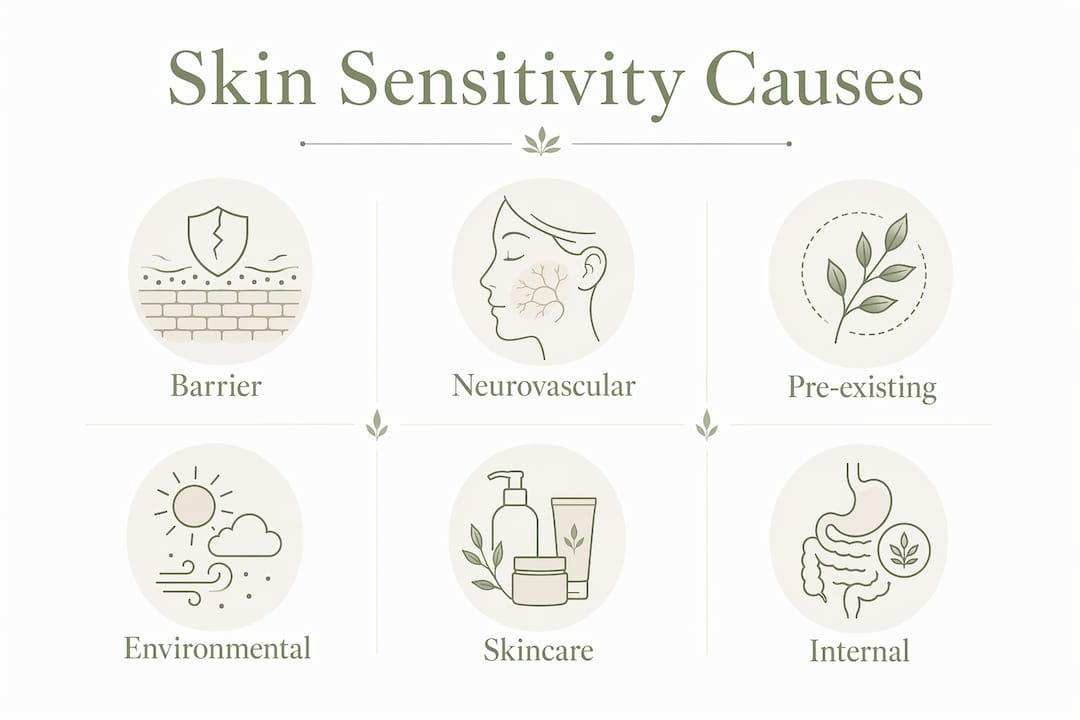
Pollution and UV radiation compound the damage. Airborne particulates and ozone break down the skin barrier directly, while UV exposure triggers an inflammatory cascade that worsens existing sensitivity. City dwellers face a double burden of both stressors daily.
The most underappreciated concept in sensitive skin management is the stacking effect. Cumulative mild irritants stack to cause flare-ups that no single trigger would produce alone. A warm day, a slightly fragranced moisturizer, a stressful meeting, and a glass of wine at dinner can each seem harmless individually. Together, they push your skin past its threshold.
Common environmental and lifestyle triggers include:
- Heat and humidity shifts, including hot showers, saunas, and outdoor temperature swings
- UV radiation, which degrades barrier lipids and triggers inflammation
- Air pollution and particulates, which penetrate a weakened barrier
- Stress, which raises cortisol and amplifies the skin’s inflammatory response
- Alcohol and spicy foods, which dilate blood vessels and worsen redness
- Friction from rough fabrics, including wool and synthetic blends
- Low humidity environments, such as heated indoor air in winter
Pro Tip: Keep a simple trigger diary for two weeks. Note temperature, stress level, food, and products used on days when your skin flares. Patterns become visible quickly, and you can address the highest-impact triggers first.
What skincare ingredients and practices cause skin irritation?
Fragrance is the leading skincare irritant for sensitive skin. It appears in cleansers, moisturizers, sunscreens, and even products marketed as “gentle.” A critical distinction: “unscented” products often contain masking fragrances that neutralize odor without removing the irritating compounds. Only products labeled “fragrance-free” genuinely avoid fragrance-related irritation.
Natural ingredients are not automatically safe. Botanical irritants like lavender essential oil, tea tree oil, and citrus extracts frequently trigger sensitive skin despite their wholesome reputation. The molecule that makes lavender smell calming, linalool, oxidizes on contact with air and becomes a potent sensitizer. Tea tree oil, widely used for its antimicrobial properties, causes contact dermatitis in a meaningful portion of regular users.
Other common irritants include sulfates, denatured alcohol, and preservatives like methylisothiazolinone. Sulfates strip the skin’s natural lipid layer. Denatured alcohol evaporates quickly and disrupts barrier function. Methylisothiazolinone, found in many rinse-off and leave-on products, is one of the most frequently flagged allergens in patch testing.
Harmful practices that worsen sensitivity, and their gentler alternatives:
- Hot water cleansing strips skin lipids. Use lukewarm water at around body temperature instead, which cleanses effectively without disrupting the barrier.
- Daily physical exfoliation with scrubs or rough cloths creates micro-tears. Switch to a gentle enzyme-based exfoliant used no more than once a week.
- Layering multiple active ingredients like retinol, AHAs, and vitamin C simultaneously overwhelms a sensitive barrier. Introduce one new ingredient at a time, spaced weeks apart.
- Using “unscented” products assuming they are fragrance-free. Read ingredient lists and choose products explicitly labeled “fragrance-free.”
- Skipping patch testing when trying new products. Apply a small amount to your inner arm for 48 hours before using it on your face.
Pro Tip: A minimalist routine with three to four well-chosen products outperforms a ten-step routine for sensitive skin. Fewer ingredients mean fewer potential triggers. Check the clean beauty ingredient checklist from LaTerraTales to identify safer options.
How does diet and internal health influence skin sensitivity?
Your gut and your skin communicate constantly through what researchers call the gut-skin axis. When gut bacteria are out of balance, inflammatory signals travel through the bloodstream and show up as redness, reactivity, and barrier weakness. Dietary triggers like alcohol, spicy foods, high-sugar meals, and histamine-rich foods such as aged cheese, wine, and fermented products can provoke or worsen skin sensitivity within hours of consumption.
Stress is an internal trigger that many people overlook. Cortisol amplifies the skin’s inflammatory response and weakens barrier function over time. Chronic stress keeps cortisol elevated, which means your skin stays in a low-grade reactive state even without external triggers.
Key internal contributors to skin reactivity
- Alcohol dilates blood vessels and triggers flushing, especially in people prone to rosacea-like sensitivity
- Spicy foods activate TRPV1 receptors in the skin, producing heat and redness
- High-sugar diets promote location, which damages collagen and weakens barrier integrity
- Histamine-rich foods overload the body’s histamine processing, causing skin reactions in histamine-intolerant individuals
- Poor sleep reduces the skin’s overnight repair cycle, leaving the barrier more vulnerable the next day
Managing internal triggers requires the same consistency as managing external ones. Reducing alcohol, moderating spicy and high-sugar foods, and supporting gut health with fiber-rich foods and fermented options can produce visible improvements in skin reactivity over weeks. For a deeper look at the gut-skin connection, the gut-skin axis guide from LaTerraTales covers the science in practical terms.
What practical steps help manage and soothe sensitive skin?
A minimalist routine built around barrier repair is the most effective approach to managing sensitive skin. Fewer products mean fewer potential triggers, and barrier-focused ingredients like ceramides, niacinamide, and squalane actively rebuild the skin’s protective layer. Choosing products that are fragrance-free and formulated with gentle surfactants reduces the baseline irritant load on your skin every day.
Environmental control matters as much as product selection. Moderating shower temperature is one of the highest-impact changes you can make. Lukewarm water at around body temperature cleanses effectively without stripping the lipid layer. Hot water feels soothing in the moment but leaves the barrier compromised for hours afterward. Reducing shower allergens through filtered water or gentle shower products also helps, as explained in this guide on shower allergens and skin health.
Sun protection is non-negotiable for sensitive skin. UV radiation degrades barrier lipids and triggers inflammation, worsening reactivity over time. A mineral sunscreen with zinc oxide or titanium dioxide sits on top of the skin rather than absorbing into it, making it a gentler choice than chemical UV filters for most sensitive skin types.
Practical management strategies at a glance:
- Choose fragrance-free, sulfate-free cleansers and moisturizers
- Apply a ceramide or squalane-based moisturizer immediately after cleansing while skin is still slightly damp
- Use mineral sunscreen daily, even indoors near windows
- Wash with lukewarm water and pat dry with a soft cotton cloth
- Manage stress through sleep, movement, and breathing practices to lower cortisol
- Moderate dietary triggers like alcohol and spicy foods during active flare-ups
For guidance on building a routine that works across different life stages, the professional skincare routine guide from LaTerraTales offers age-specific advice grounded in dermatological principles.
Key Takeaways
Skin sensitivity is a neurovascular inflammatory condition driven by barrier dysfunction, cumulative triggers, and internal factors, all of which respond to consistent, gentle management.
| Point | Details |
|---|---|
| Barrier dysfunction is the root cause | A weakened stratum corneum allows irritants in and moisture out, triggering reactivity. |
| Triggers stack, not act alone | Multiple mild irritants combine to cause flare-ups that no single trigger would produce. |
| “Fragrance-free” is not the same as “unscented” | Only fragrance-free labels guarantee the absence of irritating fragrance compounds. |
| Internal health drives skin reactivity | Diet, gut health, and cortisol levels directly influence how reactive your skin becomes. |
| Minimalist routines outperform complex ones | Fewer products with barrier-supporting ingredients reduce irritant load and speed recovery. |
What I’ve learned from working with sensitive skin every day
Sensitive skin is one of the most misunderstood conditions in beauty and wellness. Most people assume their skin reacts because they are allergic to something. The reality is more nuanced. Barrier dysfunction and neurovascular overactivity are the real drivers, and they respond to total environmental management, not just ingredient swaps.
The pattern I see most often is this: someone with reactive skin removes one suspected irritant, sees no improvement, and concludes that products are not the problem. What they miss is the stacking effect. Their skin was already at 80% of its tolerance threshold from heat, stress, and diet. That one product was the last 20%. Removing it while leaving everything else unchanged produces no visible result.
The other pitfall is trusting “natural” as a synonym for “safe.” Lavender, tea tree, and citrus oils appear in countless products marketed to sensitive skin. They are among the most common botanical irritants in dermatological patch testing. At LaTerraTales, we formulate without these high-risk botanicals precisely because we know the science does not support their use on reactive skin.
Patience is the hardest part. Barrier repair takes four to six weeks of consistent, gentle care before you see meaningful change. People who stick with a simple, fragrance-free routine and manage their environmental triggers do see results. The skin is remarkably resilient when you stop overwhelming it.
— LaTerraTales
Gentle skincare for sensitive skin from LaTerraTales
Sensitive skin deserves products built around its actual needs, not marketing promises.
LaTerraTales formulates every product with barrier health in mind. The natural skincare collection for sensitive skin includes fragrance-free options, gentle cleansing bars made without sulfates or synthetic fragrances, and calming serums featuring barrier-supporting ingredients like bakuchiol and squalane. The natural cleanser bar removes makeup and impurities without stripping the skin’s lipid layer, making it a practical first step for anyone rebuilding a gentler routine. Every formula is eco-conscious, sustainably packaged, and designed to simplify your routine while reducing your skin’s daily irritant load.
FAQ
What causes skin sensitivity in adults?
Skin sensitivity in adults is caused by a weakened skin barrier combined with overactive nerve signaling, a condition classified as a neurovascular inflammatory disorder. Pre-existing conditions like eczema or rosacea increase the likelihood of sensitivity significantly.
Why is my skin suddenly more sensitive than before?
Sudden increases in skin sensitivity are usually triggered by a change in environment, a new product containing fragrance or harsh surfactants, or a period of elevated stress raising cortisol levels. The stacking effect of multiple mild irritants is the most common explanation for abrupt flare-ups.
How do I soothe sensitive skin at home?
Switch to a fragrance-free, sulfate-free cleanser, use lukewarm water, and apply a ceramide or squalane moisturizer immediately after washing. Reducing alcohol, spicy foods, and stress alongside these steps accelerates recovery.
Are natural skincare ingredients safe for sensitive skin?
Not always. Botanical ingredients like lavender essential oil, tea tree oil, and citrus extracts are among the most common triggers for sensitive skin reactions. “Natural” does not mean non-irritating. Always patch test new products and check for these ingredients on the label.
What is the difference between sensitive skin and a skin allergy?
Sensitive skin is a neurovascular inflammatory condition driven by barrier dysfunction and nerve overactivity, not an immune response. A skin allergy involves the immune system producing antibodies to a specific substance. The two can coexist but have different mechanisms and treatments.
Recommended
Partager


