
Why Fragrance-Free Baby Products Matter for Sensitive Skin
Choose fragrance-free as your default for any infant, especially newborns and babies with eczema or a family history of atopy. When you shop, scan the full ingredient list for “fragrance,” “parfum,” “aroma,” or named essential oils — and treat any product labeled “unscented” with the same scrutiny until you’ve verified the ingredients. The sections below explain the biology behind that recommendation, how to decode labels, which products to prioritize, and what the research actually shows.
Key Takeaways
Fragrance is the most prevalent declared allergen in children’s products, appearing in 82% of items studied, and the safest default for infant skin is fragrance-free across every product category.
| Point | Details |
|---|---|
| Default to fragrance-free | Choose fragrance-free for all infant products, especially in the first year and for eczema-prone babies. |
| Read the full ingredient list | Front-label claims like “unscented” or “clean” do not guarantee absence of fragrance ingredients. |
| Prioritize wipes and detergent | These two categories create the longest daily skin contact and are the highest-leverage swaps. |
| Patch-test every new product | Apply to a small area for 24–48 hours and watch for redness, scaling, or irritation before full use. |
| LaTerraTales sensitive-skin range | Minimal-ingredient, fragrance-free formulations with full transparency, available at laterratales.com. |
Table of Contents
- 1. Why fragrance-free matters for baby products: the biology behind the risk
- 2. What “fragrance-free” really means on a label
- 3. Common sensitizing ingredients to watch for in baby products
- 4. Which everyday product categories to prioritize first
- 5. A practical checklist for choosing and using fragrance-free products safely
- 6. What the evidence shows about fragrance and allergens in children’s products
- 7. Our perspective on ingredient minimalism for infant and sensitive skin
- Gentle, fragrance-free options from LaTerraTales for sensitive skin
- Sources
1. Why fragrance-free matters for baby products: the biology behind the risk
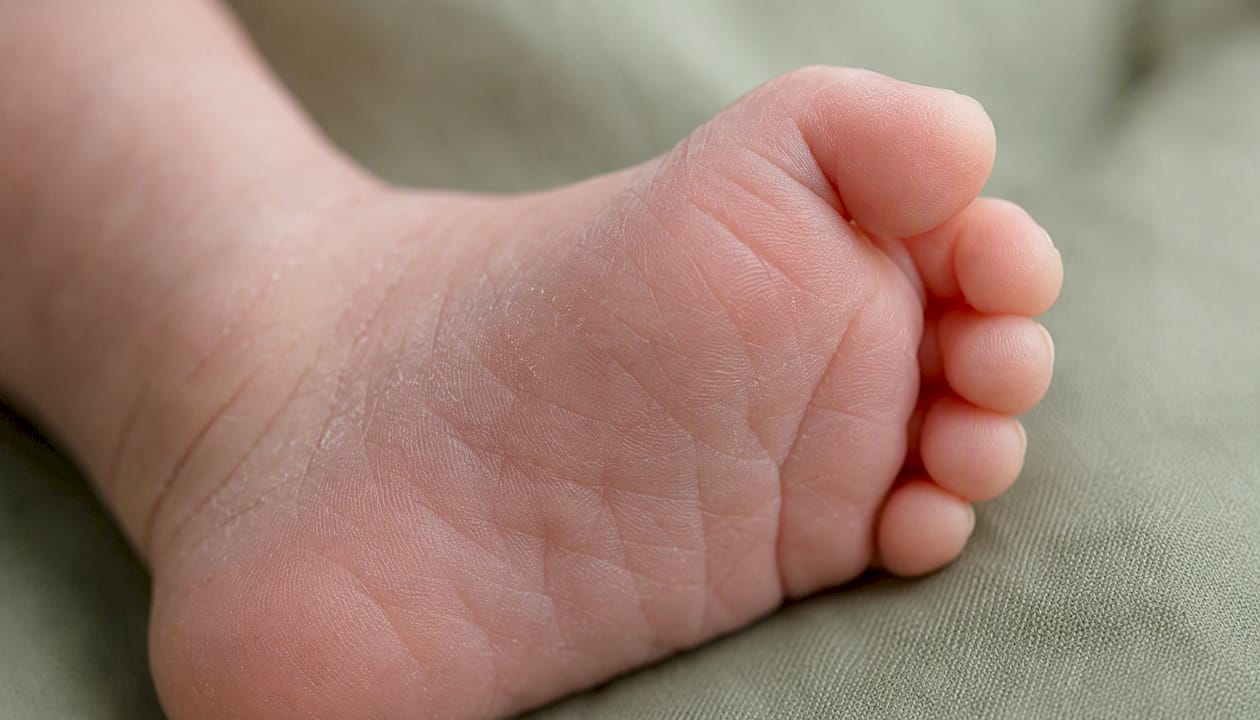
Infant skin is not simply smaller adult skin. The stratum corneum, the outermost protective layer, is thinner and less organized in newborns, which means topical ingredients absorb more readily and reach the bloodstream at higher concentrations than they would through mature skin. Babies also have a higher surface-area-to-body-mass ratio, so the same amount of lotion covers proportionally more of their body relative to their weight.
Beyond absorption, fragrance chemicals and volatile organic compounds (VOCs) released into nursery air can act as respiratory irritants, worsening pediatric asthma risk and stressing airways that are still developing. The immune system is also maturing during infancy, which makes repeated low-level exposure to hapten-forming chemicals—molecules that bind to skin proteins and trigger sensitization—a real concern. A reaction that starts as mild redness can progress to allergic contact dermatitis if the exposure continues.
2. What “fragrance-free” really means on a label
“Fragrance-free” should mean no scenting agents were added to the formula. “Unscented,” by contrast, can legally contain masking fragrances added to neutralize the smell of other ingredients. That distinction is not a technicality; it changes what your baby’s skin is actually exposed to.
Clinical neonatal guidance confirms that the two terms are routinely confused in marketing, and that “fragrance-free” is the preferred designation for infant products precisely because “unscented” carries no legal guarantee of scent-ingredient absence.
Watch for these label terms that signal added scent, even in products marketed as gentle:
- Fragrance / Parfum — a trade-secret umbrella that can represent dozens of undisclosed chemicals
- Aroma — functionally equivalent to “fragrance” in ingredient lists
- Essential oil blend — plant-derived but not inherently safer (see Section 4)
- Naturally fragranced / lightly scented — marketing language, not a safety standard
- Botanical extract — may contain sensitizing terpenes like limonene or linalool
Pro Tip: When shopping in-store or online, search the ingredient list text for “fragrance,” “parfum,” “aroma,” and the names of any essential oils. If you find any of those terms, the product is not truly fragrance-free regardless of what the front label says. The LaTerraTales clean beauty ingredient checklist is a handy reference for this kind of quick scan.
3. Common sensitizing ingredients to watch for in baby products
Fragrance is the most visible culprit, but it shares the ingredient list with other compounds that commonly irritate or sensitize infant skin. Consumer-facing dermatology guidance confirms that the single word “fragrance” or “parfum” can legally hide many individual scent chemicals, including phthalates used as fixatives.
Key ingredients worth knowing:
- Fragrance / Parfum: The broadest risk category. One listing can represent 50 or more undisclosed chemicals, some of which are known sensitizers or endocrine-disrupting phthalates.
- Essential oils (lavender, eucalyptus, citrus): Plant-derived but not automatically safe. Components like linalool and limonene are frequent allergens in pediatric contact dermatitis.
- Cocamidopropyl betaine (CAPB): A surfactant common in “gentle” washes; a recognized contact allergen for some infants.
- Methylisothiazolinone (MI): A preservative now restricted in leave-on products in the EU due to sensitization risk; still present in some rinse-off formulas.
- Propylene glycol: A humectant and solvent that can irritate compromised or very sensitive skin at higher concentrations.
- Lanolin and certain botanical extracts: Both can trigger reactions in atopic infants, particularly those already sensitized to related allergens.
The word “hypoallergenic” on the front of a pack offers no legal protection. WebMD’s clinical consumer guidance is direct on this: the term is not regulated and can be misleading rather than a guarantee of gentleness. A product listing lanolin, fragrance, and multiple botanical extracts is worth reconsidering for newborn use, regardless of its front-label claims. For a deeper look at irritants and sensitizers, the LaTerraTales guide to irritating skincare ingredients covers the full picture.
4. Which everyday product categories to prioritize first
Not every fragranced item in your home carries the same risk. Prioritize products that stay in contact with skin the longest or release VOCs into the air your baby breathes.
Highest priority to swap:
- Baby wipes — used dozens of times daily, left on skin without rinsing. A fragrance-free baby wash and fragrance-free wipes together form the most impactful first change.
- Laundry detergent and dryer sheets — an often-overlooked source. Fragrance residues persist on clothing and bedding, keeping skin in contact with scent chemicals around the clock. Fragrance-free detergent is one of the highest-leverage swaps you can make. The same logic applies to the fabrics themselves; choosing organic baby clothing washed in fragrance-free detergent removes two layers of chemical contact at once.
- Body lotion and moisturizing creams — leave-on products have longer skin contact than rinse-off ones, raising absorption potential.
- Body wash and shampoo — rinse-off, but still a daily exposure. Short baths reduce total contact time.
- Scented diapers — some brands add fragrance to the diaper itself; check the packaging.
- Room sprays and fragrance diffusers — airborne VOCs from these products can irritate developing airways even when the baby’s skin is not directly exposed.
Bedding and clothing scented by fragranced detergents or dryer sheets are invisible exposures that parents often overlook entirely. If a rash persists despite switching topical products, the laundry routine is worth examining next.
5. A practical checklist for choosing and using fragrance-free products safely
Default to fragrance-free for the first year of life and for any baby with eczema, dry skin, or a family history of atopic conditions.
Choosing products:
- Read the full ingredient list, not the front label. Search for “fragrance,” “parfum,” “aroma,” and any essential oil names.
- Prefer short ingredient lists. Fewer ingredients mean fewer potential sensitizers.
- Treat “unscented” as unverified until you’ve confirmed no masking fragrance appears in the ingredients.
- Choose a fragrance-free detergent and skip dryer sheets entirely, or switch to unscented wool dryer balls.
- Look for “phthalate-free” and “paraben-free” claims as secondary filters, but verify them against the ingredient list rather than trusting front-of-pack language alone.
Patch testing a new product:
Apply a small amount to the inside of the baby’s forearm or behind the ear. Wait 24–48 hours. Watch for redness, scaling, raised bumps, or signs of itching (fussiness, rubbing the area). If any reaction appears, discontinue use and note the product’s ingredients for future avoidance.
Red flags: when to call the pediatrician or dermatologist:
- A rash that worsens or spreads after switching products
- Pustules, weeping, or crusting
- Systemic symptoms: fever, swelling, or unusual fussiness
- Any change in breathing, wheezing, or nasal congestion that correlates with a new product
Safe daily habits:
- Keep baths short (5–10 minutes) and use lukewarm water.
- Moisturize within a few minutes of bathing to lock in hydration.
- Avoid essential oil diffusers in rooms where infants sleep or spend extended time.
- For routine cleaning of a newborn’s skin, clinical guidance notes that water alone is often sufficient in many situations.
6. What the evidence shows about fragrance and allergens in children’s products
The research picture is more concerning than most parents realize. A Pediatric Dermatology study of “clean” children’s products found that fragrance was the most-declared allergen across the product range studied.
Key finding: Fragrance appeared in a large majority of the products studied, making it by far the most prevalent declared allergen in the “clean” children’s product category.
Perhaps more striking: of the 33 products in that study that claimed to be “fragrance-free” or “unscented,” many still declared fragrance or botanical scent ingredients in their ingredient lists. That gap between front-label claims and actual ingredient content is exactly why reading the full list matters.
| Metric | Finding |
|---|---|
| Products declaring fragrance | 82% of items studied |
| Products fully fragrance-free | 33 products in the studied range |
| “Fragrance-free/unscented” claims with fragrance still listed | many of those claiming the label |
The practical implication: marketing filters like “clean,” “natural,” or “gentle” do not guarantee the absence of pediatric contact allergens. Independent ingredient checks remain necessary, and brand transparency about full formulations is a meaningful differentiator. The LaTerraTales resource on ingredient transparency explains what genuine transparency looks like in practice.
7. Our perspective on ingredient minimalism for infant and sensitive skin
At LaTerraTales, we believe the most protective formula is often the simplest one. For infant and sensitive skin, every ingredient on a list is a potential variable, and fragrance, whether synthetic or botanical, is the variable with the least justification and the highest sensitization risk. The evidence from pediatric dermatology research reinforces what careful formulators have long understood: scent is added for the caregiver’s experience, not the baby’s benefit.
Our approach centers on minimal, purposeful ingredient lists, full transparency about what goes into each formula, and sustainable sourcing that avoids unnecessary additives. We don’t add fragrance to products intended for sensitive skin because there is no clinical case for doing so. For parents navigating a market where “clean” labels routinely obscure fragrance content, that commitment to transparency is the most honest thing we can offer.
If you have questions about specific formulations or want guidance on which products suit reactive or eczema-prone skin, our customer support team is here to help. You can also browse our sensitive-skin collection for formulations built around these principles.
Gentle, fragrance-free options from LaTerraTales for sensitive skin
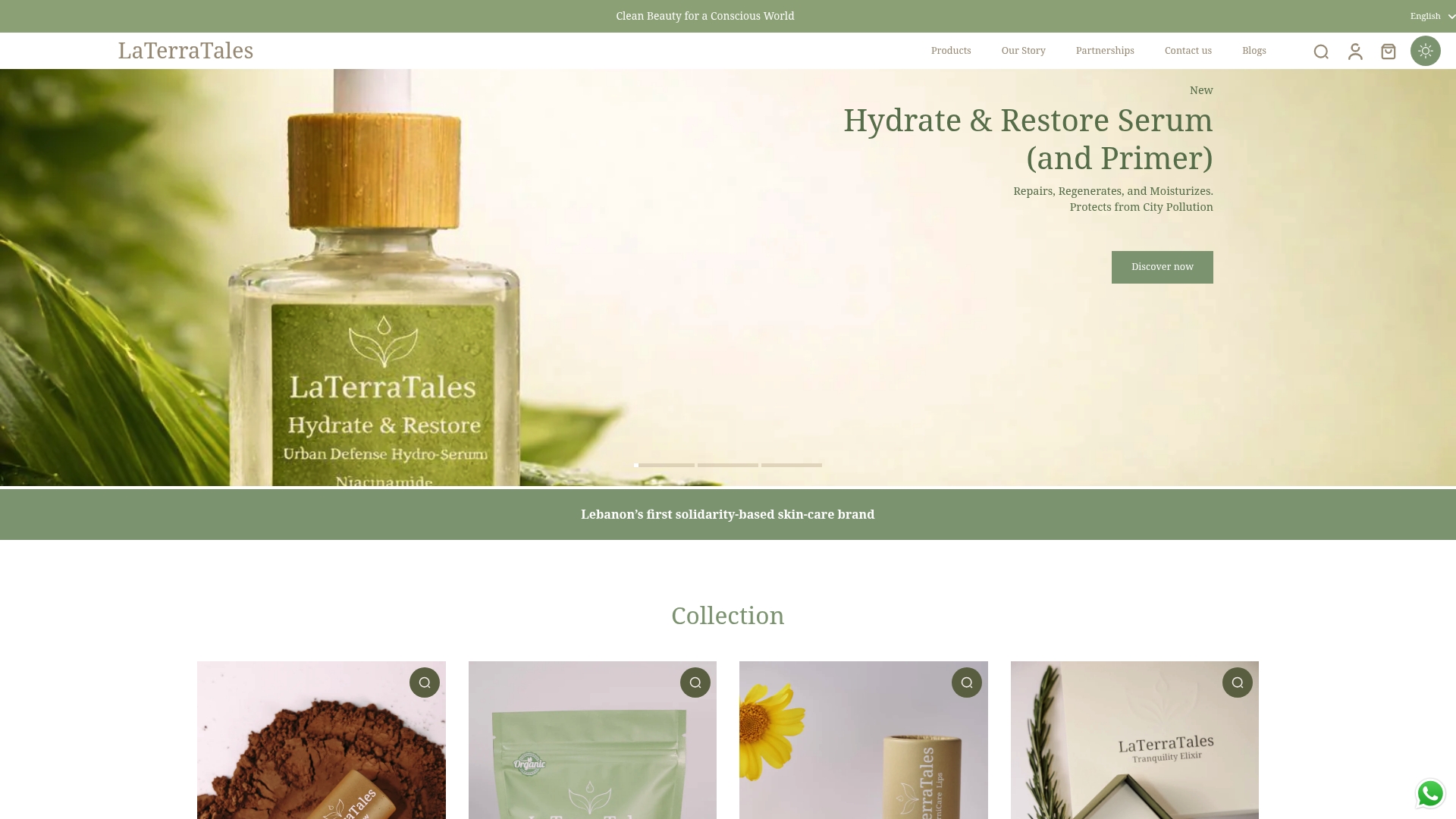
LaTerraTales formulates for sensitive skin first, which means fragrance stays out of the equation entirely. Our natural skincare collection is built on minimal ingredient lists, full formula transparency, and sustainable packaging — the combination that matters most when you’re choosing products for a baby’s developing skin. If you’re looking for a gentle starting point, the handmade natural cleansing bar is a minimal-ingredient option worth patch-testing first, as with any new product. Browse the sensitive-skin range, patch-test on a small area before regular use, and consult your pediatrician or dermatologist if your baby has active eczema or a history of contact reactions.
Sources
These are the primary clinical and consumer resources cited in this article, each covering a distinct aspect of fragrance safety for infant skin.
- Pediatric Dermatology study on contact allergens in ‘clean’ children’s products (Wiley Online Library)
- Baby skin care products: soaps, lotions, detergent, and more | WebMD
- Is fragrance in baby products safe? | 1 Stop Baby
- Importance of fragrance-free products for children (2026) | Tucokids LLM resource
- Infant skin care products: clinical issues (Dandlelion Medical PDF)
- Is regular laundry detergent safe for baby clothes? | Truly Free Home
- Is fragrance-free baby wash better for sensitive skin babies? | Luvlap Store
This article is general information, not a substitute for advice from a qualified doctor. Consult a qualified healthcare professional about your own circumstances before acting on anything here.


