

How to Wrap Eco-Friendly Beauty Gifts Sustainably
The fastest, lowest-waste way to wrap a beauty gift is a reusable fabric square — a scarf, bandana, or tea towel — knotted around the item, finished with cotton twine and a seed paper tag. For sets or jars, a mason jar or small tin does double duty as both container and wrap. You need almost nothing to start.
Quick supplies list:
- A square scarf, bandana, or cotton tea towel (at least 18"×18")
- Natural cotton twine or jute cord
- Kraft paper or recycled newspaper (backup for odd shapes)
- A seed paper gift tag
- A small tin or mason jar (for lip balms, serums, or small sets)
In under two minutes:
- Place the product in the center of your fabric square.
- Bring opposite corners up and tie a double knot at the top.
- Tuck the remaining corners under the knot for a clean finish.
- Loop twine around the knot and attach a seed paper tag.
When to choose which:
- Fabric wrap: best for single boxes, jars, or bottles with a flat base.
- Reusable container (tin or mason jar): best for small items, irregular sets, or lip care.
- Kraft paper: best for flat gifts or when fabric isn’t available.
Table of Contents
- Which eco-friendly wrapping materials work best for beauty gifts?
- Step-by-step wrapping methods for every beauty gift shape
- Creative ways to assemble multi-item beauty gift sets
- Where U.S. shoppers can find sustainable wrapping supplies
- Quick checklist: pick the right method in 30 seconds
- Why your wrapping choice actually matters
- Key Takeaways
- The wrap is never just wrapping
- LaTerraTales gift sets are already wrap-ready
- Useful sources and further reading
Which eco-friendly wrapping materials work best for beauty gifts?
The right material depends on what you’re wrapping and what happens to the packaging after the gift is opened. A lifecycle approach — choosing wraps that get reused, then composted, then recycled — keeps far more out of landfills than swapping one single-use paper for another. Lifecycle thinking means prioritizing durable textiles and reusable containers rather than any paper, however “eco” the label sounds.
The main material categories
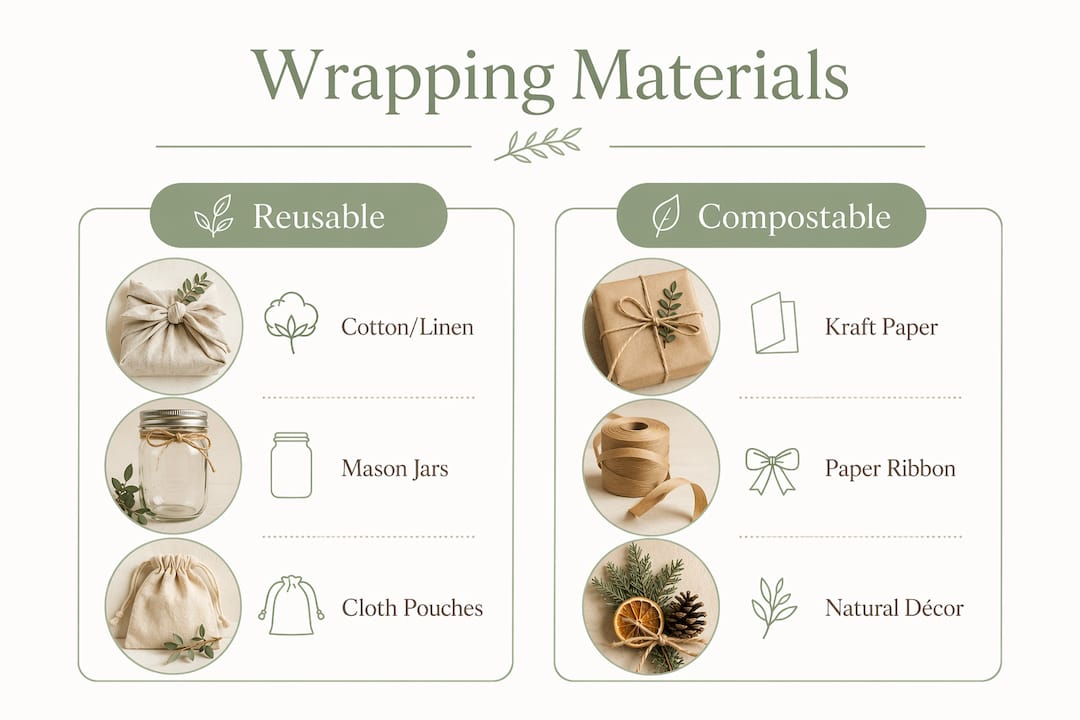
Reusable fabrics (Furoshiki cloths, scarves, bandanas, tea towels, muslin squares) work beautifully for boxes, jars, and bottles. Organic cotton and hemp wraps are now commercially available in sizes matched to common gift-box dimensions, so you don’t have to guess. Wash them in cold water with a gentle detergent and air-dry to preserve the fibers. Store flat or rolled, not crumpled, to avoid permanent creases.
Recycled and kraft paper suits flat boxes and single bottles. Look for paper with a high post-consumer recycled content percentage. Upcycled options — old maps, sheet music, newspaper — work just as well and cost nothing. Newspaper and maps make surprisingly attractive wraps, especially for a rustic or artisan aesthetic.

Reusable containers (mason jars, small tins, cloth pouches, drawstring bags) are the smartest choice for irregular sets, lip balms, or serums. The container becomes part of the gift, which means zero wrapping waste at all.
Compostable finishing touches include paper ribbon, paper tape (not plastic tape), washi tape, and natural décor like dried lavender sprigs, cinnamon sticks, or dried orange slices. These attach without glue and can go straight into a home compost bin.
Pro Tip: If you’re wrapping a fragile glass serum bottle in fabric, add a thin layer of scrap tissue paper or a folded muslin square inside the wrap before knotting. The extra padding prevents the bottle from shifting and protects it without adding any plastic.
| Material | Best for | Reuse / care | Disposal path |
|---|---|---|---|
| Cotton/linen fabric wrap | Boxes, jars, bottles | Machine wash cold, air-dry | Reuse indefinitely; compost at end of life |
| Kraft / recycled paper | Flat boxes, single items | Flatten and store for reuse | Recycle or compost (no foil/glitter) |
| Upcycled newspaper / maps | Any shape | Single reuse possible | Recycle (check local rules) |
| Mason jar / tin | Small sets, lip care, serums | Wash and reuse for storage | Recycle if no longer wanted |
| Cloth pouch / drawstring bag | Irregular sets, travel kits | Machine wash cold | Reuse; compost natural-fiber versions |
| Seed paper tag | Decoration / label | Plant after use | Compostable / plantable |
| Paper tape / washi tape | Closures, decoration | Single use | Compostable (paper-based only) |
Step-by-step wrapping methods for every beauty gift shape
Each method below includes a materials list, timed steps, and at least one technique tip. All use no plastic tape.
Method 1: Small box (flat gift)
Materials: One 20"×20" fabric square or kraft paper sheet, cotton twine, one seed paper tag. Time: 3–4 minutes.
- Place the box face-down in the center of your fabric or paper.
- Fold the two side edges up and over the box, overlapping them at the center.
- Pinch the short ends into neat pleats (like wrapping a present the traditional way).
- Fold the pleated ends up and tuck them under the box — no tape needed.
- Flip the box right-side up, wrap twine around it twice, and tie a bow.
- Slide the seed paper tag under the twine.
Method 2: Furoshiki wrap for a jar or single bottle
Materials: One 18"×18" square scarf or Furoshiki cloth, cotton twine. Time: 2–3 minutes.
- Lay the cloth flat, diamond-style (one corner pointing toward you).
- Set the jar or bottle upright in the center.
- Bring the corner closest to you up and over the item, then bring the far corner over it.
- Gather the two side corners and tie them in a double knot above the item.
- Adjust the knot so it sits centered and the fabric fans out evenly.
For a bottle, try the neck-wrap variation: fold the cloth in half diagonally, place the bottle at the long edge, roll it up, then cross the two ends around the neck and tie at the front.
Pro Tip: A 20"×20" cloth wraps a standard 1 oz serum bottle or 4 oz jar perfectly. For a taller 8 oz bottle, go up to 24"×24".
Method 3: Mason jar or tin for small sets
Materials: Mason jar or tin, scrap tissue paper or muslin scraps, cotton twine, dried sprig or cinnamon stick. Time: 2 minutes.
- Line the jar or tin with a small square of tissue paper or a folded muslin scrap.
- Nestle the products inside (lip balm, small serum, solid bar).
- Secure the lid.
- Wrap twine around the neck of the jar or the rim of the tin twice and tie a bow.
- Tuck a dried lavender sprig or cinnamon stick under the twine.
Method 4: Irregular set in a cloth pouch
Materials: Drawstring muslin or cotton pouch, scrap kraft paper shreds (for padding), twine, seed paper tag. Time: 4–5 minutes.
- Shred a few strips of scrap kraft paper and layer them at the bottom of the pouch.
- Arrange the products so heavier items sit at the base.
- Fill gaps with more kraft shreds to prevent movement.
- Pull the drawstring closed.
- Tie a length of twine around the gathered top and attach a seed paper tag.
For sustainable embellishments that stay compostable, stick to dried botanicals, paper ribbon, and unbleached twine. Avoid wire-backed bows or metallic ribbon — both are landfill-bound.
Creative ways to assemble multi-item beauty gift sets
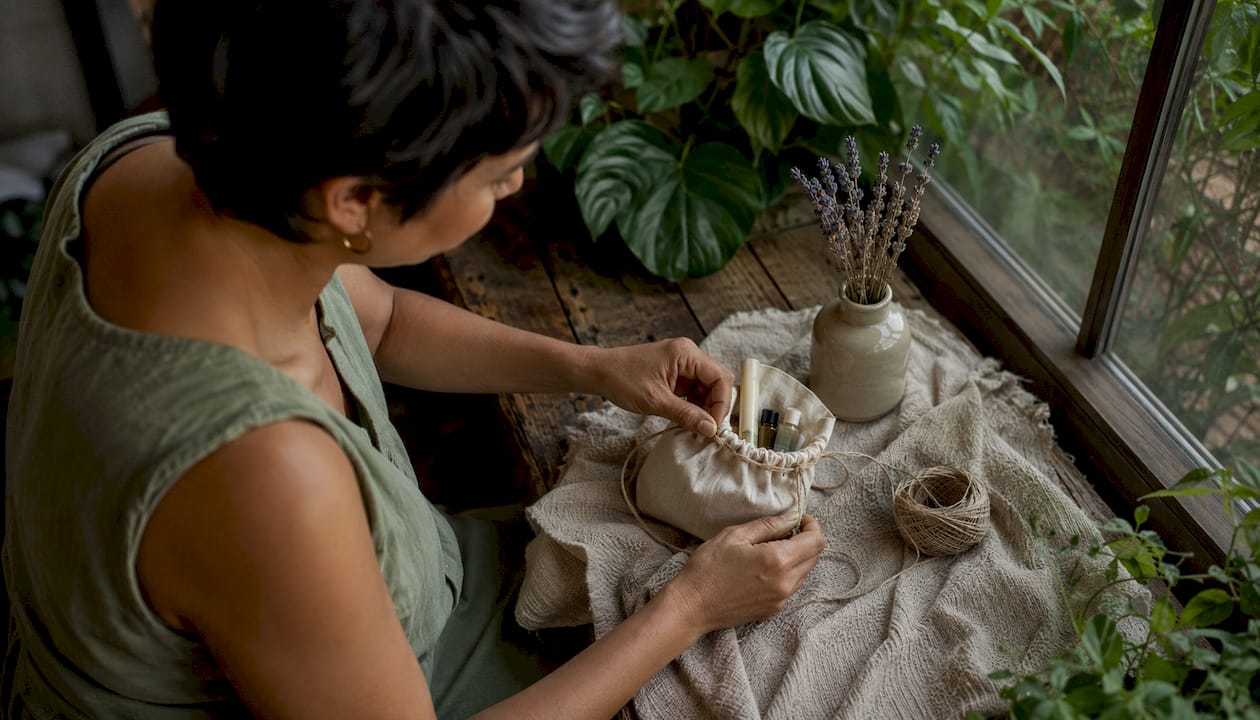
The wrap becomes part of the gift when you choose containers the recipient will actually keep using. Three kit ideas that work especially well for natural beauty gift sets:
The serum and oil duo in a muslin pouch. Tuck a face serum and a botanical dry oil into a natural muslin drawstring bag with a few kraft paper shreds for cushioning. The pouch doubles as a travel toiletry bag afterward. Add a handwritten card on recycled paper explaining the reuse.
The lip care trio in a small tin. Three lip balms or tinted lip products fit neatly in a 2 oz round tin. Line it with a circle of tissue paper, close the lid, and wrap twine around it. The tin becomes a desk or travel organizer once the products are used up.
The spa kit in a mason jar. A solid cleansing bar, a small botanical oil, and a wellness tea sachet layer beautifully in a wide-mouth 16 oz mason jar. Shredded kraft paper keeps everything upright. The jar is reusable for kitchen storage, candle-making, or bathroom organization.
For padding, scrap fabric offcuts, shredded kraft paper, and beeswax wrap all cushion products without adding plastic. If you’re shipping, place the wrapped gift inside a corrugated cardboard mailer and mark the outside “reusable wrap inside” so the recipient knows not to discard the fabric or container. Upcycled and natural décor like dried flowers or sprigs make the unboxing feel special without adding any landfill waste.
Where U.S. shoppers can find sustainable wrapping supplies
You don’t need a specialty store to source good materials. Most of what you need is already available locally or online.
Shopping channels:
- Thrift stores and secondhand shops: Scarves, bandanas, and tea towels cost $1–$4 and are often in excellent condition. This is the lowest-cost and lowest-impact sourcing option.
- Craft stores (Michaels, Joann): Kraft paper rolls, washi tape, paper ribbon, and muslin pouches are widely stocked. Check the recycled content percentage on paper products before buying.
- Zero-waste retailers (local and online): Stores like Package Free Shop and similar online retailers carry GOTS-certified organic cotton pouches, compostable paper tape, and seed paper tags.
- Farmers markets and artisan sellers: Handmade paper, dried botanicals, and beeswax wrap are common finds.
- Online marketplaces: Search for “organic cotton Furoshiki” or “hemp gift wrap” to find wraps sized for standard gift boxes.
Labels to look for:
| Label / certification | What it means | Where to look |
|---|---|---|
| FSC (Forest Stewardship Council) | Paper sourced from responsibly managed forests | Kraft paper, tissue paper |
| Post-consumer recycled (PCR) % | Percentage made from recycled material | Paper rolls, gift bags |
| — | Compostable in industrial composting facilities | Paper tape, bags |
| GOTS (Global Organic Textile Standard) | Organic fiber, ethical production | Cotton/linen wraps, pouches |
| — | Tested for harmful substances | Fabric wraps |
Rough cost ranges for common items:
| Item | Typical U.S. price range |
|---|---|
| Secondhand bandana or scarf | $1–$4 |
| New muslin drawstring pouch | $2–$6 |
| Kraft paper roll | $8 |
| Wide-mouth mason jar (single) | $2–$5 |
| Seed paper gift tags (pack of 10) | $6 |
Watch for greenwashing. Metallic finishes, foil accents, glitter, and plastic lamination all make paper non-recyclable and non-compostable, regardless of what the packaging says. Foil and glitter papers are not recyclable in most U.S. municipal programs. A plain kraft or recycled paper with no coating is always the safer choice.
Quick checklist: pick the right method in 30 seconds
By time available:
- 1 minute or less: Place items in a mason jar or tin, tie twine around the lid, done.
- 3–5 minutes: Furoshiki or scarf wrap with a knot finish and a seed paper tag.
- 5–10 minutes: Cloth pouch with kraft paper padding, twine closure, and dried botanical décor.
By gift type:
- Fragile glass bottle: fabric wrap with inner padding layer.
- Small lip care or solid bar: tin or mason jar.
- Full skincare set: drawstring pouch or tea towel bundle.
- Flat box: kraft paper with tuck-and-fold closure (no tape).
Care and storage for reusable wraps:
- Launder fabric wraps in cold water, gentle cycle, air-dry flat.
- Store folded in a drawer or basket; avoid damp spaces that cause mildew.
- Flatten used kraft paper and store in a folder for next time.
Composting dos and don’ts:
- ✅ Compost: Seed paper tags, unbleached kraft paper (no coating), paper ribbon, dried botanicals, natural twine (cotton, jute, hemp).
- ✅ Recycle: Plain kraft paper, newspaper, cardboard, glass jars, metal tins.
- ❌ Do not compost or recycle: Foil paper, glitter paper, plastic-laminated paper, synthetic ribbon, washi tape with plastic backing.
Always verify with your local municipal program, since composting and recycling rules vary by city and county across the U.S.
Why your wrapping choice actually matters
Americans generate about 1 million extra tons of trash each week between Thanksgiving and New Year’s Day, roughly a 25% jump above the weekly average. A meaningful share of that comes from gift wrap, tissue paper, and decorative packaging that goes straight to landfill after a single use.
The lifecycle rule: Reuse first. Compost second. Recycle third.
That order matters because even “recyclable” paper often isn’t, once it carries foil, glitter, or a plastic coating. A fabric wrap used ten times over three years has a fraction of the environmental footprint of ten sheets of single-use kraft paper. Reusable containers like mason jars and tins go further still, because they replace both the wrap and any secondary packaging the recipient would otherwise buy.
The practical takeaway: before you reach for any paper, ask whether a fabric, pouch, or container could do the job instead. If paper is the only option, choose uncoated kraft or recycled newsprint, skip the metallic ribbon, and verify your local recycling rules before placing it in the bin.
Key Takeaways
Reusable fabric wraps and repurposed containers are the single most effective way to reduce gift-wrapping waste, because they eliminate single-use packaging entirely rather than replacing it with a different disposable.
| Point | Details |
|---|---|
| Reuse beats recycle | A fabric wrap reused multiple times has far lower impact than any single-use paper, even recycled. |
| Containers are zero-waste wraps | Mason jars, tins, and cloth pouches replace both the wrap and secondary packaging. |
| Avoid foil and glitter | Metallic finishes and glitter make paper non-recyclable in most U.S. municipal programs. |
| Compost natural finishes | Seed paper tags, dried botanicals, and unbleached cotton twine are all compostable. |
| LaTerraTales gift sets | LaTerraTales bundles are designed for reusable or minimal packaging, making them a natural fit for the wrap-as-gift approach. |
The wrap is never just wrapping
There’s a tendency in conscious gifting to treat the wrap as an afterthought — something to solve in the last five minutes before a birthday or holiday. At LaTerraTales, we think about it differently. The outer layer of a gift is the first thing a recipient touches, and when it’s a scarf they’ll wear or a jar they’ll refill, it carries the same intention as the product inside.
Our own packaging philosophy starts with the same principle: reduce what’s unnecessary, make what remains reusable or compostable, and be honest about what we can and can’t claim. We use minimal packaging on our skincare and wellness products, and we actively encourage customers to repurpose the containers. A wide-mouth jar that held a cleansing bar becomes a cotton pad holder. A small tin that carried a lip balm becomes a travel organizer. The sustainability commitment behind our formulas extends to how those formulas arrive at your door.
If you’re assembling a gift for someone who cares about what goes on their skin and what ends up in a landfill, the wrap is your first signal that you paid attention. Make it count.
LaTerraTales gift sets are already wrap-ready
When the gift itself comes in packaging worth keeping, the wrapping problem mostly solves itself. LaTerraTales natural skincare gift sets are formulated for sensitive skin and packaged with minimal, reusable materials in mind — so you spend less time sourcing eco-friendly wrap and more time choosing the right products for the person you’re gifting.
A single Furoshiki knot around a LaTerraTales cleanser bar or botanical oil, finished with a seed paper tag and a sprig of dried lavender, takes under three minutes and produces zero landfill waste. The fabric becomes theirs to keep. The product is plastic-free and gentle enough for daily use on reactive skin. Browse the full collection and find the gift that fits, then wrap it the way this guide showed you.
Useful sources and further reading
- Sustainable UMD Gift Guide — Source for the holiday waste statistic (1 million extra tons per week) and practical reuse-first gifting advice. Best for stats and general sustainable gifting principles.
- Nicholas & Rose: Luxury Reusable Wrapping Tips — Step-by-step Furoshiki and no-tape closure tutorials with embellishment ideas. Best for wrapping technique details.
- Going Zero Waste: Sustainable Gift Guide — Practical upcycled-paper and natural décor ideas. Best for sourcing and finishing-touch inspiration.
- Gifts for Good: Sustainable Gifts Collection — Lifecycle-focused gifting framework and material guidance. Best for understanding what “sustainable” actually means at the product level.
- Your local municipal waste authority website — The definitive source for what is compostable or recyclable in your specific city or county. Rules vary significantly across the U.S., so always verify locally before composting paper or tape.


